10 Fall Hairstyles for Men With Glasses
Glasses aren’t an obstacle to great hair — they’re a styling partner, and the best fall hairstyles for men with glasses treat them that way. The problem is that most haircut advice pretends frames don’t exist, leaving you with a fringe that tangles with your lenses, sides that crowd the frame arms, or a cut that fights your glasses for attention instead of complementing them.
The best fall hairstyles for men with glasses in 2026 are the textured crop with fringe, the classic side part, and the messy quiff — here’s why. Each one follows the golden rule of frames and hair balance: keep the glasses zone clear, put visual interest where the frames aren’t, and match the cut’s energy to the frames’ energy. Get that right and your glasses stop being “something you wear” and start being part of the look.
Fall 2026 is a great season for this, because the dominant men’s hairstyles with glasses 2026 all lean toward controlled texture: crops, tapers, and quiffs that are tidy around the frames but expressive on top. Cool autumn air holds styling products better than summer humidity ever did, so the volume and texture these cuts need actually survive the day. It’s the easiest season of the year to make a glasses-friendly haircut look its best.
What makes this guide different from every generic listicle out there: every style comes with the full picture. Not just what it looks like, but exactly how to get it (what to tell your barber — guard numbers, scissor work, and how the cut interacts with your frames — plus at-home styling steps), who it flatters most, honest maintenance expectations, and a pro tip you won’t find in a caption. Our editors tested these cuts against real frames — bold acetate, thin metal, round, rectangular — so the frame-pairing advice here comes from actual wear, not guesswork.
One rule before we start, and it’s non-negotiable: wear your glasses to the barber. Every cut below should be judged with your frames on, because a fringe that looks perfect bare-faced can sit directly on your lenses once the frames are in place. A good barber will shape the cut around your glasses if they can see them — a great barber will insist on it.
Below, we’ve rounded up the 10 best autumn haircuts for glasses wearers for 2026. Sharp, practical, and built for real mornings — let’s find your cut.
Contents
- Textured Crop with Fringe
- Classic Side Part
- Messy Quiff
- Low Taper with Volume on Top
- Curtain Cut
- Slicked-Back Undercut
- Short Caesar
- Wavy Bro Flow
- Ivy League
- Buzz with Beard
Editor’s Top 5 Glasses-Friendly Picks
Short on time? These are the five cuts our editors keep recommending to glasses wearers this season — the ones with the best ratio of style to effort on the entire list.
1. Textured Crop with Fringe
The frames’ best friend. A short, textured top with a fringe that sits above the lenses — nothing competes, everything complements. It’s the cut we suggest first to any man who walks in wearing glasses, because it clears the entire glasses zone while the texture adds all the interest the cut needs.
2. Classic Side Part
Timeless and balanced. The side part’s clean geometry echoes the structure of glasses beautifully, and the combination has genuine pedigree — the Clark Kent effect is real. If your frames are rectangular or wayfarer-style, this is the most harmonious pairing on the list.
3. Messy Quiff
Height above, calm below. The quiff lifts attention upward while the sides stay quiet around the frames, which makes it the ideal partner for bold, heavy frames that need a strong haircut to share the stage. Controlled chaos on top, tidy architecture everywhere else.
4. Low Taper with Volume on Top
Controlled sides, expressive top. The taper keeps the area around the glasses immaculate while two to three inches of volume add personality — the most versatile option here, professional enough for any office and modern enough for weekends.
5. Curtain Cut
Symmetry that works. A center part with face-framing length softens the face around statement frames, and the softness of the hair offsets the geometry of the glasses beautifully. Very 2026, and it photographs wonderfully.
What Makes a Fall Haircut Work with Glasses?
Three principles govern glasses-friendly hair: clearance, balance, and harmony. Clearance is literal — hair shouldn’t touch, overlap, or visually tangle with your frames. A fringe should end above the top rim of your lenses, not rest on it. Sideburns should be trimmed so they don’t merge into the frame arms; when hair and temple arms occupy the same strip of face, both disappear into visual clutter. We found this is the single most common mistake men with glasses make — and the easiest to fix, because it’s a ten-second trim, not a new haircut.
Balance is about visual weight. Glasses add a strong horizontal line across your mid-face, so the haircut has to redistribute that weight. Bold, heavy frames pair best with hair that has presence on top — quiffs, textured crops, real volume — so the frames don’t dominate the whole face. Light, rimless, or thin frames work the other way: they can handle (and benefit from) stronger haircuts with more edge, since the hair provides the structure the glasses don’t. Think of it as a see-saw: when one side goes heavy, the other side has to answer.
Harmony means matching vibes. Chunky acetate frames have a creative, bold energy — they pair naturally with textured, modern cuts. Thin metal frames read minimal and intellectual — they suit clean, classic cuts like side parts and Ivy Leagues. Round frames soften a face, so angular cuts like faux hawks and sharp crops add welcome contrast; square frames do the opposite, and soften best with waves or textured tops. Our editors tested pairings across frame styles and kept coming back to this rule: the cut and the frames should feel like they belong to the same person, not two different ones.
Fall adds practical notes most guides skip. Glasses fog when you come indoors from the cold — shorter fringes and off-the-face styles mean less hair stuck to fogged lenses, which matters more than you’d think on a daily commute. Wet autumn hair is another factor: rain flattens volume, so cuts that rely on texture need a product with real hold in October and November, not the light summer stuff. And if you switch between glasses and sunglasses, choose a cut that works with both — the clearance, balance, and harmony principles are identical, but a fringe judged against one pair can sit wrong against another, so bring both to the barber if you alternate. If you want the warm-weather counterpart to these rules, our guide to summer hairstyles for men with glasses covers the same principles for hot months.
How to Choose the Right Fall Haircut with Glasses
Start with your frames, not your hair. Bold, thick frames are the dominant feature of your face — give them a haircut with enough presence to share the stage: texture, quiffs, crops with fringe. Thin or rimless frames disappear more, so your haircut carries the style load — sharper fades, defined shapes, intentional detail. Take a selfie wearing your glasses and assess honestly: does the hair compete or complete? That one photo tells you more than any style guide can.
Face shape interacts with both hair and frames, which makes it a three-way conversation. Round faces need height (quiffs, textured tops) and should avoid round frames plus a round cut doubling up — that’s the one combination that genuinely adds width. Square faces suit softer tops that ease the jawline. Oval faces have the most freedom and can wear nearly anything on this list. Long faces should avoid excessive top height paired with tall frames, which stretches the face further — keep the volume moderate and let the sides carry a bit more weight. If you’re choosing a cut with both your frames and your age in mind, our hairstyles for men over 50 with glasses guide tailors these rules to mature hair.
Consider your prescription and lens thickness. Strong prescriptions mean thicker lenses, which add visual weight to the mid-face — and the heavier the lenses, the more the hair needs to hold its own. This is a detail most guides skip entirely, but it matters: a man with thick lenses and a whisper-thin haircut ends up with glasses as the only thing anyone sees. If your lenses are substantial, lean toward the higher-presence cuts on this list — the quiff, the textured crop, the slicked-back undercut.
Finally, think about your daily reality. If you push your glasses up constantly, shorter sides reduce interference with your fingers. If you wear them low on your nose, keep the fringe extra clear so you’re not looking through hair. If your frame arms are thick or sporty, keep the hair above your ears tidy so the arms sit cleanly. And the barber rule bears repeating: get the cut while wearing your glasses, or at minimum bring them so the barber can check lengths against the frames at every stage. A haircut judged without glasses is a haircut judged blind.
10 Fall Hairstyles for Men With Glasses
1. Textured Crop with Fringe
The single best glasses haircut for most men — and the one our editors recommend first, full stop. The top is short and choppy, around one to two inches, with a textured fringe that ends above the frames; the sides are faded or tapered to keep the glasses zone completely clear. It’s trending hard for fall 2026 because it nails the season’s mood: maximum impact, minimum morning effort, and a texture that looks even better slightly lived-in. The vibe is casual-cool and versatile — it works for the office, the weekend, and everything between, and it suits bold statement frames and barely-there minimalists equally well.
How to get it: Tell your barber: “textured crop, fringe cut above the brow, mid fade — I wear glasses.” Ask for point-cut texture through the top (not blunt scissor cuts) so the fringe breaks up naturally instead of hanging heavy. Wear your glasses to the appointment so the fringe length can be judged against your actual frames. At home, work a pea-sized amount of matte paste through dry hair, pushing everything slightly forward and pinching the fringe into pieces.
Best for: All face shapes — the fringe length can be adjusted to flatter yours; straight to wavy textures; fine to medium hair that benefits from the texture’s illusion of density; short lengths and anyone growing out longer hair who wants a reset.
Maintenance: Low. Two to three minutes each morning, and it genuinely looks fine air-dried on lazy days. Barber visits every 3–4 weeks to keep the fringe above the frames and the fade sharp.
Pro tip: A pea-sized amount of American Crew Fiber through dry (not damp) hair is the sweet spot — too much product and the texture clumps instead of separating. And if your fringe creeps toward your lenses between appointments, trim just the very center strands yourself; it’s the difference between a clean month and a messy one.
%

%
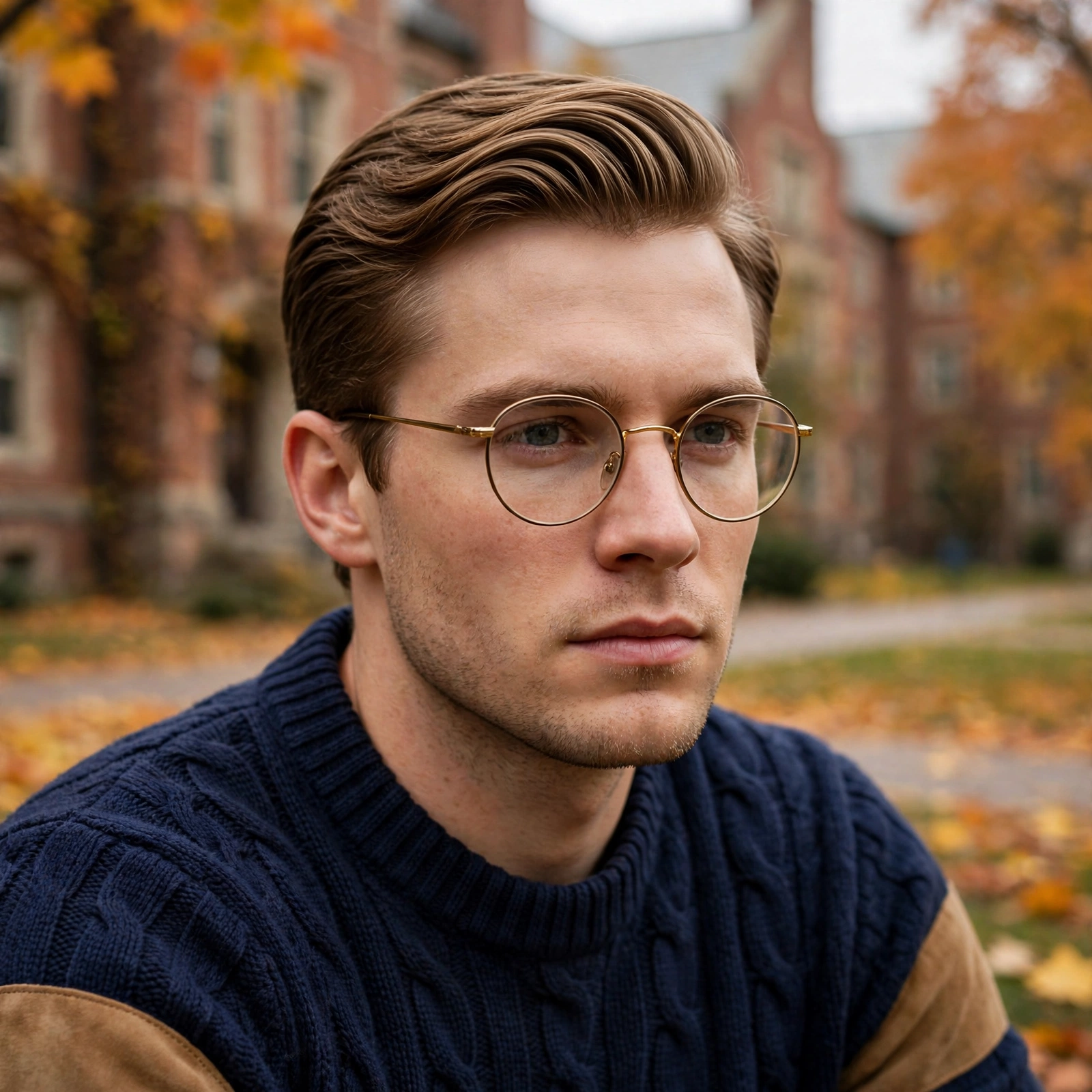
2. Classic Side Part
Structure loves structure. The neat side part’s clean geometry harmonizes with the straight lines of rectangular and wayfarer-style glasses, and the combination has a century of pedigree — the Clark Kent effect is real, and it’s not a bad thing to lean into. It’s trending for fall 2026 as part of the broader “quiet luxury” menswear wave: precise, intentional, and quietly confident rather than loud. The vibe is intelligent and polished — presentations, client dinners, professional settings where you want to look sharp without looking like you tried too hard.
How to get it: Tell your barber: “classic side part, tapered sides — not a skin fade, keep it traditional — and enough length on top to part cleanly.” The top usually needs two to three inches for a proper part. At home, find your natural part first (comb damp hair straight back and see where it falls), then define it with a comb and a small amount of pomade, smoothing everything into place. The critical glasses detail: keep the hair above your ears and at the temples neat so nothing crowds the frame arms.
Best for: Oval and square faces especially; straight to wavy textures; medium to thick hair that holds a part; short-to-medium top lengths; rectangular, wayfarer, and thin metal frames.
Maintenance: Low to medium. About five minutes each morning with a comb — no heat required if your hair cooperates. Barber visits every 4–5 weeks to keep the taper clean and the part line crisp.
Pro tip: Never fight your natural part — combing against it means the style collapses by noon. And for fall, switch to a slightly stronger-hold pomade than your summer one; autumn dampness loosens a weak part faster than you’d expect.
%
%
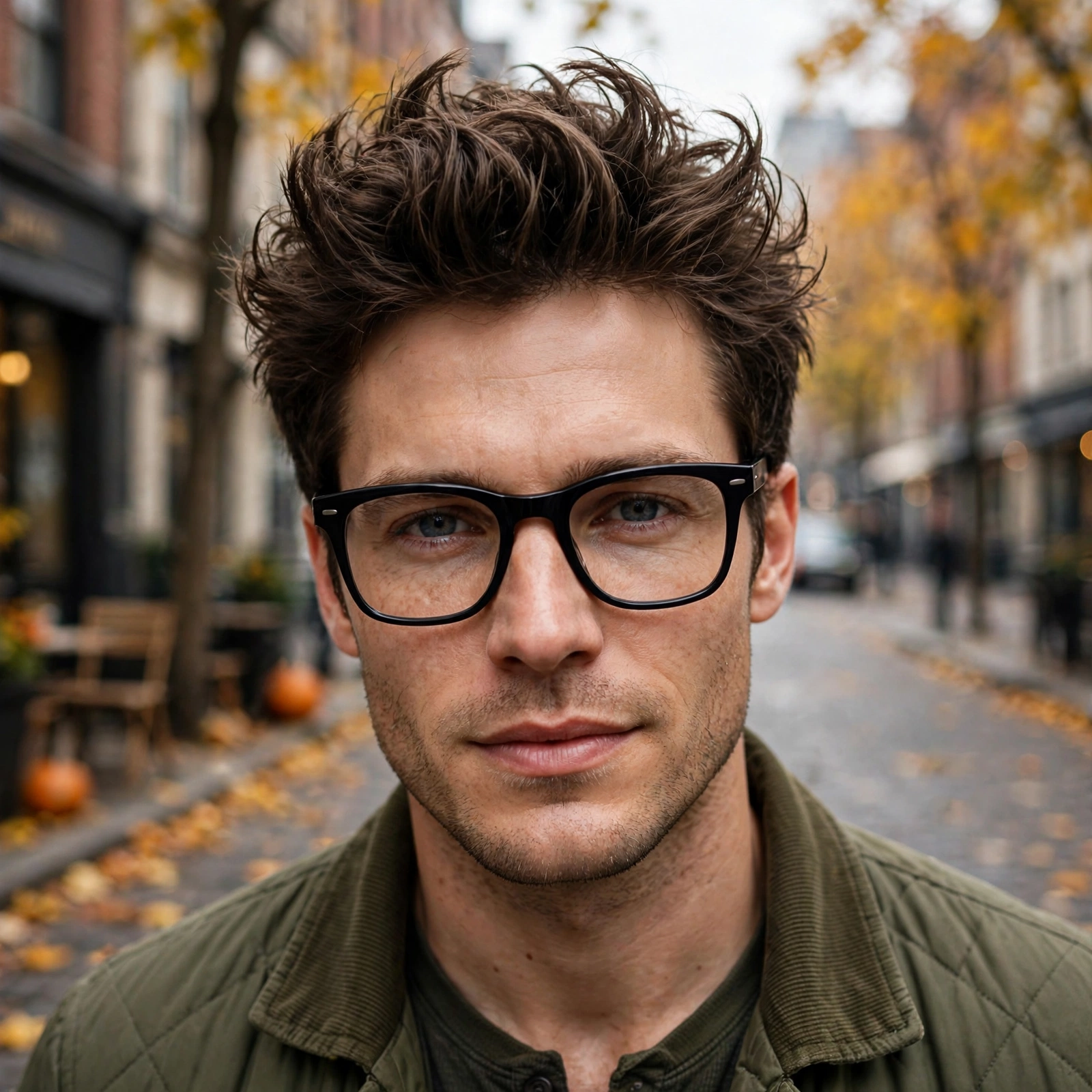
3. Messy Quiff
Drama where it counts. Two to three inches of textured height up top draw the eye upward, balancing heavier frames below, while the faded sides keep the mid-face calm and the glasses zone clear. It’s all over the men’s hairstyles with glasses 2026 roundups for one reason: it’s the ideal partner for bold acetate frames, giving them a haircut with enough presence to share the stage instead of being dominated by them. The vibe is confident and modern — date nights, creative workplaces, weekends — with a contrast between wild top and tidy sides that photographs brilliantly.
How to get it: Tell your barber: “textured quiff, mid fade, keep the sides tight around the frames.” You need at least two to three inches on top; the barber should point-cut for texture so the quiff breaks up instead of forming a solid wall. At home, blow-dry the top upward and back for lift (this step is non-negotiable — air-drying a quiff gives you a flop), then work a matte clay through it and push everything up and slightly back with your fingers.
Best for: Round faces especially — the height elongates; oval faces too; thick, straight to wavy hair that can hold lift; bold acetate, chunky, or thick rectangular frames.
Maintenance: Medium. Eight to ten minutes each morning including the blow-dry. Barber visits every 3–4 weeks — the fade grows out faster than the top, and a grown-out quiff loses its architecture.
Pro tip: Apply a small amount of Baxter of California Clay Pomade to towel-dried hair before blow-drying, not after — pre-styling with clay gives the lift a foundation that survives the whole day. And always blow-dry with your glasses off but do the final check with them on; the quiff’s height should clear your frames’ top line by a comfortable margin.
%
%
4. Low Taper with Volume on Top
The diplomat. A subtle low taper keeps everything around the glasses immaculate while two to three inches of volume on top provide the style — it’s the most versatile option on this list, professional enough for any office and modern enough for weekends. It’s trending for fall 2026 because it hits the exact middle of the “clean but not boring” spectrum that defines autumn haircuts for glasses wearers right now. The vibe is understated confidence — the guy whose hair always looks right but never looks like he’s thinking about it. It suits thin to medium frames especially well, since the haircut’s restraint matches the glasses’ subtlety.
How to get it: Tell your barber: “low taper — not a fade, keep it gradual — with volume left on top, glasses-friendly.” The key word is taper, not fade: a taper stays conservative around the ears and neckline, which is what keeps the frame arms sitting cleanly. At home, blow-dry the top with a little lift at the roots, then add a light styling cream and shape with your fingers — no comb needed, and that’s the point.
Best for: Oval and heart-shaped faces; thin to thick hair (very thick hair needs more thinning through the top); short-to-medium lengths; thin metal, rimless, and medium acetate frames.
Maintenance: Low. Three to five minutes each morning. Barber visits every 4–6 weeks — the taper grows out gracefully, so you can stretch appointments longer than with a fade.
Pro tip: Ask your barber to keep the taper especially clean right above the ear — that’s where frame arms rest, and even a little bulk there pushes the arms outward and makes glasses sit crooked. It’s a detail that takes thirty seconds in the chair and pays off every single day.
%

%
5. Curtain Cut
Soft symmetry for bold frames. A center part with three to five inches falling to either side of the face frames both the face and the glasses, and the softness of the hair offsets the geometry of statement eyewear beautifully. It’s one of the defining men’s hairstyles with glasses 2026 because it photographs wonderfully — the parted hair creates a natural frame around the frames, doubling the structure in a way that reads intentional rather than busy. The vibe is artistic and relaxed — creative fields, university life, weekends — and it pairs especially well with round or bold rectangular frames.
How to get it: Tell your barber: “curtains, center part, textured ends — I wear glasses, so keep the front pieces clear of the lenses.” You need three to five inches on top with light layering so the hair falls naturally to each side. At home, apply a little sea salt spray to damp hair and rough-dry with your fingers, encouraging the center part; the texture keeps the curtains from looking flat or curtain-rod stiff. The glasses detail: the front pieces should fall beside your frames, not across them — have your barber check with your glasses on.
Best for: Oval and square faces; wavy to straight textures (natural wave makes this cut effortless); medium lengths; round, bold rectangular, and acetate frames.
Maintenance: Low to medium. About five minutes with sea salt spray — or zero on good-wave days. Barber visits every 6–8 weeks for shaping; curtains grow out gracefully, which is half their charm.
Pro tip: A pea-sized amount of Hanz de Fuko Quicksand worked through dry hair gives the curtains grit and separation without weight. And when the center part starts looking severe as it grows out, shift it a centimeter off-center — the asymmetry instantly refreshes the whole cut.
%

%
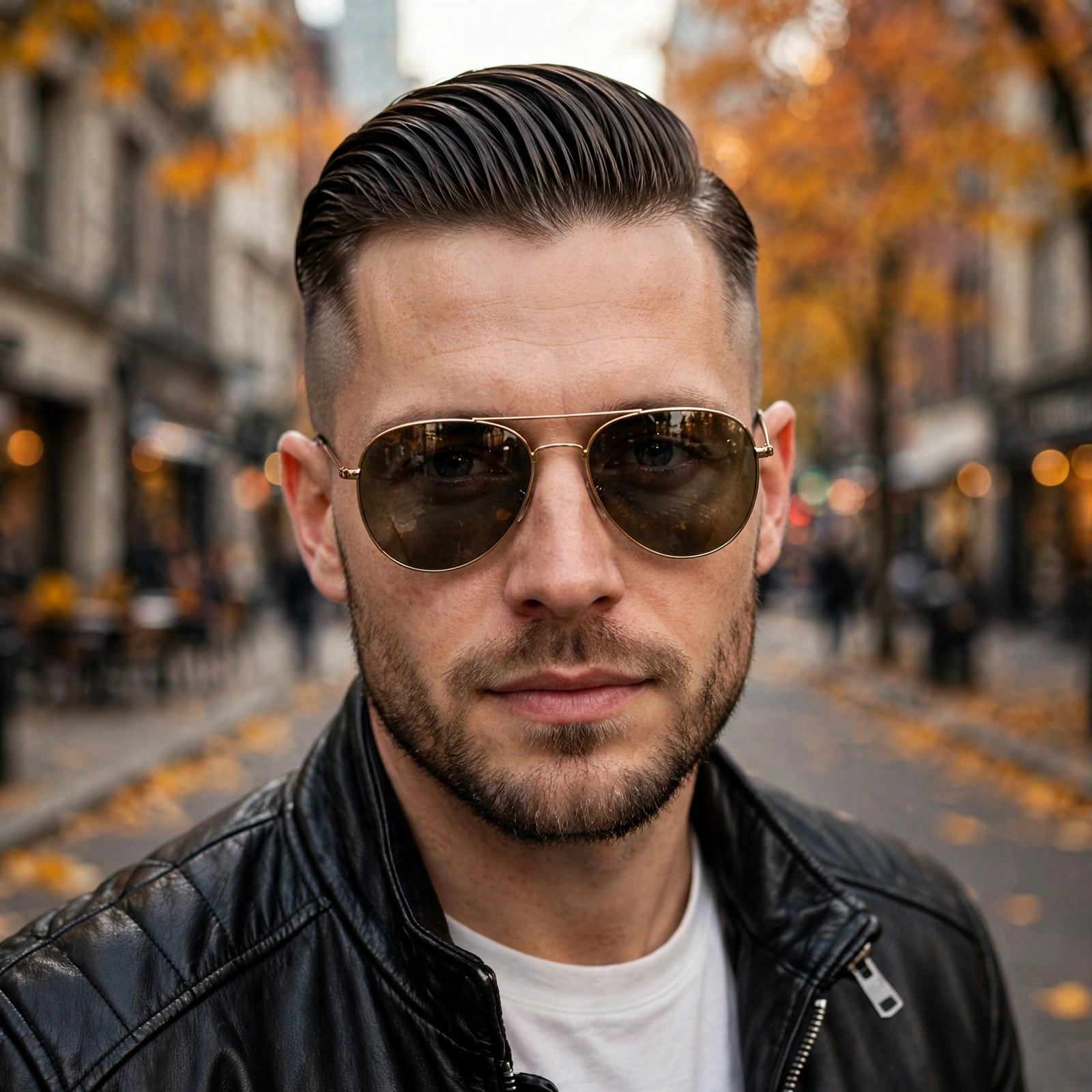
6. Slicked-Back Undercut
Maximum contrast, maximum confidence. Long top swept straight back, tight faded sides — the severity of the cut makes glasses look deliberate and sharp, like eyewear as a fashion choice rather than a necessity. It’s trending for fall 2026 among men with strong, thick hair who want a look with opinions: the combination reads powerful and fashion-forward, especially with bold frames. The vibe is unapologetic — evenings out, fashion-conscious workplaces, anyone who wants their entrance noticed. This is not a cut for shy dressers, and that’s exactly its appeal.
How to get it: Tell your barber: “slicked-back top, mid fade on the sides — disconnected or blended, your call — and I wear glasses, so keep the fade tight around the temples.” You need at least four inches on top to sweep back properly. At home, apply pomade to damp hair and comb straight back from the hairline, working in sections; finish with a second pass once it’s dry to lock the shape. The fade around the temples is doing half the glasses work here — it keeps the entire frame zone architectural and clean.
Best for: Thick, straight to slightly wavy hair (fine hair struggles to hold the sweep); oval and oblong faces; medium-to-long top lengths; bold, thick, or fashion-forward frames.
Maintenance: Medium. Five to ten minutes each morning. Barber visits every 3–4 weeks — the contrast only works when the sides stay tight, so this cut punishes appointment-stretchers.
Pro tip: Use a water-based pomade rather than oil-based: it gives you the same slick finish but lets you restyle with damp hands during the day, which matters when autumn wind undoes your sweep. And always do the final comb-through with your glasses on — the top’s sweep should visually continue the frames’ top line, not fight it.
%
%
7. Short Caesar
Graphic and tidy. The Caesar’s short, straight fringe sits well above the glasses, and the uniform short length keeps the whole head neat — nothing touches the frames, nothing crowds the arms, nothing needs thinking about. It’s a quiet star of autumn haircuts for glasses wearers for fall 2026 because it solves the season’s practical problems in one move: rain-proof, beanie-proof, fog-proof. The vibe is no-nonsense and sharp — minimalists, athletes, anyone whose mornings have no room for styling. And it pairs beautifully with minimal or rimless frames, where the cut’s graphic simplicity matches the eyewear’s understatement.
How to get it: Tell your barber: “Caesar, short all over, straight fringe across the forehead — and I wear glasses, so keep the fringe well above the brow.” The fringe is the whole cut: it should be even, short, and textured at the edge so it doesn’t read as a bowl. At home, there’s barely a routine — a tiny amount of styling cream through dry hair if you want a little texture, or nothing at all. Check the fringe against your frames in the chair; it should clear the top rim by at least a finger’s width.
Best for: Square and oval faces; straight hair especially; short lengths; minimal, rimless, and thin metal frames; anyone who wants the lowest-maintenance option that never looks accidental.
Maintenance: Low. One minute or less each morning — this is the wash-and-go champion of the list. Barber visits every 3–4 weeks, because the Caesar’s graphic edge blurs fast as it grows.
Pro tip: Ask for the fringe to be point-cut rather than cut straight across — the micro-texture at the edge is what separates a modern Caesar from a 1990s throwback. And resist the urge to grow the fringe between appointments; the moment it reaches your lenses, the whole cut’s logic collapses.
%

%
8. Wavy Bro Flow
Relaxed frames, relaxed hair. Medium-length waves — four to six inches — flow naturally back, with the wave providing effortless texture around casual frames. It’s the least “done” look on this list, which is exactly its charm: in a season of precise tapers and architectural fades, the bro flow is the confident shrug. It’s trending for fall 2026 because the “undone but healthy” aesthetic keeps gaining ground, and autumn’s drier air is kinder to natural wave than summer humidity. The vibe is easygoing — weekends, travel, creative casual — and it pairs beautifully with acetate, round, or vintage-inspired frames that share its relaxed energy.
How to get it: Tell your barber: “medium flow, light layers to encourage the wave, keep the sides tidy so my glasses stay the focal point — I wear glasses.” The cut is mostly about removing bulk and adding light layers; the styling does the rest. At home, work a curl cream or light styling cream through damp hair and air-dry or rough-dry — no comb, no precision. The glasses detail: keep the hair above the ears and around the temples controlled so the frame arms and the wave don’t merge into one shapeless mass.
Best for: Naturally wavy or curly hair (this cut is made for it); oval and oblong faces; medium lengths; acetate, round, tortoiseshell, and vintage-inspired frames.
Maintenance: Low. About five minutes, mostly product application. Barber visits every 8–10 weeks for shaping — flow grows out better than almost any cut here.
Pro tip: Don’t over-product wavy hair — heavy cream kills the wave’s natural bounce. And on beanie days, put the beanie on after the hair is fully dry; damp wave under a hat sets into a flat dent that no amount of fluffing fixes.
%

%
9. Ivy League
The intellectual’s uniform. Short, neat, side-swept — the Ivy League and glasses are a combination with a century of pedigree, and it earns its place in every men’s hairstyles with glasses 2026 roundup as the safest, smartest choice on the list. It’s trending for fall 2026 because it never left: in a cycle of loud trends, the quiet classic keeps winning by simply never looking wrong. The vibe is timeless polish — boardrooms, academia, formal events, professional settings where you want the glasses to be the personality and the hair to be the frame. It works with every frame style because it never competes.
How to get it: Tell your barber: “Ivy League — tapered sides, enough length on top to side-sweep, and I wear glasses.” The top usually runs one to two inches: long enough to sweep, short enough to stay neat. At home, the entire routine is a touch of styling cream through dry hair, swept to the side with your fingers. The glasses detail is baked into the cut itself — the tidy taper keeps the frame arms clear, and the side-swept top clears the lenses without needing a separate decision.
Best for: All face shapes — the sweep direction can be adjusted to flatter yours; straight to wavy textures; short lengths; every frame style, from bold acetate to rimless minimal.
Maintenance: Low. Two to three minutes each morning. Barber visits every 4–5 weeks to keep the taper neat and the top at sweepable length.
Pro tip: Sweep toward your natural growth pattern, not against it — fighting the grain is the only way to make this easy cut difficult. And if your frames are bold, keep the Ivy League slightly shorter on top; the restraint lets the glasses carry the look instead of competing with it.
%

%
10. Buzz with Beard
Let the frames be the hairstyle. A uniform buzz — #2 to #3 guard — removes hair from the equation entirely, while a groomed beard adds the structure and masculinity the cut takes away. It’s the boldest frames and hair balance move on this list: with this little hair, the glasses become the dominant style feature, which is perfect if you love your frames and want them to have the spotlight. It’s trending for fall 2026 as part of the ongoing minimalist-grooming wave, and it’s brutally practical — rain, wind, beanies, fogged lenses, none of it matters. The vibe is rugged confidence — it suits strong bone structure and bold frames that deserve center stage.
How to get it: Tell your barber: “buzz cut, #2 or #3 guard all over, and shape the beard.” The buzz itself is simple enough to maintain at home with clippers. The beard is where the craft lives: keep the cheek line clean, the neckline defined (two fingers above the Adam’s apple is the classic rule), and the length balanced against your face — the beard is now doing all the visual work your hair used to do. With this little hair, every line shows, so the edges have to be sharp.
Best for: Strong bone structure — defined jawlines and cheekbones; oval and square faces; bold, thick, or statement frames; men who want maximum practicality.
Maintenance: Low. Under a minute each morning — there’s nothing to style. The buzz needs refreshing every 1–2 weeks (easy to DIY with clippers), and the beard needs weekly line-ups to stay sharp. Beard oil keeps the texture healthy through fall’s dry air.
Pro tip: The beard’s neckline is the make-or-break detail — a sloppy neckline ruins the whole look faster than anything else. And because the glasses are now your main style feature, keep them immaculate: clean lenses and well-adjusted arms matter more with a buzz than with any other cut here.
%

%
Fall Hairstyles for Men With Glasses: FAQs
Can men with glasses wear bangs or a fringe?
Yes — but the fringe has to respect the frames. The rule is simple: the fringe ends above the top rim of your lenses, with at least a finger’s width of clearance. Anything longer sits on the lenses, catches on the frames when you adjust your glasses, and looks messy within an hour. The textured crop with fringe (style #1) and the short Caesar (#7) are built around this rule — both keep the fringe short, broken up, and well clear. Always judge fringe length with your glasses on, not off, because frames sit higher on some faces than expected.
I have thick, bold frames — should my hair be bold too?
Yes, that’s exactly the right instinct. Bold frames are the dominant feature of your face, and a whisper-quiet haircut leaves them doing all the visual work alone — which reads unbalanced. Give them a partner with presence: the messy quiff (#3), the textured crop (#1), or the slicked-back undercut (#6) all have enough top volume and texture to share the stage. The one thing to avoid is doubling up in the same zone — bold frames plus heavy, bulky sides crowd the mid-face. Keep the sides controlled and put the boldness on top.
How do I stop my sideburns from clashing with my glasses arms?
Keep the hair above and just in front of your ears short and tidy — that’s where the frame arms rest, and even a little bulk there pushes the arms outward so your glasses sit crooked. A taper or fade naturally solves this, but if you wear a longer cut like the bro flow (#8) or curtains (#5), ask your barber to keep that specific area clean while leaving the length elsewhere. Also check the arms themselves: if they’re thick or sporty, they need more clearance than thin wire arms. When in doubt, have your barber shape that area with your glasses on — it takes thirty seconds in the chair and fixes a daily annoyance.
What works for beanie and hat season when you wear glasses?
Low, contained cuts win hat season: the textured crop (#1), the short Caesar (#7), and the Ivy League (#9) all slide under a beanie without getting crushed, and there’s no long fringe to tangle with fogged lenses when you come indoors. Two practical tricks: put the beanie on after your hair is fully dry (damp hair under a hat sets into a dent), and keep a microfiber cloth in your coat pocket — glasses fog every time you come in from the cold, and wiping them on your sweater scratches the lenses. If you wear a longer style, pull the beanie slightly back from your hairline so it doesn’t drag your fringe down onto your frames. Cleveland Clinic’s guide to keeping hair healthy in winter adds useful advice on static and dry-air damage — both classic beanie-season problems.
How do I transition between these styles — say, growing a crop out into curtains?
Grow through the in-between stages instead of fighting them. A textured crop (#1) growing out becomes a messy textured top, then a quiff-length cut (#3), then curtain length (#5) — each stage is a legitimate style if you get a shaping trim every 6–8 weeks to clean the sides and neckline while the top grows. The awkward phase only exists if you do nothing. One warning: during grow-out, the fringe will pass through the exact length that touches your lenses — that’s the moment to have your barber trim just the center strands, or push the fringe to the side temporarily. Patience plus interim trims turns a grow-out into a series of intentional haircuts. While you’re growing it out, following dermatologists’ tips for healthy hair helps the new length arrive in good condition.
The Bottom Line
The best fall hairstyles for men with glasses aren’t about hiding your frames — they’re about building the cut around them. Keep the glasses zone clear, put the visual interest on top, match the cut’s energy to your frames, and wear your glasses to every barber appointment. Do that, and your glasses stop being an accessory you manage and start being the best-looking thing about your haircut. For the general-care side of the equation — washing, heat, and diet — Healthline’s guide to healthier, shinier hair is a solid primer.