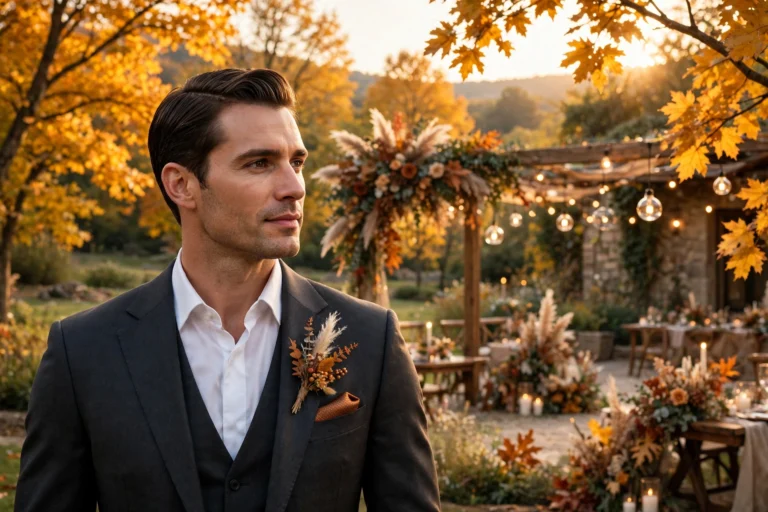
15 Stylish Fall Haircuts for Men That Work With Every Outfit
If you’re searching for fall haircuts for men that look as good with a suit as they do with a flannel, you’re in the right place. The first cold snap of autumn does something to a man’s grooming standards — the sandals go away, the boots and jackets come out, and suddenly the haircut matters more. Fall is layering season, and a sharp haircut is the foundation everything else builds on.
Here’s the direct answer if you’re in a hurry: the best fall haircuts for men in 2026 are the textured crop with mid fade, the messy quiff, and the classic side part with taper — here’s why. All three nail this year’s dominant theme of controlled texture: polished structure on the sides with movement and separation on top. They grow out gracefully (no awkward in-between weeks), they work with autumn’s heavier wardrobe, and each one transitions from the office to a night out without restyling. They’re the three cuts our editors tested most this season, and they won.
The defining fall haircut trends for 2026 are moving away from the ultra-slick, helmet-like finishes of a few years ago. Barbers are cutting for movement now — choppy textured crops, quiffs with deliberate separation, soft fades that don’t demand a touch-up every ten days. The look is sharp but never stiff, which is exactly what autumn dressing asks for. Cooler air genuinely helps too: summer humidity turns product into a losing battle, but fall’s drier air means your style holds from morning to night.
There’s a wardrobe logic to a good autumn cut as well. Coats, scarves, and chunky knits create strong, heavy silhouettes — and a haircut with clean sides and intentional shape keeps you from disappearing underneath them. The best autumn hairstyles for men have enough structure to stand up to a wool overcoat and enough texture to look interesting when the scarf comes off. That’s the brief for every cut on this list.
One more seasonal bonus: fall rewards slightly longer tops. An extra half-inch gives styling options — forward, swept back, to the side — and sits better under a beanie without going flat. Our editors found versatile tops with clean sides survived hat season best; it’s the formula behind nearly every style below.
What makes this guide different from every other “haircut roundup” on the internet: every style comes with the full picture. Not just a description, but exactly how to get it (the words to say to your barber, plus at-home styling steps), who it flatters most (face shape, hair type, length), honest maintenance expectations (morning time and how often you’ll need a trim), and a pro tip our editors picked up along the way. Below are 15 stylish men’s fall haircuts for 2026 that work with literally everything in your closet — low drama, current, and built to look better as the season goes on.
Contents
- Textured Crop with Mid Fade
- Classic Side Part with Taper
- Messy Quiff
- French Crop with Skin Fade
- Slicked-Back Undercut
- Curly Top with Low Fade
- Bro Flow
- Buzz Cut with Line-Up
- Pompadour with Tapered Sides
- Ivy League
- Faux Hawk with Textured Top
- Long Fringe with Faded Sides
- Caesar Cut with High Fade
- Wavy Comb-Over
- Disconnected Undercut
Editor’s Top 5 Stylish Fall Haircuts for Men
Short on time? These are the five cuts our editors keep coming back to this season — the highest style-to-effort ratio on the entire list, and the ones that earned the most compliments when we wore them.
1. Textured Crop with Mid Fade
The workhorse of 2026 and our number one pick: short, choppy texture on top with a clean mid fade. Sharp enough for the office, relaxed enough for the weekend, and it grows out more gracefully than any other faded cut we tested.
2. Classic Side Part with Taper
Timeless for a reason. A neat side part with tapered sides works with a suit, a sweater, or a leather jacket without missing a beat. The most versatile cut here — it never looks out of place.
3. Messy Quiff
Volume up front, texture everywhere. The messy quiff adds height and personality, and pairs beautifully with fall’s chunkier silhouettes — turtlenecks, overcoats, heavy denim. The pick for men who want their haircut to have a point of view.
4. French Crop with Skin Fade
Short fringe, blunt and forward, with a skin fade for contrast. Minimal styling, maximum edge — ideal for men who want to look sharp with zero morning effort. Two minutes with clay and you’re done.
5. Slicked-Back Undercut
Long on top, tight on the sides, swept straight back. The power move of fall haircuts — bold, architectural, unbeatable with a coat. The cut that drew the most double-takes in our testing.
What Makes a Fall Haircut Stylish?
A stylish fall haircut balances two things: structure and texture. Structure comes from the cut itself — clean fades, defined partings, intentional shapes that hold their own against a heavy coat and scarf. Texture is what keeps it from looking dated — choppy ends, natural movement, a finish that looks touched by hands rather than frozen by gel.
The fade is the backbone of most modern men’s cuts, so it pays to speak the language before you sit in the chair. A low fade starts the blend just above the ear; a mid fade starts around the temple; a high fade climbs toward the crown. A skin (or bald) fade blends all the way down to the skin, while a taper is a subtler, more gradual version that keeps some weight. In 2026, mid fades and tapers dominate for one practical reason: they grow out softly. You can stretch barber visits to four or five weeks without looking unkempt, which makes them the smart-money choice for low-maintenance men’s cuts.
Texture on top is achieved two ways: the cut and the product. At the barber, ask for point cutting or texturizing shears — this removes bulk and creates the piece-y separation that separates a modern cut from a dated one. For product, reach for matte clay or paste rather than shiny pomade. Shine reads formal and slightly retro; matte reads current and touchable. Our editors tested this switch across a dozen cuts, and matte finishes looked better against fall fabrics in every single case. For the fundamentals behind any good cut, the dermatologists’ tips for healthy hair are worth bookmarking.
One seasonal rule most men miss: fall’s drier air means less product, not more. Start with half your summer amount — a pea-sized bit of clay, one pump of salt spray — and build up only if needed. Over-producting in dry air makes hair look dull and heavy fast.
How to Choose the Right Fall Haircut for You
Start with face shape, and be honest about it. Square faces suit volume on top and softer sides — quiffs, pompadours, and textured crops add flattering height without widening the jaw. Round faces need height and angularity: avoid cuts that are wide at the sides, and lean into quiffs, faux hawks, and higher fades that elongate. Oval faces can wear almost anything, including middle parts and longer fringe — it’s the most forgiving shape. Oblong (longer) faces look best with width at the sides and less height — think side parts and crops rather than tall pompadours. If you’re unsure of your shape, ask your barber during the consultation; a good one will tell you in ten seconds.
Hair type matters as much as face shape. Thick hair loves texture and layering, which remove weight and prevent the mushroom effect as it grows. Fine hair does better with shorter, blunter cuts that fake density — the French crop and Caesar are genuinely excellent. Wavy and curly hair should be cut with the natural pattern: find a barber who dry-cuts curls.
Then be brutally honest about maintenance — this is where most men choose wrong. A skin fade looks incredible but needs a touch-up every two to three weeks to stay crisp. A taper or scissor-cut neckline grows out gracefully and buys you five to six weeks. If you hate styling, choose a cut that works air-dried: crops, buzz cuts, and the bro flow. If you enjoy the morning ritual, longer tops reward the effort with real versatility. Match the cut to your actual life, not the life you imagine having.
Finally, factor in the season. Fall is beanie weather: your cut should survive a hat (crops, tapers, shorter tops win), and keep a light oil on hand for static. Also check your calendar — wedding season runs into October and holiday events start in November, so a formal schedule favors the side part, Ivy League, or pompadour over the faux hawk. For the science-backed seasonal basics, Cleveland Clinic’s guide to keeping hair healthy in cold weather is worth a read.
15 Stylish Fall Haircuts for Men (2026 Trends)
1. Textured Crop with Mid Fade
The definitive men’s fall haircut of 2026: one to two inches of point-cut, piece-y texture on top with a mid fade blending cleanly at the temple. It nails the season’s brief — sharp sides that hold their shape under a coat, a top you can push forward, sweep aside, or leave messy. Our editors wore it for weeks and it looked intentional every day, from blazer to flannel to leather jacket.
How to get it: Tell your barber: “textured crop on top — point-cut, not blunt — about an inch and a half long, with a mid fade on the sides and back, and a natural fringe line up front.” At home, rub a pea-sized amount of matte clay between your palms, work it through dry hair, and push the front slightly forward with your fingertips. The messier the better — this cut punishes over-styling.
Best for: Straight to wavy hair; nearly every face shape (round faces should keep the fringe slightly off the forehead for height); fine to thick hair. Works best at short-to-medium lengths.
Maintenance: Low. About two minutes each morning; the fade needs a refresh every 4–5 weeks. It grows out better than any other fade cut on this list.
Pro tip: Ask your barber to keep the fade “soft” rather than skin-tight at the blend line — it grows out noticeably more gracefully. For product, Hanz de Fuko Quicksand is our editors’ go-to for this cut: it adds grit and separation without shine.
%

%
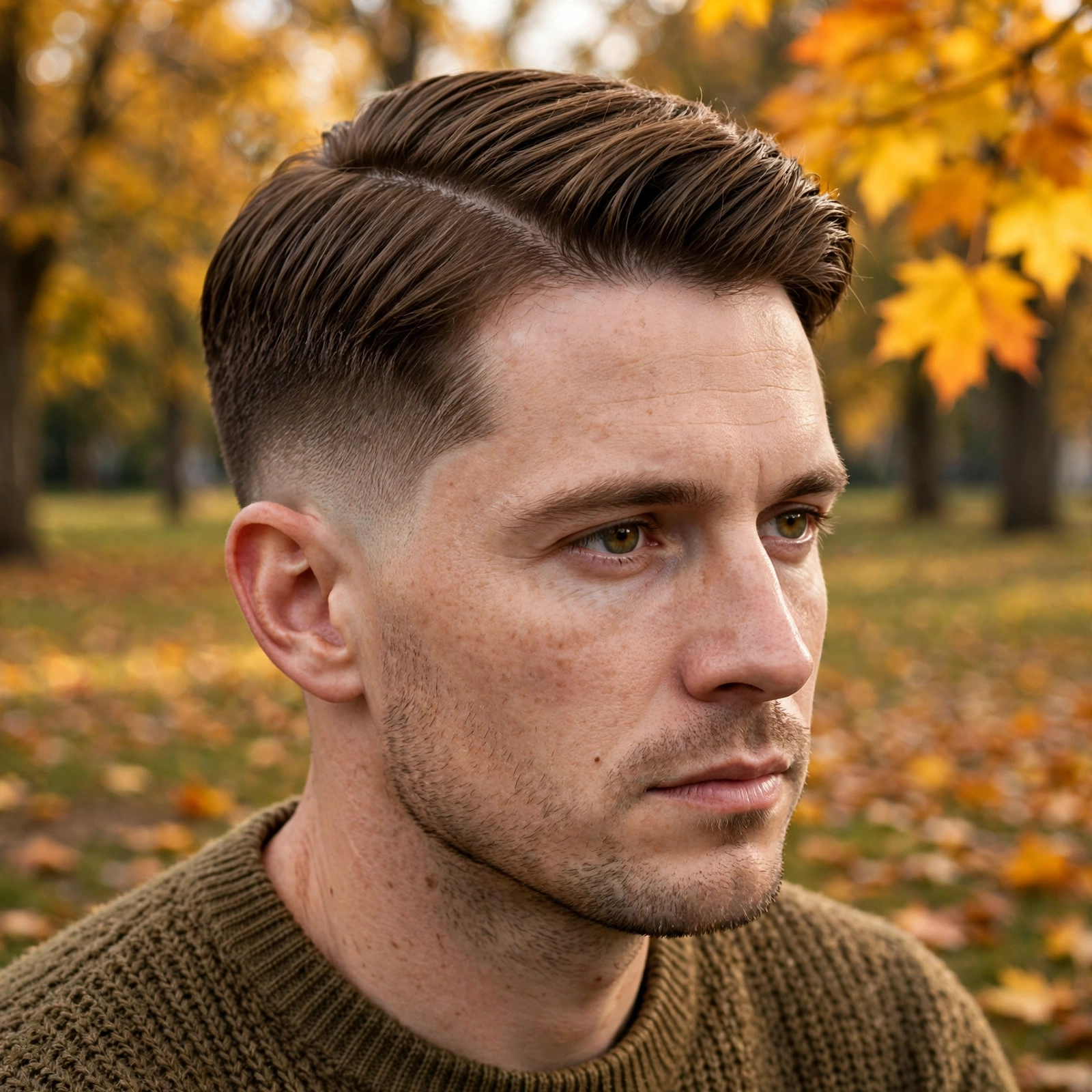
2. Classic Side Part with Taper
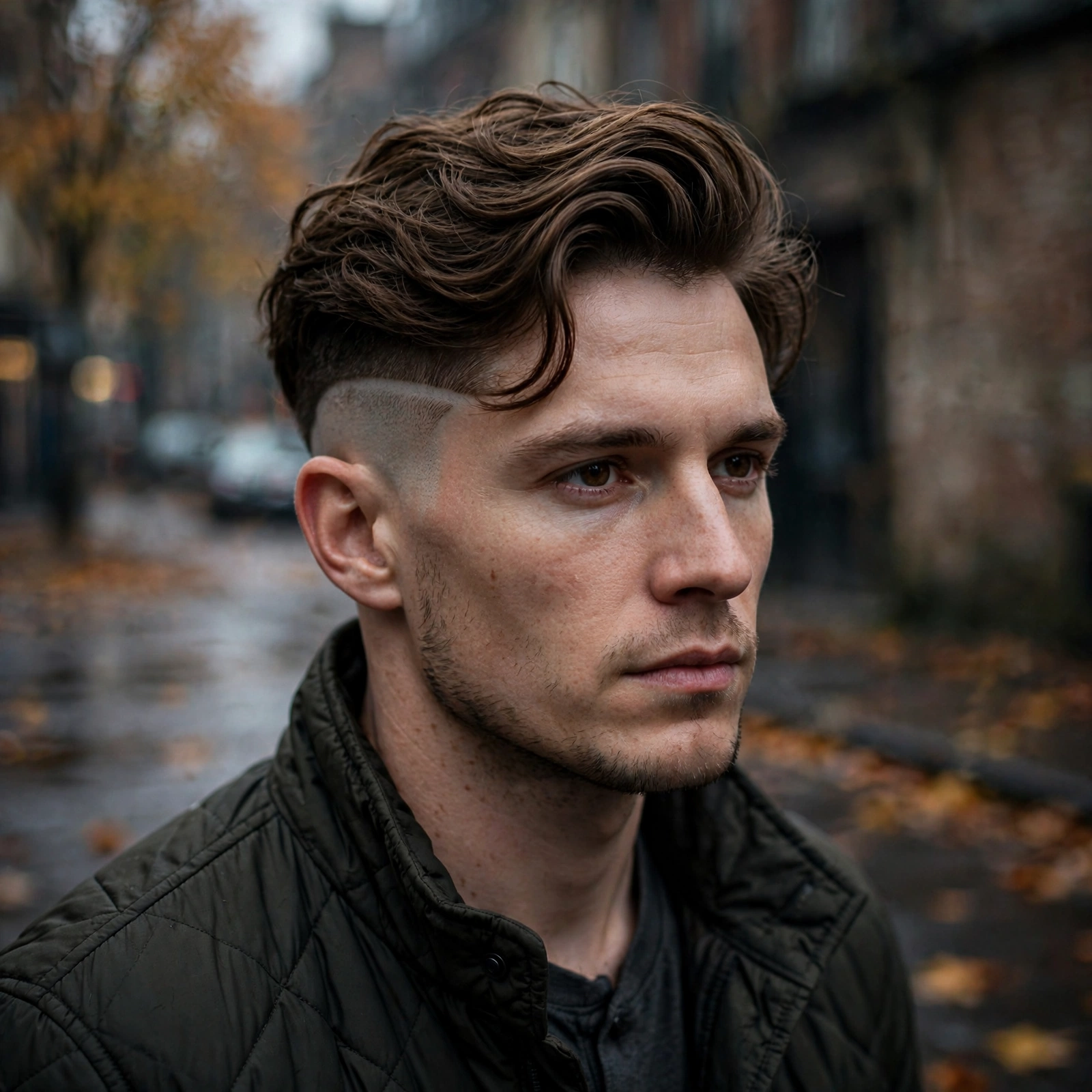
The cut that never goes out of style, updated for fall with a softer taper instead of a hard fade: two to three inches on top swept across the natural part, sides tapered for a clean neckline without aggressive contrast. It’s on every fall haircut trends list because it works everywhere — office, wedding, Saturday errands — never out of place. The 2026 update is the finish: natural, touchable texture instead of the shellacked shine of the Mad Men era.
How to get it: Tell your barber: “classic side part on my natural part, two to three inches on top with some texture, tapered sides and back — scissor finish, not a skin fade.” At home, work a dime-sized amount of light pomade or styling cream through damp hair, comb it into place along the part, and let it air-dry or hit it with a quick blast of the dryer for staying power.
Best for: Oval and square faces especially; straight to wavy hair; fine hair benefits from the swept-over coverage. Any length on top from two inches up.
Maintenance: Low. Three to five minutes in the morning; barber visits every 4–6 weeks — the taper grows out softly, so you can stretch it.
Pro tip: Find your natural part once and never fight it again: comb damp hair straight back, then push it forward — where it separates on its own is your part. Cutting against it guarantees a lifetime of morning battles.
%
%
3. Messy Quiff
Volume, texture, and just enough chaos: three to four inches on top styled up and back with deliberate separation, sides faded or tapered to keep the silhouette clean. It’s one of the defining autumn hairstyles for men in 2026 — height and personality that pairs spectacularly with chunky fall layers. A messy quiff under a wool overcoat is one of the best-dressed looks a man can pull off right now, and it earned our editors more compliments than any other cut we tested.
How to get it: Tell your barber: “keep three to four inches on top for a quiff, textured with point cutting, and a mid fade or taper on the sides.” At home, blow-dry the top upward and back with a vent brush for lift — this step is non-negotiable for real volume — then work a matte paste through with your fingers, lifting at the roots. Finish by pushing the front slightly up and back.
Best for: Thick or wavy hair (fine hair can work it with a good pre-styler); round and square faces benefit most from the added height; oval faces too. Needs at least three inches on top.
Maintenance: Medium. Five to eight minutes with a blow-dryer; barber visits every 3–4 weeks to keep the sides tight and the top shaped.
Pro tip: Apply product to towel-dried, not dripping-wet hair — too much water dilutes the hold and the quiff collapses by lunch. A sea salt spray as a pre-styler before blow-drying doubles the volume on finer hair.
%

%
4. French Crop with Skin Fade
Maximum impact, minimum effort: about an inch on top with a blunt fringe worn forward, sides dropped to a skin fade for sharp, graphic contrast. It earns its place among the top low-maintenance men’s cuts because the morning routine is essentially zero — a wash-and-go cut that still looks deliberate. The fringe flatters longer foreheads, and the skin fade’s contrast keeps it from reading plain. Edgy without being loud: the quiet-confidence pick.
How to get it: Tell your barber: “French crop, blunt fringe worn forward, skin fade on the sides and back.” At home, it’s almost nothing — a fingertip of matte clay worked through the fringe for a bit of definition if you want it. Otherwise, towel-dry and go.
Best for: Straight hair (the blunt fringe needs it); square and oval faces; men with strong jawlines; longer foreheads benefit from the fringe coverage. Works on any density.
Maintenance: Low daily, medium salon frequency. Under two minutes each morning — but the skin fade needs refreshing every 2–3 weeks to stay crisp, so this one demands barber discipline.
Pro tip: If your hairline is receding, tell your barber to keep the fringe slightly textured rather than ruler-straight — it disguises thinning at the temples far better than a blunt line. And American Crew Fiber gives this cut its ideal dry, matte separation.
%

%
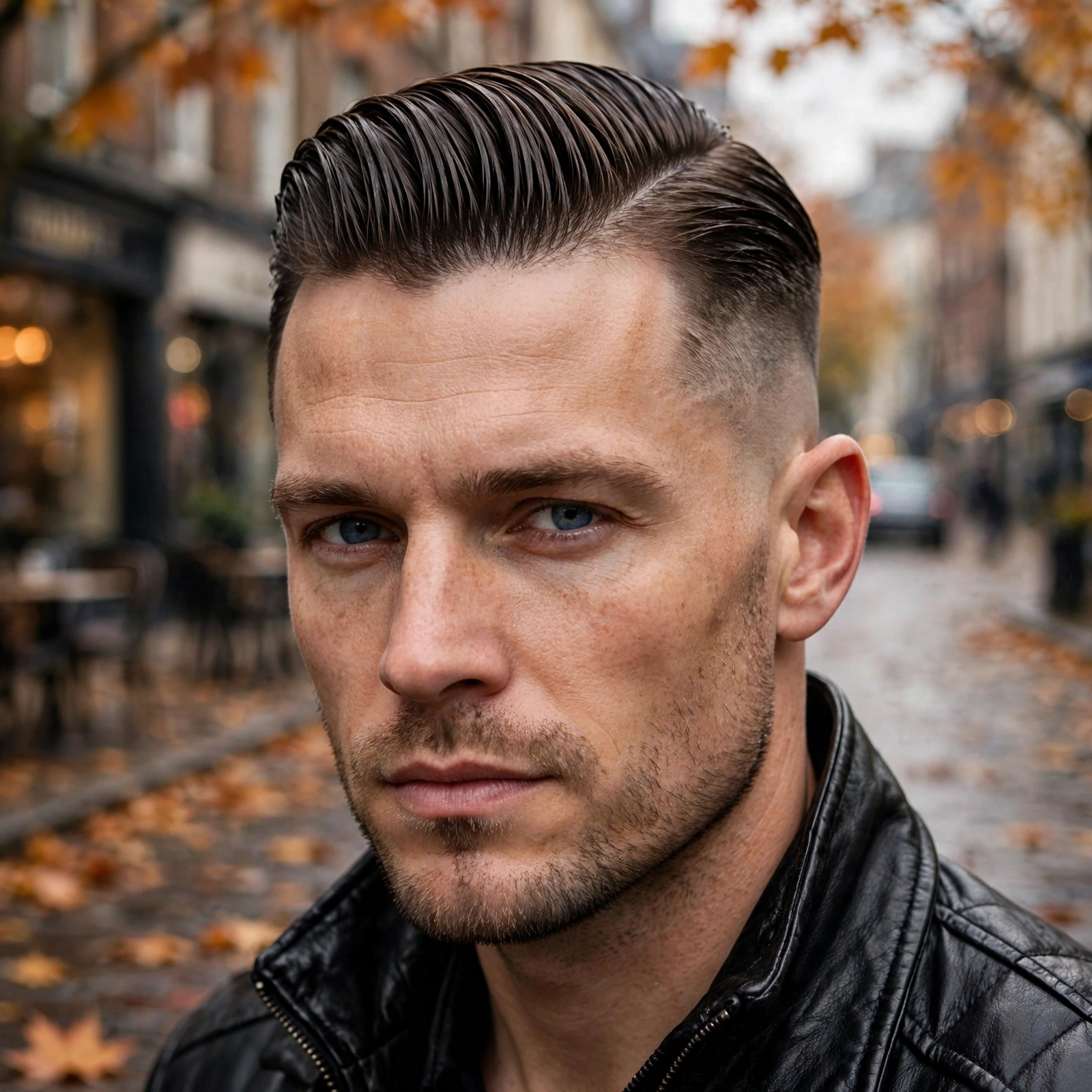
5. Slicked-Back Undercut
Bold and architectural: four to six inches on top swept straight back, sides clipped tight in a disconnected undercut with zero blending. It’s the power move of fall haircuts for men — unapologetic, clean, unbeatable with a long coat. When our editors tested it, the modern matte version (clay, not shiny pomade) read current rather than costume-y, and drew the most double-takes of any cut here.
How to get it: Tell your barber: “disconnected undercut — clip the sides short with no fade, and keep all the length on top, four to six inches.” For the classic finish, apply pomade to damp hair and comb straight back. For the 2026 matte version, work clay through towel-dried hair and sweep it back with your fingers for texture.
Best for: Thick, straight hair that can hold the weight on top; oval and square faces. Needs four-plus inches of length on top to work properly.
Maintenance: Medium. Five minutes to style; the undercut needs re-clipping every 3–4 weeks to maintain the sharp disconnect.
Pro tip: This cut lives or dies by the grow-out — once the sides pass about three weeks, the disconnect gets fuzzy and the whole thing loses its edge. Book your next appointment before you leave the chair. Baxter of California Clay Pomade nails the modern matte version.
%
%
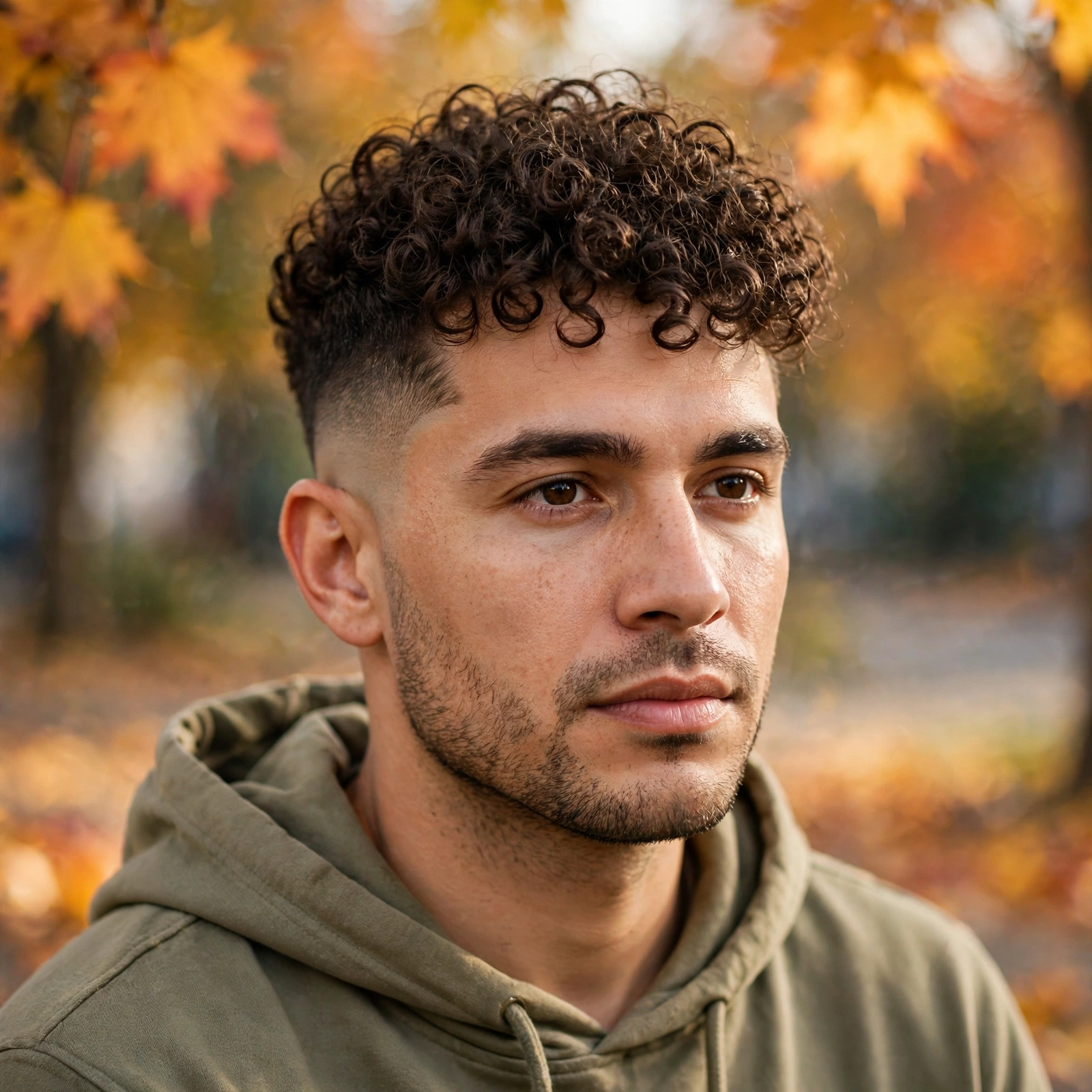
6. Curly Top with Low Fade
Let the curls do the talking: two to four inches on top for the natural curl pattern, a low fade keeping the sides tidy without stealing the show. It’s one of the smartest autumn hairstyles for men for curly hair — the low fade preserves the shape as it grows, and fall’s lower humidity means less frizz and better definition than summer allowed. Expressive but neat: texture up top, discipline on the sides, equally at home with streetwear or a blazer.
How to get it: Tell your barber: “low fade on the sides, keep the curls long on top — and please dry-cut the curls if you can.” Dry cutting matters: curls shrink when dry, so cutting them wet leads to surprises. At home, apply curl cream to damp hair, scrunch gently, and let it air-dry. Resist the urge to touch it while it dries — that’s what creates frizz.
Best for: Naturally curly, wavy, and coily hair; all face shapes — the barber shapes the top to yours. Needs at least two inches of curl length on top.
Maintenance: Low to medium. Minimal daily styling (cream and air-dry); trims every 4–5 weeks to maintain the shape and keep the fade clean.
Pro tip: Sleep on a satin or silk pillowcase — cotton roughs up curl cuticles overnight and you’ll wake up with half the definition. It’s the cheapest upgrade a curly-haired man can make, and it genuinely works.
%
%
7. Bro Flow
The medium-length classic that refuses to die: four to six inches flowing back naturally, light layering for movement, a cleaned-up neckline to keep it intentional. It’s the low-maintenance men’s cut for guys growing their hair out — the least styling of any longer cut here, and better slightly imperfect. Relaxed confidence: flannels, denim, boots. Fall is its best season — it sits beautifully under beanies and looks even better with a scarf.
How to get it: Tell your barber: “grown-out flow, four to six inches, light layers for movement, clean up the neckline and around the ears — but don’t take length.” At home, work a little sea salt spray through damp hair and let it air-dry, pushing it back with your fingers. That’s the whole routine.
Best for: Straight to wavy hair with medium thickness; oval and oblong faces; anyone in the grow-out phase who wants to look deliberate, not neglected.
Maintenance: Low. Two to three minutes; barber visits every 6–8 weeks just for shape and neckline cleanup. The most forgiving grow-out on this list.
Pro tip: The difference between “bro flow” and “needs a haircut” is the neckline — keep the nape and around the ears clean between appointments and the length reads intentional. A quick barber neckline cleanup (often free) every three weeks does it.
%

%
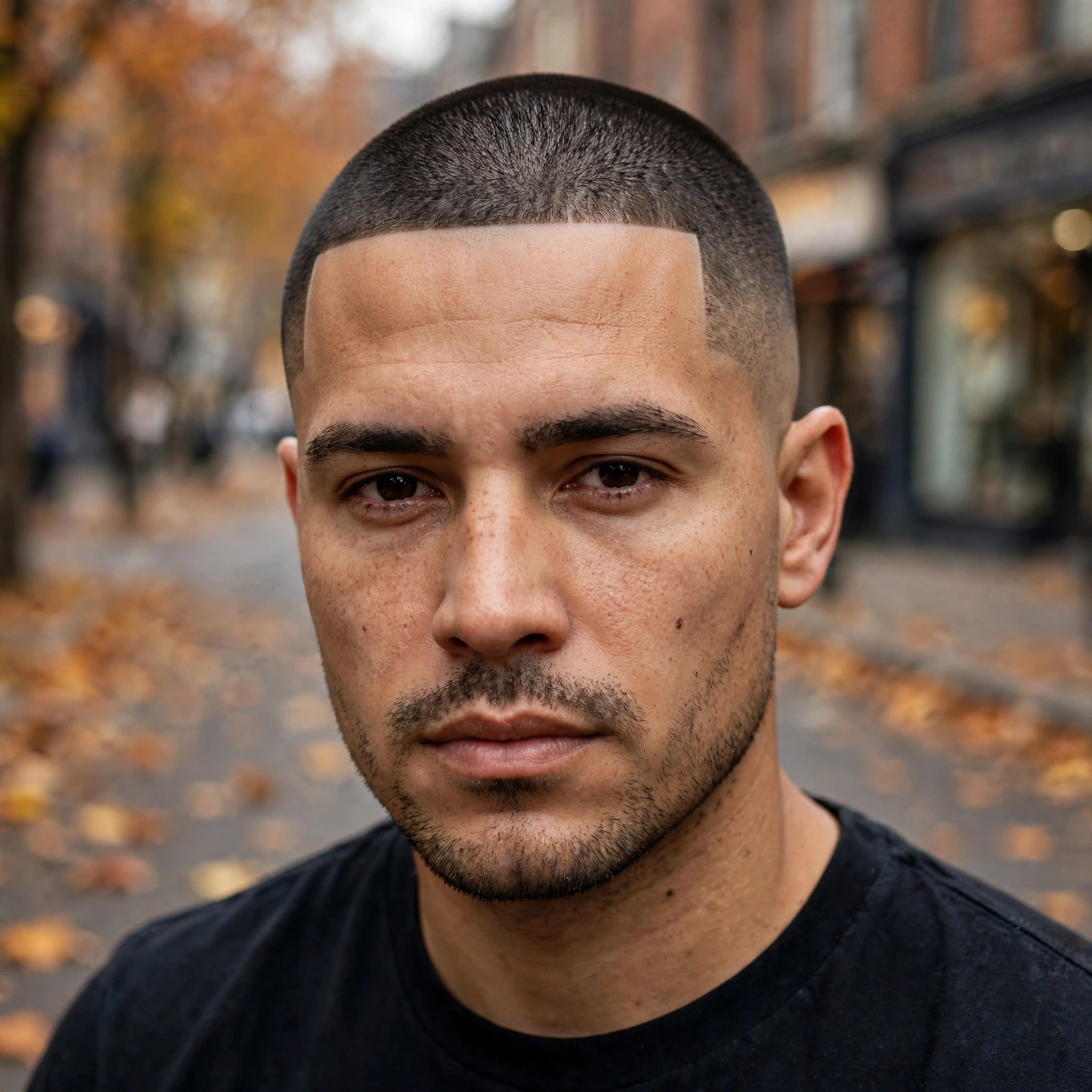
8. Buzz Cut with Line-Up
The ultimate low-maintenance power move: one even length all over (a #2 or #3 guard), sharpened with a crisp line-up at the forehead and temples. Zero styling, zero product, zero bad hair days — and the line-up is what elevates it from “I gave up” to “I chose this,” framing the face with architectural precision. It looks fantastic with fall outerwear; a clean buzz under a wool coat just works.
How to get it: Tell your barber: “buzz cut, number 2 (or 3 for a touch more length), all over — with a sharp line-up at the forehead and temples.” At home, there’s no styling — but do moisturize your scalp, because fall’s dry air plus short hair means flaking shows fast.
Best for: Strong bone structure and defined jawlines (there’s nothing to hide behind); any hair type or texture; men with a good head shape — ask your barber honestly if you’re unsure.
Maintenance: Very low daily, medium salon frequency. Zero morning time — but the line-up needs touching up every 2 weeks to stay sharp. Many barbershops offer cheap line-up-only visits.
Pro tip: In fall and winter, switch to a gentle exfoliating scalp scrub once a week — dry air causes buildup that shows immediately on a buzz. And wear sunscreen on your scalp if you’re outdoors; newly exposed skin burns fast.
%
%
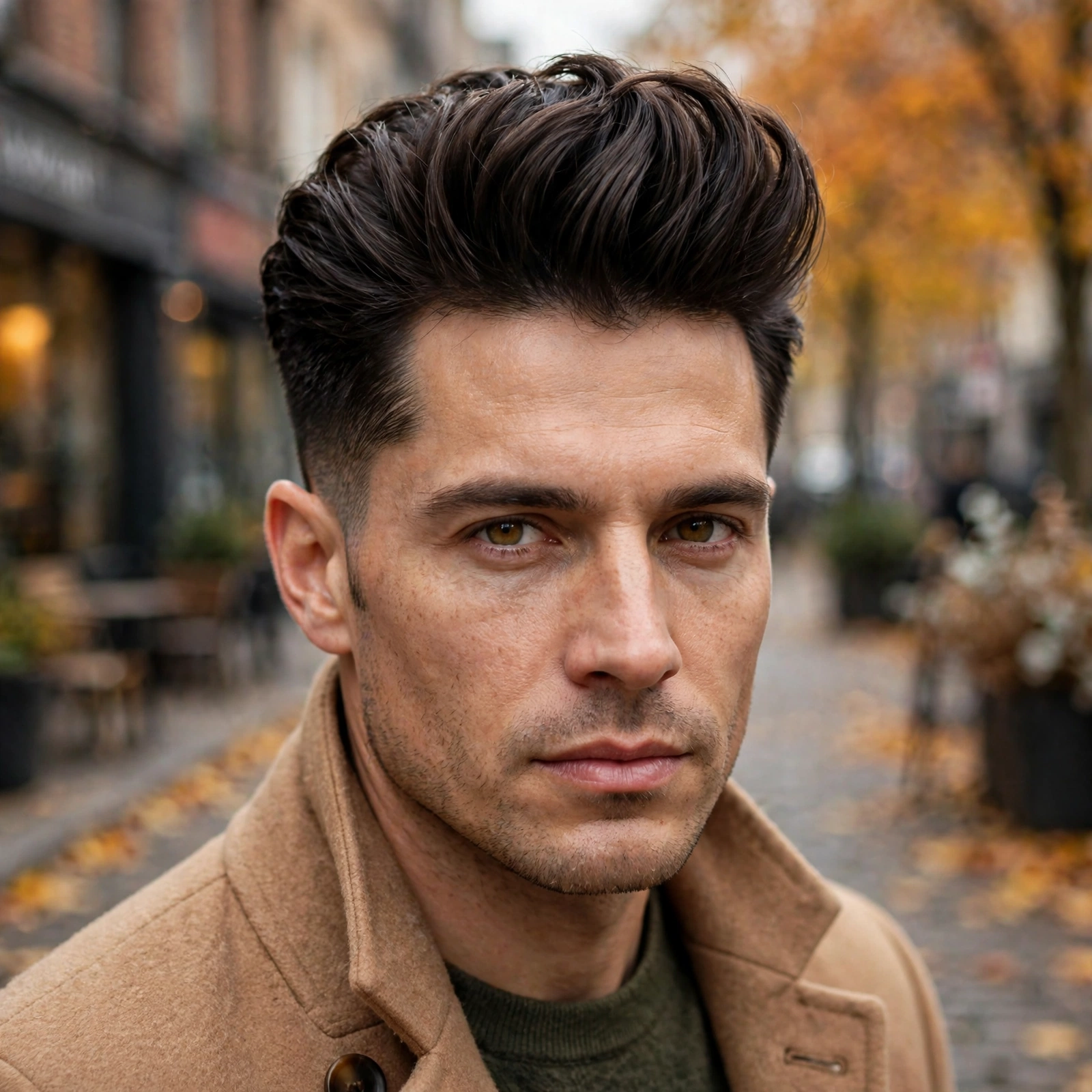
9. Pompadour with Tapered Sides
Vintage volume, modern execution: three to five inches up front swept up and back, sides tapered rather than harshly faded so it stays wearable and office-appropriate. The pompadour earns its spot among fall haircut trends because autumn is event season — weddings, holiday parties, dinners that matter. It’s the dressiest cut here, and it photographs beautifully, which matters in the age of the group photo.
How to get it: Tell your barber: “modern pompadour, tapered sides — not a skin fade — with texture left on top for styling.” At home, blow-dry the front upward and back with a round brush to build the volume foundation, then work a medium-hold pomade through and shape the pomp with your fingers or a comb. The blow-dry is the step most men skip, and it’s the step that makes it last all day.
Best for: Round and square faces (the height elongates and flatters); thick, straight to wavy hair that can hold volume; needs three-plus inches up front.
Maintenance: Medium to high. Ten minutes with a blow-dryer each morning; barber visits every 3–4 weeks to keep the taper and the front length balanced.
Pro tip: Build the pomp in two passes: a light first layer of product for structure, blow-dry, then a second small amount for finish and shine. One heavy application just weighs it down — layering is what gives it all-day height.
%
%
10. Ivy League
The thinking man’s cut: essentially a longer crew cut — about an inch on top, tapered sides — neat enough for the most conservative office, short enough to need no styling. It’s the safest and arguably smartest choice here, working with every outfit precisely because it never competes with one. Among autumn hairstyles for men, it’s the quiet professional: no trend-chasing, no morning drama, just a clean shape that looks like you have your life together.
How to get it: Tell your barber: “Ivy League — about an inch on top, tapered sides and back, enough length up front to side-part if I want to.” At home, work a tiny amount of styling cream through dry hair and push it into place. Some mornings you won’t even need the cream.
Best for: Universally flattering — genuinely every face shape and hair type. The single best choice for conservative workplaces and for men trying a new barber for the first time.
Maintenance: Low. One to two minutes; barber visits every 3–4 weeks to keep the shape crisp. Grows out tidily if you stretch it.
Pro tip: This is the ideal “audition” cut for a new barber — it’s technically simple, so the result tells you everything about their scissor control and attention to detail before you trust them with something harder.
%

%
11. Faux Hawk with Textured Top
Edge without the commitment: a longer, textured center strip styled upward, sides faded — not shaved — for a wearable take on the mohawk. It’s one of the bolder fall haircut trends for 2026, and the fade (rather than bare skin) keeps it in “creative professional” territory. Confident and a little rebellious with leather jackets and boots — and the dramatic height is genuinely flattering, not just a statement for its own sake.
How to get it: Tell your barber: “faux hawk — keep the center strip long and textured, mid fade on the sides, but keep it wearable, not extreme.” At home, work a strong matte clay through the center section and push it upward with your fingers, letting the texture stay piece-y. The sides need nothing.
Best for: Thick, straight hair that can hold the lift; round faces benefit most from the dramatic height; oval faces too. Needs two to three inches in the center strip.
Maintenance: Medium. Three to five minutes of styling; the fade needs refreshing every 3–4 weeks to keep the contrast that makes the cut work.
Pro tip: The wearability secret is the fade height — a mid fade reads modern and intentional, while taking it too high tips into costume. When in doubt, tell your barber to start conservative; you can always go higher next time.
%

%
12. Long Fringe with Faded Sides
Fashion-forward and face-framing: a two-to-three-inch fringe over the forehead — textured and piece-y, never blunt — with faded sides for contrast. It’s one of 2026’s defining youth-driven men’s fall haircuts, all over runways and street style. Creative, current, and it photographs incredibly well — our editors found it draws the most attention of any cut here, which is either the point or the reason to skip it.
How to get it: Tell your barber: “long textured fringe — two to three inches, piece-y, worn forward — with faded sides for contrast.” At home, work a small amount of paste through the fringe with your fingers, pushing it forward and separating the pieces. A quick blast with the dryer, fringe forward, sets the direction.
Best for: Oval and oblong faces especially (the fringe shortens a longer face beautifully); straight to wavy hair; medium thickness. Younger faces and fashion-forward dressers.
Maintenance: Medium. Three to five minutes; the fringe needs trimming every 3–4 weeks so it frames the face rather than covering it.
Pro tip: Ask for the fringe to be point-cut, never blunt-cut straight across — blunt fringe on men reads wig-like, while point-cut texture is what makes this look expensive. It’s a one-word difference at the barber that changes everything.
%

%
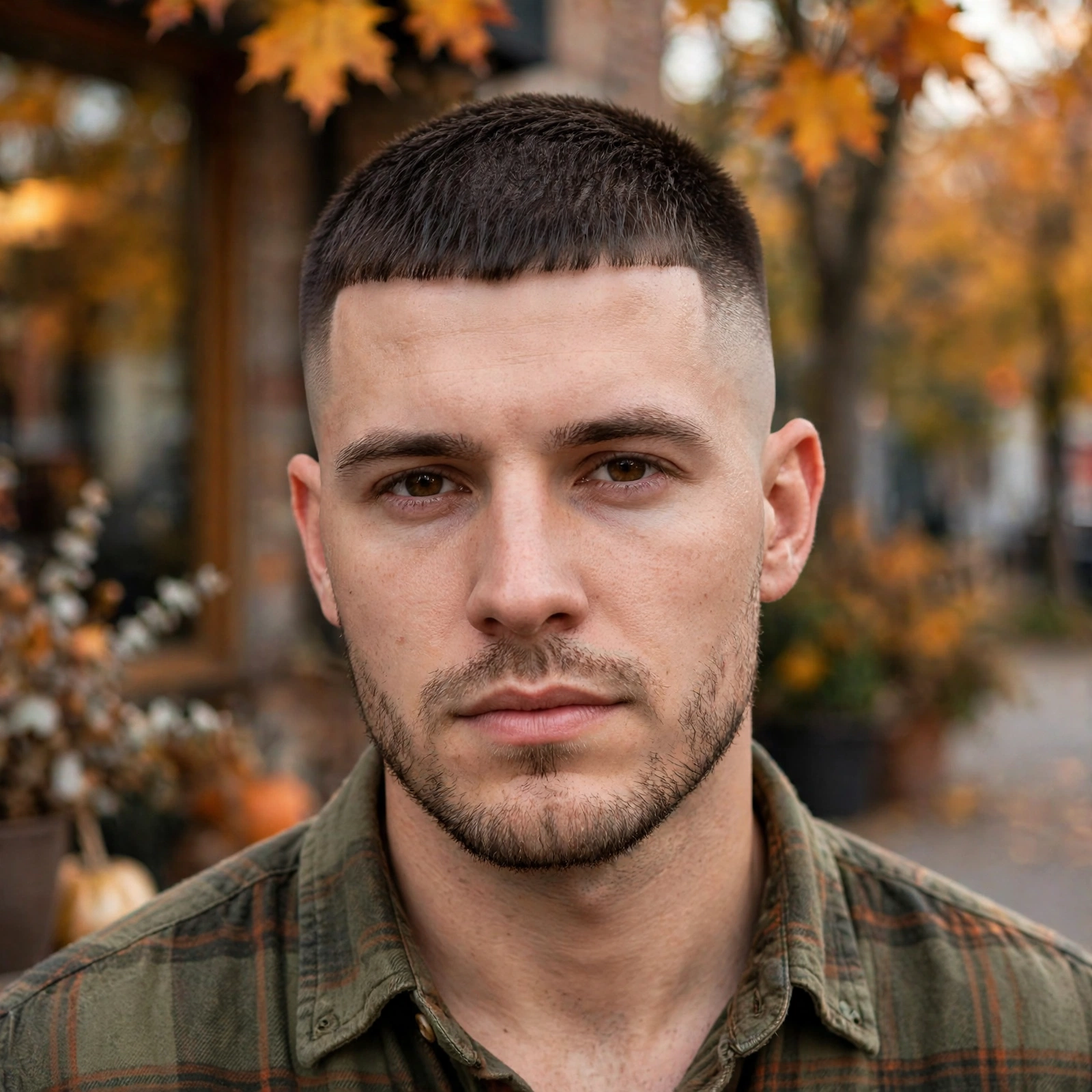
13. Caesar Cut with High Fade
Short, sharp, and graphic: the classic Caesar — short all over with a straight horizontal fringe — lifted into 2026 by a high fade on the sides. A genuine low-maintenance men’s cut: wash-and-go, almost zero styling, yet intentional rather than neglected. The high fade is the crucial update — without it the Caesar reads dated; with it, crisp and current. Excellent for active lifestyles, since there’s nothing to restyle after a workout.
How to get it: Tell your barber: “Caesar cut — short all over with a straight fringe — with a high fade on the sides.” At home, there’s barely a routine: towel-dry, and if you want a touch of definition, work a fingertip of matte clay forward through the fringe.
Best for: Straight hair; square and oval faces; men with strong hairlines (the fringe draws the eye to the forehead). Great for fine hair — the short, even length creates density.
Maintenance: Low daily, medium salon frequency. Under a minute each morning — but the high fade needs refreshing every 2–3 weeks to keep the graphic contrast.
Pro tip: The fringe line is everything on this cut — ask your barber to cut it dry at the end of the appointment for a truly straight line. Wet-cut fringes shrink up unevenly as they dry.
%
%
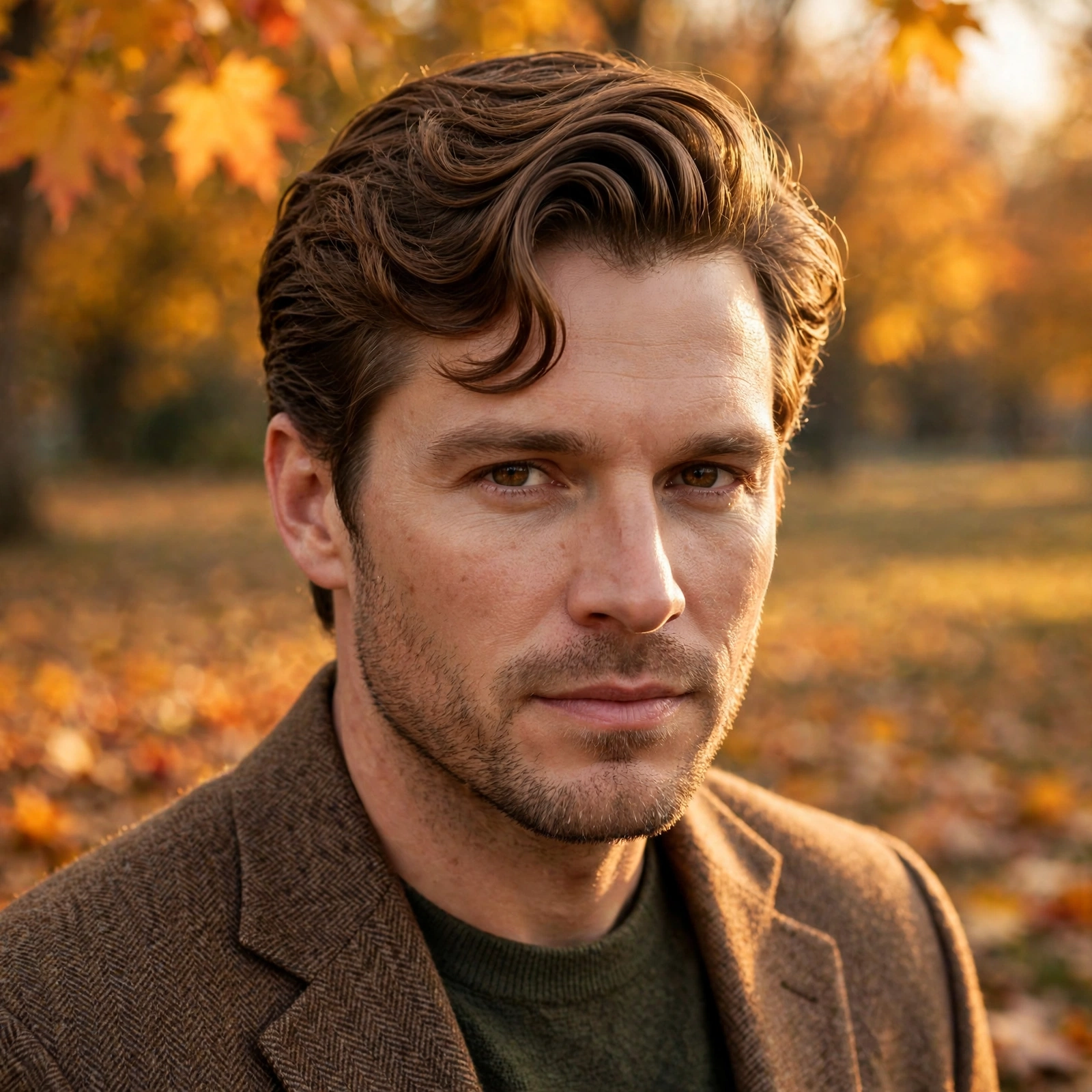
14. Wavy Comb-Over
Old-school shape, new-school texture: hair parted and swept across with the natural wave left intact — not flattened, not fought — tapered sides keeping the silhouette clean. It’s the cut that finally lets wavy hair be the feature, one of the most satisfying autumn hairstyles for men for guys with natural wave. Elegant and mature with fall tailoring — tweed, flannel suits, knit ties. Professorial in the best way.
How to get it: Tell your barber: “comb-over but keep the wave — don’t thin it out — with tapered sides.” Emphasize that you want the texture preserved. At home, work a light styling cream through damp hair to enhance the wave without flattening it, sweep it across your part, and let it air-dry.
Best for: Naturally wavy hair (this cut exists for you); oval, square, and oblong faces; medium thickness. Needs two to three inches on top.
Maintenance: Low. Three minutes with cream; barber visits every 4–5 weeks. One of the most forgiving cuts here as it grows.
Pro tip: Never brush wavy hair dry — it breaks the wave pattern into frizz. Finger-comb or use a wide-tooth comb on damp hair only. This single habit change transforms how this cut looks between appointments.
%
%
15. Disconnected Undercut
Maximum contrast, all attitude: four-plus inches on top with a hard disconnect — zero blending — to tightly clipped sides. The boldest fall haircut for men here: not for every office, but unbeatable for making an entrance. The surprise is versatility — the long top styles back, to the side, or up, so one cut gives three looks. It demands confidence and thick hair; if you’ve got both, nothing else here touches its presence.
How to get it: Tell your barber: “disconnected undercut — hard line, no blending between the top and the sides — keep four-plus inches on top.” A hard part line is optional but adds to the graphic effect. At home, style the top back with pomade for the classic look, to the side with cream for something softer, or up with clay for texture.
Best for: Thick hair (the weight on top needs density to work); oval and square faces; men with the confidence and the wardrobe to carry a statement cut.
Maintenance: Medium to high. Five to ten minutes depending on the styling variation; the sides need re-clipping every 2–3 weeks to keep the disconnect razor-sharp.
Pro tip: Grow the top out before you get the sides disconnected — barbers can’t create length that isn’t there, and getting the undercut too early in the grow-out leaves you in an awkward phase. Patience first, drama second.
%
%
Fall Haircuts for Men: FAQs
How do I grow out a short summer cut into a longer fall style without looking messy?
Use bridge cuts, not suffering. Growing a buzz or crop into a textured crop or quiff? Book a “shape-up” every three to four weeks — the barber cleans only the sides, neckline, and edges while the top grows untouched. For the bro flow (#7), regular neckline cleanups are the difference between “growing it out” and “gave up.” And lean on product in transition: extra clay or paste disguises uneven lengths better than anything else. For what actually helps hair grow, Healthline’s guide to growing hair faster for men separates the facts from the myths.
Which of these haircuts actually survive beanie season?
Short, structured tops win hat season: the textured crop (#1), French crop (#4), Caesar (#13), and buzz cut (#8) all survive a beanie. Anything with height — quiffs, pompadours, faux hawks — gets crushed; low-profile cuts don’t. Two more tricks: choose beanies with a smooth lining to cut frizz and static, and when the hat comes off, flip your head forward and shake once to restore volume. Committed to a tall cut? Carry a travel-size clay for a thirty-second restyle.
I have a stubborn cowlick — which fall haircuts work with it instead of against it?
Work with the cowlick’s direction, never against it. Textured, forward-moving cuts — the textured crop (#1), French crop (#4), long fringe (#12) — absorb a front cowlick naturally. For a crown cowlick, go shorter (buzz, Caesar, Ivy League): less length, less misbehavior. Avoid slicked-back styles and precise side parts, which fight the cowlick every morning and lose. And tell your barber upfront — leaving a touch of extra weight over a cowlick is the professional fix most men never ask for.
How can I blend grey hair without committing to full dye?
Skip the all-over color job. The lowest-commitment move is a demi-permanent “camouflage” color — most barbershops offer it, it takes ten minutes, blends grey instead of covering it, and fades over four to six weeks with no harsh line. It looks especially natural with the textured, matte cuts here (#1, #3, #11). If you’re grey at the temples, ask for a slightly softer fade there — harsh skin fades spotlight regrowth. And never go darker than your natural color; matching it is what keeps it believable.
How often should I really get a trim in the fall?
It depends on the cut. Skin fades, high fades, and line-ups (#4, #8, #13): every 2–3 weeks — the contrast is the whole cut and it goes fuzzy fast. Mid fades and tapers (#1, #2, #3, #9, #10): every 3–5 weeks; they grow out gracefully, so stretching is fine. Scissor cuts and longer styles (#7, #14): every 6–8 weeks. The real sign you’re overdue isn’t the calendar — it’s the neckline and the blend. And book your next appointment before you leave the chair: the men with the best hair aren’t luckier, they’re just scheduled.
The Bottom Line
The best fall haircuts for men aren’t the most dramatic ones — they’re the cuts that work with your texture, survive your real mornings, and hold their own against a heavy coat. Pick one cut and give it a genuine two-week trial before judging it; most great haircuts look even better once you’ve learned the thirty-second styling routine. If you want a longer-top option beyond these 15, our two-block haircuts for men guide is a good next read. Happy fall, and happy hair days ahead.