
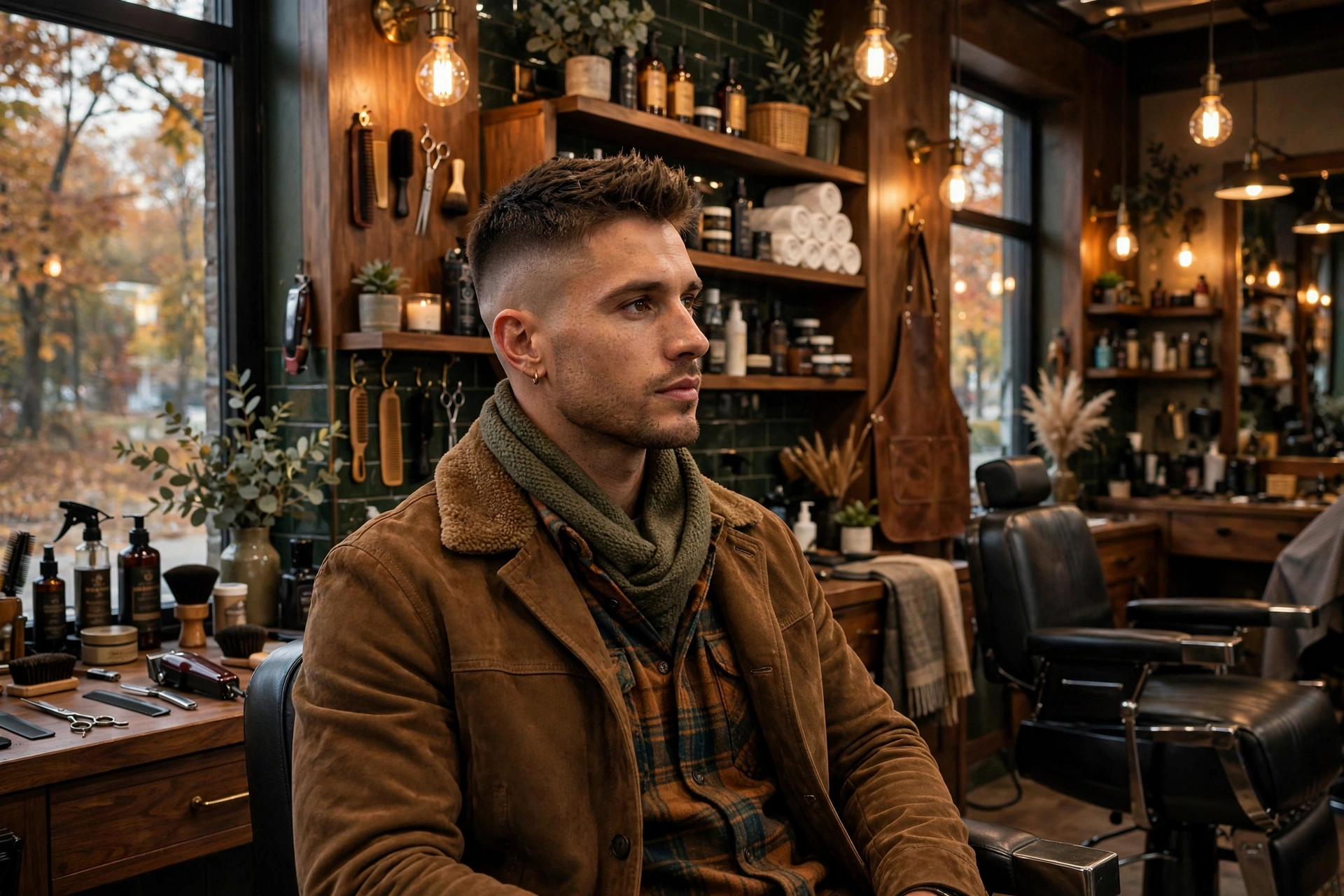
12 Fall Fade Haircuts for Men (2026 Styles)
The best fall fade haircuts for men in 2026 are the mid skin fade with textured top, the low taper with a side part, and the high fade with curly top — because they pair razor-clean edges with tops that actually suit cooler weather. Barbers quietly call autumn “fade season”: cooler air keeps your blend crisp longer (sweat is the enemy of a fresh fade), beanies sit better over tapered sides than bulky ones, and the structured look pairs perfectly with every layer you own from October through December.
Here’s what most men get wrong: “fade” is not one haircut. It’s a whole language, and the vocabulary is the difference between walking out with exactly what you pictured and living with a surprise for three weeks. A fade is simply hair graduating from short to shorter down the sides and back. The variables are where the blend starts (low, mid, high), how short it goes (taper, fade, skin fade), and what happens on top (crop, quiff, curls, slick-back). Learn the vocabulary in this guide and you’ll never miscommunicate at the chair again.
The autumn fade styles dominating 2026 share one direction: blend quality over drama. The best barbers are celebrated for seamless, buttery transitions rather than harsh lines — a fade should melt, not step. Mid fade trends lead because they suit the most faces and grow out gracefully, while skin fades remain the pick for maximum sharpness. Texture on top is now non-negotiable: the flat, helmet-like top is officially over, and choppy, lived-in tops are what separate a 2026 fade from a 2019 one.
Fall is also the most forgiving season for a fade’s biggest weakness: the grow-out. Summer humidity breaks down crisp lines fast; autumn’s drier air preserves the blend, so you can genuinely stretch a mid fade to four weeks and a taper to six. That’s real money saved — and it’s why this is the smartest time of year to commit to a cut that needs regular upkeep.
What makes this guide different: every cut below comes with the full picture — what it is and why it’s trending, exactly how to get it (the words for your barber, guard numbers and all), who it flatters, an honest maintenance schedule, and a pro tip from behind the chair. Our editors wore these cuts through the season and had working barbers sanity-check the numbers. Here are the 12 men’s fade haircuts 2026 is defined by.
Table of Contents
- Mid Skin Fade with Textured Top
- Low Taper Fade with Side Part
- High Fade with Curly Top
- Drop Fade with Quiff
- Burst Fade with Mohawk Shape
- Temple Fade with Short Crop
- Bald Fade with Pompadour
- Shadow Fade with Brushed-Forward Top
- Low Fade with Long Fringe
- Mid Fade with Slick-Back
- Skin Fade with French Crop
- Taper Fade with Wavy Top
Editor’s Top 5 Fall Fade Picks
Short on time? These five fall fade haircuts for men have the highest style-to-upkeep ratio on the list — the ones our editors keep recommending.
1. Mid Skin Fade with Textured Top
The modern standard. The mid fade is the sweet spot of the low/mid/high fade trends — noticeable and sharp without being aggressive — and the textured top makes it the defining silhouette of 2026.
2. Low Taper Fade with Side Part
The gentleman’s fade: all the craft of a great blend with none of the statement. Perfect for conservative offices, and it has the most forgiving grow-out on this list — the smartest pick if you’re maintenance-shy.
3. High Fade with Curly Top
Maximum contrast, maximum personality. Tight high sides turn natural curls into the star of the show, and the height genuinely flatters rounder faces. If you’ve got the curls, this cut was made for them.
4. Drop Fade with Quiff
The connoisseur’s pick. The drop fade’s arc is a subtle flex most people can’t name but everyone notices. Paired with a quiff, it’s the most “barber’s barber” cut here.
5. Burst Fade with Mohawk Shape
Edgy but wearable — the boldest energy on the list. The burst fade frames a textured strip without the commitment of shaved sides, so it reads confident rather than costume.
Fade Types Explained: Low, Mid, High, Taper, and Skin
A great fade comes down to three things: blend, placement, and how short it goes. Blend is everything — the transition from skin to short to longer should be seamless, with no visible lines or steps. This is pure barber skill and why a great fade costs more than a basic clipper cut. Before committing to a new barber, check their fade work in a portfolio: if every blend looks crisp and line-free, you’re in good hands.
Placement gives the cut its personality. A low fade starts just above the ear — subtle and conservative, the blend reads as a detail. A mid fade starts around the temple — balanced and modern, which is why mid fades dominate the low/mid/high fade trends of 2026. A high fade climbs toward the crown — bold, with the fade as a major design element. Placement is the single biggest decision you’ll make; discuss it with your barber before the clippers come out.
How short it goes determines the grow-out math. A taper fade never reaches skin and grows out almost invisibly over five to six weeks. A standard fade goes shorter but stops above bald. A skin (bald) fade blends to bare skin for maximum contrast — incredible for two weeks, then needing a touch-up every two to three. Honest advice: pick the shortest version you’ll actually maintain. A skin fade stretched to six weeks looks worse than a taper kept fresh, every time.
Worth knowing: the drop fade arcs downward behind the ear following the skull’s curve; the burst fade curves around the ear in a semicircle with a longer neckline; the temple fade concentrates the blend at the temples; and the shadow fade is the softest skin fade — so gradual it reads as a shadow, not a line. These names let you describe precisely what you want instead of pointing at a photo and hoping.
How to Choose the Right Fall Fade for You
Start with face shape. Round faces need height and angles — high fades, quiffs, anything with vertical lift elongates. Square faces suit most fades but want some top volume to balance a strong jaw. Oval faces have full freedom, including the boldest high skin fades. Longer faces should favor low and mid fades — a high fade plus height on top stretches the face further.
Hair type determines what the top can honestly do. Thick hair supports dramatic tops (quiffs, pompadours) because there’s density to hold shape. Fine hair does better with shorter, blunter tops like crops, where the fade provides the visual interest. Curly and coily hair pairs spectacularly with fades — tight sides against a free top is one of barbering’s best looks, and it needs less daily effort than you’d expect.
Then filter by lifestyle, because a fade is a commitment. Skin and high fades read bold — great for creative fields, tougher for conservative offices — and need the chair every two to three weeks. Low tapers and mid fades are the professional’s choice with more time between visits. Faded sides are beanie-season gold, since there’s less hair to flatten. And be honest about your mornings: a pompadour needs a blow-dryer and ten minutes daily; a French crop needs thirty seconds.
Finally, find the right barber and stay loyal — it matters more for fades than almost any other cut. A barber who knows your head shape, growth patterns, and cowlicks beats a stranger reading a photo every time. Bring reference photos, use this guide’s vocabulary, and give feedback after the cut. The best fade is a relationship, not a transaction.
12 Fall Fade Haircuts for Men (2026 Styles)
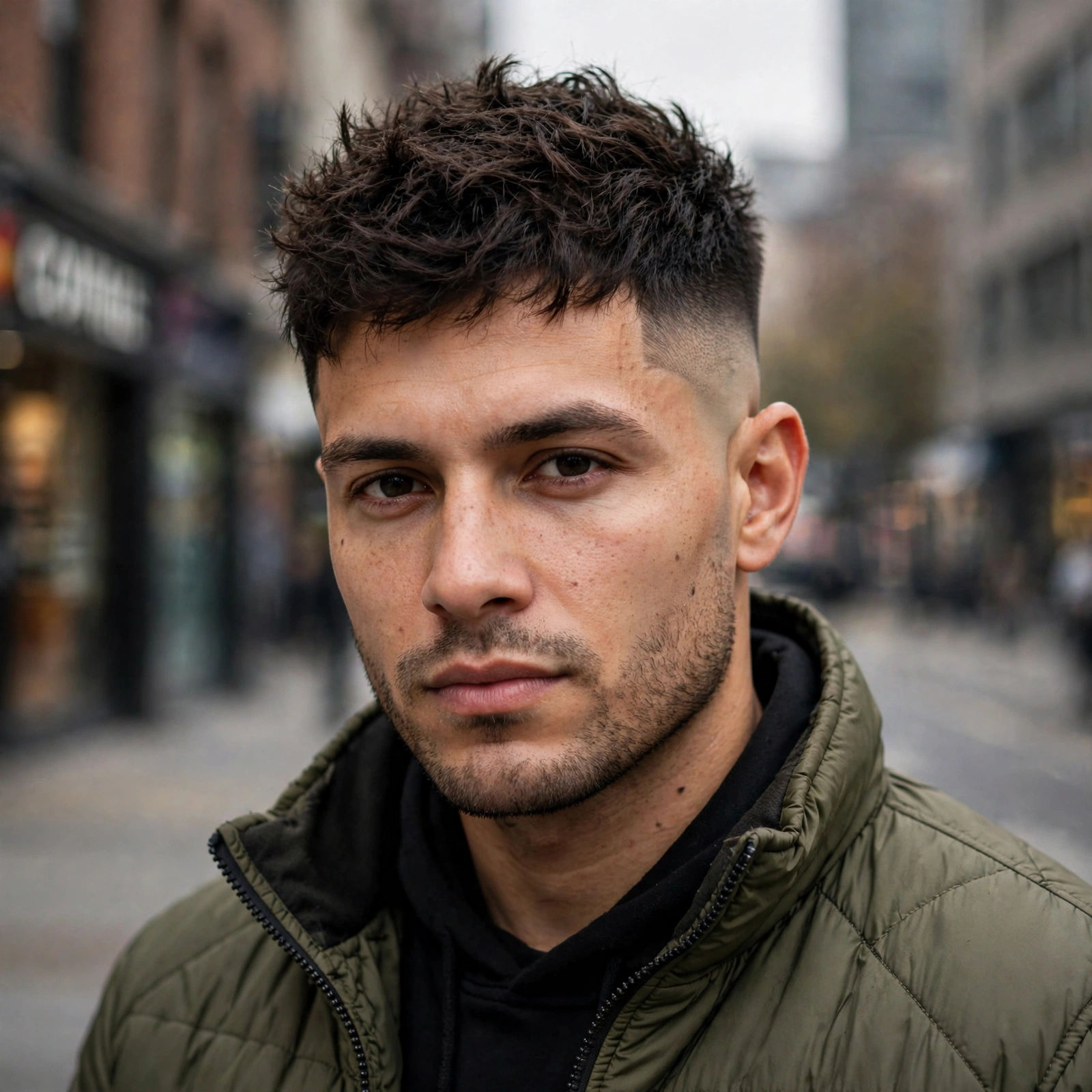
1. Mid Skin Fade with Textured Top
The cut that defines 2026. The sides melt from bare skin at the temple into one to two inches of choppy, point-cut texture with a soft natural fringe. It’s trending because it nails the season’s sweet spot: sharp from every angle, yet the textured top keeps it from reading stiff. The vibe is confident everyday polish — as right under a peacoat at the office as with a flannel on the weekend.
How to get it: Say “mid skin fade, textured top, natural fringe.” Ask for the fade to start at the temple and blend to skin, with the top at 1.5–2 inches point-cut for texture, not cut blunt. At home, work matte clay through dry hair and push the top forward with your fingers — messier is better.
Best for: Oval, square, and heart-shaped faces; straight to wavy hair with medium density; men who want one cut for workdays, dates, and weekends.
Maintenance: Medium. Two minutes each morning; the skin blend needs a touch-up every 3 weeks, stretchable to 4.
Pro tip: Apply clay to completely dry hair, not damp — on damp hair it goes shiny and heavy, on dry hair it gives the piece-y separation that makes texture pop. Our editors found American Crew Fiber the most reliable matte finish for this cut.
%
%
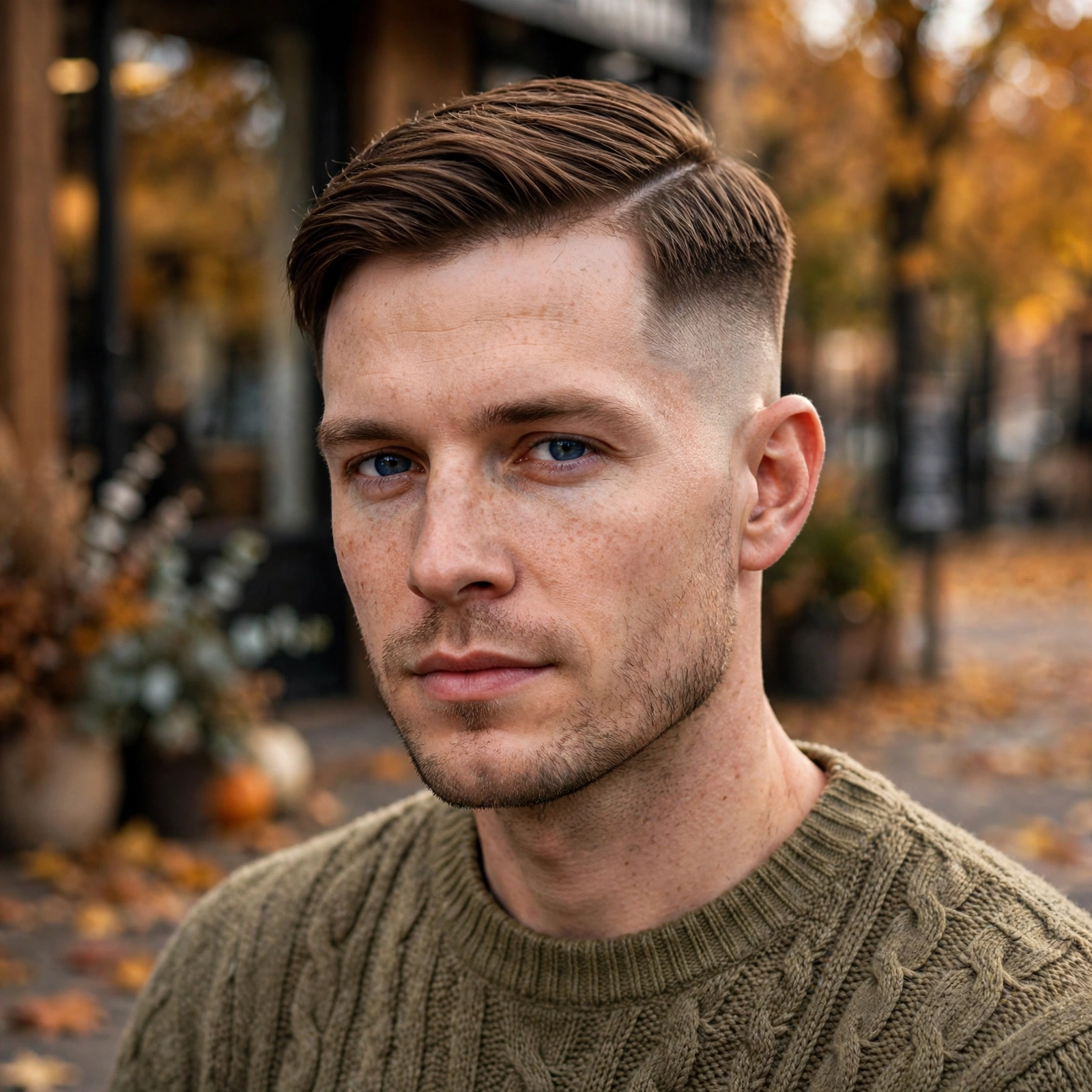
2. Low Taper Fade with Side Part
Understated excellence — the fade for men who want the technique without the statement. The taper stays low and subtle, never reaching skin, while the top carries a neat side part at two to three inches. It’s a quiet star of the autumn fade styles for 2026 because it bridges generations: timeless and refined, never try-hard. The vibe is old-money polish — boardrooms, weddings, client dinners. It’s also the cut that earns the most “did you do something different?” comments, because it reads as an upgrade, not a transformation.
How to get it: Say “low taper, side part, scissor finish on top.” Keep the taper tight to the ear and neckline with no skin showing; have the top cut with scissors for a softer finish. At home, part damp hair on your natural line, comb through, and finish with a little pomade for definition.
Best for: Oval and square faces; straight to slightly wavy hair; conservative workplaces; men growing out of a bolder fade.
Maintenance: Low. Three minutes with a comb each morning; 5–6 weeks between barber visits — the longest stretch on this list.
Pro tip: Find your natural part before you sit in the chair — it’s where wet hair falls when combed back. Fighting it is a daily battle you’ll lose; working with it means the style falls into place. Baxter of California Clay Pomade gives the part definition without a wet look.
%
%
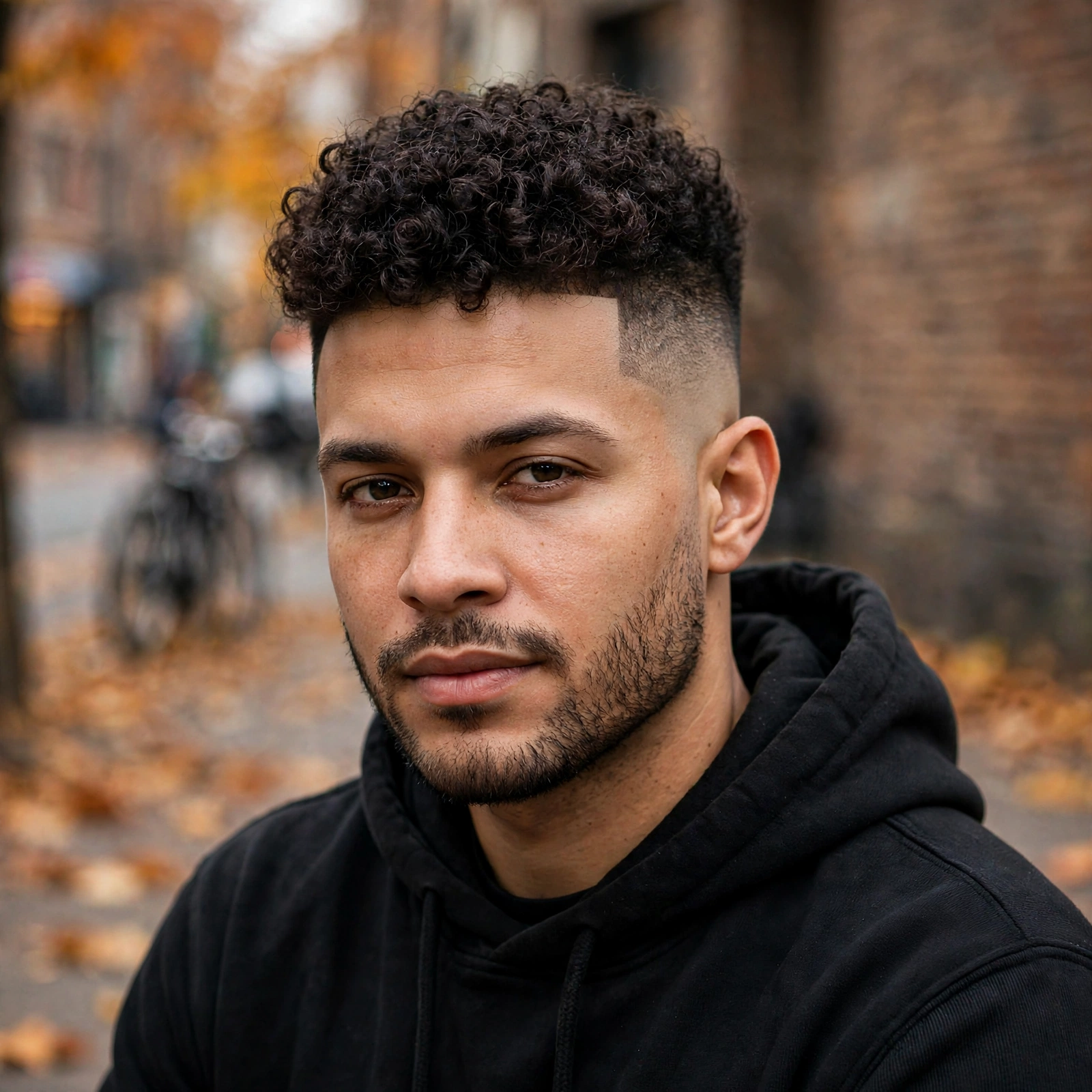
3. High Fade with Curly Top
Drama, done right. The sides go high and tight, framing two to four inches of natural curls worn free on top. It’s a defining men’s fade haircut 2026 look because it treats curly hair as the asset it is — the contrast between disciplined sides and free top is the entire point. The vibe is bold and magnetic: creative workplaces, nights out, anywhere you want your hair noticed first. Round faces benefit most, since the height genuinely elongates.
How to get it: Say “high fade, keep the curls long — dry-cut the top if possible.” Dry cutting matters because wet curls shrink unpredictably. At home, apply curl cream to damp (not soaking) hair, scrunch upward, and air-dry or diffuse — never brush curls dry.
Best for: Naturally curly to coily hair (3A–4C); round and square faces; men who want a statement cut with minimal daily effort.
Maintenance: Medium. Five minutes on wash days, almost nothing between — but refresh the high fade every 2–3 weeks or the contrast blurs.
Pro tip: Sleep on a satin pillowcase. Cotton roughs up curls overnight and creates morning frizz; satin preserves the curl pattern so day-two hair often looks better than day one. A dime-sized amount of Shea Moisture Curl Enhancing Smoothie gave us definition without crunch in testing.
%
%
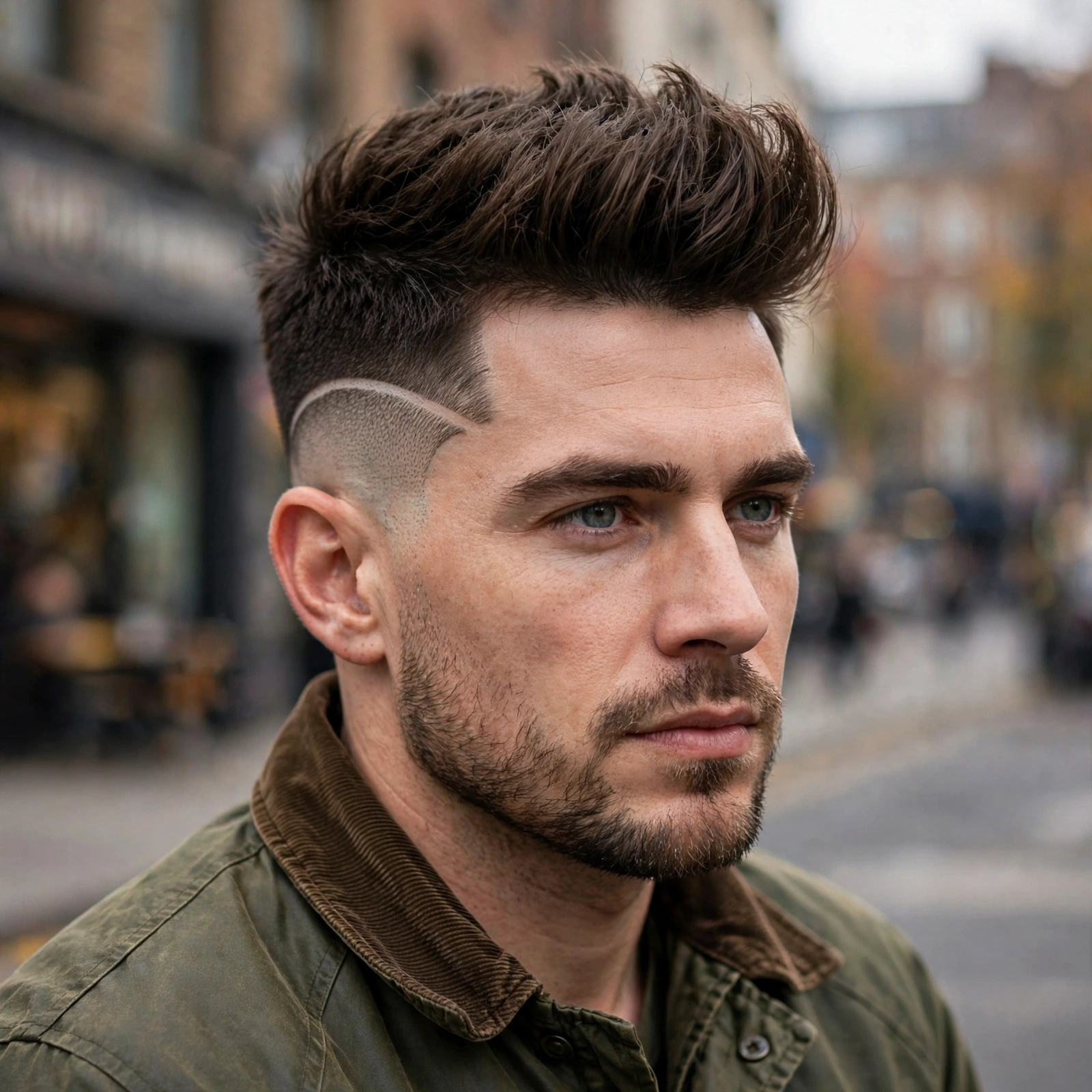
4. Drop Fade with Quiff
The connoisseur’s cut. Unlike a standard fade running straight around, the drop fade arcs downward behind the ear, following the skull’s natural curve — paired here with a voluminous quiff swept up and back. It’s trending in 2026 as men move past basic fades toward cuts with real architecture. The vibe is refined confidence: date nights, upscale events, offices where personal style gets noticed. Most people won’t name why it looks so good — just that it does.
How to get it: Say “drop fade, quiff on top.” This is advanced barbering — check portfolios for a clean arc behind the ear before booking. The top needs 3–4 inches for real height. At home, blow-dry upward and back with a vent brush (non-negotiable for volume), then set with matte paste.
Best for: Thick, straight to wavy hair; oval, square, and longer faces; men willing to spend real time styling each morning.
Maintenance: High. Ten minutes with a blow-dryer daily, plus a barber visit every 3 weeks — the arc shows regrowth faster than a straight fade line.
Pro tip: Blow-dry against the grain first, then sweep into place — drying in the opposite direction builds twice the root lift. Hanz de Fuko Quicksand is the insider favorite for quiffs: gritty volume without weight.
%
%
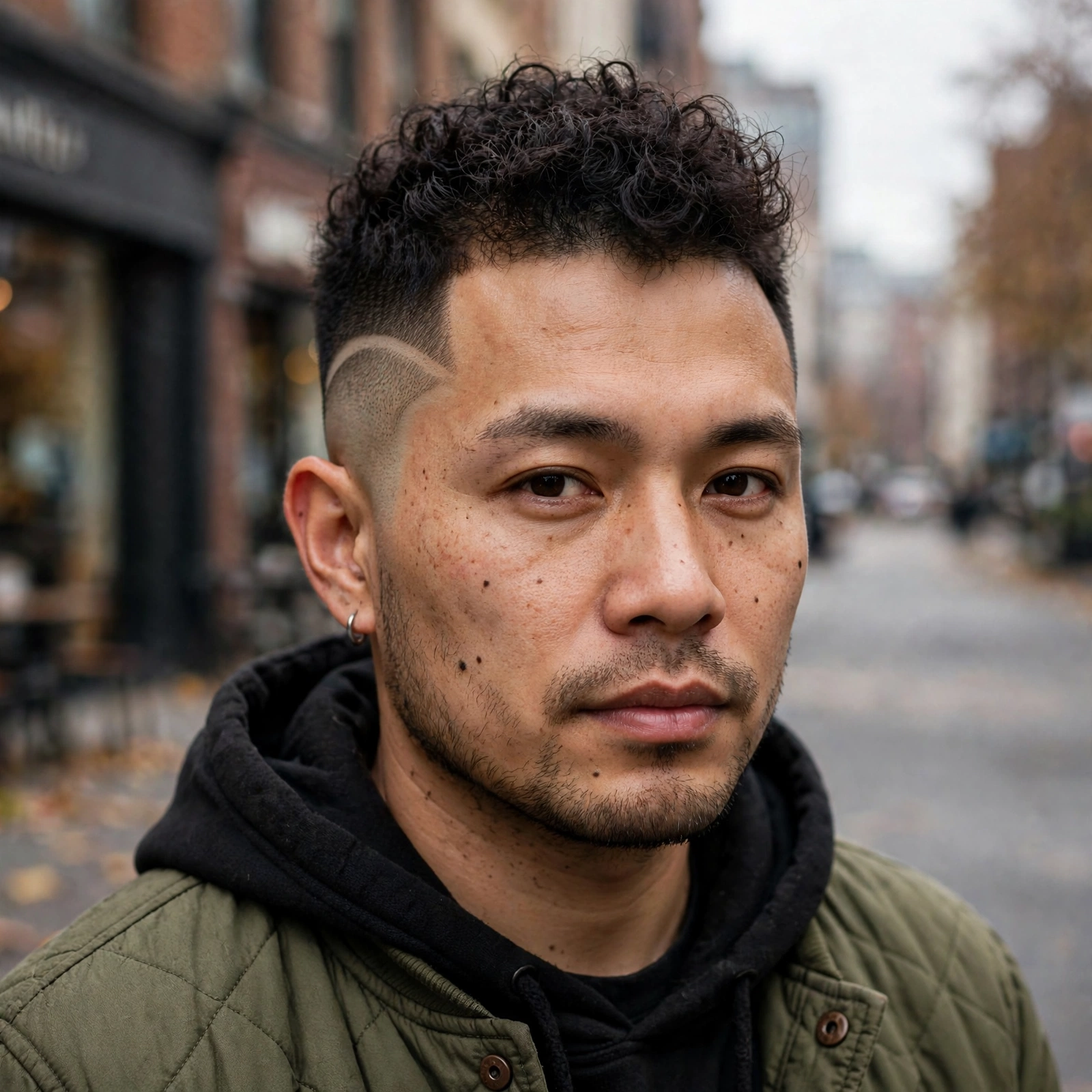
5. Burst Fade with Mohawk Shape
Edge, calibrated. The burst fade curves around the ear in a clean semicircle while the neckline stays longer and natural; the top is a wide, textured strip with a mohawk’s attitude but none of its aggression. It’s the boldest of the autumn fade styles for 2026 — the wearable answer to the punk revival in men’s fashion. Key word: wide. A narrow strip reads costume; a wide textured strip reads fashion. The vibe is creative self-assurance: music scenes, design studios, nightlife.
How to get it: Say “burst fade, textured mohawk — keep it wearable, not shaved.” The top strip should run temple to temple with 2–3 inches of point-cut length. At home, work strong-hold clay through the top and push upward and slightly forward with your fingers.
Best for: Thick, straight to wavy hair; oval and oblong faces; confident dressers in creative or casual workplaces. Know your office culture first.
Maintenance: Medium-high. Five minutes each morning; the burst curve needs a barber’s eye every 3 weeks — an uneven arc is very visible.
Pro tip: Keep the neckline natural and tapered rather than shaved into a hard line. A soft neckline grounds the whole cut, keeps it wearable, and grows out far more gracefully if you ever move on.
%
%
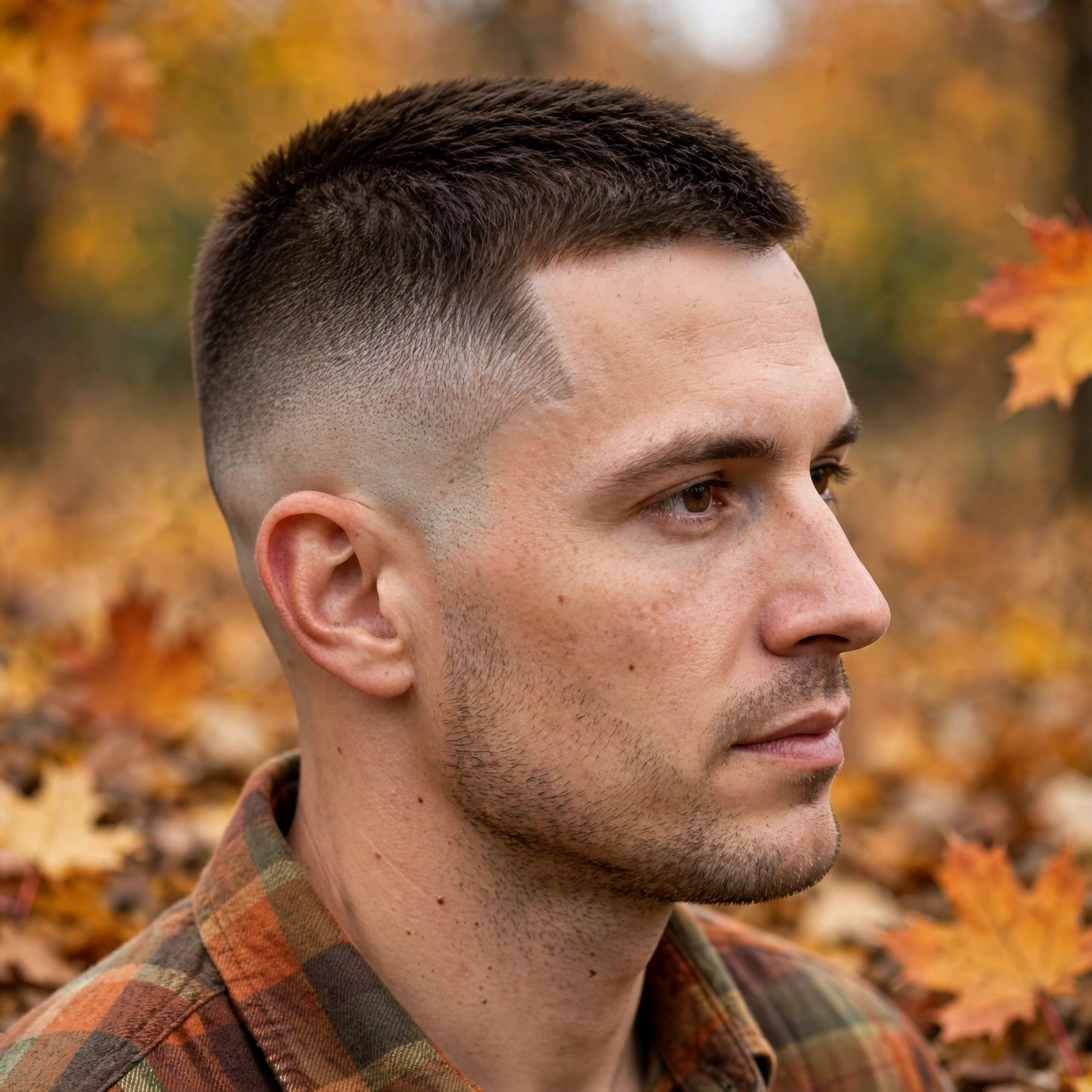
6. Temple Fade with Short Crop
Precision detailing, not a full-head statement. The fade concentrates at the temples and hairline — sculpting the hairline’s corners beautifully — while the back stays natural and the top carries a short, neat crop. It’s one of the smartest men’s fade haircuts 2026 has produced: the crisp, designed look of a fade exactly where the eye goes, without committing the whole head. The vibe is clean and intentional — gym, office, wedding, it works everywhere. A favorite for men with sharp hairlines who want them framed, not hidden.
How to get it: Say “temple fade, short crop.” Ask for the fade focused at the temples with a clean natural hairline — enhanced, never aggressively reshaped — and the top cropped to about an inch with light texture. At home: a touch of matte product pushed forward. That’s the routine.
Best for: All face shapes; straight to wavy hair; men who want fade sharpness with minimal commitment and easy grow-out.
Maintenance: Low. Under two minutes each morning; tidy the temples every 3–4 weeks. The uncut back grows out gracefully.
Pro tip: Guard your hairline — tell your barber explicitly not to push it back or square it beyond its natural shape. An over-edged hairline looks sharp for a week, then grows in artificial. The best temple fades enhance what you have; they never redraw it.
%
%
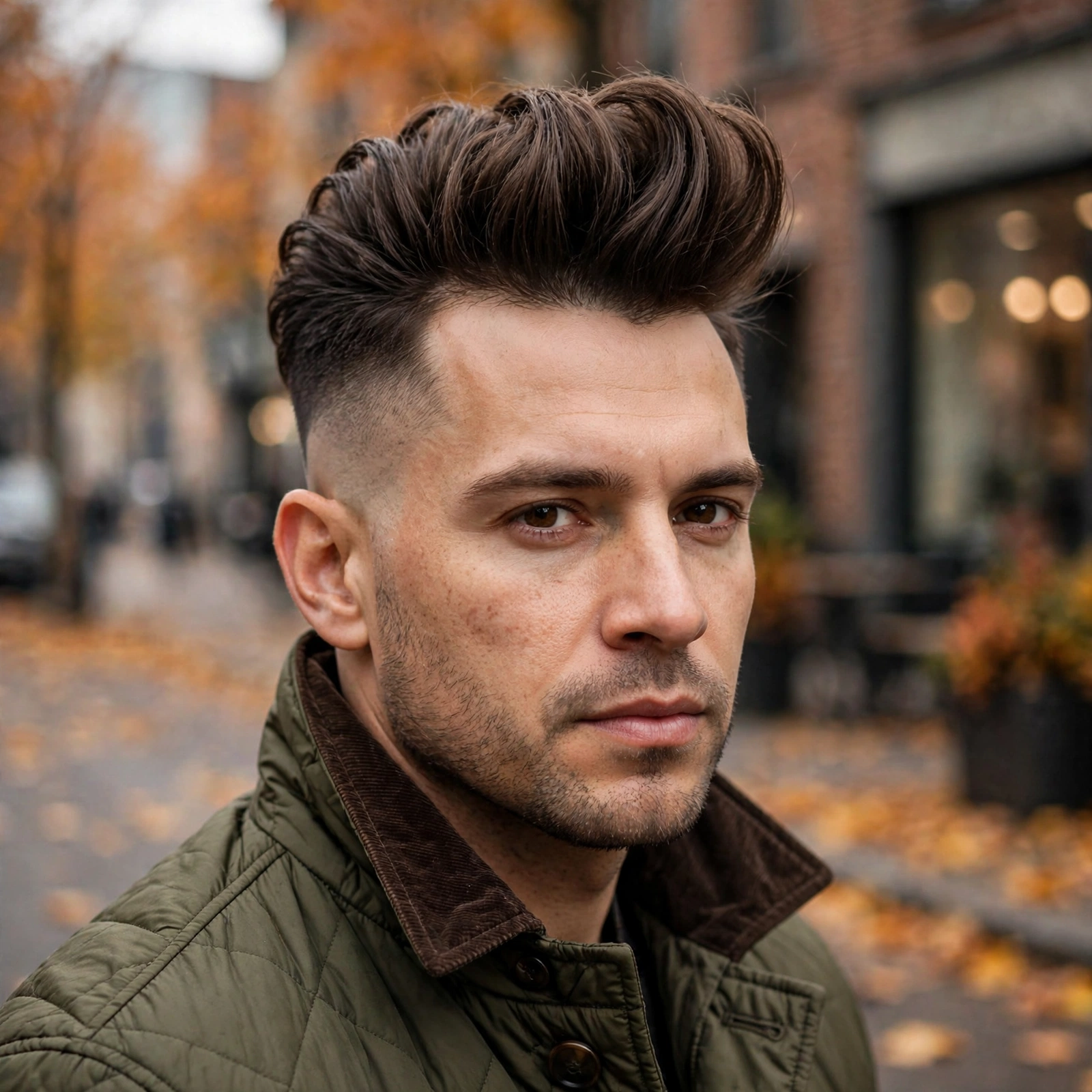
7. Bald Fade with Pompadour
Vintage volume meets modern edges — the showpiece of this list. The sides go to skin in a high bald fade while the top carries a full, classic pompadour with real height. It’s a fixture of fall fade haircuts for men roundups because nothing else delivers this polish: bare sides against sculpted top is pure barbershop theater. The vibe is dapper and deliberate — tailored coats, whiskey bars, occasions where you want to look like the best-dressed man in the room. Not low-effort and doesn’t pretend to be; for the dedicated, the payoff is unmatched.
How to get it: Say “bald fade, classic pomp.” The top needs 4–5 inches for proper height. At home, blow-dry up and back with a vent brush for volume, work firm-hold pomade from roots to ends, and sculpt the sweep. A comb pass sets the clean lines.
Best for: Thick, straight hair with density to hold height; round and square faces, which vertical lift flatters; men who enjoy the styling ritual.
Maintenance: High. Ten to fifteen minutes with a blow-dryer daily, and the bald fade needs touching up every 2 weeks — the highest upkeep here, no contest.
Pro tip: Build in two passes: a pre-styler (light mousse) before blow-drying for structure, then firm pomade after for hold. One product doing both jobs is why home pompadours collapse by noon. Suavecito Firme Hold is the classic workhorse — strong hold, restyles with water.
%
%
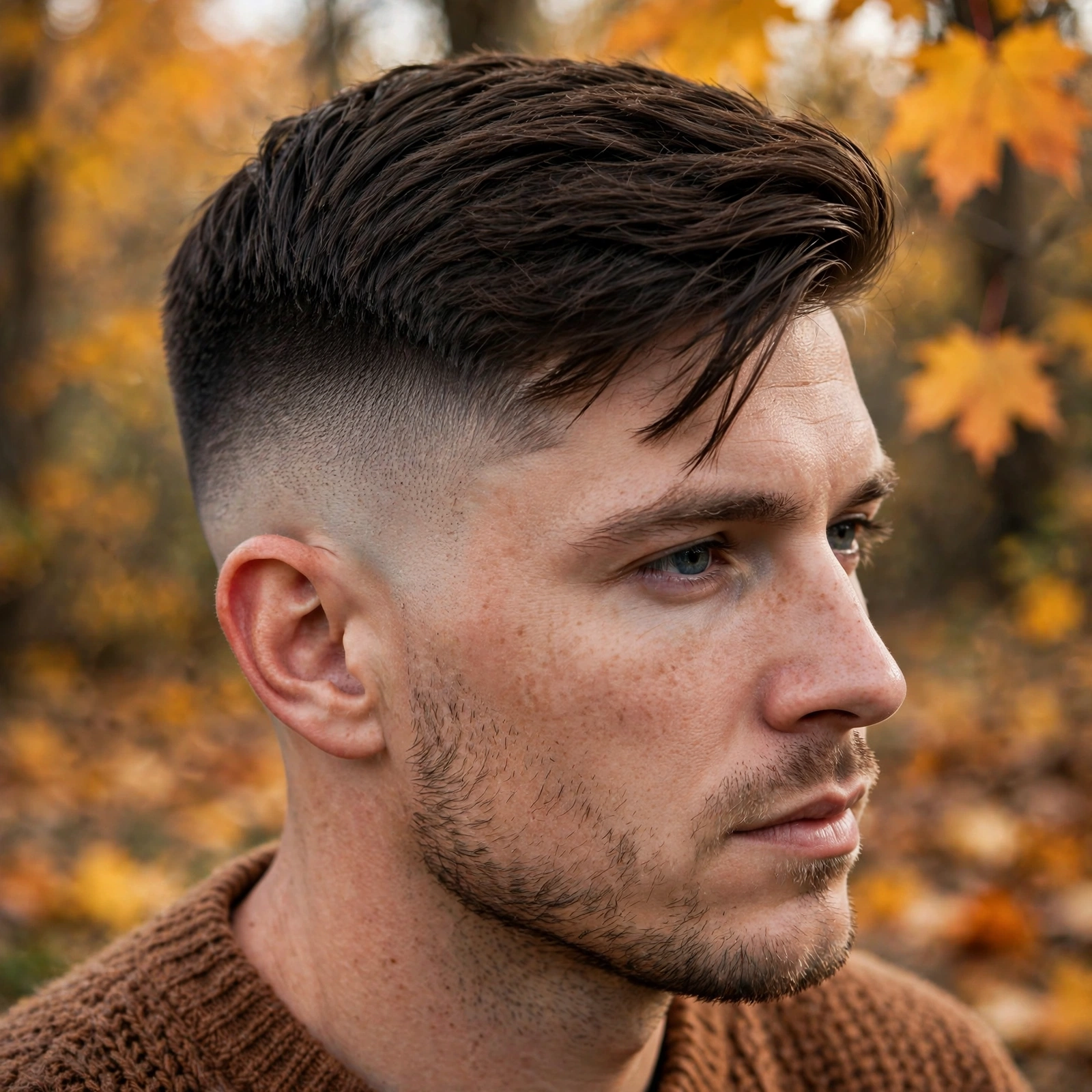
8. Shadow Fade with Brushed-Forward Top
Softness as a feature. The shadow fade is the subtlest skin fade — the blend so gradual it reads as a shadow rather than a line — with the top brushed forward in a textured crop. It’s one of the most 2026 autumn fade styles here because it captures the year’s philosophy: expensive-looking hair that doesn’t shout. You get skin-fade crispness with a gentler grow-out. The vibe is quiet luxury — creative agencies, dinner dates, style that whispers. Our editors found it photographs beautifully in fall’s low golden light, where the soft gradient really shows.
How to get it: Say “shadow fade, forward crop.” Ask for a skin fade with an extra-gradual blend — more guards, smaller steps, no harsh lines — and the top at 1.5–2 inches, textured and worn forward. At home, apply light paste to dry hair and push forward with your fingers.
Best for: Oval, round, and heart-shaped faces; straight to wavy hair; men who want the skin-fade aesthetic with the most forgiving regrowth of any skin fade.
Maintenance: Medium. Two to three minutes each morning; barber visits every 3–4 weeks — the gradual blend buys an extra week over a standard skin fade.
Pro tip: This cut lives or dies on blend quality, so barber selection matters most here. Ask to see healed, grown-out fades in their portfolio — anyone looks crisp on day one, but a great shadow fade still looks intentional at week three.
%
%
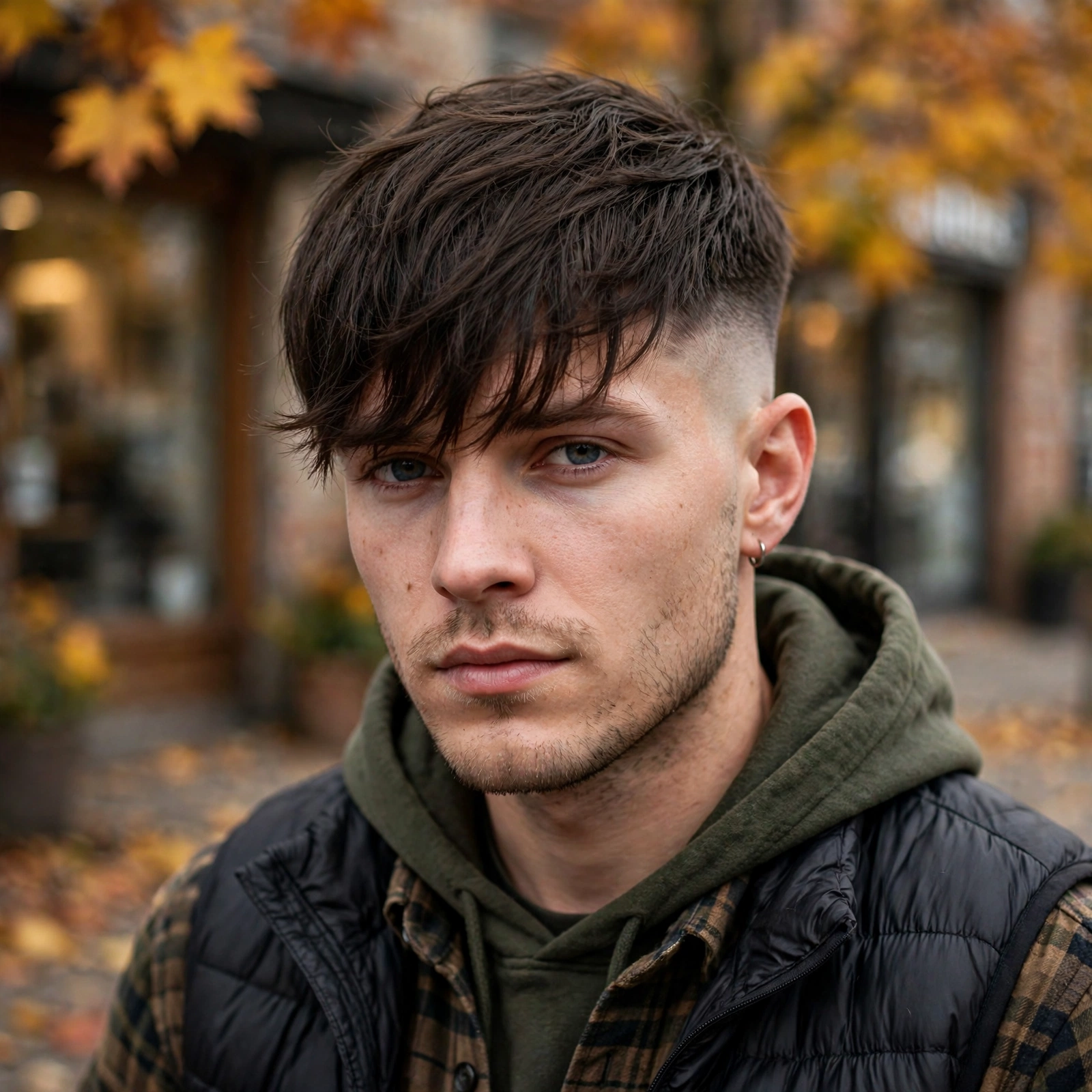
9. Low Fade with Long Fringe
Fashion-forward contrast and the youth-driven trend of the season. A subtle low fade keeps the sides quiet while two to three inches of textured fringe fall over the forehead — the tension between tidy sides and free fringe is what makes it modern. It’s climbing fast in men’s fade haircuts 2026 searches: endlessly photogenic, creative, slightly rebellious without going full statement. The vibe is artistic and current — campuses, creative industries, gigs. Fair warning: fringe is a commitment to your forehead, so be sure before the scissors come out.
How to get it: Say “low fade, long textured fringe.” Top and fringe get point-cut at 2–3 inches for piece-y separation. At home, work light cream through dry hair and push the fringe forward, pinching small sections for deliberate separation rather than a solid curtain.
Best for: Straight to wavy hair with length to fringe; oval and longer faces, which forehead coverage balances; younger men and creative dressers.
Maintenance: Medium. Three to five minutes placing the fringe each morning; trim it every 3–4 weeks to keep it framing, not covering.
Pro tip: Never cut fringe straight across while wet — wet hair stretches and you’ll land an inch shorter once dry. Point-cut dry, a little at a time. And keep heavy conditioners off the fringe; buildup at the forehead is the fastest route to breakouts.
%
%
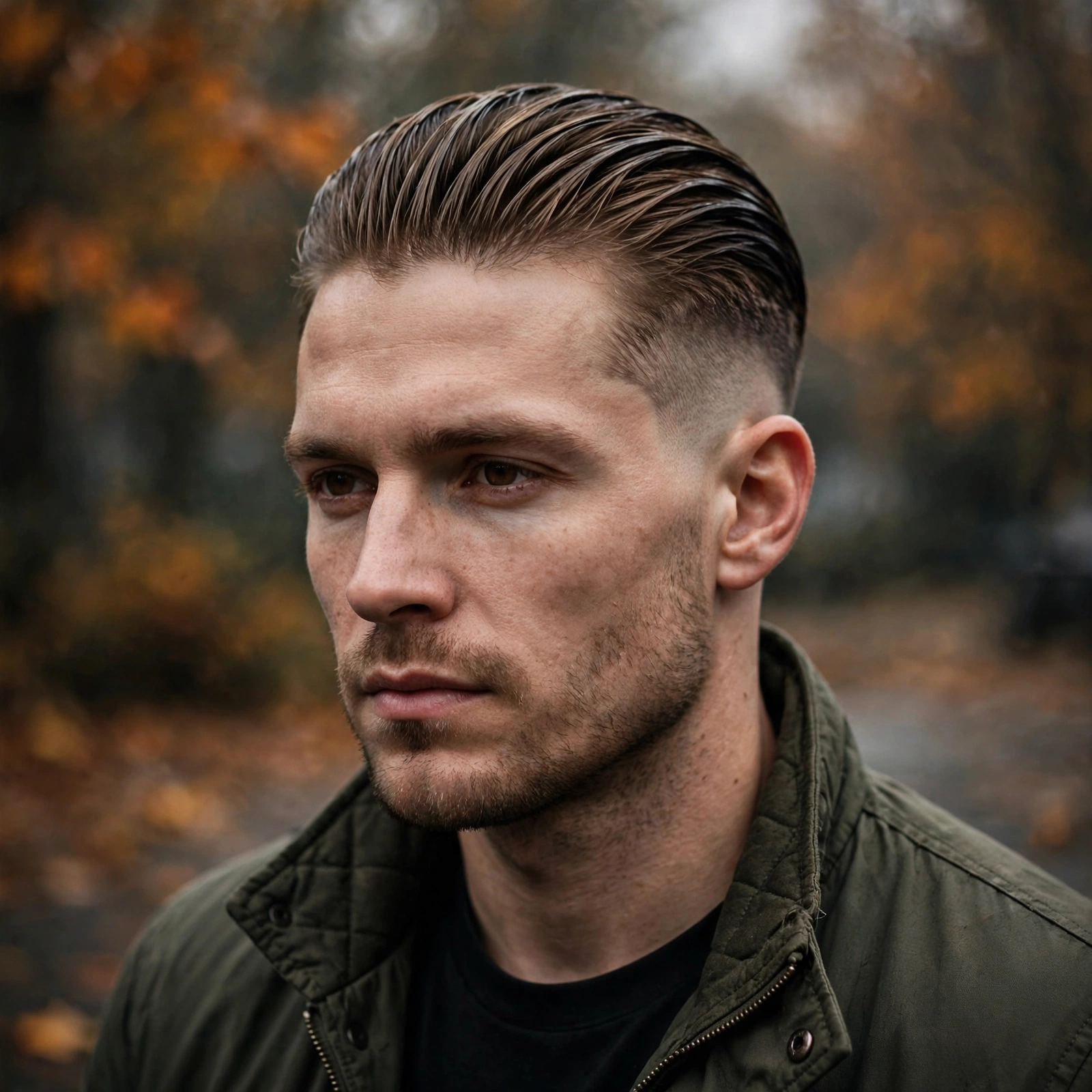
10. Mid Fade with Slick-Back
Classic shape, current edges. Three to five inches swept straight back while a mid fade sharpens the sides — the cut that reads “dated” in the wrong hands and “contemporary classic” in the right ones, and the mid fade is what makes the difference. It modernizes the silhouette and adds the crisp perimeter separating intentional from accidental. A steady presence in fall fade haircuts for men guides because it bridges eras: vintage soul, 2026 execution. The vibe is powerful polish — leadership roles, evening events, authority without a strand out of place.
How to get it: Say “slicked back, mid fade.” The top needs 3–5 inches with enough weight to lie back. At home, apply pomade to damp hair and comb straight back for polish, or use matte clay and fingers for the modern version. A blow-dryer aimed backward adds staying power.
Best for: Thick, straight to wavy hair; oval and square faces; men with the patience to grow the top out if it’s currently short.
Maintenance: Medium. Five minutes each morning; refresh the mid fade every 3–4 weeks. The top is low-drama once at length.
Pro tip: Choose your finish deliberately: shiny pomade reads classic and formal, matte clay reads modern and relaxed — same cut, different message. Layrite Original is the barbershop staple for the classic finish; American Crew Fiber handles the matte version.
%
%
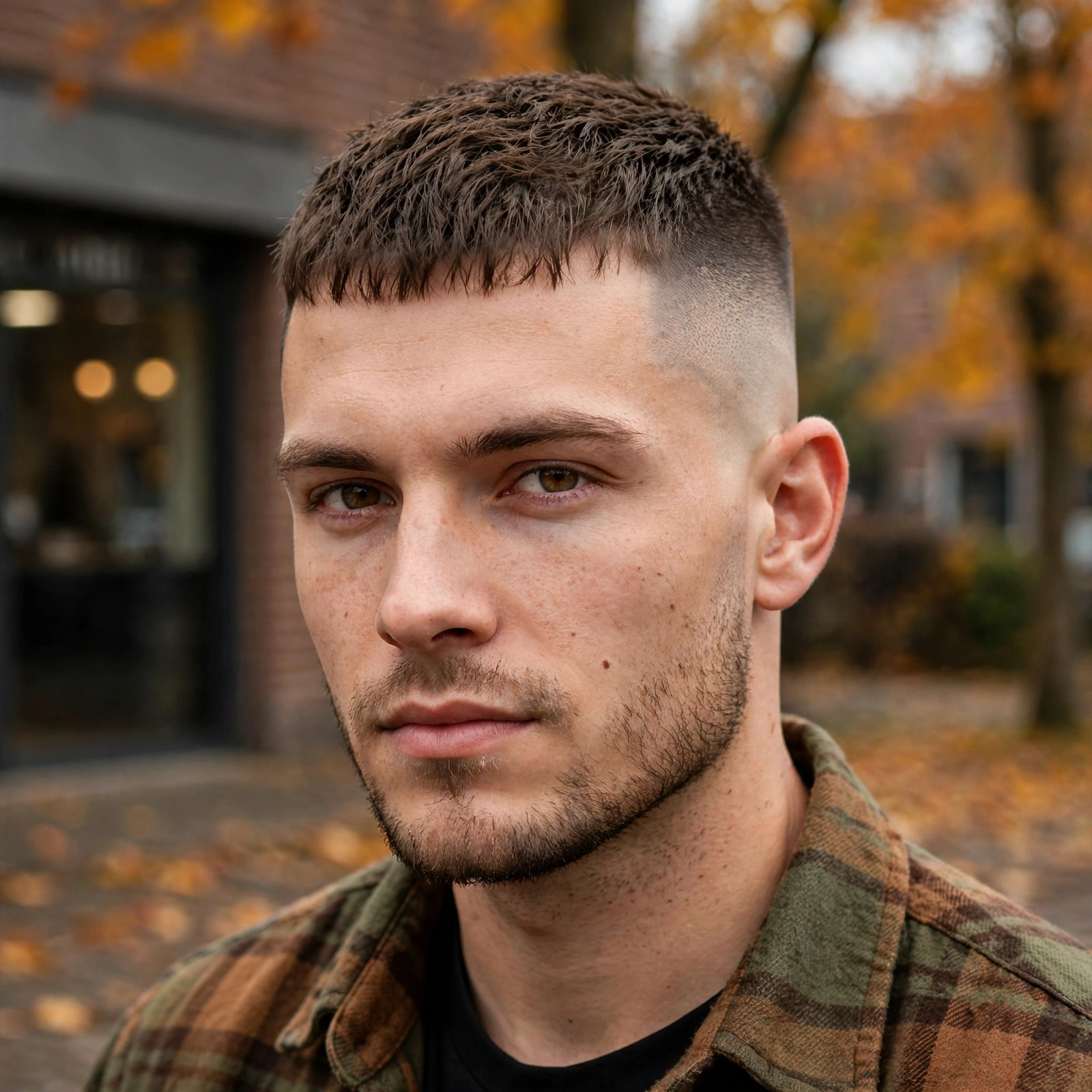
11. Skin Fade with French Crop
Short, sharp, graphic — the minimalist’s power move. A blunt one-inch fringe meets a skin fade for maximum contrast and near-zero styling. It’s the wash-and-go that still looks designed, and it holds its spot in autumn fade styles for 2026 by solving the modern dilemma: looking sharp with no time to think about hair. The geometry does the work — the hard fringe line against the melted fade is striking from across the room. The vibe is decisive: athletes, minimalists, men who want their mornings back. Also superb for strong jawlines, since tight sides put bone structure on display.
How to get it: Say “French crop, skin fade, blunt fringe.” Fringe cut straight across (blunt, not textured) at about an inch; skin fade at mid or high placement to taste. At home: towel-dry, pea-sized matte product, push forward. Under a minute.
Best for: Straight hair (the blunt line shows best); oval faces and strong jawlines; men who want maximum style with minimum effort.
Maintenance: Low daily, higher barber frequency. Under a minute each morning — but refresh the skin fade every 2–3 weeks, since regrowth dulls the contrast fast.
Pro tip: Between visits, resist “cleaning up” the fringe with clippers — one slip and the blunt line goes crooked for weeks. Fringe sitting on your eyebrows is your signal to book the touch-up, not to DIY it.
%
%
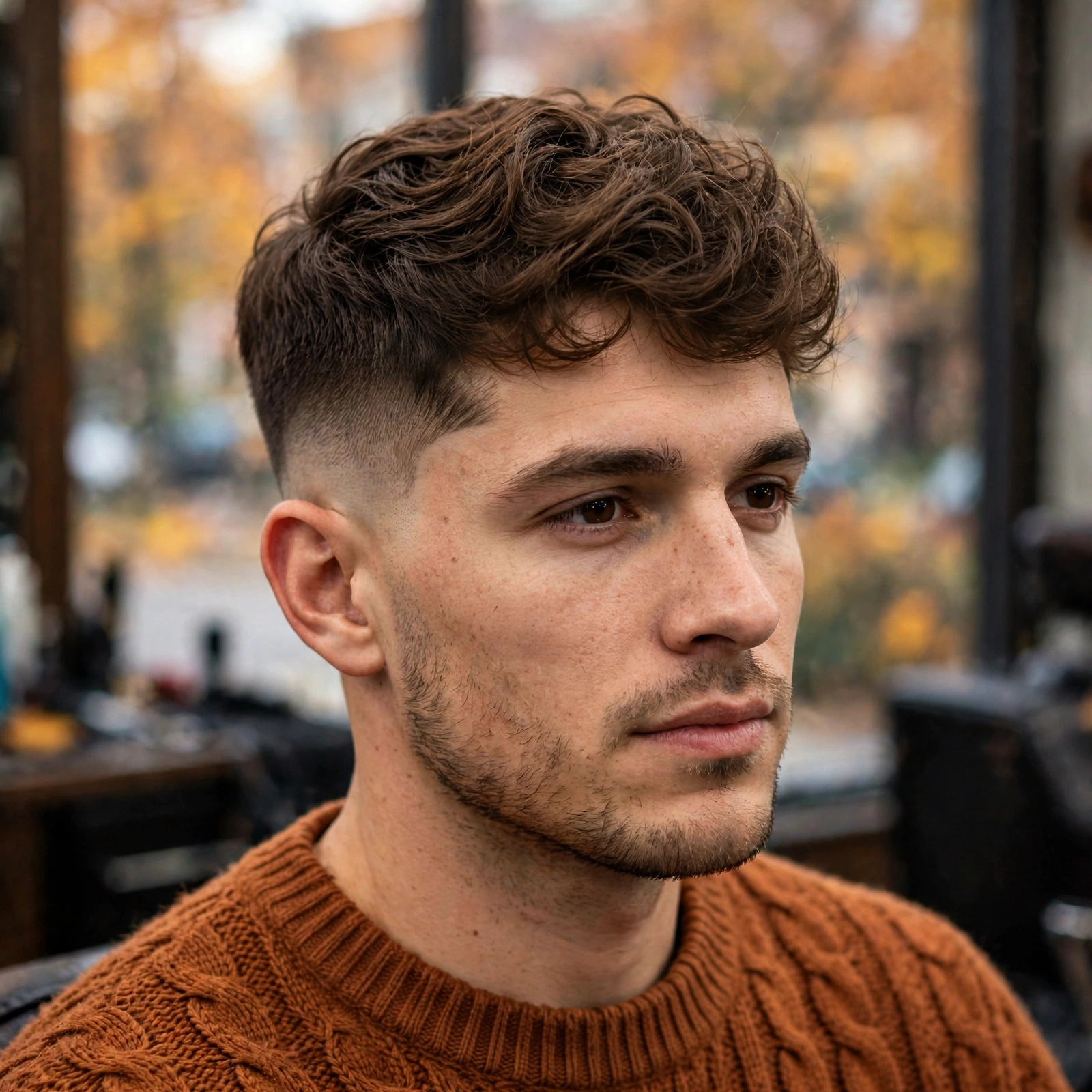
12. Taper Fade with Wavy Top
The grow-out champion and the perfect finale. A soft taper that never touches skin meets three to five inches of natural wave, lightly layered for movement — the fade keeps the perimeter tidy while the wave provides all the visual interest. It’s the most livable of these men’s fade haircuts 2026 offers: the fade you’ll still love at week five, when sharper skin fades are begging for a touch-up. The vibe is relaxed and natural — weekends, travel, creative offices. Fall’s drier air is genuinely kind to waves, giving more defined texture with less product than summer allowed.
How to get it: Say “taper fade, keep the wave long, light layers.” Have the top cut with the natural wave pattern in mind — never straighten waves before cutting or the length will surprise you. At home, scrunch sea salt spray into damp hair and air-dry. That’s the routine.
Best for: Naturally wavy hair; oval, square, and longer faces; low-maintenance men who still want to look intentional.
Maintenance: Low. Two minutes with salt spray on damp hair; barber visits every 5–6 weeks — tied for the longest stretch on this list.
Pro tip: Less is more — don’t touch the hair as it dries. Handling breaks up the wave pattern and creates frizz. Apply product, scrunch once, leave it alone until dry. The discipline of not touching it is the whole technique.
%
%
Fall Fade Haircuts for Men: FAQs
How do I grow out a fade without an awkward phase?
Plan the exit before you enter: tapers and low fades grow out almost invisibly over 5–6 weeks, while skin and high fades show a harsh regrowth line within two. Growing out a skin fade? Book one “bridge” appointment around week three and ask your barber to soften the line with a longer guard instead of re-fading — it blends regrowth rather than restarting the clock. Keep the top slightly longer than usual; extra length up top visually balances shorter sides. And skip home clipper touch-ups unless you truly know what you’re doing — uneven self-fades cause most awkward grow-outs.
How often should I get my fade touched up?
Skin and bald fades: every 2–3 weeks — regrowth against bare skin shows fast. Standard mid fades: every 3–4 weeks. Tapers and low fades: every 5–6 weeks. Fall’s cooler air genuinely buys extra days over summer, since less sweat keeps the lines crisp longer. The honest rule: book your next appointment when you leave the chair. Good barbers fill up, and a fade maintained on schedule always beats one rescued late.
What’s the difference between a skin fade and a taper fade?
A skin fade blends all the way to bare skin — maximum contrast and the boldest look. A taper never reaches skin; it just graduates to very short hair for a softer finish. Practically: skin fades need refreshing every 2–3 weeks, tapers stretch to 5–6. Visually: skin fades make the blend a feature, tapers make it a detail. Fade-curious but not ready for the upkeep? Start with a taper — you can always go shorter next time, but you can’t un-shave skin.
Can I get a fade if my hair is thinning on top?
Yes — a fade is often one of the best cuts for thinning hair, because it removes the contrast problem. Thinning shows most when dense sides sit next to a sparse top; a fade narrows that gap so the top blends instead of standing out. The French crop (#11) and short textured tops (#1, #6) are strongest — short, forward-styled tops maximize the appearance of density. Don’t grow the top long to “cover” it; longer thin hair separates and shows more scalp. Be upfront with your barber — a good one adjusts placement and length to work with thinning, and it’s a conversation worth having.
Do fades survive beanie and hat season?
Better than almost any cut — faded sides are beanie-season gold, with less hair to flatten and crisp edges that still read sharp when the hat comes off. Two tricks: put the beanie on over dry, styled hair (damp hair takes the hat’s shape and keeps it), and when you remove it, flip forward, shake once at the roots, and re-place the top with your fingers — the sides need no help. One caution: tight daily hats press a line into longer tops, so daily beanie wearers will do better with the shorter tops on this list (#1, #6, #11) than the high-volume ones (#4, #7).
The Bottom Line
The best fall fade haircuts for men aren’t the most extreme ones — they’re the ones matched to your face, your hair type, and the maintenance schedule you’ll actually keep. Pick your placement, learn the vocabulary, find a barber whose fade portfolio impresses you, and give any new cut two full weeks before you judge it. This is prime fade season — make the most of it.