12 Fall School Hairstyles for Girls (Quick Morning Styles)
School mornings are a race against the clock — backpacks to pack, lunches to grab, shoes to find — and hair is usually the first thing to fall apart by second period. If you’re looking for fall school hairstyles for girls that actually last through recess, gym class, and a whole day of fidgeting, you’re in the right place. The best fall school hairstyles for girls in 2026 are double Dutch braids, the bubble braid ponytail, mini space buns, and the low scrunchie bun — all under ten minutes, all playground-proof, and all parent-tested by our editors this season.
Here’s what most “cute school hairstyles” roundups get wrong: they show styles that look adorable at 8 a.m. and are a tangled mess by 10. Fall adds its own challenges — dry, static-prone air, itchy sweaters and turtlenecks that catch on loose hair, and the arrival of beanie season. The 12 styles below were chosen with one brutal filter: can a busy parent do this in under ten minutes, and will it still look intentional at pickup time? Every single one passed.
There’s a real payoff beyond the class photo: styles that hold all day mean fewer midday complaints, shorter nightly detangling sessions, and a calmer morning routine for everyone.
The good news: you don’t need fancy tools or salon skills. Every style on this list uses things you probably already own — regular elastics, a brush, a few bobby pins, and maybe a scrunchie or two. We’ve written each “how to get it” section for the parent doing the styling, not the stylist, with the shortcuts our editors actually use when the clock is ticking. If you need a refresher on the absolute basics first, our quick school hairstyles for busy mornings guide covers the five-minute foundations.
What makes this guide different from the dozens of others you’ll scroll past: every style below comes with the full picture. Not just what it looks like, but exactly how to get it in real morning minutes, who it’s best for by age, hair type, and length, honest maintenance expectations, and a pro tip our editors picked up from testing these on real school-age kids. No fluff — just 12 genuinely workable styles for fall 2026.
Below, we’ve rounded up the 12 best quick school hairstyles for girls this fall. Cozy, practical, and classroom-tested — let’s find your daughter’s new morning favorite.
In this guide: jump straight to any style that catches your eye.
- 1. Double Dutch Braids
- 2. Bubble Braid Ponytail
- 3. Half-Up Twisted Crown
- 4. Low Scrunchie Bun
- 5. Side Fishtail Braid
- 6. High Wrapped Ponytail
- 7. Mini Space Buns
- 8. Front French Braid Headband
- 9. Twisted Low Side Ponytail
- 10. Curly Pineapple Puff
- 11. Pull-Through Braid
- 12. Inside-Out Topsy Tail Ponytail
Editor’s Top 5 Quick School-Day Picks
Short on time? These are the five looks our editors reach for most during the school week — the highest survival-to-effort ratio on the list, tested through real school days.
1. Double Dutch Braids
The undisputed champion of school mornings. Two raised braids that lie flat against the head, distribute tension evenly (no headaches), and genuinely survive everything — recess soccer, wind, backpack straps, you name it. This is the style we recommend first to every parent, especially for the 5–8 crowd who can’t sit through anything fussy.
2. Bubble Braid Ponytail
Maximum visual payoff for almost zero skill. A regular ponytail sectioned with elastics and gently puffed out looks elaborate but takes six minutes and requires no actual braiding ability. It photographs beautifully, holds through the day, and gets more compliments than anything else on this list.
3. Mini Space Buns
Two little buns on top, done in under five minutes, and the single best style for the youngest girls who pull hair out of everything else. The buns sit high enough to stay clear of backpack straps and collars, and they look intentional even when they’re slightly messy — which is exactly what a kindergartener’s hair will be by noon.
4. Low Scrunchie Bun
The cozy fall hero. A soft low bun at the nape that works under beanies, doesn’t press uncomfortably when kids lean back in chairs or car seats, and keeps long hair from catching on wool scarves and jacket zippers. When we asked our testers’ kids which style they forgot they were wearing, this won by a mile.
5. Front French Braid Headband
A single French braid swept across the front hairline, keeping bangs and flyaways out of eyes all day — no headband required (headbands get lost; this doesn’t). It’s the best solution we found for girls growing out bangs or dealing with fall static flyaways during reading time.
How to Choose a School Hairstyle by Age and Hair Type
Start with age and wiggly-ness, because the fanciest style in the world is useless if your daughter can’t sit still for it. Ages 5–7 need styles you can finish in five minutes or less with minimal sectioning — think the low scrunchie bun, mini space buns, and the high wrapped ponytail. Ages 8–10 can usually tolerate braiding and sit long enough for double Dutch braids or a pull-through braid. By 11–12, most girls want a say in the choice (and can do several of these themselves), so the conversation shifts from “what can I do fast” to “what will she actually keep in her hair all day.”
Next, be honest about hair type — the style has to cooperate with what grows out of her head. Fine, straight hair holds twists and bubbles beautifully but slips out of smooth braids, so anchor everything with an extra elastic and a little texture spray at the roots. Thick hair makes gorgeous chunky braids and full buns, but double styles can get heavy — one solid pull-through braid often beats two thick ones for comfort. For curly and coily textures (types 3 and 4), never detangle dry; do it in sections with conditioner or a detangling spray, and lean into protective styles like the pineapple puff, Dutch braids, and low buns that keep ends tucked away from fall’s drying air. Loose styles on curly hair will tangle by lunch — contained is kinder.
Length matters too, but less than parents think. Shoulder-length hair can do almost everything on this list except the bubble braid (needs more length to show the bubbles) and the side fishtail (needs length for the fishtail to read). Very long hair is actually harder on school mornings, not easier — it’s heavier, tangles faster, and catches on everything, so containment styles like braids and buns are your friends. Chin-to-shoulder lengths shine in half-up styles like the twisted crown, which need less hair to look complete.
Finally, build in the school-day reality check: recess, gym, wind on the playground, backpack straps, car seats, and (in fall) wool scarves and beanies. Anything that sits high on the crown gets crushed by a beanie; anything loose around the neck catches on collars. Low and contained wins in fall. And ask about the seating — if she leans her head back in a high chair back or a car headrest, high buns and ponytails become uncomfortable fast. When in doubt, go lower and looser than you think. Comfort is what keeps a style in all day; a style that hurts comes out at recess and never goes back in.
The 10-Minute Tangle-Free Morning Routine
Here’s the routine our editors standardized across every test morning, and it genuinely takes ten minutes once you have the rhythm: prep, detangle, style, seal. Skipping the prep is why most school hairstyles fail — the style itself is only half the battle.
Start with prep (2 minutes). If her hair is dry from yesterday, mist it lightly with water or a detangling spray — never start a braid on bone-dry, static-y fall hair. Work a pea-sized amount of leave-in conditioner or detangler through the mid-lengths and ends. For mornings when you’re really rushed, the single highest-impact product in our testing was a good kids’ detangling spray applied before the brush ever touches the hair. This one step cut our average detangling time from six minutes to two.
Detangle bottom-up (3 minutes). Start at the ends and work upward in small sections, holding each section firmly above where you’re brushing so you’re not pulling at her scalp — this is the technique that ends the morning tears. Use a wide-tooth comb or a flexible detangling brush on wet or damp hair, never a fine-tooth comb, and never rip through knots: ease them apart with your fingers first, then follow with the brush. If you want the dermatologist-backed version of all of this, these dermatologists’ hair care tips cover the same fundamentals and are worth bookmarking.
Style (4 minutes). Pick one style from the list below — at this point the hair is prepped and cooperative, so the braiding or twisting goes fast. Keep a small dish or cup of elastics and pins within arm’s reach before you start; hunting for a dropped bobby pin mid-braid is how four minutes becomes twelve. For braids, slightly damp hair holds better than fully dry — if you washed her hair the night before and did a loose braid, morning two starts from an advantage.
Seal (1 minute). A light mist of flexible-hold hairspray or a tiny bit of smoothing cream over the finished style, plus tucking any face-framing flyaways. In fall, finish with an anti-static pass — smooth a dryer sheet lightly over the finished style or mist with leave-in spray — then you’re done: ten minutes, tangle-free, and it survives the day.
12 Fall School Hairstyles for Girls (Quick Morning Styles)
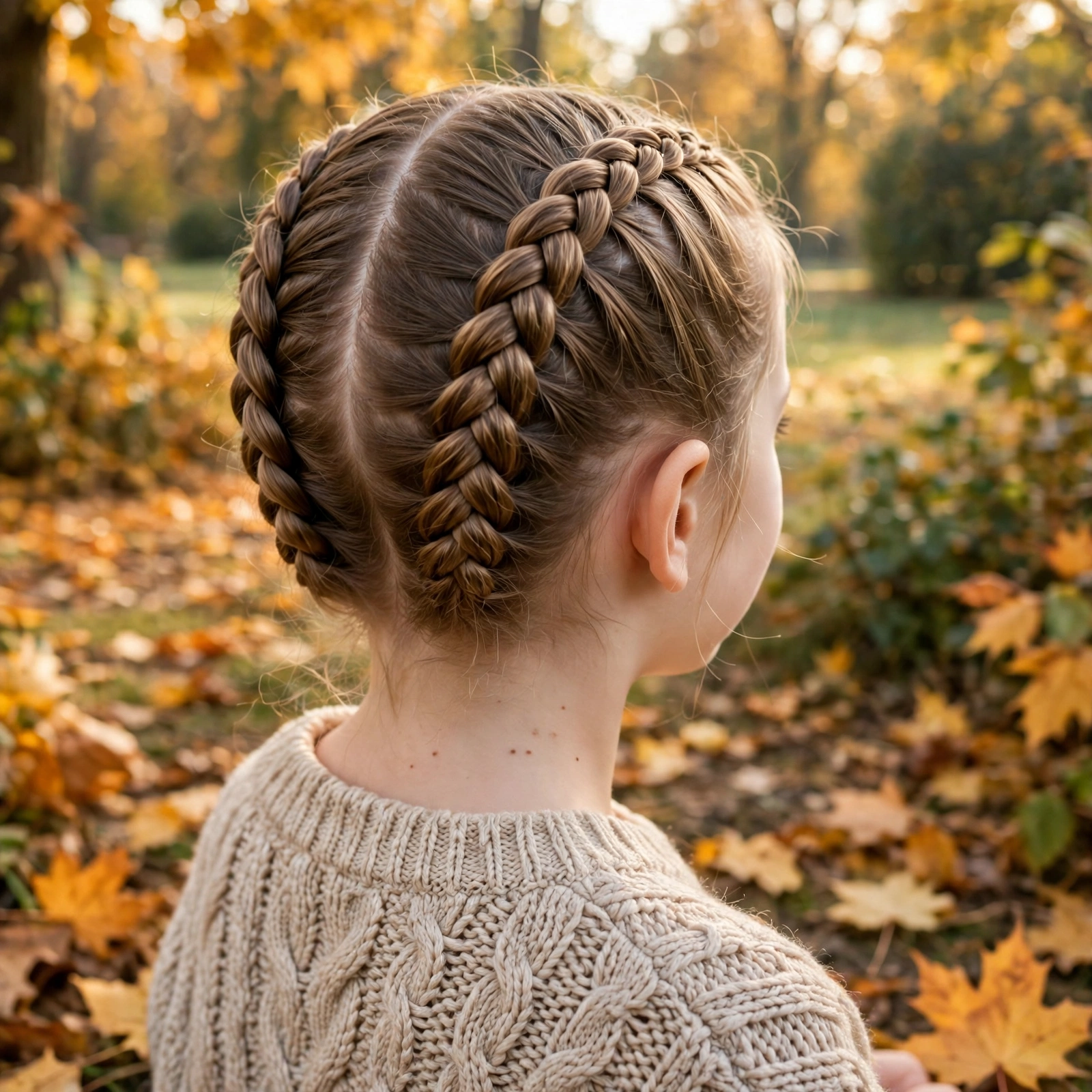
1. Double Dutch Braids
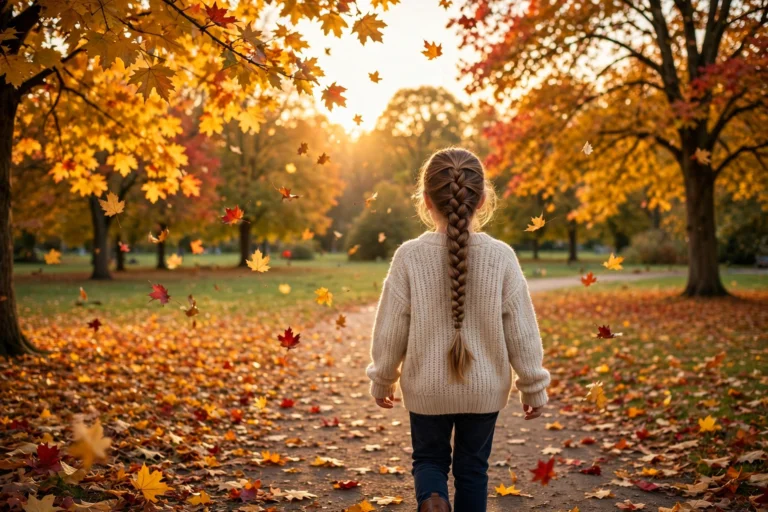
Two raised braids running from the front hairline to the nape, sitting on top of the hair instead of woven underneath like a French braid. They lie flat, look neat from every angle, and — most importantly for school — they don’t shift, loosen, or snag on backpack straps all day. Our editors tested these through full school days including PE, and they were the only style that looked nearly identical at pickup. The vibe is classic sporty-cute: think recess-ready, soccer practice, and picture-day neat without any fuss.
How to get it: Part hair cleanly down the middle. Starting at one side of the hairline, braid using the Dutch method (cross each side section UNDER the middle section instead of over) while feeding in hair as you go down toward the nape. Secure with an elastic, repeat on the other side. Damp hair braids faster and holds tighter — spritz before you start.
Best for: Ages 5–12; straight, wavy, and curly textures (type 3 curls braid beautifully damp); shoulder-length to long hair. Fine hair holds well with a light texturizing spray at the roots first.
Maintenance: Low. 8–10 minutes once you’ve practiced twice; lasts all day and can be slept in for next-day waves. Redo daily — second-day braids get fuzzy at the hairline.
Pro tip: Braid slightly damp hair and add a tiny elastic at the very start of each braid (hidden under the hair) — it anchors the braid so the front doesn’t loosen by recess. And always use snag-free elastics like Goody Ouchless; cheap elastics with metal clasps break kids’ hair.
2. Bubble Braid Ponytail
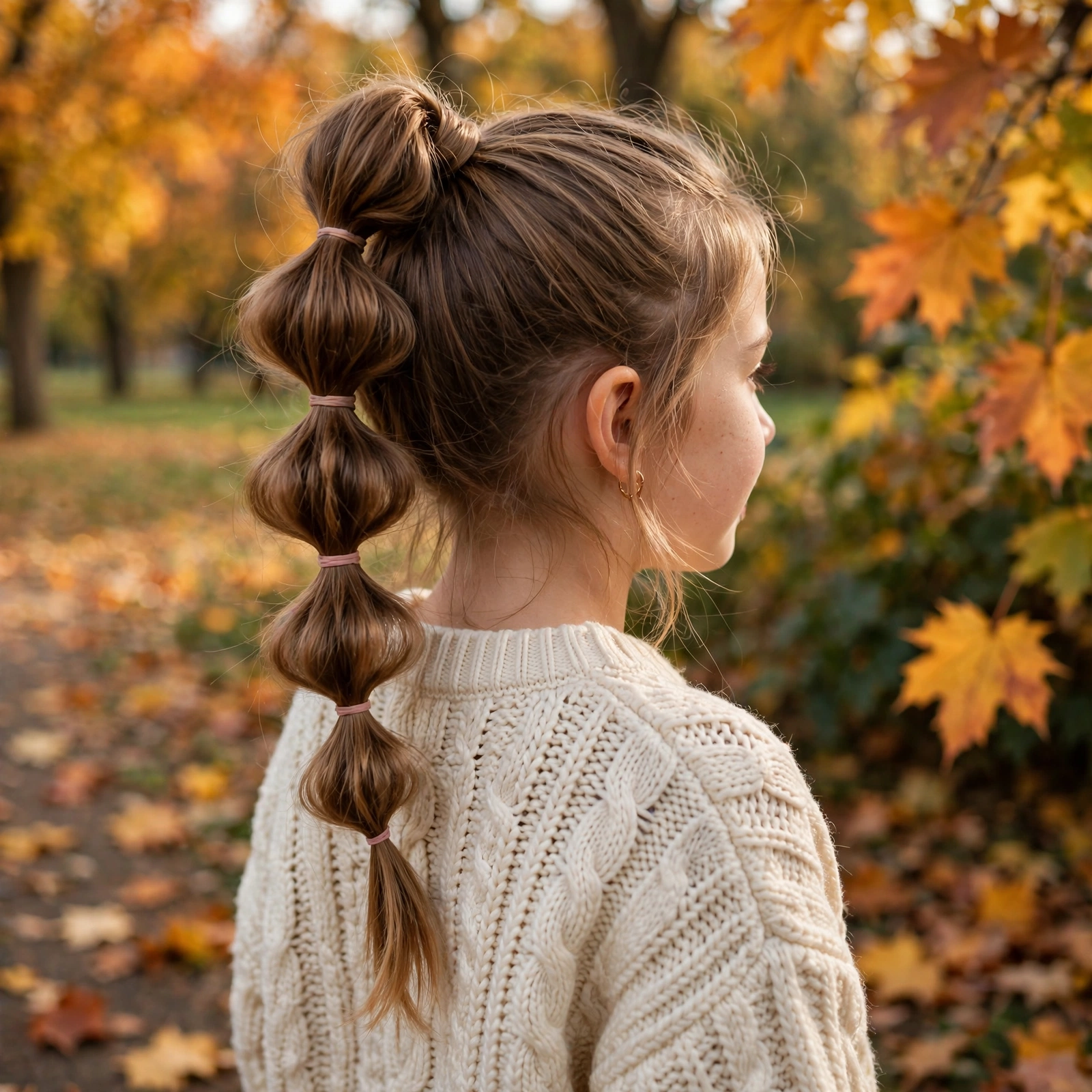
A high or mid ponytail sectioned into “bubbles” with small elastics every couple of inches, each section gently puffed out for a fun, voluminous effect. It looks like a salon style but requires zero braiding skill — if you can put in a ponytail, you can do this. It’s having a major moment in fall 2026 because it photographs beautifully for school pictures and survives the day far better than a plain ponytail, which goes limp and tangles by lunch. The vibe is playful and confident — spirit days, birthday parties at school, and any morning she wants to feel fancy without the effort.
How to get it: Pull hair into a ponytail (mid-height is most comfortable for all-day wear). Add small elastics down the ponytail every 2 inches, then gently tug each section outward to puff it into a bubble shape. Work from the bottom bubble up so you don’t disturb the finished ones.
Best for: Ages 6–12; medium to long hair (needs enough length for at least 3 bubbles); all textures. Thick hair makes the fullest bubbles; fine hair benefits from a little dry shampoo at the roots first for grip.
Maintenance: Low. 5–7 minutes; holds all day. The bubbles can be fluffed back up at lunch if needed. Redo daily.
Pro tip: Match the small elastics to her hair color so they disappear, and don’t puff the top bubble too aggressively — it loosens the ponytail base. A quick mist of flexible hairspray before puffing helps each bubble keep its shape through gym class.
3. Half-Up Twisted Crown
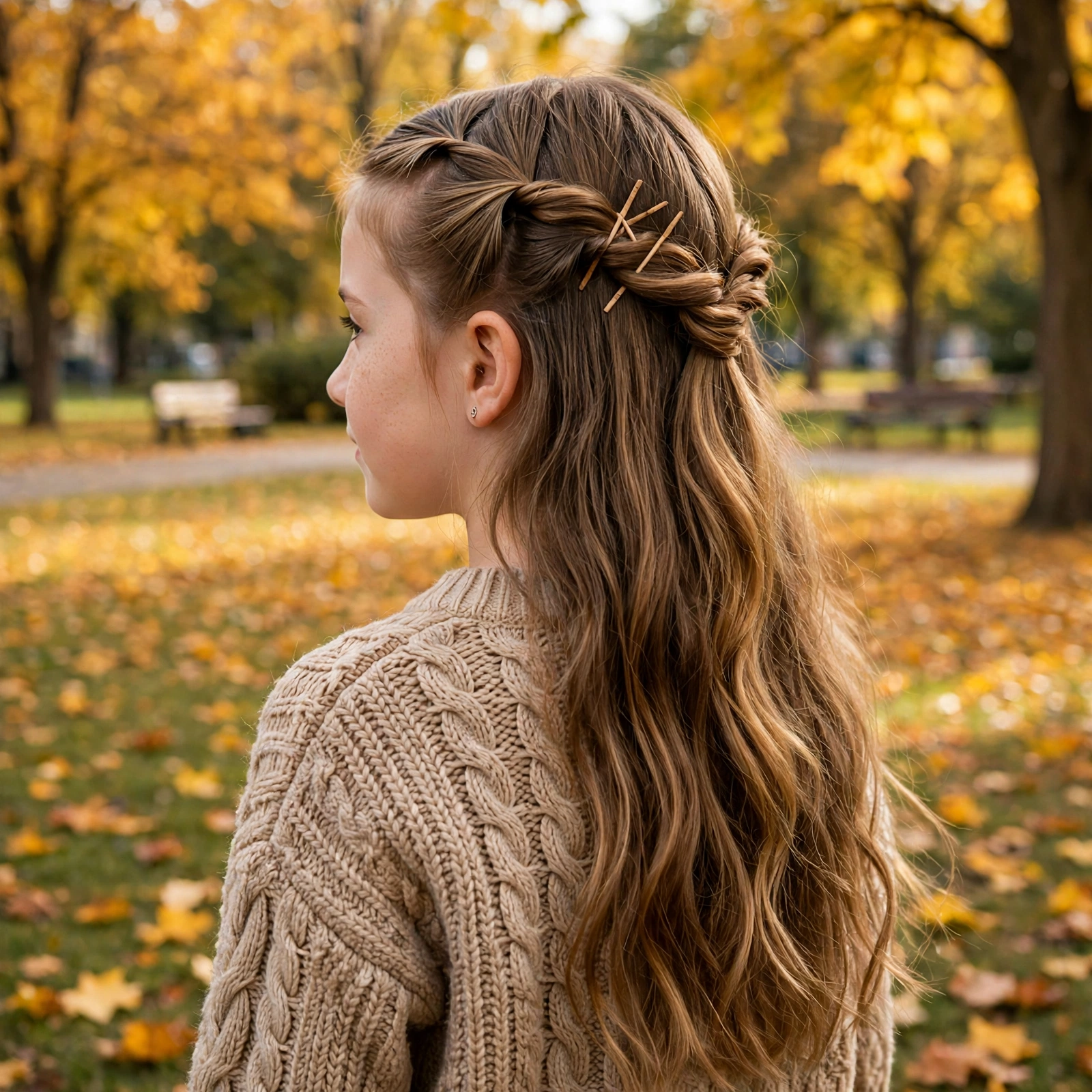
Two sections twisted back from the temples and pinned where they meet at the back, with the rest of the hair left flowing. It keeps the front pieces out of her eyes during class — the number-one classroom complaint — while still letting her wear her hair down, which is what most girls actually want. Our editors found this is the best compromise style for the 8–12 crowd who refuse full updos. The vibe is soft and pretty — class presentations, school concerts, and picture day.
How to get it: Take a 2-inch section from each temple, twist each one back toward the crown, cross them over each other at the back, and pin where they meet with two bobby pins in an X. Let the rest of the hair fall free. Mist the twists with a little hairspray before pinning for all-day hold.
Best for: Ages 7–12; medium to long hair; wavy and curly textures look especially pretty here. Works on straight hair too with a bit of texture spray for grip.
Maintenance: Low. Under 5 minutes, no heat required. The twists may need one re-pin after recess; the rest stays put. Redo daily.
Pro tip: Use bobby pins that match her hair color and push them in wavy-side-down — they grip twice as well. For extra staying power, twist each section fairly tightly; the twists relax to the perfect looseness within an hour.
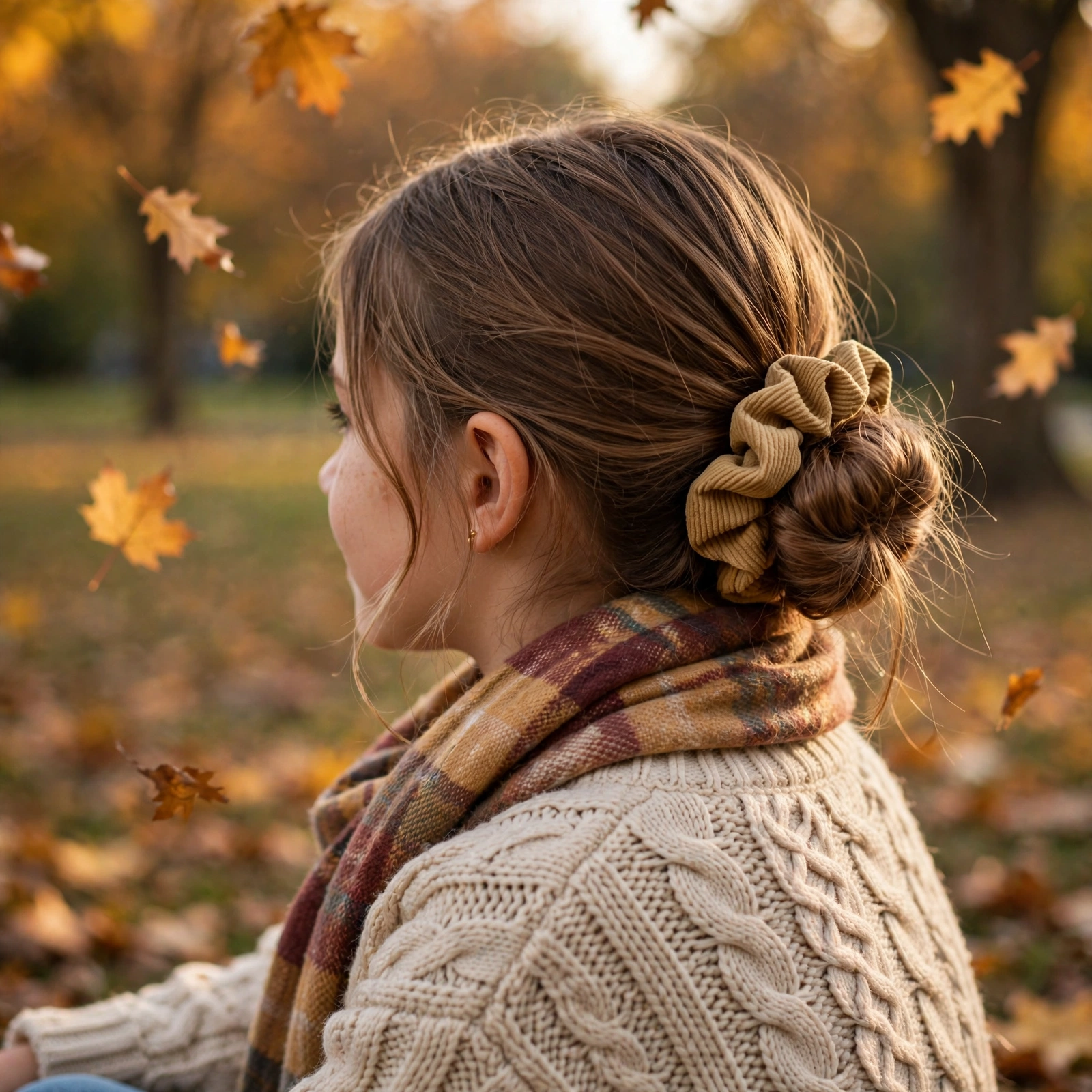
4. Low Scrunchie Bun
A soft, loose bun sitting at the nape, secured with a scrunchie instead of a tight elastic. The scrunchie is doing real work here: it distributes pressure so there’s no headache, no hairline pulling, and no elastic crease — and it looks intentionally cute rather than rushed. This is the cozy fall hero our editors kept returning to, because it slides under beanies, doesn’t press against car headrests, and keeps long hair from catching on wool scarves and jacket zippers. The vibe is cozy-classic — chilly mornings, library days, and everything from October through December.
How to get it: Gather hair into a low ponytail at the nape with your hands (no brush needed — a little texture helps), twist loosely, wrap into a bun, and secure with a scrunchie wrapped twice around the base. Pull gently at the bun to loosen it into a soft shape. Leave a couple of face-framing pieces out if she likes.
Best for: Ages 5–12; medium to long hair; all textures. Especially good for thick hair that overwhelms regular elastics, and for sensitive scalps.
Maintenance: Low. 3–4 minutes; the gentlest all-day hold on this list. Refresh the scrunchie wrap at lunch if needed. Redo daily — but it also works as a next-day refresh style.
Pro tip: Satin or silk scrunchies (like the Slip scrunchies) cause noticeably less frizz and breakage than cotton ones, especially in dry fall air — worth the few extra dollars if she wears buns most days. Keep a spare scrunchie on her wrist; that’s the whole emergency kit.
5. Side Fishtail Braid
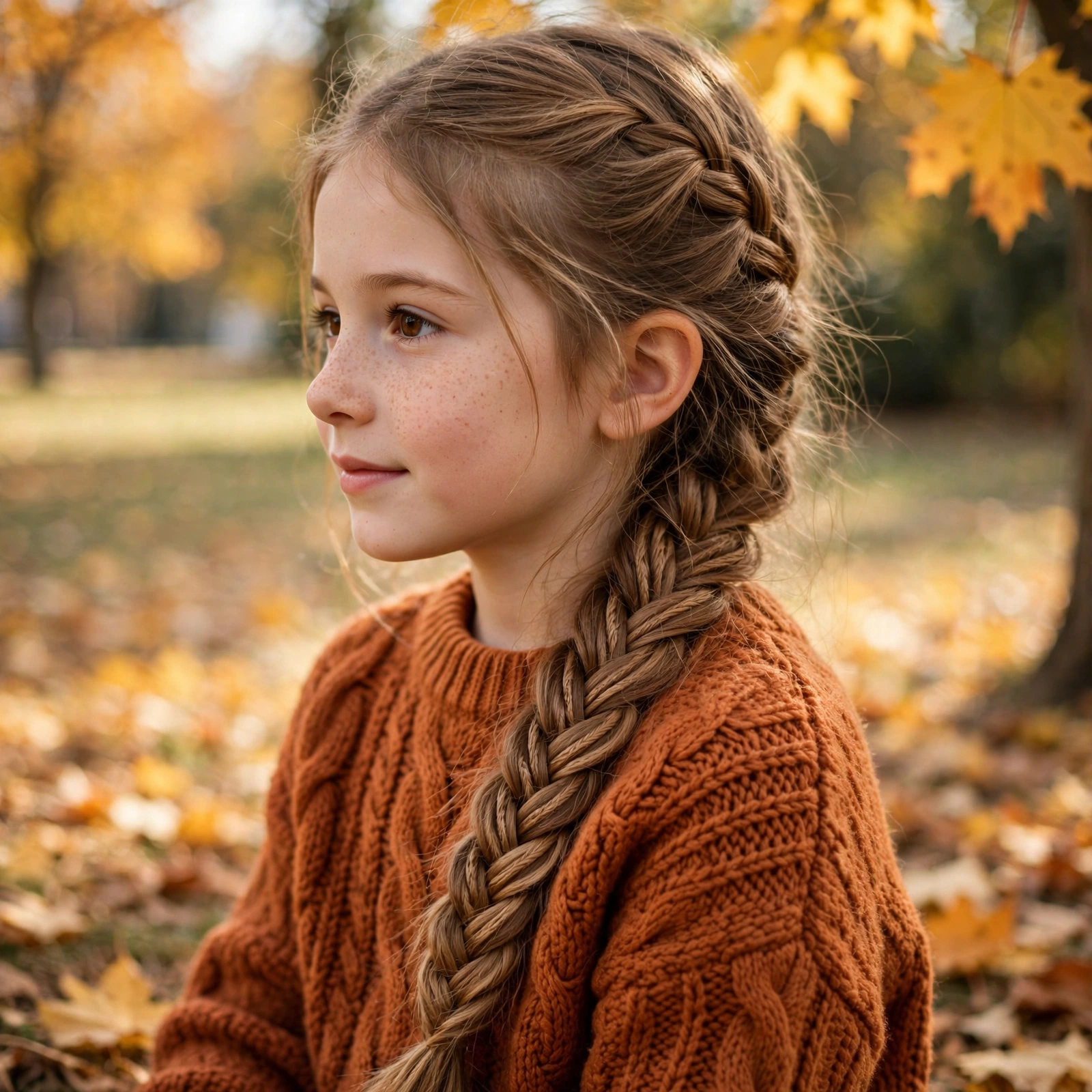
A fishtail braid draped over one shoulder — made by weaving small sections from the outside of each half into the opposite side, creating that distinctive herringbone pattern. It looks far more intricate than it is, holds better than a regular three-strand braid (the weave locks itself in), and draping it over the shoulder keeps it visible and out of the way of backpack straps. Our editors found it’s the style older girls (9–12) request most when they want something that looks “done” without heat. The vibe is effortlessly pretty — fall festivals, family dinners after school, and days she wants to feel a little grown-up.
How to get it: Sweep all hair over one shoulder. Divide into two sections (not three). Take a thin strand from the outside of the left section, cross it over to join the right section; repeat from the right to the left. Keep the strands thin and the tension even, and work down to the ends. Secure with an elastic and gently pancake the braid by tugging the edges.
Best for: Ages 8–12 (the technique needs a slightly longer sit); medium-long to long hair; straight and wavy textures show the herringbone pattern best. Needs some practice — try it on a weekend first.
Maintenance: Medium. 8–10 minutes once learned; holds all day without re-pinning. Can be slept in loosely for next-day texture. Redo every 1–2 days.
Pro tip: The number-one fishtail mistake is making the strands too thick — thinner strands, more of them, is what creates that clean herringbone look. And drape it over the shoulder BEFORE you start braiding; braiding behind and flipping it over loosens the top.
6. High Wrapped Ponytail
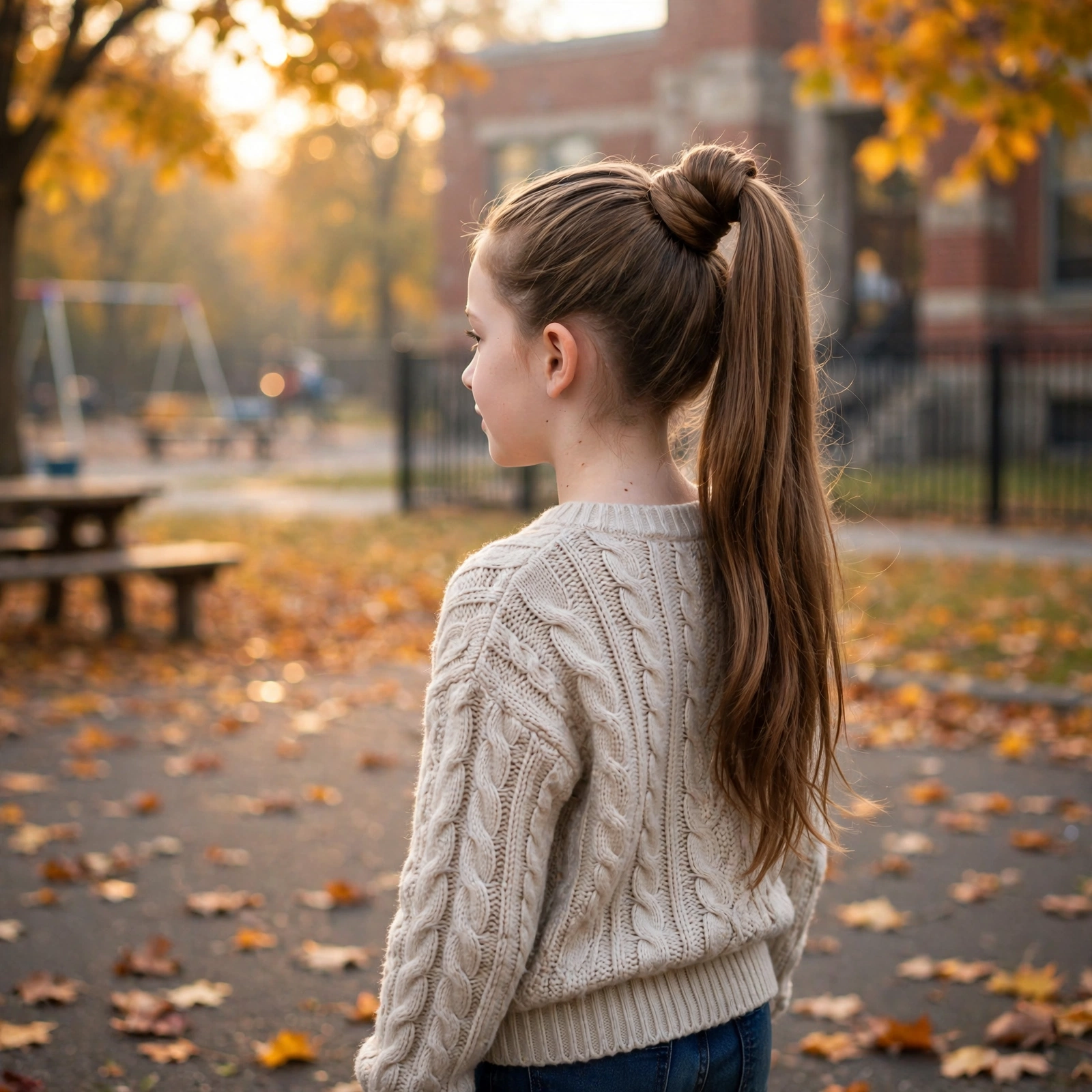
The classic high ponytail, upgraded by wrapping a strand of hair around the elastic to hide it — a thirty-second detail that makes the whole thing look polished instead of rushed. It’s the fastest style on this list and the one our editors recommend for genuine “we’re going to be late” mornings. The high placement keeps hair off the neck and collar (no sweater snags), and it survives recess running better than a low pony, which swings and tangles. The vibe is sporty-polished — PE days, running late, and the universal default that never looks wrong.
How to get it: Brush hair up into a high ponytail at the crown and secure with a strong elastic. Take a thin strand from the underside of the ponytail, wrap it around the elastic to cover it, and pin the end underneath with a bobby pin. Smooth the top with your hands and a tiny bit of smoothing cream.
Best for: Ages 5–12; medium to long hair; all textures. Fine hair should tease the crown lightly first so the elastic doesn’t slide; thick hair needs a heavy-duty elastic.
Maintenance: Low. 3–5 minutes; the quickest style here. May need a tightening tug at lunch for very active kids. Redo daily.
Pro tip: The comfort trick: don’t pull every hair drum-tight. Secure the ponytail firmly but leave the hairline slightly soft — a ponytail that gives no headache is a ponytail that stays in all day. Two stacked elastics hold better than one overstretched elastic.
7. Mini Space Buns
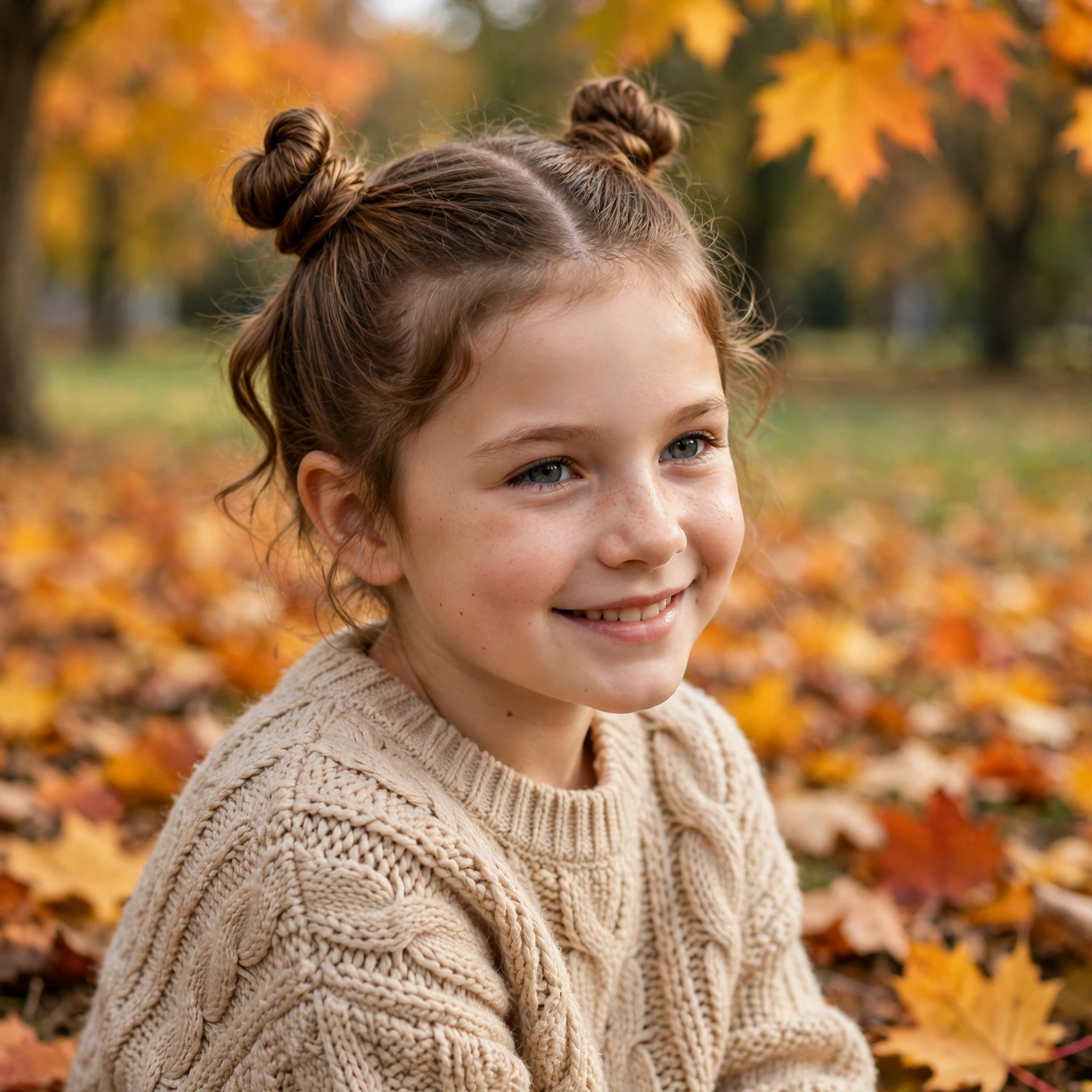
Two small buns sitting high on either side of the crown — the cutest five-minute style in existence, and the single best option for the youngest girls who pull everything else out by 10 a.m. Because the hair is fully contained in two small anchors, there’s nothing to catch, tangle, or fall in her face, and the style looks intentional even when it gets a little messy (which, with a five-year-old, is guaranteed). Our editors found these are also beanie-compatible: the buns sit above where most kids’ beanies land. The vibe is pure fun — spirit week, field trips, and mornings when she picks her own hairstyle.
How to get it: Part hair down the middle. Make two high pigtails, twist each one into a small bun, and secure each with an elastic plus a bobby pin or two. Don’t aim for perfect symmetry — slightly playful is the whole point. Pull out a few tiny pieces around the face if she wants.
Best for: Ages 5–10; medium to long hair (shorter hair can do “half” space buns with the bottom half down); all textures. Curly hair makes especially adorable space buns with zero extra work.
Maintenance: Low. 4–6 minutes; holds all day on most hair. Very fine hair may need a second pin per bun after recess. Redo daily.
Pro tip: Make the pigtails first and check they’re even by having her look straight into a mirror — uneven placement is the only thing that makes space buns look accidental instead of cute. And use mini clear elastics for the pigtails; they disappear under the buns.
8. Front French Braid Headband
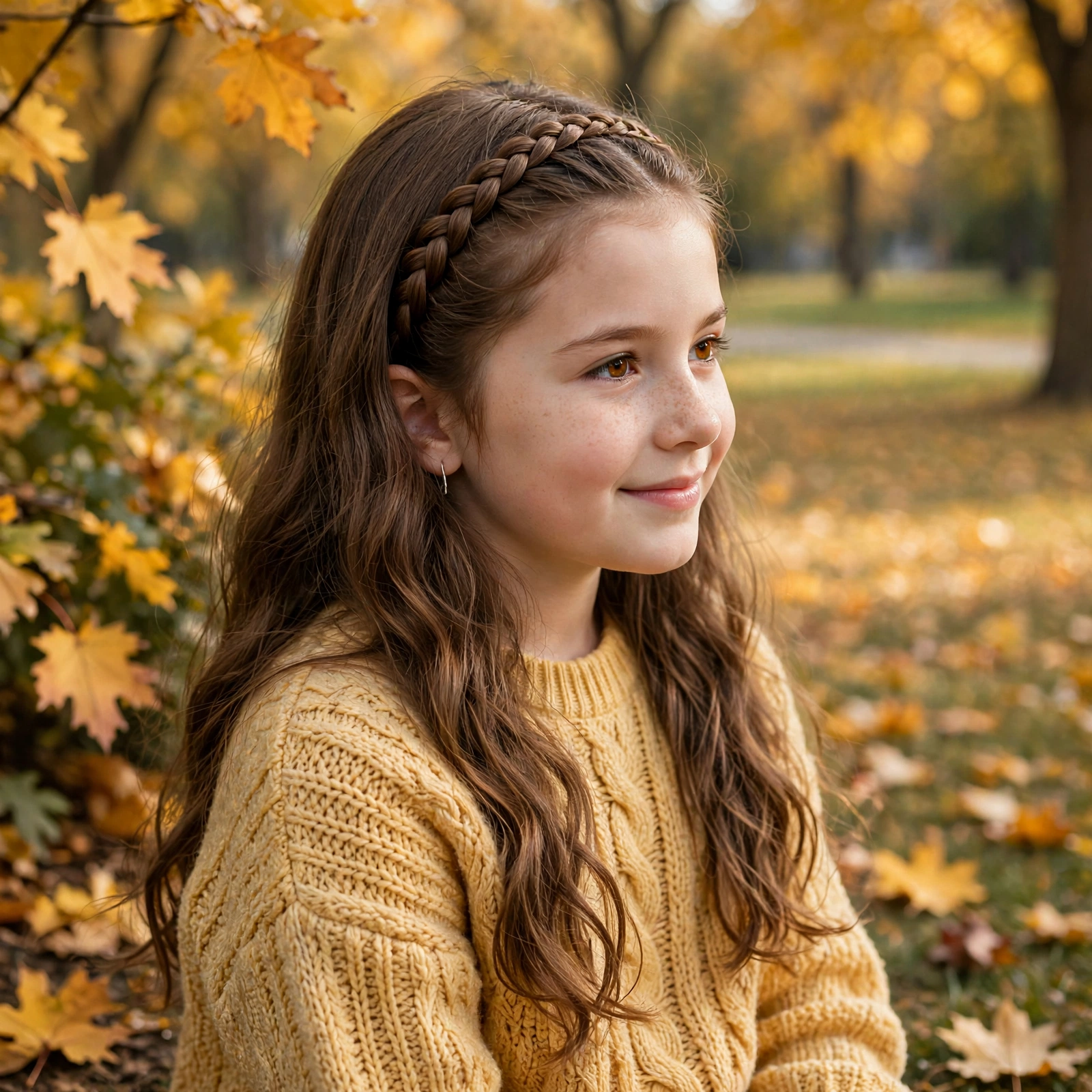
A single French braid swept across the front hairline from one temple toward the other, functioning as a headband made of her own hair. It solves two classic school problems at once: bangs and flyaways staying out of her eyes during class, and headbands getting lost by second period (a braid can’t fall out of a backpack). Our editors found this is the best style for girls growing out bangs, and it’s a genuine lifesaver during fall’s static season. The vibe is neat and sweet — class picture day, school concerts, and windy playground days.
How to get it: Part hair on one side. Starting at the deeper side of the part near the temple, French-braid along the hairline toward the opposite ear, feeding in hair only from the front side as you go. When you reach the opposite temple, pin the end behind the ear with two crossed bobby pins. Leave the rest of the hair down or in a low pony.
Best for: Ages 7–12; shoulder-length to long hair; all textures. Especially good for growing-out bangs and static-prone fine hair in fall.
Maintenance: Low to medium. 6–8 minutes; holds all day once pinned well. The pins are the weak point — cross two of them in an X. Redo daily.
Pro tip: Braid it slightly tighter than feels natural at the start — the front hairline loosens first, and a firm start buys you the full school day. A light mist of hairspray along the braid before school, not after, sets it best.
9. Twisted Low Side Ponytail
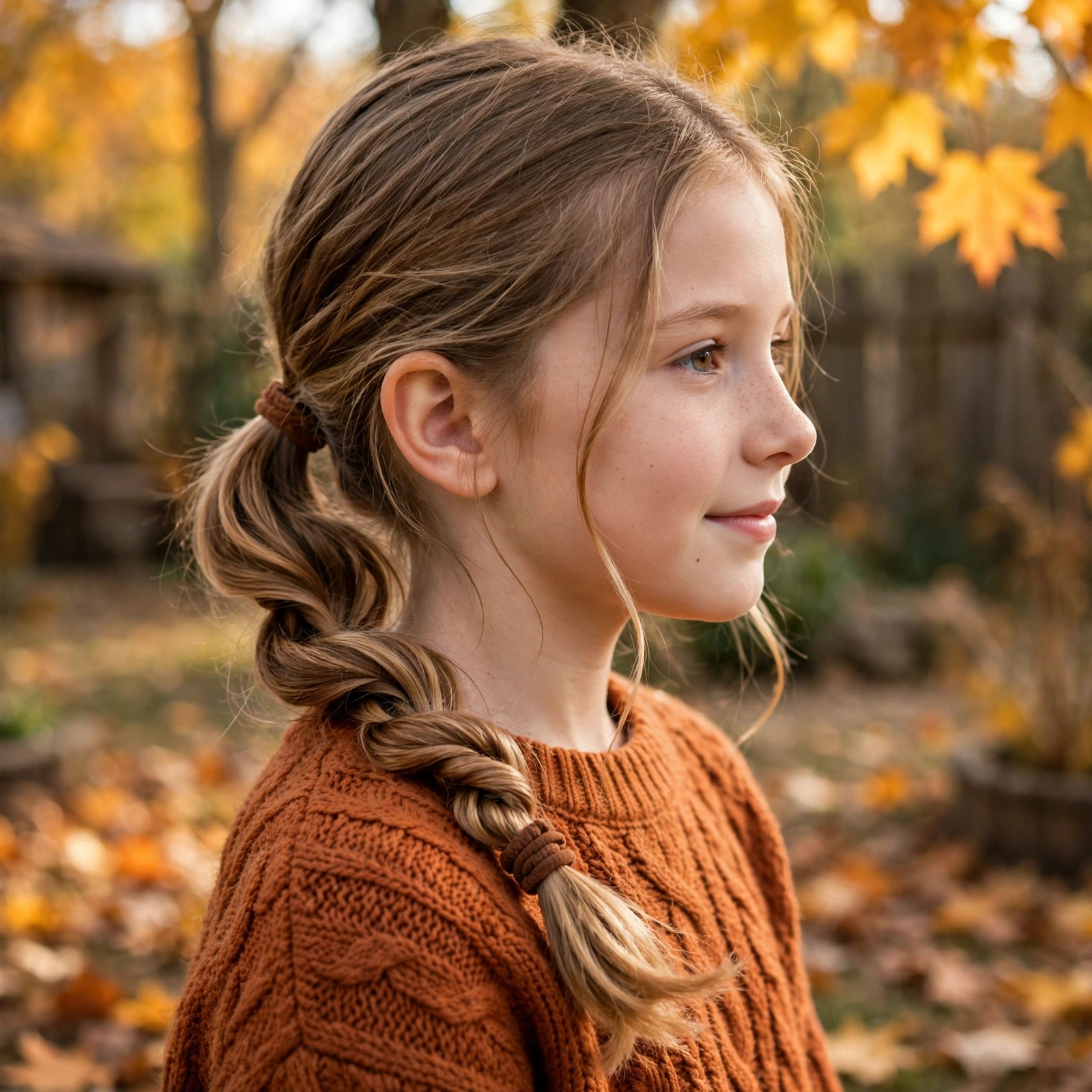
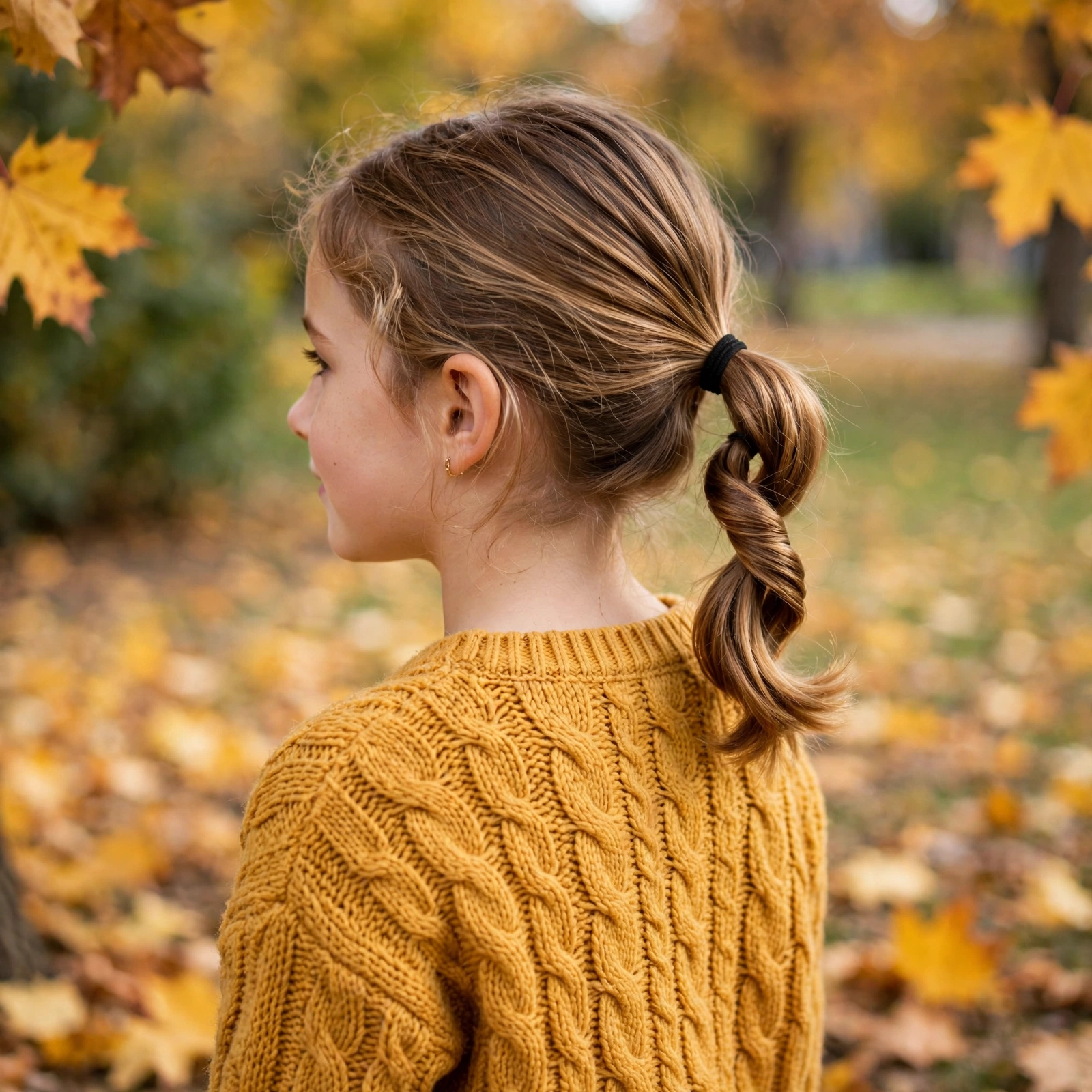
A low ponytail worn over one shoulder, with the hair twisted once or twice before securing — a simple rope twist that keeps the ponytail from swinging into a tangled mess and adds a pretty spiral detail. It’s the gentlest ponytail option for girls who complain that high ponies pull, and the side placement keeps hair clear of backpack straps and chair backs. Our editors liked this one for sensitive scalps: the twist distributes tension so nothing yanks at the hairline. The vibe is soft and relaxed — reading days, art class, and low-key school mornings.
How to get it: Sweep all hair loosely to one side at the nape. Divide into two sections, twist them around each other 3–4 times (a simple rope twist), and secure with an elastic. Fluff the twist gently for softness. Keep the tension loose at the scalp — comfort is the point.
Best for: Ages 6–12; medium to long hair; straight to wavy textures show the twist best. Great for sensitive scalps and fine hair that can’t take tight styles.
Maintenance: Low. 4–5 minutes; stays comfortable all day. May need one re-twist at lunch for very silky hair. Redo daily.
Pro tip: Secure the rope twist with an elastic, then wrap a small strand around the elastic like the high wrapped pony (#6) — it stops the twist from unraveling upward, which is the one failure mode of this style. Twist in the same direction every time so it becomes muscle memory.
10. Curly Pineapple Puff
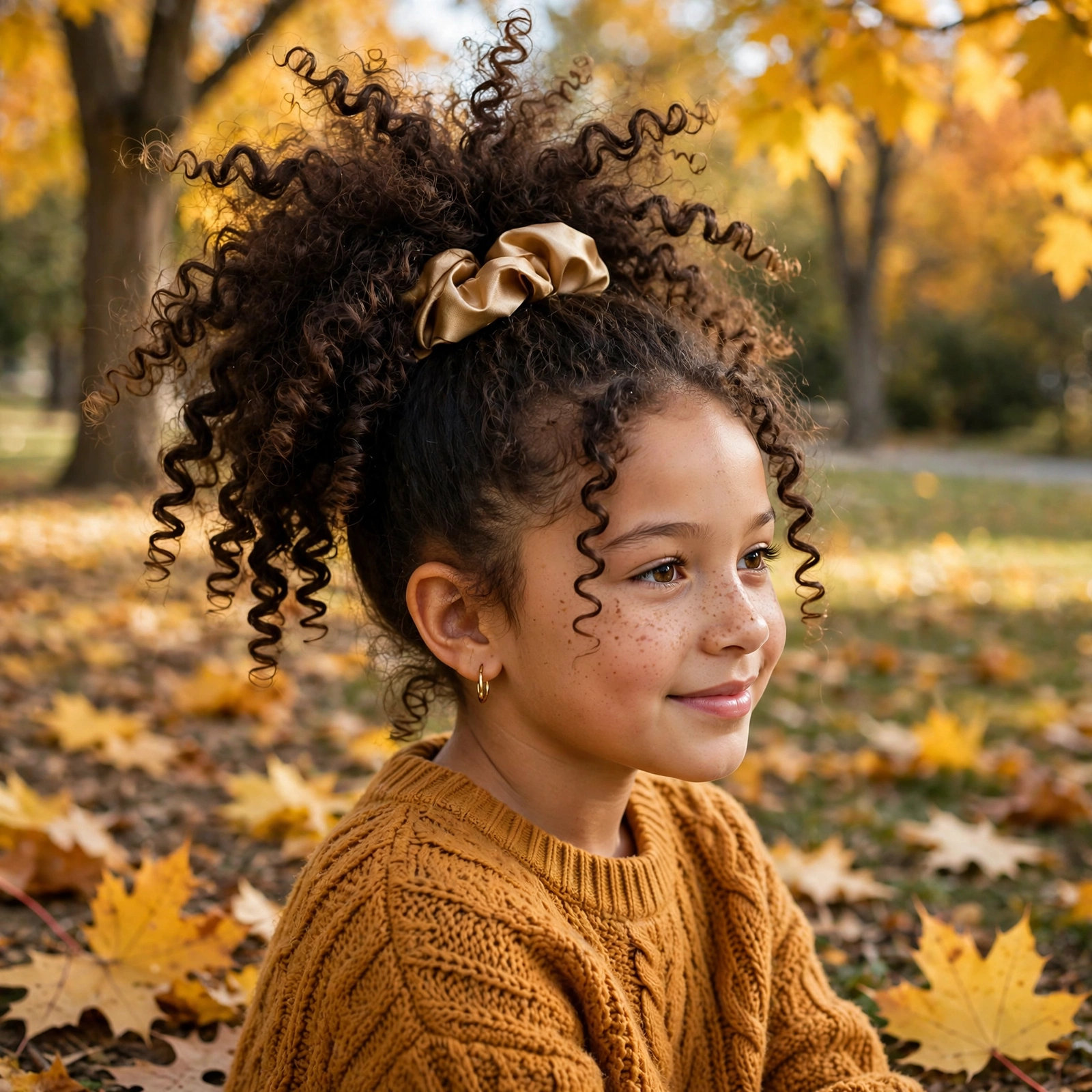
A high, loose puff on top of the head that gathers curly and coily hair up and away from the face while protecting the curl pattern — the beloved “pineapple” method, worn as the daytime style instead of just at bedtime. It’s the lowest-manipulation style on this list: no brushing curls out, no fighting texture, no heat. For curly girls, this is the fall school style our editors recommend first, because it keeps ends tucked away from drying autumn air and scarves while letting the curls do what they do best. The vibe is joyful and confident — every day, especially picture day, when her natural texture deserves the spotlight.
How to get it: On wash day or refreshed curls, flip her head forward, gather all the hair loosely to the very top of the head, and secure with a satin scrunchie or loose elastic — just one or two wraps, never tight. Arrange the curls with your fingers so the puff sits evenly. Smooth the edges with a little edge control or gel if she likes a neat hairline.
Best for: Ages 5–12; curly to coily textures (types 3–4); medium to long curls. This style is specifically designed for natural texture — not recommended for straight hair.
Maintenance: Low. 3–5 minutes; the curls hold their shape all day under the scrunchie. Refresh curls with a water + leave-in mist in the morning. Can last 2–3 days with nighttime pineappling.
Pro tip: Never detangle dry curls to do this — refresh with a spray bottle of water mixed with a little leave-in conditioner, then finger-detangle gently. And a satin scrunchie (not a regular elastic) is non-negotiable here; regular elastics snap curly hair at the tie point.
11. Pull-Through Braid
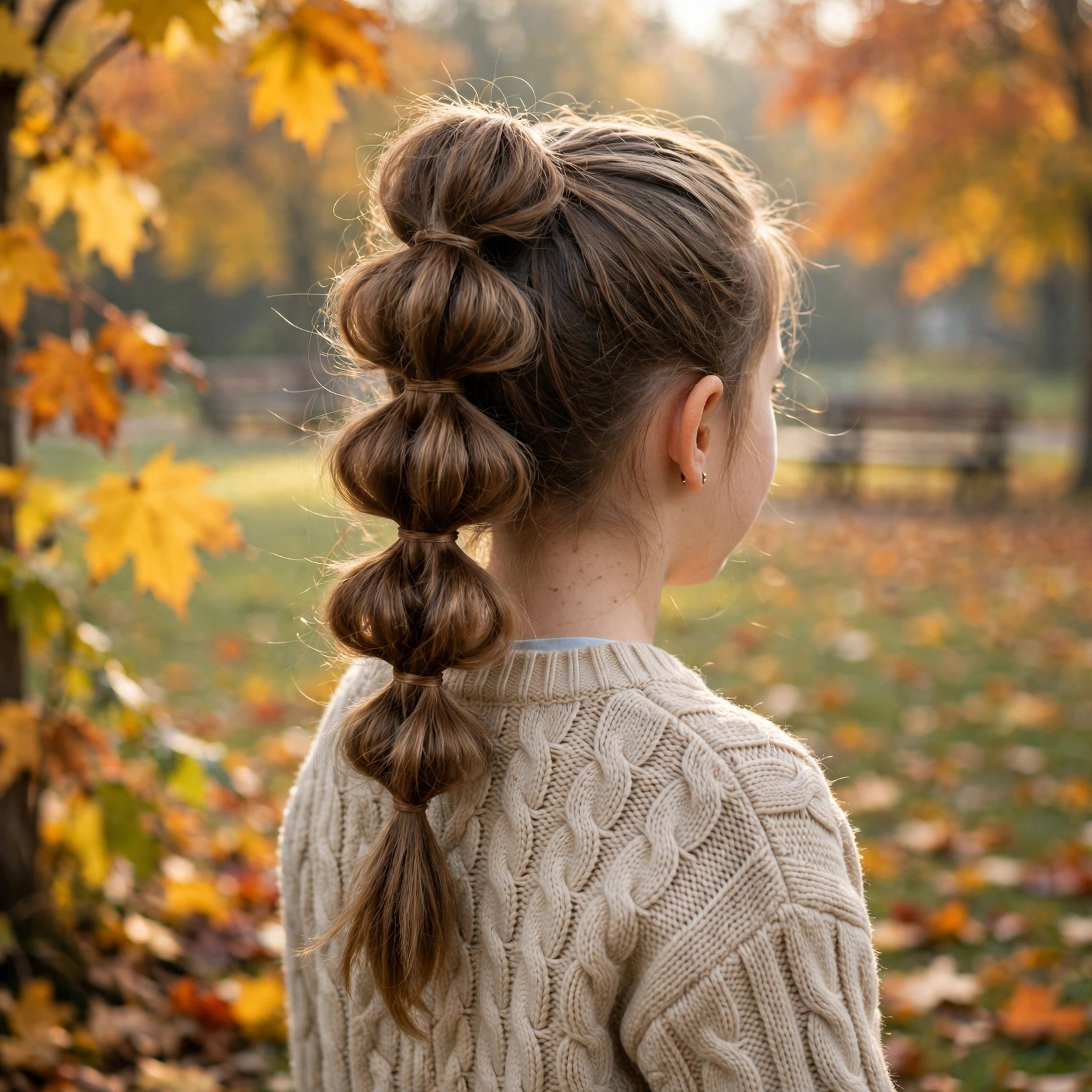
A faux-braid made by stacking ponytails: each small ponytail is split and pulled around the next one down, creating a chunky, voluminous braid look with no actual braiding technique required. It’s the cheat code for parents who can’t French braid — our editors had complete beginners doing presentable pull-throughs on the first try. The finished braid looks thick and intricate, holds extremely well (every section is independently secured), and survives the whole school day including gym. The vibe is impressive-without-trying — school events, days she wants compliments, and mornings when you want maximum style for minimum skill.
How to get it: Make a small half-ponytail at the crown and secure it. Make a second ponytail just below it, incorporating the tail of the first. Split the first ponytail’s tail in two, bring the halves around the second ponytail, and clip them out of the way; add the second ponytail’s tail into a new third ponytail below. Repeat down the head, then gently tug each section outward to puff it into a full braid shape.
Best for: Ages 7–12; medium to long hair; all textures — fine hair especially loves this because the puffing creates volume it can’t get from real braiding. Needs a handful of small elastics.
Maintenance: Medium. 8–10 minutes the first few times, faster with practice; holds all day superbly. Uses many elastics — keep spares in her backpack. Redo daily.
Pro tip: Use clear mini elastics so they vanish into the style, and puff each section BEFORE moving to the next one — trying to puff the whole braid at the end pulls sections loose. This is also the best style on the list for second-day hair, which has the grip the technique needs.
12. Inside-Out Topsy Tail Ponytail
The retro topsy tail, modernized: a low ponytail flipped inside-out through a gap above the elastic, creating a pretty twisted detail at the base in about two minutes flat. It’s the simplest “fancy” style ever invented — one flip transforms a plain ponytail into something that looks deliberately styled. Our editors kept this as the emergency backup for every test week: when a braid falls apart at 7:55 a.m., the topsy tail saves the morning. The vibe is neat and classic — any school day, especially the rushed ones.
How to get it: Make a low ponytail at the nape, but keep it slightly loose. Reach up behind the elastic, part the hair above it into a gap with your fingers, and flip the ponytail up and through the gap from underneath. Pull the tail down to tighten — the twist sets itself. Smooth the top and you’re done.
Best for: Ages 5–12; shoulder-length to long hair; all textures. The easiest style on this list for beginners — genuinely hard to mess up.
Maintenance: Low. 2–3 minutes; holds all day. The twist can be re-tightened with one tug if it loosens. Redo daily.
Pro tip: The gap above the elastic is everything — make it with your fingers, not a tool, and keep the ponytail loose until AFTER the flip; flipping a tight ponytail is what makes this frustrating. For longer-lasting hold, do the flip on slightly damp hair.
Fall School Hairstyles for Girls: FAQs
How do I deal with morning tangles without the tears?
Technique beats products, but the right order matters: detangling spray first, then start at the ends and work up in small sections while holding the hair firmly above where you’re brushing. Never start at the roots and rip down — that’s where the tears come from. For truly stubborn knots, work them apart with your fingers before the brush goes near them, and detangle damp hair rather than dry whenever possible. If the tangles have gone beyond a bad morning into actual matting, read up on how to safely work through matted hair before you reach for the scissors — most mats can be saved with patience, conditioner, and a wide-tooth comb.
What are the best hairstyles for second-day hair?
Second-day hair is actually easier to style than freshly washed hair — it has natural grip that makes braids and twists hold better. The pull-through braid (#11), double Dutch braids (#1), and the low scrunchie bun (#4) are our top second-day picks from this list. A quick spritz of dry shampoo at the roots (not the lengths) absorbs oil and adds texture; then style as normal. The one thing to avoid on second-day hair is anything requiring a perfectly smooth finish, like the high wrapped ponytail — day-two texture fights sleekness, so lean into styles where texture is an asset.
Which styles are lice-check friendly?
Any style that keeps hair fully contained and off the neck reduces head-to-head contact transmission, which is how lice actually spread — braids and buns are genuinely protective, not just neat. Double Dutch braids (#1) and the low scrunchie bun (#4) are the best picks here because they keep every strand contained and make the hairline and nape easy for a parent to check quickly at night. Avoid loose long hair during known school outbreaks, skip shared brushes and hats, and do a quick weekly check behind the ears and at the nape regardless of style. Contained hair also simply tangles less, so it’s a win twice over.
What should I do for school picture day?
Picture day rewards styles that look good from the front and photograph cleanly: the bubble braid ponytail (#2), half-up twisted crown (#3), and front French braid headband (#8) are our top three. Do a trial run the weekend before — picture-day morning is not the time to learn a fishtail. Wash her hair the night before (not the morning of, when it’s too slippery), and bring a small emergency kit in her backpack: two elastics, two bobby pins, and a travel detangling spray. One practical note: avoid brand-new products on picture day; an unfamiliar spray on photo morning is how you discover an allergy or a weird reaction in the class photo.
Which hairstyles survive hats and beanies in late fall?
Low and contained wins hat season every time. The low scrunchie bun (#4), inside-out topsy tail (#12), and double Dutch braids (#1) all sit at or below where a beanie lands, so they survive being covered without getting crushed. Anything piled high on the crown — space buns, high ponytails, the pineapple puff — will get flattened, so save those for hat-free days. Two more tricks: choose beanies with a smooth or satin lining to prevent frizz and breakage, and part her hair where the hat’s edge will sit before putting it on to avoid the dreaded horizontal dent. When the hat comes off indoors, one flip of the head upside down and a shake restores the volume.
The Bottom Line
The best fall school hairstyles for girls aren’t the most elaborate ones — they’re the ones a busy parent can do in under ten minutes, that survive recess and gym, and that don’t end in tears at the brush. Pick two or three styles from this list that fit her age and hair type, practice each once on a relaxed weekend morning, and let this be the fall that school mornings finally feel easy. For even more ponytail inspiration as she gets older, our ponytail hairstyles for school girls guide has her covered. Happy fall, and happy school mornings.