

12 Fall Braided Hairstyles for Women
If you’re hunting for fall braided hairstyles for women that hold up to wind, hats, and scarf season — not just look good in a mirror selfie — this is the list you need. The best fall braided hairstyles for women in 2026 are the loose chunky side braid, the braided crown, and the fishtail braid — here’s why: they stay put for days, they look better slightly undone, and they tuck your ends away from fall’s dry, staticky air. Braids are fall’s hardest-working hairstyle, and this season they’ve evolved way past the basic three-strand plait.
There’s a reason braids dominate autumn braids roundups every October. Fall weather is the enemy of loose hair: wind tangles it, wool scarves rough it up, and dry indoor heating turns ends staticky and brittle. A braid solves all of that at once. It’s wind-proof by construction, hat-friendly (pull a beanie right over a low braid and it survives), and genuinely protective — your fragile ends stay tucked inside the weave instead of rubbing against coat collars all day.
The braid ideas for 2026 share one unifying shift: texture over tightness. The severe, pulled-to-the-scalp braids of past years have given way to pancaked, pulled-apart plaits that look soft, romantic, and expensive. A finished braid should look like you did it in five unhurried minutes and then went on living your life — because in 2026, you can. Every style on this list is built for real fall days: commuting, tailgates, Thanksgiving dinner, weekend markets, and the thousand small moments in between.
Another thing worth knowing: braids are a genuine protective braids fall strategy, not just a style choice. Cold air holds less moisture than summer air, and the constant on-off of scarves creates friction that snaps fragile ends. Keeping hair contained in a braid for a few days a week — with a little oil on the lengths first — is one of the simplest things you can do to come out of winter with healthy hair.
What makes this guide different: each of the 12 styles comes with the complete picture — what it looks like in real life, how to get it with steps a beginner can follow, who it flatters most, honest maintenance expectations, and a pro tip you’d normally only learn after doing it wrong a few times. No fluff — just the 12 best fall hair ideas in braids for 2026.
Below, we’ve broken down all twelve styles from the chunky side braid to the sleek braided ponytail. Cozy, wind-proof, and genuinely wearable — let’s find your fall braid.
Table of Contents
- The Chunky Side Braid
- Braided Crown
- Bubble Braid Ponytail
- Double Dutch Braids
- Fishtail Braid
- Half-Up Braided Crown
- Braided Low Bun
- Waterfall Braid
- Four-Strand Braid
- Braided Headband
- Dutch Braid Pigtails with Ribbons
- The Braided Ponytail
Editor’s Top 5 Fall Braided Hairstyles Picks
Short on time? These are the five braided looks our editors keep coming back to this season — the ones with the highest style-to-effort ratio of all twelve. For a wedding or prom, our braided bun hairstyles for prom roundup pairs beautifully with these everyday picks.
1. The Chunky Side Braid
The undisputed star of fall 2026. One big, pancaked braid draped over the shoulder — romantic, cozy, and absolutely perfect against chunky knits and wool coats. It looks intricate but takes about ten minutes, and it genuinely improves as it loosens throughout the day. If you try one braid this season, this is the one.
2. Braided Crown
Two braids wrapped around the head like a halo — ethereal for fall weddings, surprisingly wearable for weekends. It photographs beautifully, stays secure through long evenings, and keeps every strand off your neck when you’re bundled in scarves. The soft, pancaked finish is what makes this year’s version modern rather than costume-y.
3. Bubble Braid Ponytail
A high ponytail sectioned into rounded “bubbles” with elastics — playful, modern, and achievable in five minutes with zero braiding skill required. It’s the highest style payoff on this list for the least effort, and it survives wind, workouts, and long days without budging.
4. Double Dutch Braids
The ultimate windy-day insurance policy. Two inverted French braids that sit boldly on top of the hair and don’t move — gym, storms, sixteen-hour days, nothing touches them. Sporty, dimensional, and cool, they’re the most secure style on the list by a wide margin.
5. Fishtail Braid
Intricate-looking but secretly built on a simple two-strand rhythm that becomes muscle memory fast. The fishtail is the boho classic that elevates even a plain sweater into an intentional outfit, and its woven texture looks richer in fall’s warm light than any other braid here.
What Makes a Fall Braid Look Modern in 2026?
Modern braids are built on texture and deliberate imperfection. The tight, lacquered braids of a decade ago have been replaced by plaits that are gently pulled apart — “pancaked” — after braiding, so they sit wider, softer, and more dimensional on the head. The technique is simple: once the braid is secured, tug the outer edge of each section outward, working from the bottom up, until the braid looks almost twice as wide. This one move is the difference between a braid that looks like 2016 and one that looks like right now. Pancake the outer edges only, never the middle, or the whole thing unravels.
Prep is where most braids succeed or fail, and it starts with grip. Slightly dirty, second-day hair braids better than freshly washed hair — it has natural texture for your fingers to hold. If you’ve just washed, mist a texturizing spray or dry shampoo through the mid-lengths and ends before you start. For sleek styles like the braided ponytail, work a pea-sized amount of pomade or smoothing cream along the hairline first; it tames flyaways without the stiffness of gel. And if your hair is fine, add a volumizing powder at the roots before braiding — it creates the illusion of density that makes every braid look fuller.
Longevity is the braid’s superpower, but only if you set yourself up for it. A well-done braid lasts two to three days if you sleep in it right: loosen it slightly before bed — tight tension overnight causes hairline breakage — and swap cotton for a satin or silk pillowcase. If the braid feels tired on day two, don’t redo it: mist with texturizing spray, pancake it wider, and wear it messier.
Fall brings one specific enemy: dry-air frizz and static. Cooler air holds less moisture, and the wool-scarf-and-beanie cycle creates friction that turns smooth braids fuzzy by evening. The fix is moisture before you braid, not after. Work a single drop of hair oil through the lengths before you start — your ends stay hydrated and protected inside the weave all day. If static hits mid-day, smooth a dryer sheet over the surface — and skip heavy hairspray, which flakes in dry air and turns texture crunchy.
How to Choose the Right Braid for You
Start with your hair’s length and density, honestly assessed. Long, thick hair can carry statement braids — the chunky side braid, the braided crown, the four-strand — because there’s enough hair to make them look substantial rather than stringy. Fine or medium hair does better with techniques that manufacture fullness: pancaking, bubble braids, the waterfall effect, or ribbon-embellished pigtails. Thin hair has one more trick up its sleeve: braid slightly damp hair, and the braid sets with more texture and grip than it ever could dry. (There’s a full thin-hair braiding guide in the FAQs below.)
Next, match the braid to your actual effort level and occasion. Bubble braids and braided headbands take five minutes and look like much more; Dutch braids and fishtails take practice but reward you with all-day security. For formal events, braided updos (crowns, buns, the waterfall half-up) photograph beautifully and stay put all evening. If prom is the event, our braided ponytail prom hairstyles roundup has sleek high-pony looks that last all night. For everyday, side braids and half-up styles are the sweet spot: hair out of your face, length on display, minimal skill required.
Face shape is a guide, not a rule, but a few patterns hold. Braids pulled straight back off the forehead can emphasize roundness, so if that’s a concern, keep some volume at the crown or leave face-framing pieces out — a few wispy bits around the face make braids look romantic rather than severe on everyone. Side-swept braids are close to universally flattering; the asymmetry is kind to every face shape. And if you wear glasses or statement earrings, low and side braids keep the area around your face open instead of competing with your accessories.
Finally, think about your fall calendar, not just your mirror. Hat season rewards low, contained braids — anything piled high on the crown gets crushed by a beanie, while a low side braid or braided ponytail slides right under. If you’re a frequent scarf wearer, braids that end above the coat collar (buns, crowns, short pigtails) avoid the constant friction that frays ends.
12 Fall Braided Hairstyles for Women (2026 Trends)
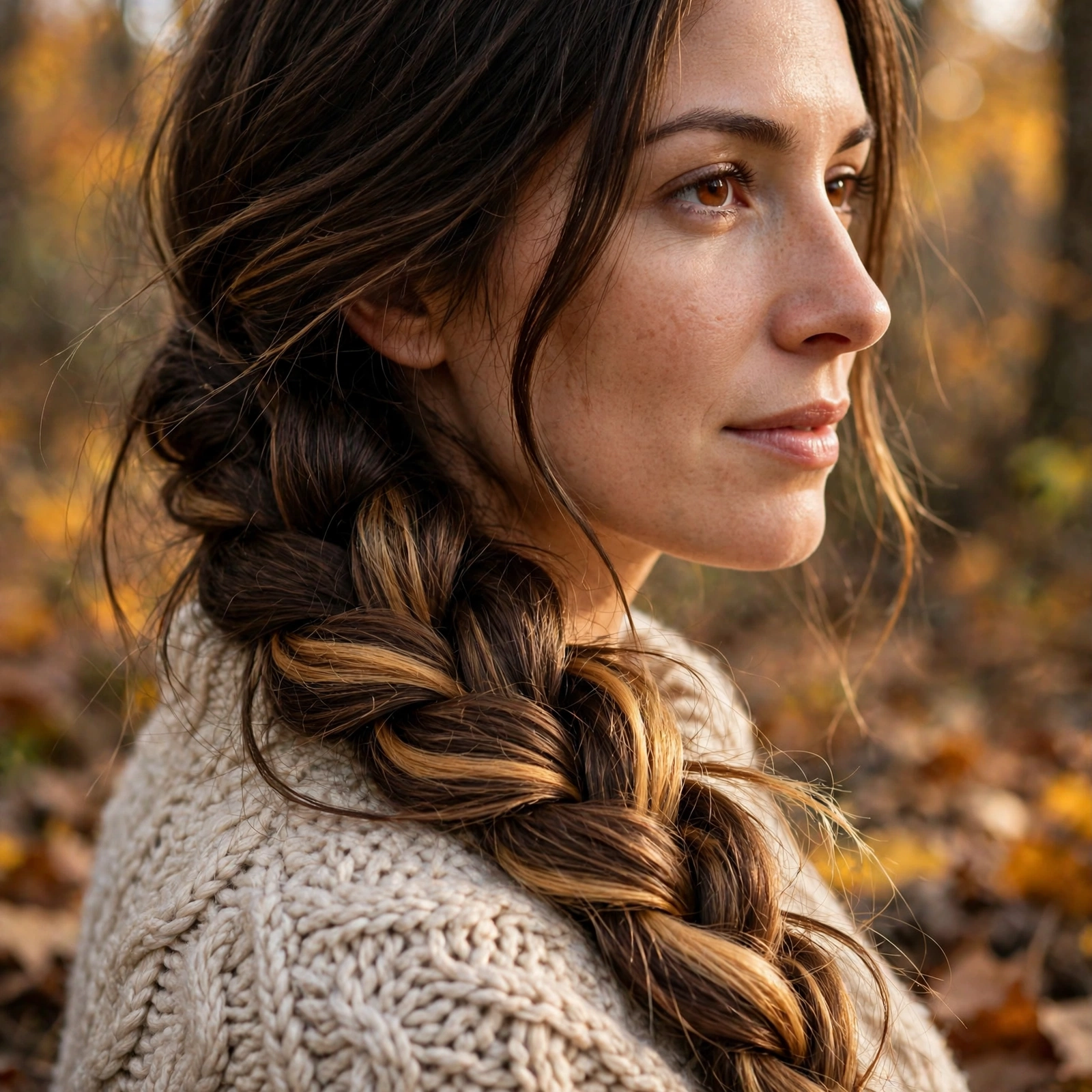
1. The Chunky Side Braid
One big three-strand braid swept over a single shoulder, pancaked aggressively until it’s nearly twice as wide as a normal plait — the chunky side braid is fall’s signature romantic statement. It’s trending hard for 2026 because it nails the season’s cozy aesthetic in one move: the wide, soft texture echoes chunky knits and wool coats, and it looks even better slightly loosened by evening than it did fresh. Think weekend markets, Thanksgiving dinner, and fireside dates.
How to get it: Sweep all your hair over one shoulder. Divide into three sections and braid loosely down the full length, keeping medium tension — not tight. Secure with a clear elastic, then pancake: starting from the bottom, gently tug the outer edges of each braid section outward until the plait widens dramatically. Finish by wrapping a small strand of hair around the elastic and pinning it underneath.
Best for: Medium to long hair (below the shoulders at minimum); medium to thick densities hold the pancaked width best, though fine hair can fake it with teasing; oval, heart, and oblong faces — the asymmetry flatters almost everyone.
Maintenance: Low. Ten minutes to braid, and it lasts two days — sleep in it loosely and day two brings effortless heatless waves when you take it down.
Pro tip: Braid it on second-day hair, or fake it: mist dry shampoo through the lengths before you start. Clean, slippery hair refuses to pancake — it slides back flat. A gritty texture spray like Oribe Dry Texturizing Spray gives fine hair the grip it needs to hold that wide, romantic shape all day.
2. Braided Crown
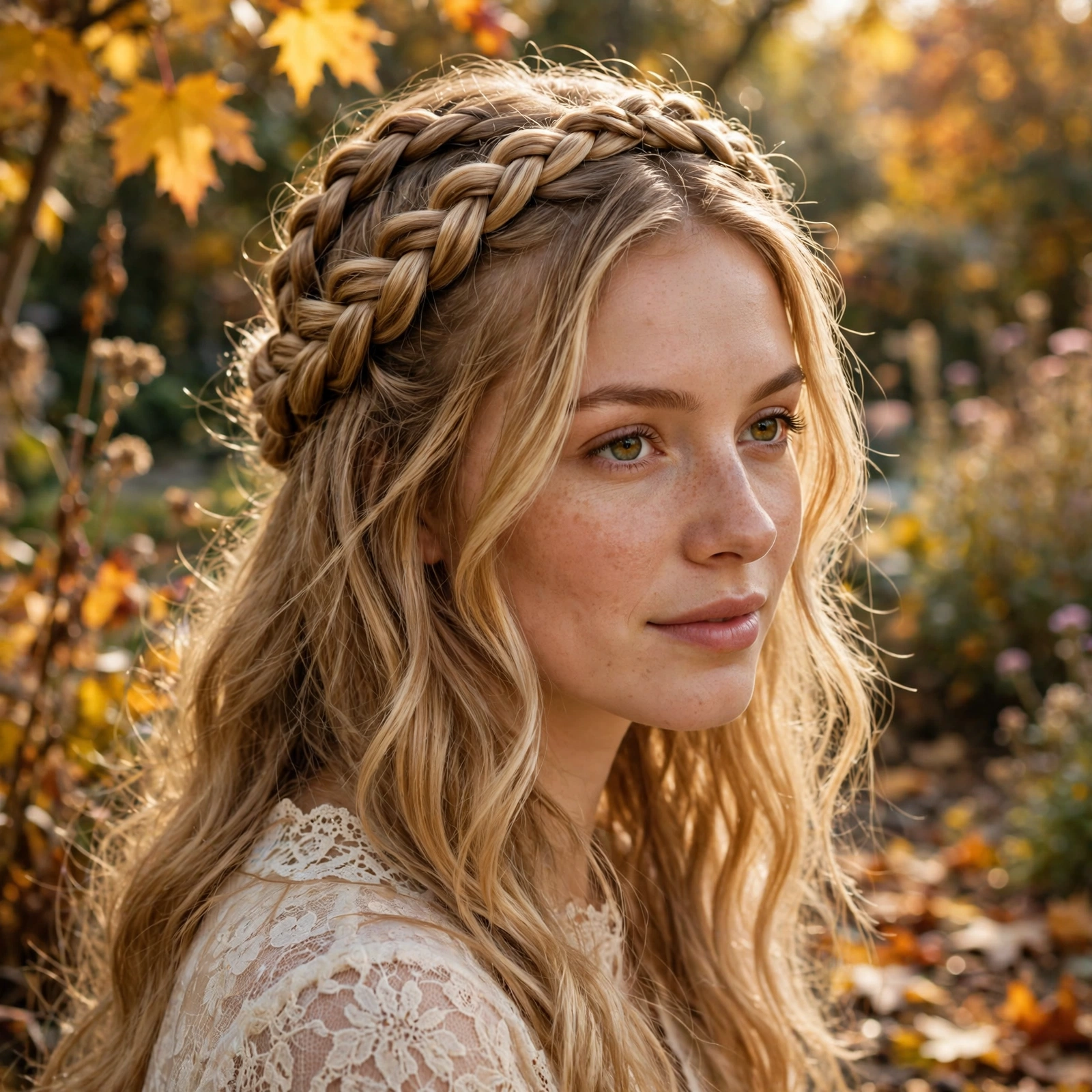
Two braids wrapped around the head and pinned into a halo — the braided crown is the ethereal showstopper of autumn braids for 2026. This year’s softer, pancaked finish made it wearable beyond weddings — loosened and undone, it reads romantic-weekend rather than bridal-costume. It keeps every strand off your neck and scarf collar while looking like you booked a stylist.
How to get it: Part hair down the middle. Dutch-braid (strands crossing under, not over) each side from the temple down toward the nape, finishing as regular three-strand braids. Pancake both braids gently for softness. Cross the braids over the top of your head in opposite directions, pinning as you go to form the halo. Tuck both ends underneath and secure with bobby pins.
Best for: Medium to long hair with enough length to wrap fully; medium to thick densities look most substantial, though pancaking helps finer hair; oval and heart-shaped faces especially — the halo frames them beautifully.
Maintenance: Medium. Fifteen to twenty minutes the first few times, faster once you’ve done it twice. Lasts a full day and evening easily; refresh by re-pinning any loose spots rather than starting over.
Pro tip: Hide every pin completely — slide bobby pins in with the wavy side facing down and tuck the tips under the braid. Visible hardware is the one thing that makes a crown look homemade instead of salon-done. And pin the crown slightly back from the hairline, not right at it; that half-inch gap keeps it from reading like a costume headband.
3. Bubble Braid Ponytail
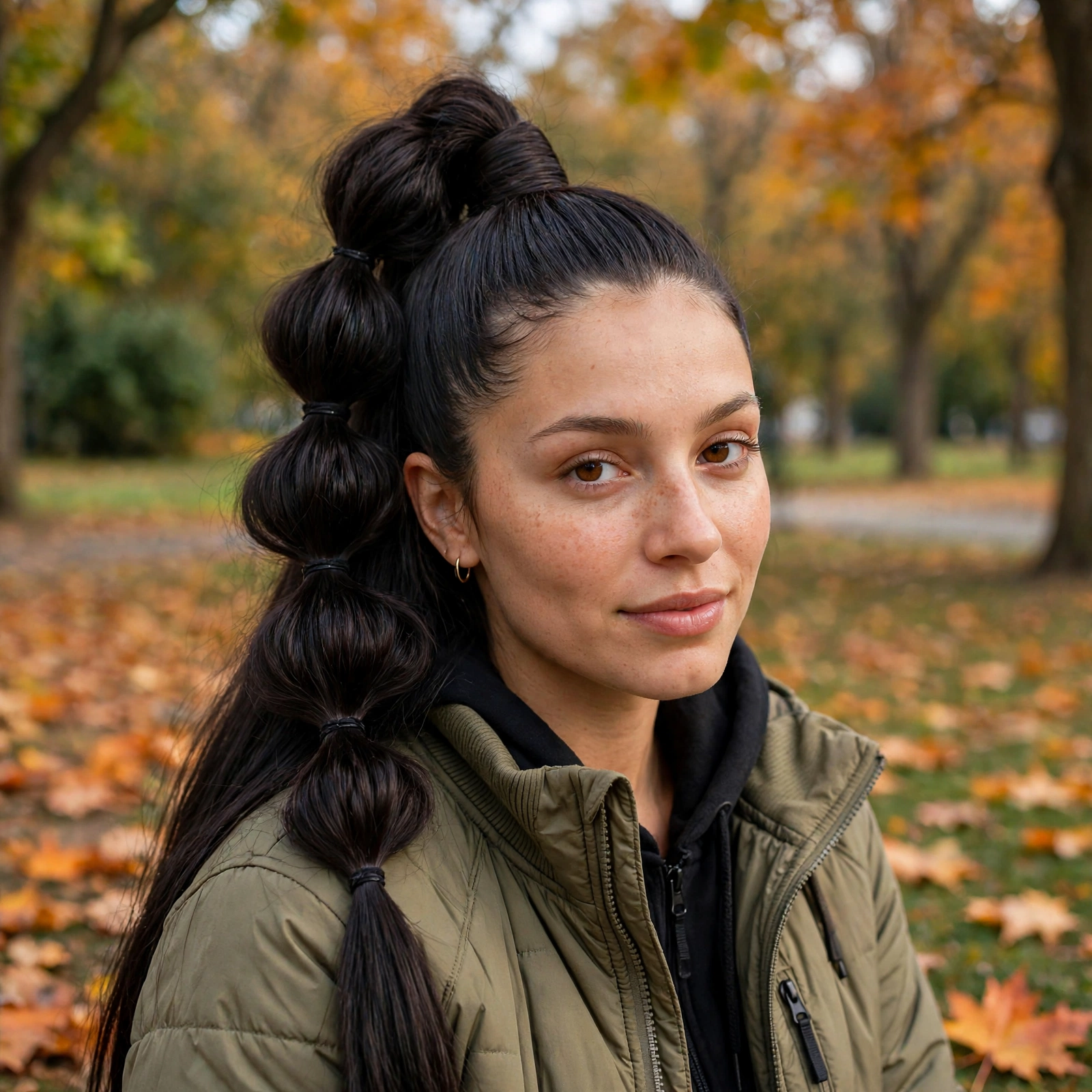
A high ponytail sectioned into rounded “bubbles” with elastics spaced down the length — the bubble braid is the playful modernist of this list. It’s trending in braid ideas 2026 because the style-to-skill ratio is unmatched: zero actual braiding required, five minutes of work, and it looks like you tried far harder than you did. It doesn’t budge in wind, survives workouts, and the sculptural shape pairs perfectly with athleisure and oversized blazers.
How to get it: Pull hair into a high ponytail and secure firmly. Place another elastic 2–3 inches down the tail, then gently pull the hair between the elastics outward and upward to form a rounded bubble. Repeat down the full length. Fluff each bubble evenly — asymmetry looks like a mistake here, unlike looser braids.
Best for: Medium to long hair (needs enough length for at least three bubbles); all densities — fine hair actually excels here since the pulling creates volume; oval, round, and heart-shaped faces benefit from the ponytail’s lift.
Maintenance: Low. About five minutes, and it holds all day — arguably the most wind-proof style on this list. Lasts one day comfortably; the bubbles flatten overnight, so rebuild fresh rather than reviving.
Pro tip: Use small clear elastics, and match the bubble size to your hair’s thickness — chunky bubbles on fine hair need more pulling and a spritz of texturizing spray inside each section for structure. And tease each section lightly before pulling it out: that hidden backcombing is what keeps bubbles round instead of collapsing into sad ovals by noon.
4. Double Dutch Braids
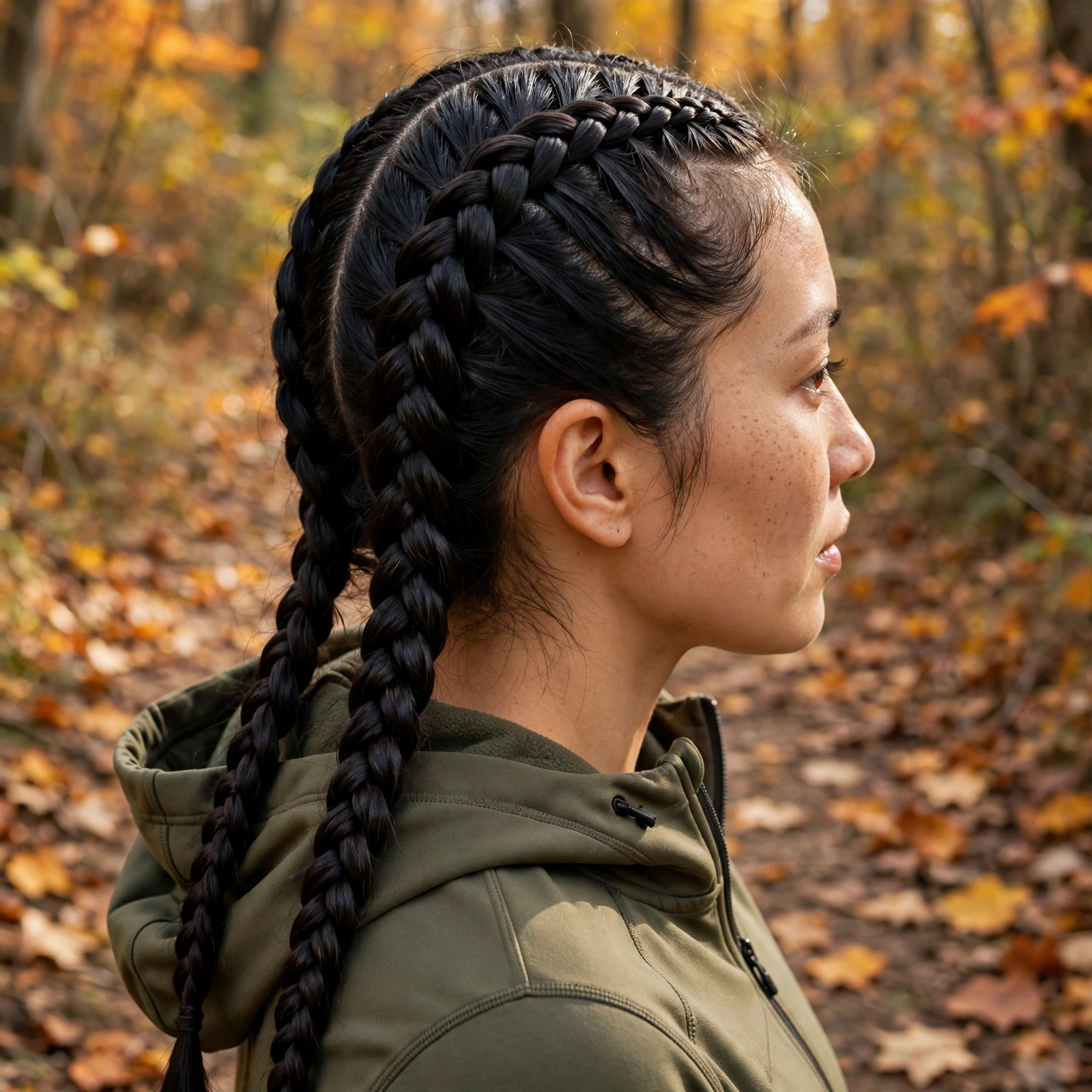
Two inverted French braids running from the hairline to the nape, finished as regular plaits down the back — double Dutch braids are the sporty, secure workhorses of fall. They hold a firm spot in every protective braids fall roundup because nothing stays put like them: gym sessions, storms, sixteen-hour days, beanies pulled on and off — the braids don’t move. For 2026, keep the front sections slightly loose and pancaked rather than shellacked — it softens the athletic edge into something brunch-ready.
How to get it: Part hair down the middle into two sections. On each side, Dutch-braid from the hairline back toward the nape — strands cross under the middle strand (not over, like a French braid). Keep tension firm but not scalp-punishing. Once you run out of hair to add at the nape, continue as a regular three-strand braid and secure with elastics.
Best for: Medium to long hair; medium to thick densities show the dimensional “raised” effect best; all face shapes — keep the front slightly loose and pull out two face-framing pieces to avoid severity. Very curly hair should stretch it first.
Maintenance: Low to medium. Ten to fifteen minutes once you know the technique (the underhand motion takes one practice session to click). Lasts two to three days — the most durable style on this list — and survives sleeping better than any other braid here.
Pro tip: Dutch braids expose the scalp along the part lines, so they’re merciless about showing oil. Dust dry shampoo along both parts before braiding — Batiste Original on the partings keeps them looking fresh through day three. And braid them slightly damp for extra staying power; they set with more grip as they dry.
5. Fishtail Braid
Two sections woven by crossing thin outer strands over to the opposite side — the fishtail is the boho classic that makes every fall braided hairstyles for women list because nothing else creates that intricate, woven, almost fabric-like texture. It’s trending for 2026 in its loosest form yet: slightly messy, gently pancaked, worn over one shoulder with a chunky sweater. It looks far more complicated than it is — the rhythm becomes muscle memory after two attempts.
How to get it: Divide hair into two equal sections (forget three strands entirely). Take a thin strand from the outside of the left section, cross it over to the inside of the right section. Then take a thin strand from the outside of the right section and cross it to the inside of the left. Repeat all the way down — thinner strands look more intricate, thicker strands go faster. Secure, then pancake gently by tugging the edges.
Best for: Medium to long hair; all densities — fine hair looks surprisingly intricate in a fishtail because the thin strands multiply visually; oval, oblong, and heart-shaped faces. Straight or lightly waved hair shows the weave best.
Maintenance: Low to medium. Eight to twelve minutes; the first attempt is slow, the third is fast. Lasts one to two days — the thin-strand structure loosens gracefully rather than falling apart.
Pro tip: The number one beginner mistake is taking strands that are too thick, which makes the fishtail look like a sloppy regular braid. Use strands no wider than a pencil for that signature woven look — yes, it takes longer, and yes, it’s worth it. And keep both sections in your fists rather than laying them down; dropping a section is how fishtails turn into tangles.
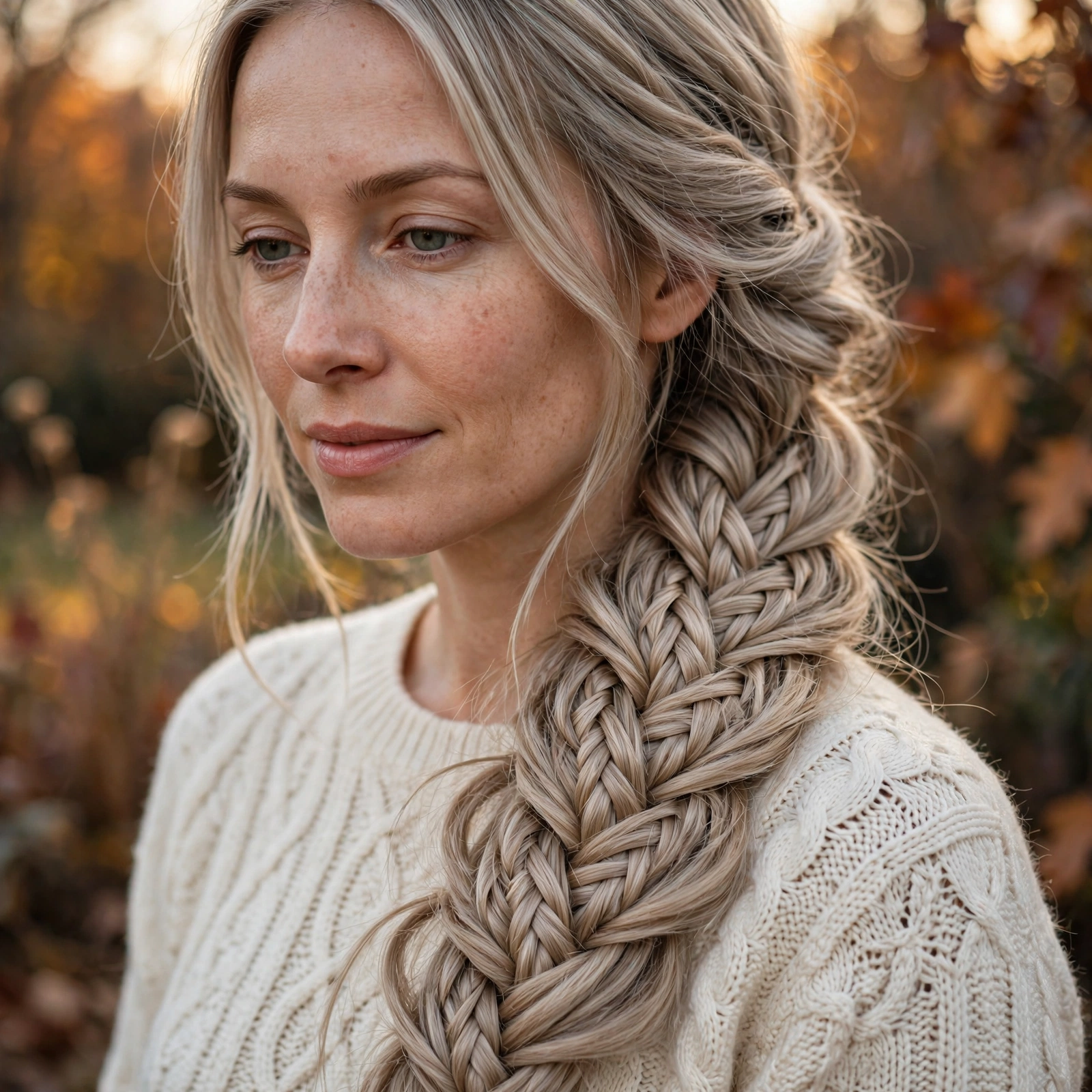
6. Half-Up Braided Crown
Small braids from each temple, pinned together at the back while the rest of the hair falls free — the half-up braided crown is the perfect compromise braid. It’s a fixture of fall hair ideas for 2026 because it solves the season’s most annoying daily problem (front pieces whipping across your face in autumn wind) without committing to a full updo. It’s ideal for second and third-day hair — it disguises the crown, the exact zone that shows oil first.
How to get it: Take a two-inch section from each temple. Braid each one — three-strand for classic, fishtail for extra romance — and secure with tiny clear elastics. Draw both braids back and pin them together at the back of your head, crossing one over the other and securing with bobby pins in an X. Let the rest of your hair fall freely.
Best for: All hair types and lengths from shoulder-length up — one of the most universal styles here; round and oval faces benefit from the crown lift; wavy and curly textures make the loose hair look especially pretty.
Maintenance: Low. Under ten minutes, no heat required if your hair has natural texture. Lasts a full day; the braids usually hold overnight too.
Pro tip: Backcomb the crown lightly before pinning the braids — that hidden lift is what separates a flat half-up from a gorgeous one. And mist the braids (not the loose hair) with a flexible-hold spray like Kenra Volume Spray 25 before pinning; the small sections are the first thing to fuzz out in dry fall air, and a little hold there buys you hours.

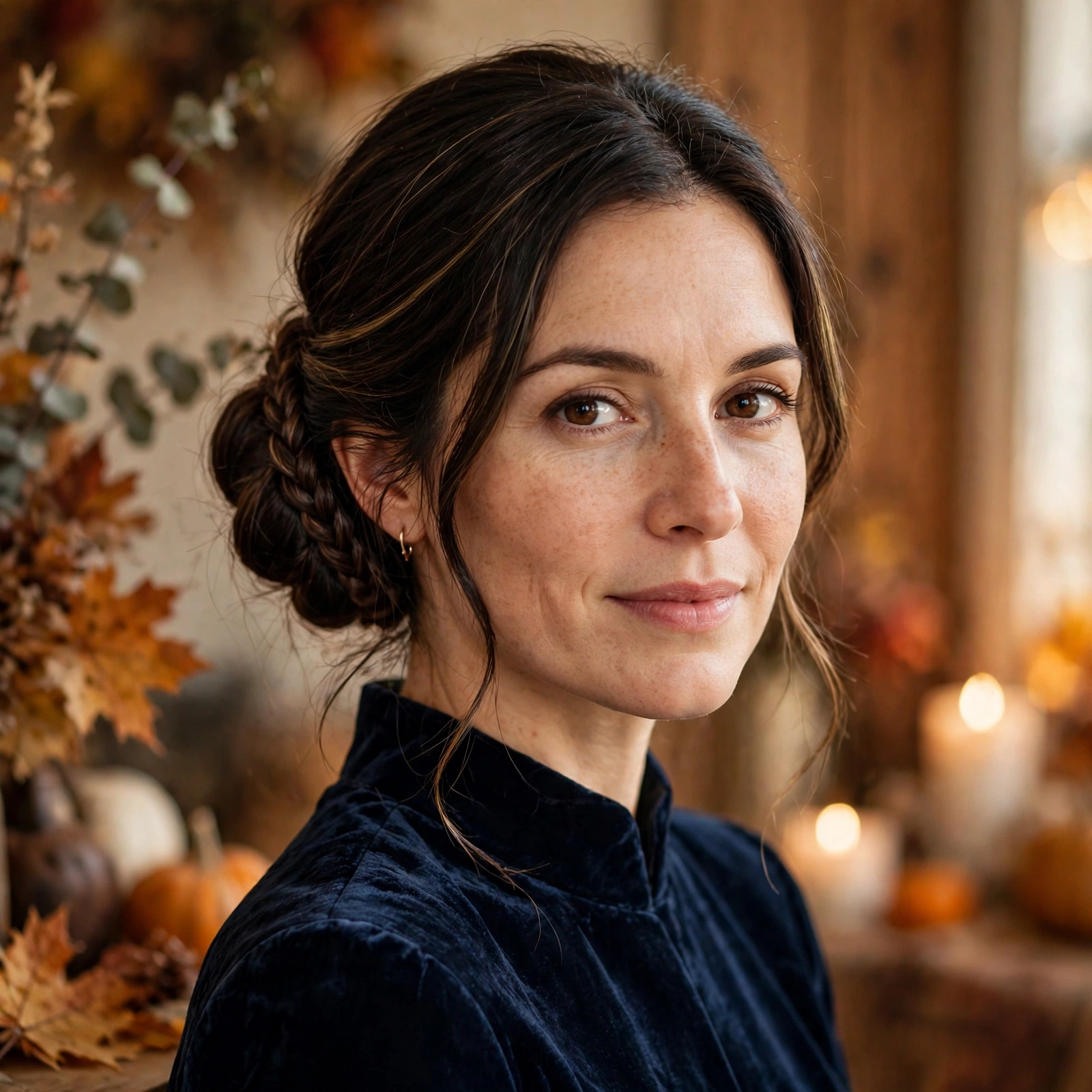
7. Braided Low Bun
A loose braid coiled into a low bun at the nape — sometimes with two small temple braids feeding into it — the braided low bun is the polished romantic of this list. It’s trending for fall 2026 because it does three seasonal jobs at once: it keeps hair off turtleneck and coat collars, it survives wind completely, and it slides from a workday to a wedding without a single adjustment. The braided texture elevates it — a plain low bun can read severe, but the visible weave looks soft and intentional.
How to get it: Option one (simplest): make a loose three-strand braid starting at the nape, coil it into a bun, and pin securely. Option two (prettier): braid two small temple sections, gather everything into a low ponytail, braid it, wrap into a bun, then wrap the temple braids around the base and pin. Either way, pancake the braid lightly before coiling and pull out a few face-framing pieces.
Best for: Medium to long hair (needs enough length to coil); all face shapes — adjust the face-framing pieces to flatter yours; straight to wavy textures show the braid detail best. Fine hair should pancake generously for a fuller-looking bun.
Maintenance: Medium. Ten to fifteen minutes once you’ve practiced it twice. Holds all day and evening — bobby pins at the nape rarely loosen — and it transitions well to day two with a re-pin.
Pro tip: Build the bun on a small hair donut or a rolled-up sock for structure if your hair is fine — the braid wraps around it and looks twice as substantial. And use U-shaped hair pins instead of bobby pins for the coiling: they grip more hair with less visible hardware, and the bun holds dramatically longer.
8. Waterfall Braid
A French braid variation where each new section is dropped and replaced — creating strands that cascade through the hair like a waterfall — worn as a half-up across the back of the head. The waterfall braid is the undisputed romance champion of autumn braids: it looks impossibly intricate in photos, which is exactly why it dominates fall engagement and wedding content. The drop-and-pick-up motion clicks after one slow practice run, and it shows off dimensional hair color better than any other braid here.
How to get it: Start a French braid near one temple, working horizontally across the back of the head. Here’s the twist: each time you’d normally fold a new section in, drop it instead and pick up a fresh section of hair from just below to continue the braid. The dropped strands fall through, creating the cascade. Work across to the other side, secure with pins or a small elastic and wear the remaining hair in soft waves.
Best for: Medium to long hair; highlighted, balayaged, or dimensional color (the cascade shows it off); oval and heart-shaped faces; wavy textures blend the dropped strands most naturally. Straight hair works too — just add soft waves to the loose lengths.
Maintenance: Medium. Ten to fifteen minutes; the first attempt feels fiddly, the second feels obvious. Lasts a full day as a half-up — pin the endpoint securely, since that’s the one structural weak point.
Pro tip: Practice the drop-and-pick-up motion on a simple three-strand braid draped over your shoulder first, where you can see your hands. The mechanics are identical, and one low-stakes practice run saves you from restarting on your head three times. And keep the braid’s tension even — if one side is tighter, the waterfall slants instead of flowing straight.
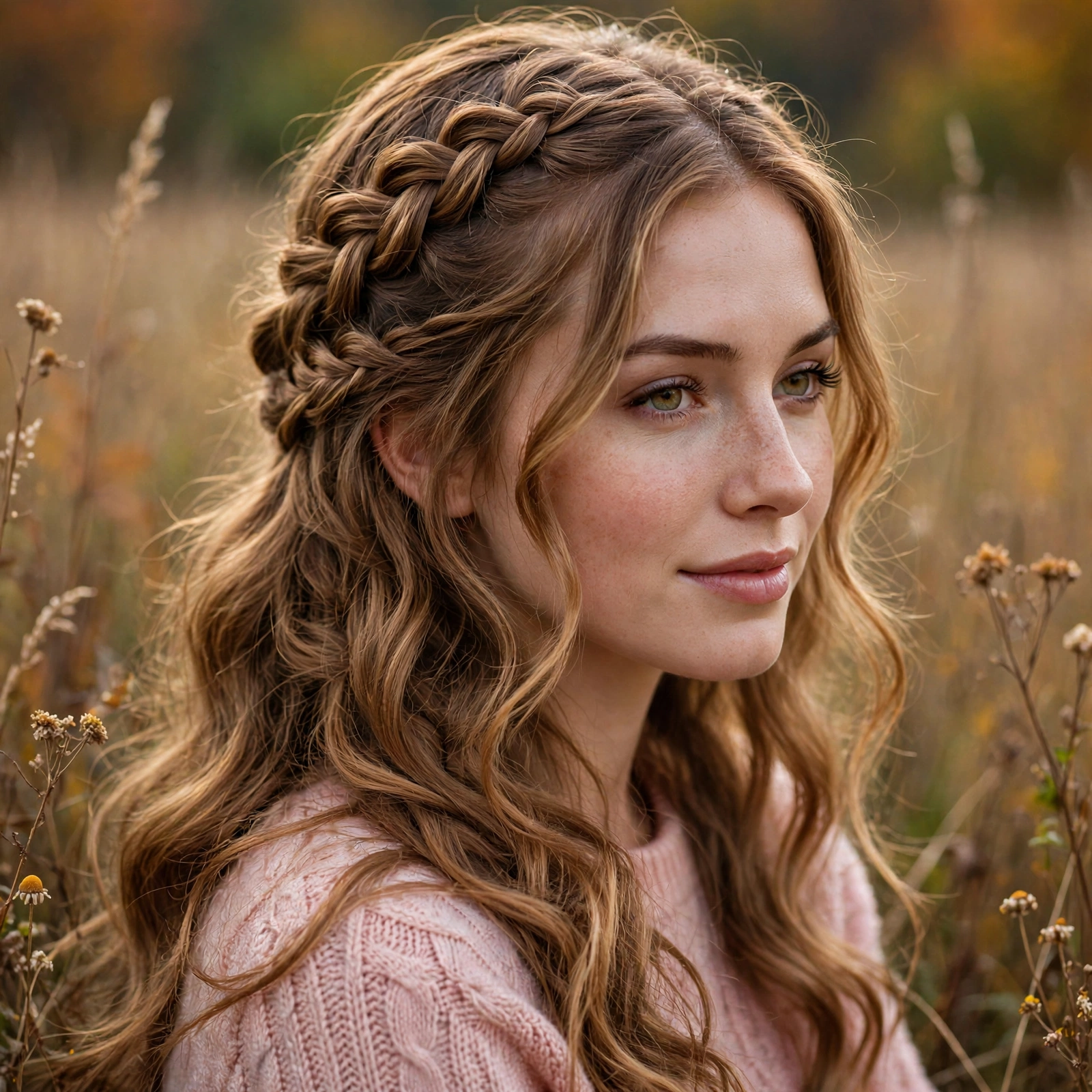
9. Four-Strand Braid
Four sections woven in an over-under pattern — the four-strand braid creates a flat, basket-like texture that’s strikingly different from any three-strand plait. It’s the conversation-starter of braid ideas 2026: people notice it because the woven pattern reads almost like fabric, and almost nobody can immediately tell how it was made. It wears best as a side braid, where the flat weave sits visible against the shoulder — for days you want your hair to be the outfit.
How to get it: Divide hair into four equal sections — think of them as 1-2-3-4 from left to right. Take strand 1 over strand 2, then under strand 3, then over strand 4. Now re-number the strands in their new positions and repeat the same over-under-over sequence all the way down. Secure with an elastic and pancake lightly — the flat weave widens beautifully.
Best for: Medium to long hair; medium to thick densities show the woven pattern most clearly; all face shapes worn as a side braid. Straight or smoothed hair shows the basket texture best — heavy natural texture can blur the pattern.
Maintenance: Medium. Ten to fifteen minutes including the learning curve; subsequent attempts take under ten. Lasts one to two days — the four-strand structure is surprisingly stable once set.
Pro tip: Count out loud for the first few inches — “over, under, over” — until your hands learn it. The single most common mistake is losing track of which strand is which after the first pass; keeping the four sections in a strict left-to-right line (never letting them cross over each other outside the pattern) prevents the whole thing from collapsing into a knot.
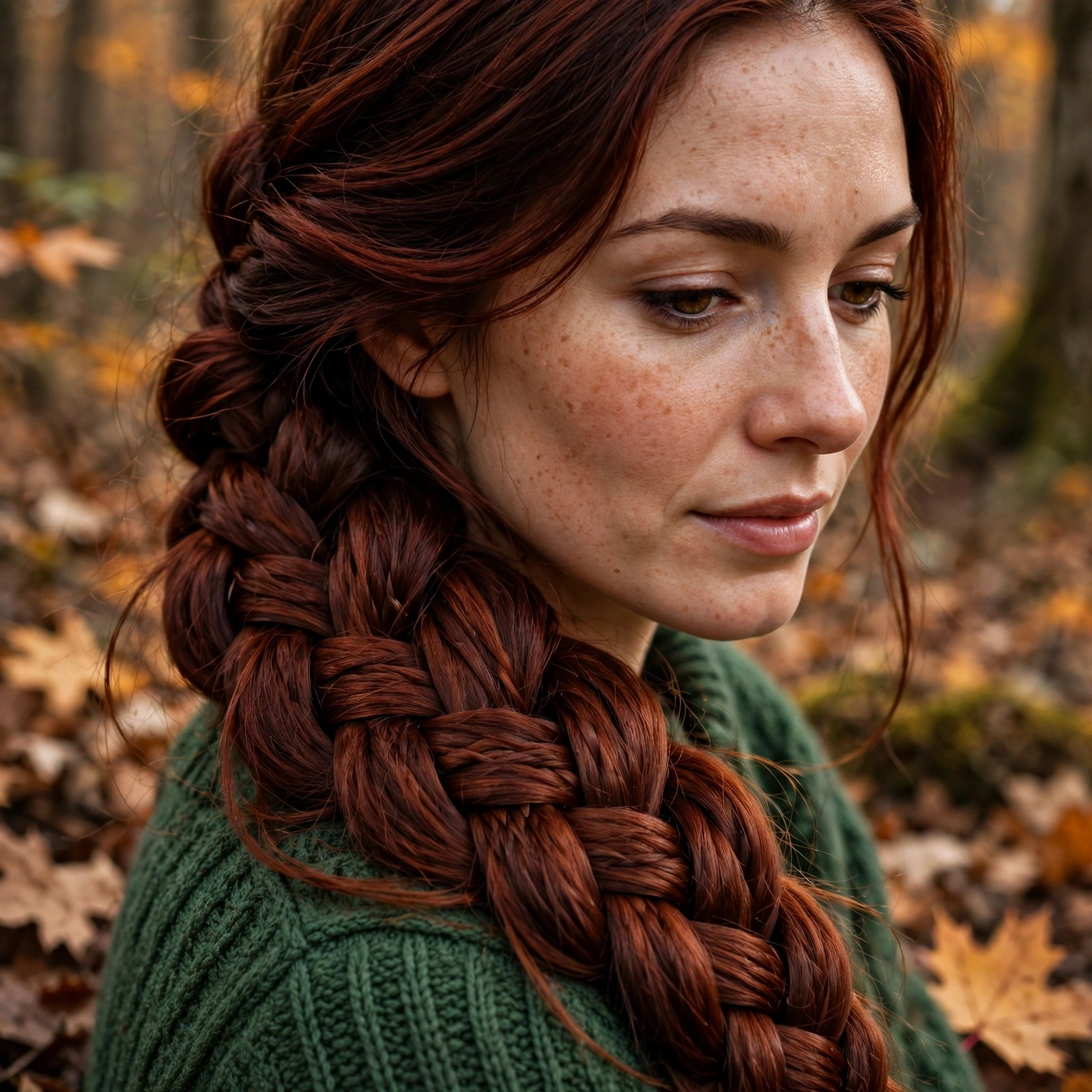
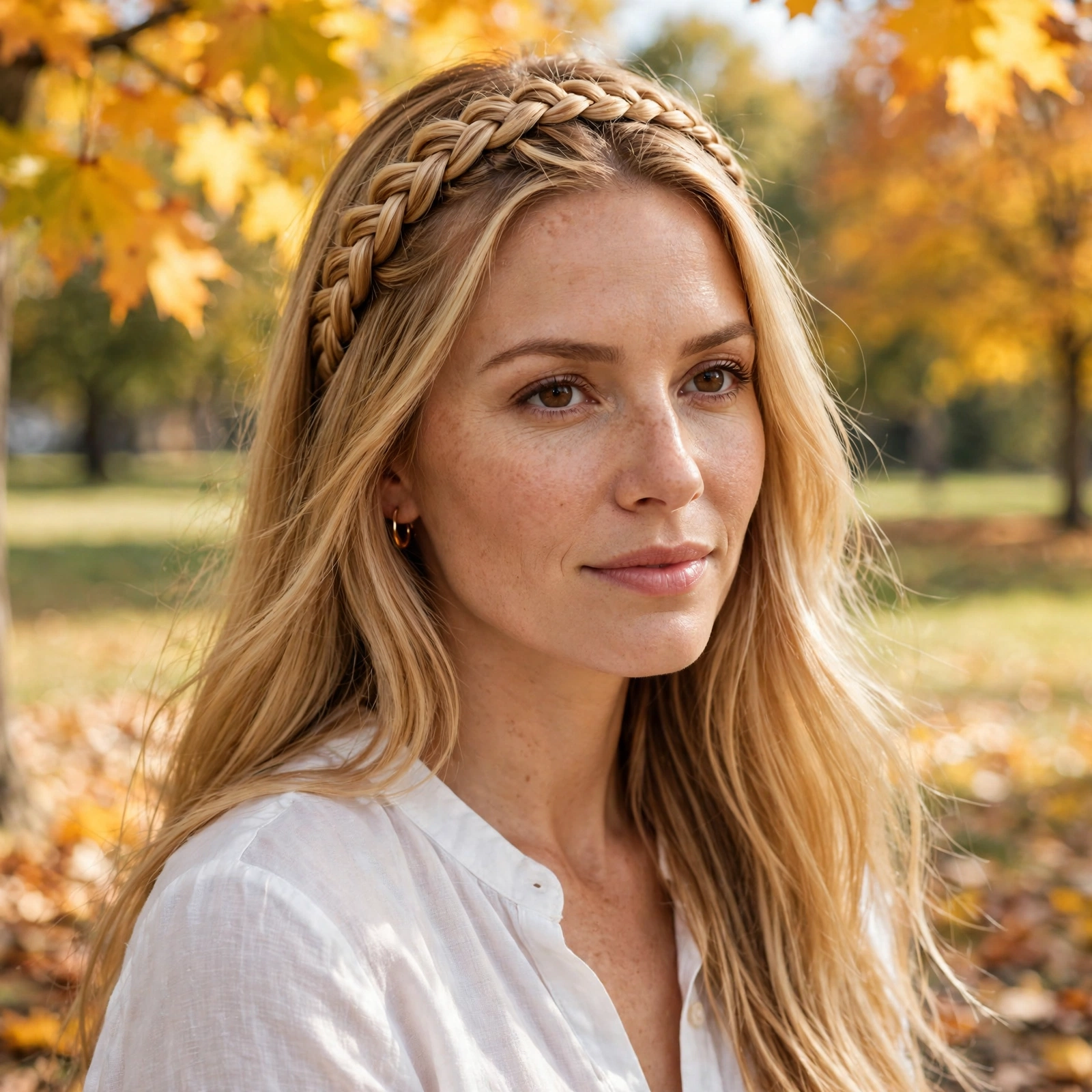
10. Braided Headband
A single tight braid taken from behind one ear, draped across the top of the head and pinned behind the opposite ear — the braided headband is the delicate accent braid that does quiet, essential work. It’s a sleeper hit in fall hair ideas for 2026 because it solves three specific problems: growing-out bangs, second-day front pieces, and windy days when you need the hairline controlled but don’t want a full updo. The rest of your hair can be straight, wavy, in a bun, or in a ponytail — the headband elevates all of it.
How to get it: Take a one-inch section of hair from behind one ear and braid it tightly — a tight braid is key here, since a loose one won’t hold the headband shape. Drape it across the top of your head, positioning it where a real headband would sit (about an inch behind the hairline). Pin it behind the opposite ear, then tuck the end underneath surrounding hair and pin again.
Best for: All lengths from chin-length up (shorter hair just needs a thinner braid); fine to medium hair braids tightest; growing-out bangs and face-framing layers especially — this style was made for the awkward grow-out phase. All face shapes.
Maintenance: Low. About five minutes. Lasts a full day; re-pin the far end if it works loose. No salon maintenance.
Pro tip: Braid the section with a tiny bit of styling cream worked through it first — something like Amika Brooklyn Bombshell Blowout Spray is too heavy, but a pea-sized amount of a light cream gives the small braid grip and keeps flyaways from poking out along the headband line. And always pin in an X with two bobby pins at the far ear; a single pin is why headband braids slip by lunch.
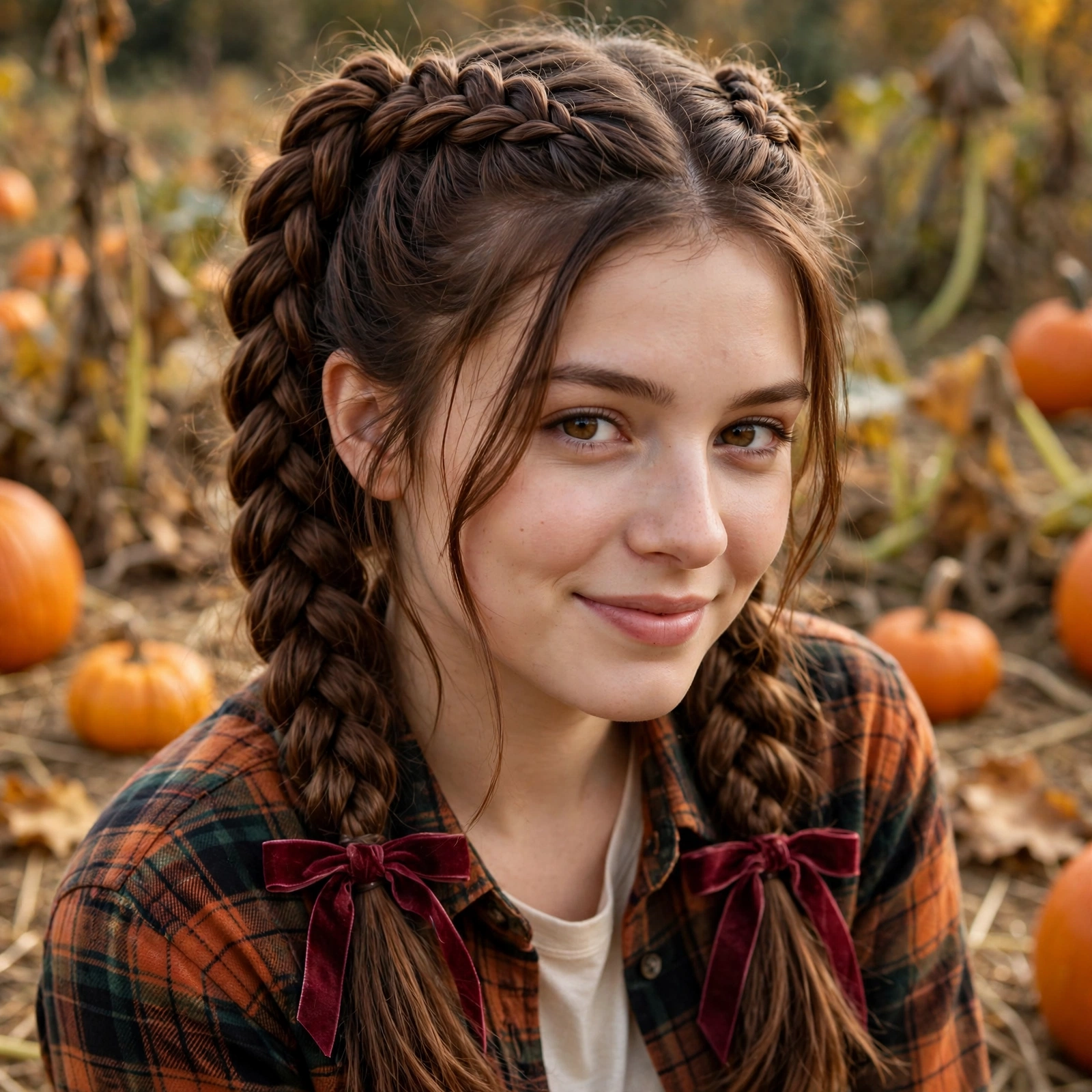
11. Dutch Braid Pigtails with Ribbons
Two Dutch braids worn as low pigtails, tied with velvet or grosgrain ribbons in fall tones — burgundy, forest green, mustard, chocolate. The ribbon-embellished pigtail is the festive wildcard of autumn braids for 2026: youthful and playful without reading childish, thanks entirely to the ribbon upgrade. The ribbons signal seasonal the way a costume never could — expect compliments at fall festivals and pumpkin patches. It’s also one of the most wind-proof configurations here, with everything anchored low and doubled.
How to get it: Part hair down the middle and Dutch-braid each side from the hairline to the nape, continuing as three-strand braids. Instead of finishing both as one style, wear them as two low pigtails draped forward over the shoulders. Tie each end with a ribbon in a bow — velvet ribbon about an inch wide looks most autumnal. Pancake the braids lightly for softness, and pull out a few face-framing pieces so it reads festive, not schoolyard.
Best for: Medium to long hair; all densities — fine hair benefits from the double-braid fullness; round and heart-shaped faces (the low pigtails balance width); anyone who wants festive without formal.
Maintenance: Low to medium. Ten to fifteen minutes for both braids. Lasts a full day of activity — the low placement means beanies and hoods don’t disturb them — and the braids survive overnight for next-day waves.
Pro tip: Weave the ribbon through the last few inches of the braid before tying the bow, rather than just tying it around the elastic — the woven ribbon stays put all day and looks far more deliberate. And choose wired-edge ribbon if you want the bow to hold its shape; soft grosgrain collapses by afternoon.
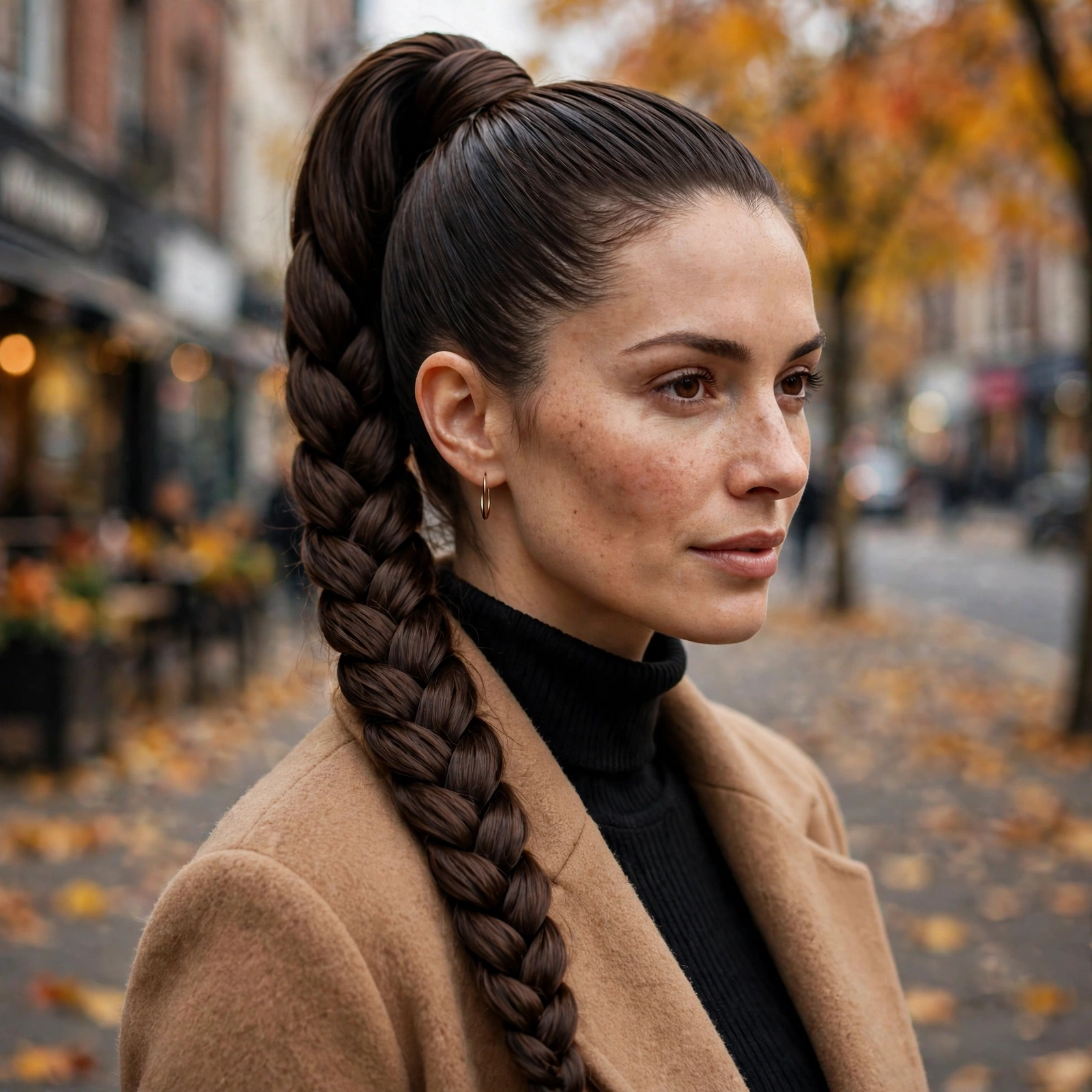
12. The Braided Ponytail
A high, sleek ponytail transitioning into a fishtail or four-strand braid — the power braid that closes this list. It’s a staple of protective braids fall styling for 2026 because it combines the polish of a sleek pony with the staying power of a braid: the height elongates the face, the braid adds visual interest, and the whole thing stays perfect from morning workouts through evening plans. It’s the most dramatic style here — confident and intentional, the braid equivalent of a great blazer.
How to get it: Smooth the top with a light gel or smoothing cream and brush everything up into a high ponytail at the crown — placement is everything; too low and it loses the elongating effect. Secure firmly with a strong elastic, then wrap a strand around the base. Braid the tail: fishtail for boho intricacy, four-strand for woven drama, or classic three-strand pancaked for speed. Secure the end and pancake gently.
Best for: Long hair ideally (needs length for the braid to register); oval, round, and oblong faces benefit most from the crown height; medium to thick densities hold the sleek top best. Straight to wavy textures smoothest.
Maintenance: Low to medium. Ten to fifteen minutes. Lasts all day — the high anchor point plus the braid structure is extremely stable — and refreshes well on day two with dry shampoo at the crown.
Pro tip: The sleek top is the make-or-break detail: smooth a clean mascara spoolie or toothbrush misted with hairspray along the hairline and part to erase flyaways without helmet-head stiffness. And anchor the ponytail with two stacked elastics instead of one — the braid’s weight pulls a single elastic loose by evening, but two hold the height all day.
Fall Braided Hairstyles for Women: FAQs
How long do braids actually last, and how do I make them last longer?
A well-done braid lasts two to three days; Dutch and double braids often stretch to three, while looser styles like the waterfall hold best for one to two. The biggest longevity lever is how you start: braid second-day hair (or fake the grip with dry shampoo), keep tension firm at the scalp but relaxed through the lengths, and secure ends with small clear elastics rather than bulky bands that work loose. Before bed, loosen the braid slightly and switch to a satin or silk pillowcase — cotton creates the friction that frizzes braids overnight. On day two, mist with texturizing spray, pancake wider, and wear it messier.
Can I sleep in braids every night? Will it damage my hair?
Yes, you can sleep in braids regularly — it’s actually one of the best things you can do for your hair in fall, since it prevents the tangling and friction that cause breakage. The rules: never sleep in a tight, scalp-pulling braid (tension plus eight hours equals hairline breakage and headaches); loosen it before bed or re-braid loosely. Keep the braid low and to one side rather than down your back, so you’re not lying on it and creating kinks and pressure points. And give your hair one loose night a week if you braid daily; constant tension in the same pattern can stress the same strands, so vary your part and braid placement. If you notice thinning around the hairline or scalp soreness, WebMD’s guide to traction alopecia covers the warning signs and how to recover.
My hair is fine and thin — which braids won’t make it look stringy?
Thin hair braids beautifully once you stop fighting it and start manufacturing fullness. Your best styles from this list: the bubble braid (the pulling technique creates volume out of nothing), the pancaked chunky side braid, the fishtail (thin strands multiply visually), and the braided headband (a thin braid is an advantage here). The technique matters more than the style: always prep with volumizing powder at the roots and texturizing spray through the lengths, braid slightly damp hair for extra grip and set, and pancake aggressively — pulling each section wide is what turns a skinny plait into a substantial braid. Tease the crown lightly before starting any side braid.
How do I fight frizz and static in braids during dry fall weather?
Fall frizz is a moisture problem, so the fix happens before you braid, not after. Work a single drop of hair oil — Moroccanoil Treatment is the classic for a reason — through the mid-lengths and ends before braiding; your ends stay hydrated inside the weave all day instead of drying out in the air. For the hairline and surface frizz, smooth a pea-sized amount of anti-frizz cream along the parts before you start, and finish with a flexible-hold spray rather than a stiff one (stiff sprays flake in dry air).
How do I take braids out without causing breakage?
Never rip a braid out dry at the end of a long day — that’s how you snap ends. Work a little oil or leave-in conditioner through the braid first; it lubricates the strands so they slide apart instead of catching. Unravel from the bottom up, gently finger-combing each freed section before moving higher — working top-down just compacts the tangles downward. If you hit a knot, don’t pull: apply more product, hold the hair above the knot firmly (so you’re not yanking the root), and tease the knot apart with your fingers or a wide-tooth comb. Once the braid is out, follow with your weekly deep-conditioning mask.
The Bottom Line
The best fall braided hairstyles for women aren’t the most complicated ones — they’re the ones that survive your real fall life: the wind, the hats, the scarves, the long days that turn into longer evenings. Pick one everyday braid and one occasion braid from this list, give them a genuine two-week trial, and let this be the autumn your hair finally works as hard as you do. Still hungry for more? Browse our braided hairstyles collection for even more braid ideas. Happy fall, and happy braiding.

6 Comments