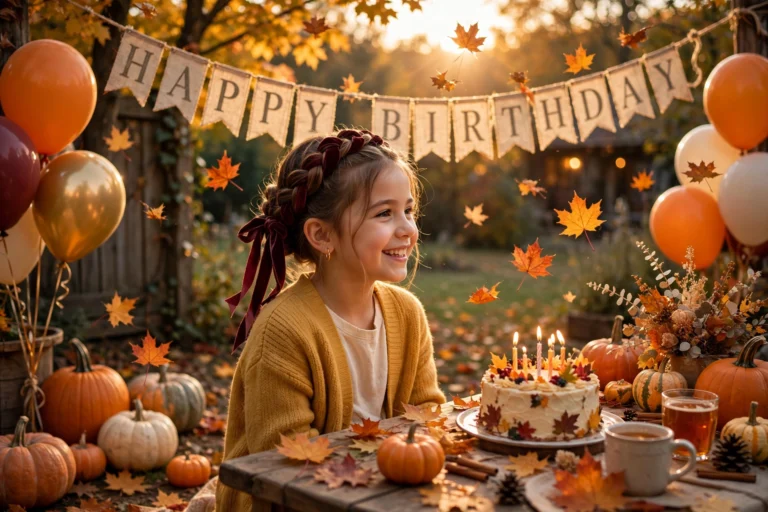
10 Fall Hairstyles for Little Girls (Tangle-Free)
If you’re searching for fall hairstyles for little girls that survive real toddler life — car seats, naps, knit hats, and the infamous wiggly-toddler meltdown — you’re in exactly the right place. The best fall hairstyles for little girls in 2026 are bouncy low pigtails, mini space buns, bubble braid ponytails, and soft knit headband styles: quick, tear-free looks that take under ten minutes and still look adorable at the pumpkin patch.
Here’s what nobody tells you until you’ve lived it: styling a three-year-old’s hair is nothing like styling your own. You get roughly ninety seconds of cooperation, you cannot explain “just hold still,” and any style that hurts even slightly becomes a war you’ll lose tomorrow too. Fall makes it harder in one way — dry air plus wool hats equals static, tangles, and breakage — but easier in another: the season’s cutest accessories (knit headbands, tiny beanies, autumn bows) do half the styling work for you.
The trick to tear-free mornings isn’t a better elastic or a fancier product. It’s choosing styles that cooperate with your child’s hair type, her patience level, and her actual day. A style that survives a two-hour car nap without becoming a nest. A style you can refresh in the school parking lot in thirty seconds. A detangling routine that doesn’t end in tears — hers or yours.
That’s exactly what this guide delivers. Our editors tested every style here with real wiggly toddlers and preschoolers — actual children ages 3 to 7, with everything from silky fine hair that slips out of everything to thick, glorious manes that tangle if you look at them wrong. Every style below comes with the full picture: what it is and why it works for little girls in fall 2026, how to get it (including how to keep a wiggly child cooperative), who it’s best for, honest maintenance expectations, and a pro tip from our testing notes.
No complicated braiding tutorials, no styles that require a second adult, no heat tools. Just ten tangle-free, tear-free fall hairstyles for little girls that make mornings easier and photos cuter. Jump to any style that catches your eye.
- 1. Bouncy Double Pigtails
- 2. Mini Space Buns
- 3. The Soft Knit Headband Swoop
- 4. Twisted Side Ponytail
- 5. Little French Braid Pigtails
- 6. Bubble Braid Ponytail
- 7. Cozy Low Mini Bun
- 8. Half-Up Bow Twist
- 9. Two-Strand Twist Pigtails
- 10. Face-Framing Mini Braids
Editor’s Top 5 Tangle-Free Picks
Short on time? These are the five looks our editors reach for on actual school mornings — the ones with the highest cute-to-cooperation ratio on the entire list.
1. Bouncy Double Pigtails
The undefeated champion of little-girl hairstyles. Two high pigtails take three minutes, survive the entire school day, and photograph like a dream against fall foliage. In our testing, this was the single style every child under five tolerated without complaint — it distributes tension so evenly that nothing pulls, and the bounce makes fine hair look instantly fuller.
2. Bubble Braid Ponytail
One ponytail, four or five little elastics, and you’ve got a style that looks intricate but requires zero braiding skill. It survived naps, car seats, and playground swings better than anything else we tested — the bubbles hold their shape even after a hat comes off. If you can only learn one new technique this fall, make it this one.
3. Mini Space Buns
Two tiny buns on top of the head that are equal parts adorable and practical. Nothing hangs in her face, nothing catches in a coat zipper, and the style holds from breakfast to bath time. This was the clear winner with thick-haired testers — all that volume finally had somewhere to go.
4. The Soft Knit Headband Swoop
The zero-effort hero for mornings when your child has decided hair is canceled. Brush, slip on a soft knit headband, done in forty seconds. It keeps hair out of her face, looks completely intentional under a fall jacket, and the headband itself protects against hat static. Our testers’ parents called it “the cheat code.”
5. Twisted Side Ponytail
A low side ponytail with one twisted section looks fancy but takes five minutes and keeps her cooperation high because she gets to pick which side. It’s the best choice for car seats — everything sits to one side instead of bunching under her head — and it slides neatly under a beanie without losing its shape.
The Tear-Free Detangling Routine Every Parent Needs
Every cute hairstyle in this guide depends on one foundation: pain-free detangling. Most toddler hair trauma doesn’t come from the style — it comes from the brush before the style. A child who cried through detangling will fight every hairstyle for the next week, so fixing the routine matters more than choosing the style.
Our editors’ tested routine works on every hair type: always detangle damp, never dry. Spritz hair with water mixed with a small amount of leave-in conditioner (a spray bottle lives in every one of our testers’ bathrooms now), then divide hair into two sections and work from the ends upward in small pieces — never dragging the brush from roots to ends in one go. A wide-tooth comb or a flexible detangling brush does the pulling for you; the old bristle brush is the enemy of cooperation. Distraction is a legitimate styling tool: a short video, a snack, or letting her “brush” her doll’s hair at the same time buys you the three minutes you need.
Timing matters too. Detangling works best right after bath time or in the morning while hair is still slightly damp from a quick spritz — fighting dry, slept-on hair is a losing battle. For kids who wake up with a nest at the back of the head (the car-seat-and-pillow zone), a silk or satin pillowcase makes a genuine difference; we saw morning tangle time cut roughly in half in our two-week test. And for the full picture on keeping little hair healthy through dry fall weather, these dermatologists’ tips for healthy hair cover the seasonal basics — moisture, gentle handling, and when to trim.
The golden rule our testers’ parents now swear by: if she’s crying, stop. A half-done style with a happy kid beats a perfect style with a meltdown every time — because tomorrow she has to trust you again. Tear-free is a strategy, not a slogan.
Choosing Styles for Fine Baby Hair vs Thick Toddler Hair
Fine, silky baby hair and thick toddler hair are opposite engineering problems, and the wrong style choice is the real reason most parents give up. Fine hair slips out of everything — elastics slide, braids unravel, buns collapse — so the winning move is styles that don’t depend on grip: pigtails with small fabric-covered elastics placed at mid-height rather than high (high placement pulls fine hair painfully), the bubble braid pony (each elastic traps hair above it), and headband styles that bypass elastics entirely. Avoid heavy clips and anything that needs volume the hair doesn’t have; work with the silkiness instead of fighting it.
Thick hair has the opposite problem: it’s heavy, it tangles by existing, and half the styles on this list need to be sectioned more carefully or they’ll pull. Mini space buns and the cozy low mini bun are thick hair’s best friends — they contain the volume instead of fighting it — and the two-strand twist pigtails beat French braids because twisting is faster and less arm-tiring than a full braid on a huge head of hair. Always detangle thick hair in four sections, never two; rushing this step is where the tears start. A pea-sized amount of leave-in conditioner through the lengths before styling keeps thick hair manageable all day.
One honest note from our testing: if your child’s hair is thinning noticeably, breaking off in patches, or losing hair in a way that doesn’t match normal seasonal shedding, that’s not a styling problem — mention it to your pediatrician or a dermatologist. For context on what can cause hair to thin or fall out, this overview of common causes of hair loss is a useful starting point for the conversation, even though it’s written about adults.
10 Fall Hairstyles for Little Girls (Tangle-Free)
1. Bouncy Double Pigtails
Two classic pigtails set at mid-height, brushed smooth on top and left to bounce — the timeless little-girl style that dominates fall 2026 schoolyards for a reason. It works so well in autumn because nothing about it fights the season: the hair is fully off her neck (no sweaty tangles under a scarf), it slides perfectly under a beanie, and it looks completely adorable peeking out of a hooded jacket. Our editors tested this with real wiggly toddlers, and it was the fastest style to get a smile for the camera — something about pigtails just makes a little girl feel fancy.
How to get it: Detangle damp hair first (see our routine above). Make a center or slightly off-center part, gather each side into a ponytail at about ear level — not higher, which pulls on little scalps — and secure with a fabric-covered elastic. Smooth the top with a soft brush. To keep her cooperative, let her hold the second elastic while you do the first side, then switch jobs — the “helper” role buys you two full minutes of stillness.
Best for: Ages 3–7; all hair types and textures; chin-length to long hair. Especially good for fine hair, which looks instantly fuller in bouncy pigtails.
Maintenance: Low. About 3 minutes in the morning; lasts all day at school and survives a hat. Refresh by re-smoothing the top only — no need to redo the elastics.
Pro tip: Tie a tiny autumn ribbon around each elastic instead of using a fussy bow clip — ribbons survive naps and car seats, clips don’t. For fine hair that slips, spritz the roots with a little water before placing the elastic; damp hair grips better than dry.

2. Mini Space Buns
Two tiny buns perched on top of the head, worn slightly messy — the style every preschooler requests by name once she’s seen it. Mini space buns are a fall 2026 staple for little girls because they solve three seasonal problems at once: no hair in the face on windy days, nothing catching in coat zippers, and a beanie slides right over the top without crushing anything. The vibe is pure joy — playground royalty, pumpkin patch photos, birthday parties. Our thick-haired testers loved it most: all that glorious volume finally had somewhere to go.
How to get it: Part hair down the middle, gather each side into a high ponytail, twist each one loosely and wrap it into a small bun, securing with one fabric elastic each. Don’t aim for neat — slightly messy buns hold better and look cuter. Keep her still with the oldest trick in the book: ask her to make her silliest face in the mirror while you work. She’ll be too busy performing to wiggle.
Best for: Ages 3–7; medium to thick hair that can fill a bun; shoulder-length and longer. Fine hair can work with a little texturizing — but skip this one on very short hair.
Maintenance: Low. About 5 minutes; holds all day and through naps. If a bun loosens, just re-twist — no full redo needed.
Pro tip: Place the buns slightly forward of the crown’s highest point rather than dead center — they photograph better, look bigger, and don’t press into a car-seat headrest during the ride. A tiny bit of Fairy Tales Tangle Tamer spray on your palms before twisting gives fine hair the grip it needs to hold the bun shape.
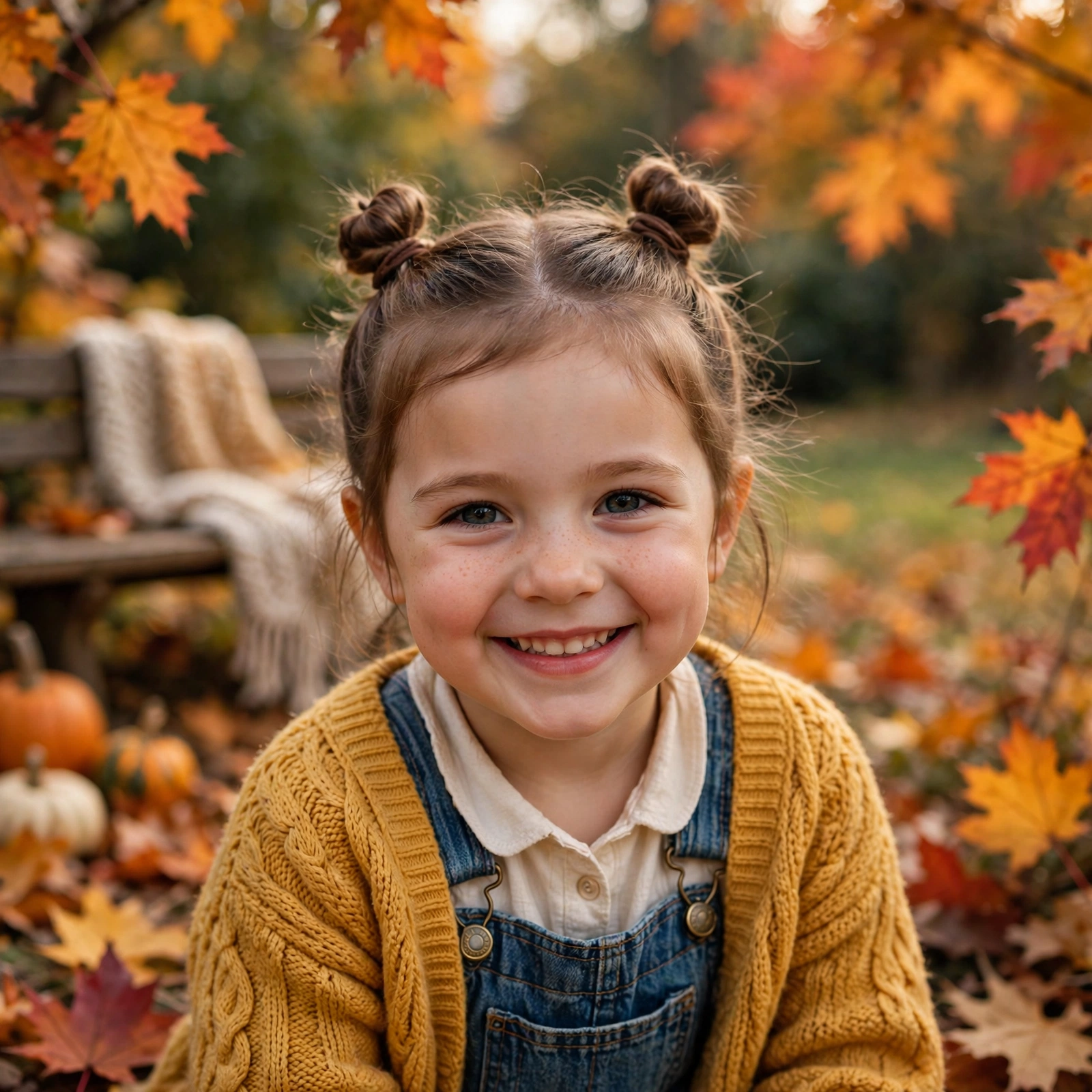
3. The Soft Knit Headband Swoop
Hair worn down and brushed smooth, with a wide soft knit headband pushing everything back from the face — the forty-second style that looks like you tried. This is the fall 2026 cheat code for little girls: the headband does the styling, keeps hair out of her eyes during windy playground afternoons, and transitions seamlessly under a winter hat later in the season. It works on mornings when she has declared hair “canceled,” and our editors’ testing confirmed it’s the single most nap-friendly way to wear hair down — no elastics pressing into her head when she lies back.
How to get it: Brush hair smooth from a center or side part, spritz lightly with water if there’s static, and slide the headband on from front to back so it sits about an inch behind the hairline. Smooth any flyaways under the band. Cooperation hack: keep three headbands in different fall colors (rust, mustard, forest) and let her choose — the choice gives her ownership and she’ll sit still to “model” her pick.
Best for: Ages 3–7; all hair types; chin-length and longer. Ideal for fine hair that won’t hold elastics, and for kids who hate anything tight on their scalp.
Maintenance: Low. Under 1 minute; re-slide the band back into place once or twice a day. Zero tangling from the accessory itself.
Pro tip: Choose a wide knit or velour band, never a thin hard plastic one — hard bands slip, pinch behind the ears, and cause the exact headache that makes kids rip headbands off by noon. Keep a spare in your bag; headbands are the most lost item in every preschool on earth.

4. Twisted Side Ponytail
A low ponytail swept to one side, with one twisted section wrapped around the base — fancy enough for fall family photos, easy enough for a Tuesday. This style earned its spot on our list for one unbeatable reason: it’s the best car-seat hairstyle we tested. With all the hair gathered to one side, nothing bunches behind her head against the headrest, so she arrives at school looking exactly like she left the house. The twist detail catches the light beautifully in autumn photos, and the whole thing takes five minutes flat.
How to get it: Brush all hair to one side (let her pick the side — autonomy is cooperation). Take a small section from the front, twist it back, and gather everything into a low side ponytail, wrapping the twisted section around the elastic base and tucking the end under. Secure with a fabric elastic. While you work, narrate like a sportscaster — “and she’s holding still like a champion!” — toddlers will hold a pose for praise they won’t hold for pleading.
Best for: Ages 4–7; straight to wavy hair shows the twist best; shoulder-length and longer. Works on thick hair too — just use a stronger elastic.
Maintenance: Low. About 5 minutes; survives car rides, hats, and playground time. Refresh by re-smoothing the twist — the ponytail itself holds.
Pro tip: Place the ponytail in front of the shoulder, not behind it — behind-the-shoulder placement slides back during the day and ends up under her in the car seat, defeating the whole purpose. A spritz of Johnson’s No More Tangles detangler before brushing keeps the sweep smooth and snag-free.
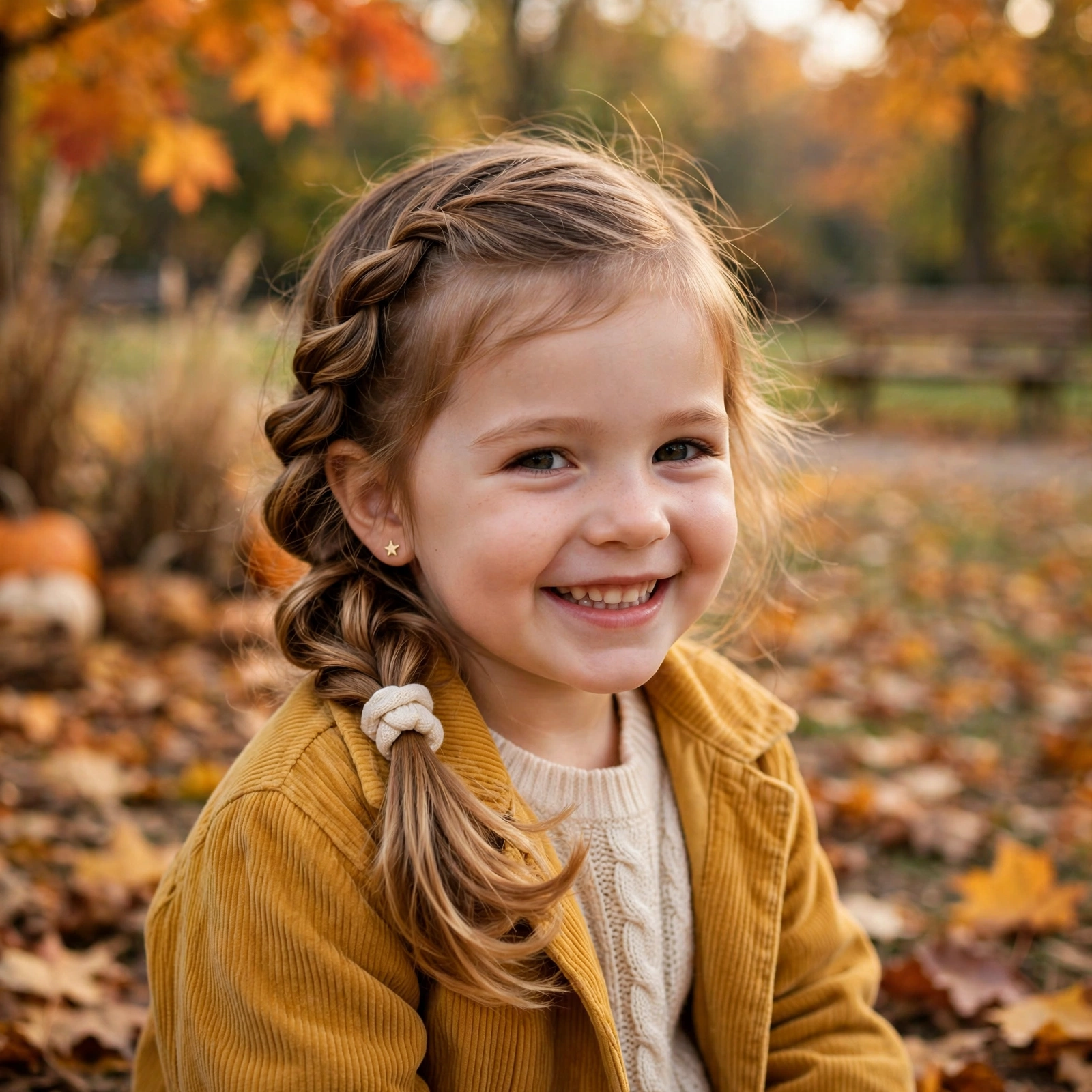
5. Little French Braid Pigtails
Two French braids starting at the temples and running back into pigtails — the braided upgrade that looks like you spent twenty minutes when you spent eight. French braid pigtails are having a major moment for little girls in fall 2026 because they stay perfect under hats (nothing to crush), survive the wildest playground sessions, and the braided top keeps wispy front hairs from whipping across her face in autumn wind. Our testers’ parents reported this was the longest-lasting style of the entire list — genuinely still intact at bedtime.
How to get it: Part down the middle. On each side, French-braid from the temple back to about ear level, then secure the remaining hair into a pigtail with an elastic. Keep braids loose — tight braids on little scalps cause headaches and tears. For cooperation, braid during a favorite short video; the screen holds her head still better than any instruction, and you’ll be done before it ends.
Best for: Ages 4–7; medium to long hair; all textures. Needs enough length to braid — skip for chin-length bobs.
Maintenance: Medium. About 8 minutes for both sides; lasts all day and overnight — many parents leave it in for day two with just a re-smooth.
Pro tip: Braid on slightly damp hair with a pea-sized amount of leave-in conditioner — damp hair grips itself, so the braid holds without pulling tight, and it dries into soft waves you can wear loose the next day. Finish each pigtail with a tiny autumn scrunchie instead of a plain elastic for instant fall charm.
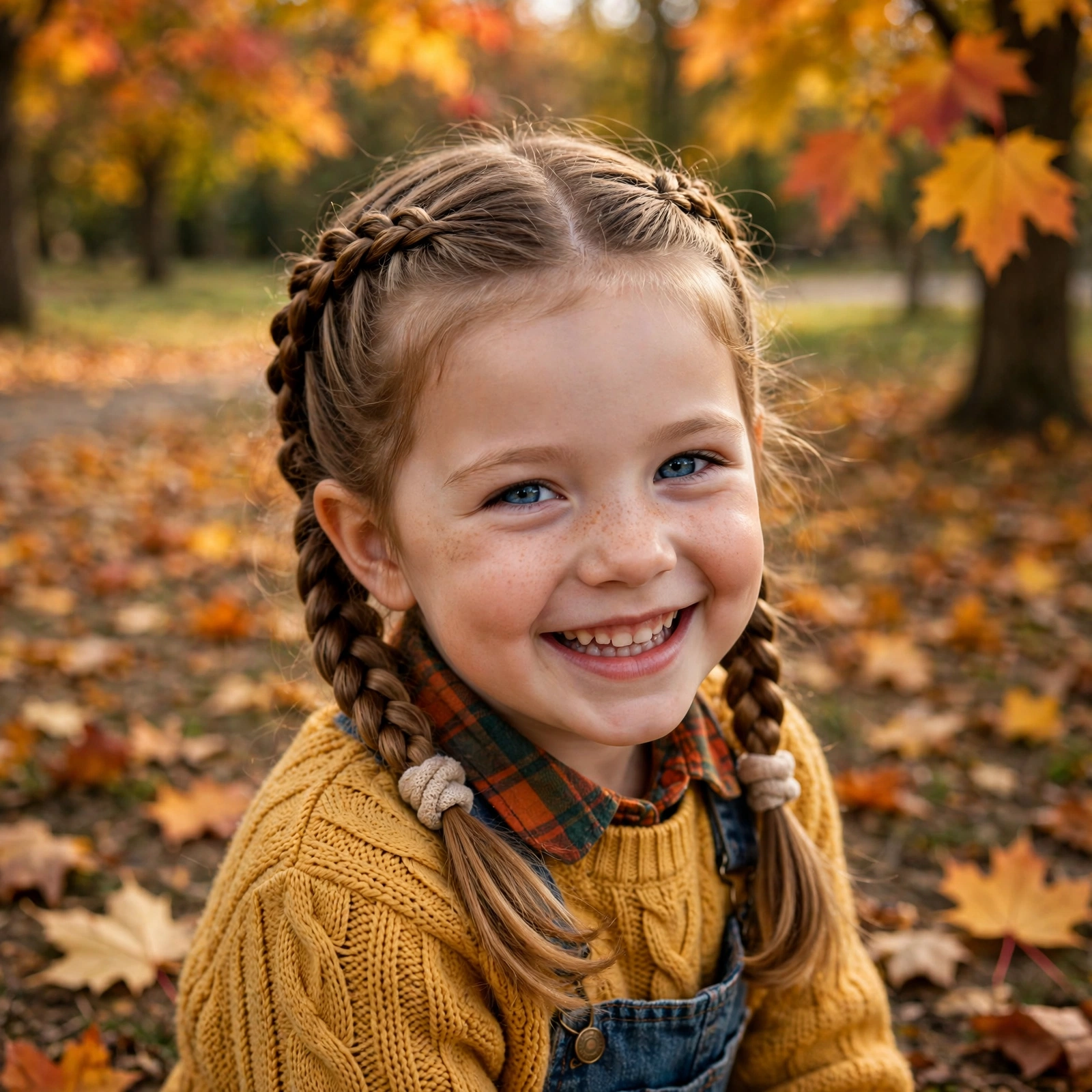
6. Bubble Braid Ponytail
One ponytail divided into puffy “bubbles” by small elastics spaced down its length — the style that looks intricate and requires absolutely zero braiding skill. The bubble braid ponytail is the breakout little-girl style of fall 2026 because it’s practically indestructible: our testers napped in it, wore beanies over it, and swung on monkey bars, and the bubbles bounced right back. The segmented shape also means tangles can’t travel — each elastic acts as a barrier, so end-of-day brushing takes half the time of a regular ponytail.
How to get it: Gather hair into a ponytail at whatever height she likes. Place small elastics every 2–3 inches down the tail, then gently tug each section outward to puff it into a bubble. That’s the whole technique. Make it a game: count the bubbles together as you add each elastic — “one bubble, two bubbles!” — and she’ll sit still through all of them because she’s waiting for the next number.
Best for: Ages 3–7; all hair types; shoulder-length and longer (needs enough tail for at least 3 bubbles). Fantastic for fine hair — the bubbles create volume that isn’t really there.
Maintenance: Low. About 4 minutes; the most hat-proof and nap-proof style on this list. Redo frequency: daily, but removal takes seconds — just slide the elastics off.
Pro tip: Use small clear or fabric elastics, never rubber bands — rubber bands snap fine hair and turn removal into a crying session. To remove painlessly, dab a little conditioner on each elastic and slide it off instead of pulling. Tie a ribbon at the top elastic for a finished fall look.
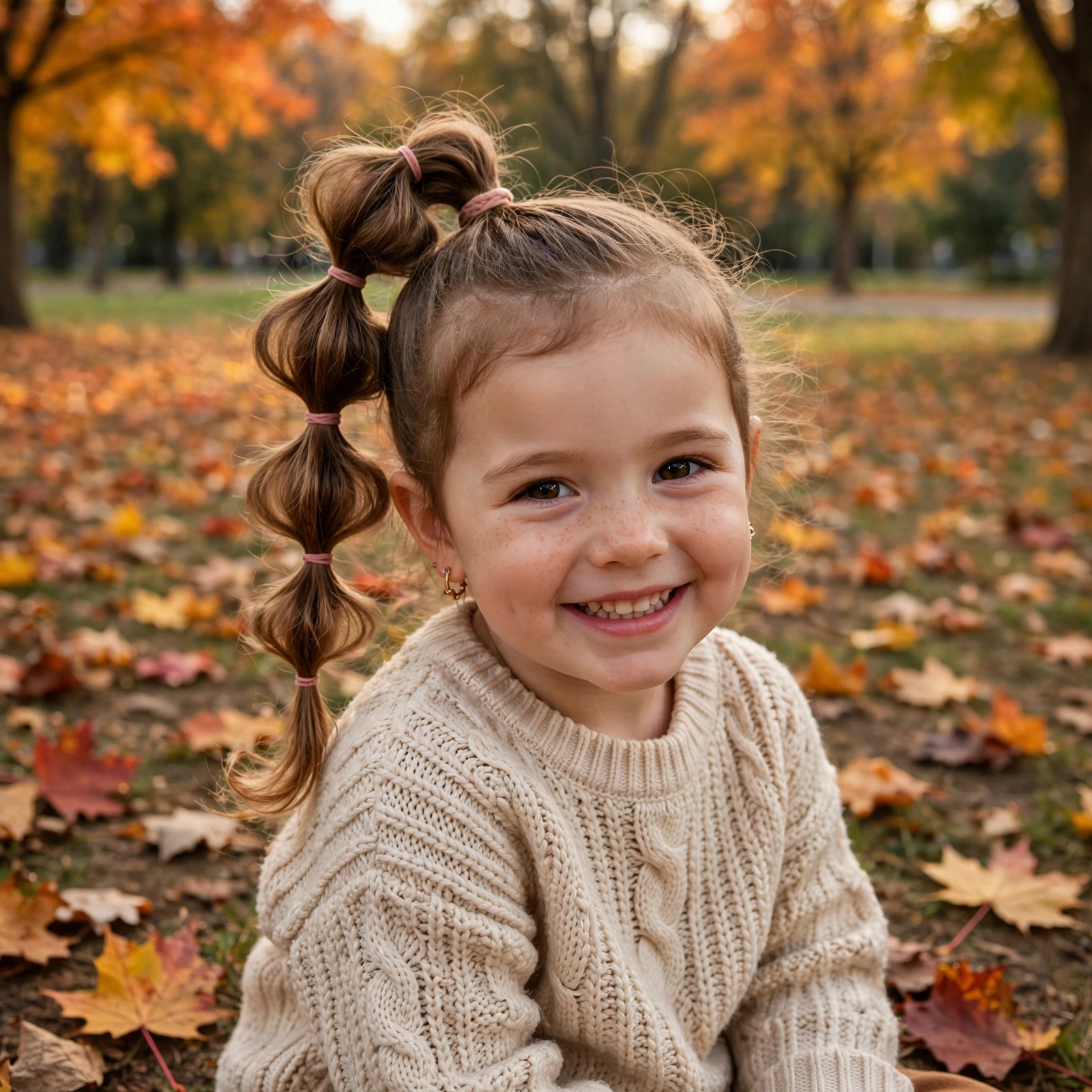
7. Cozy Low Mini Bun
A single small bun sitting low at the nape — the quiet, cozy workhorse of fall hairstyles for little girls. While the flashier styles get the photos, this is the one our editors reached for on the busiest mornings: everything is contained, nothing touches her coat collar, and it slides perfectly under a beanie or hood with zero crushing. The low placement means she can lean back in the car seat comfortably, and the style reads polished enough for holiday gatherings without a single bobby pin.
How to get it: Brush hair back into a low ponytail at the nape, twist loosely, wrap into a small bun, and secure with one or two fabric elastics — no pins needed on little heads. Leave the twist loose; tight buns pull and cause the “my head hurts” complaint by lunch. Cooperation trick: do it while she’s eating breakfast. A child with toast in both hands is a child who cannot grab the brush.
Best for: Ages 3–7; medium to thick hair fills the bun best; shoulder-length and longer. Great for kids who dislike anything on top of their head.
Maintenance: Low. About 3 minutes; holds all day under hats and hoods. Re-twist once midday if needed — thirty seconds.
Pro tip: Wrap a small knit scrunchie around the bun base instead of a plain elastic — it hides the mechanics, adds fall texture, and the fabric grips better than smooth elastics on silky hair. For extra staying power on very smooth hair, braid the ponytail loosely before wrapping it into the bun.

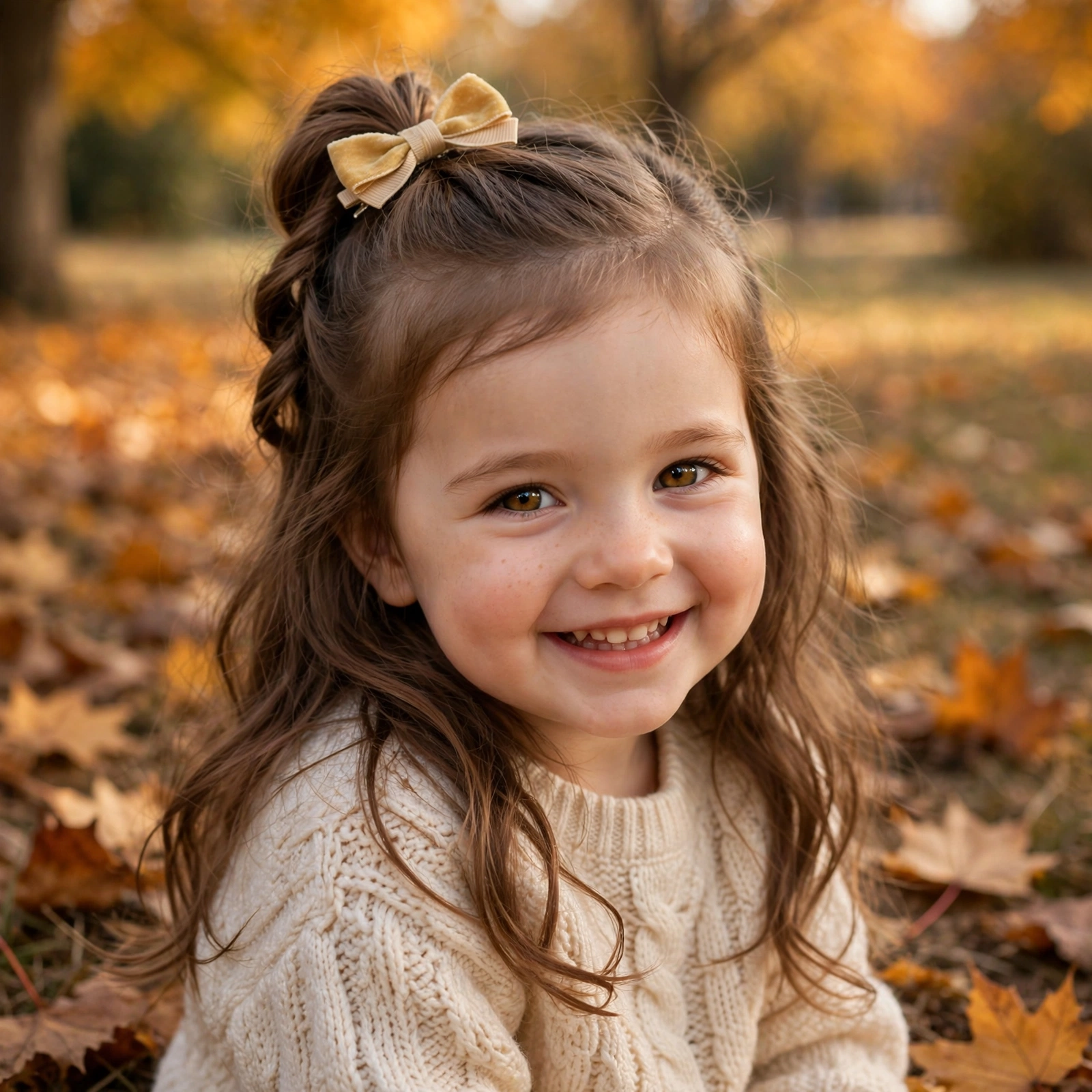
8. Half-Up Bow Twist
The top half of the hair twisted back and secured with a bow clip, the rest left flowing — the sweet spot between “done” and comfortable that little girls genuinely love. The half-up bow twist is a fall 2026 favorite because it keeps hair out of her face (goodbye, windy-day eye-whipping) while letting her keep the long flowing hair she’s proud of. It’s also the fastest “occasion” style on this list — our editors clocked it at four minutes, fast enough for a school morning but pretty enough for Thanksgiving dinner.
How to get it: Take a section from each temple, twist each one back toward the crown, and secure where they meet with a bow clip or small elastic — then clip the bow over the elastic to hide it. Let the rest hang free. Let her choose the bow from a small “bow box” — the ritual of picking makes her invested in the result, and an invested child doesn’t pull the style out by 10 a.m.
Best for: Ages 3–7; all hair types; shoulder-length and longer. Perfect for wavy and curly hair, where the twists look especially pretty.
Maintenance: Low. About 4 minutes; the bottom half may need a quick brush after naps, but the twisted top holds. Works beautifully on second-day hair.
Pro tip: Use a bow on an alligator clip, not a snap clip — alligator clips grip little-girl hair without sliding, and they don’t pinch when she leans her head back. Hide the elastic under the bow and the whole thing looks seamless. A light mist of SoCozy detangler spray on the loose lengths keeps the bottom half tangle-free till pickup.
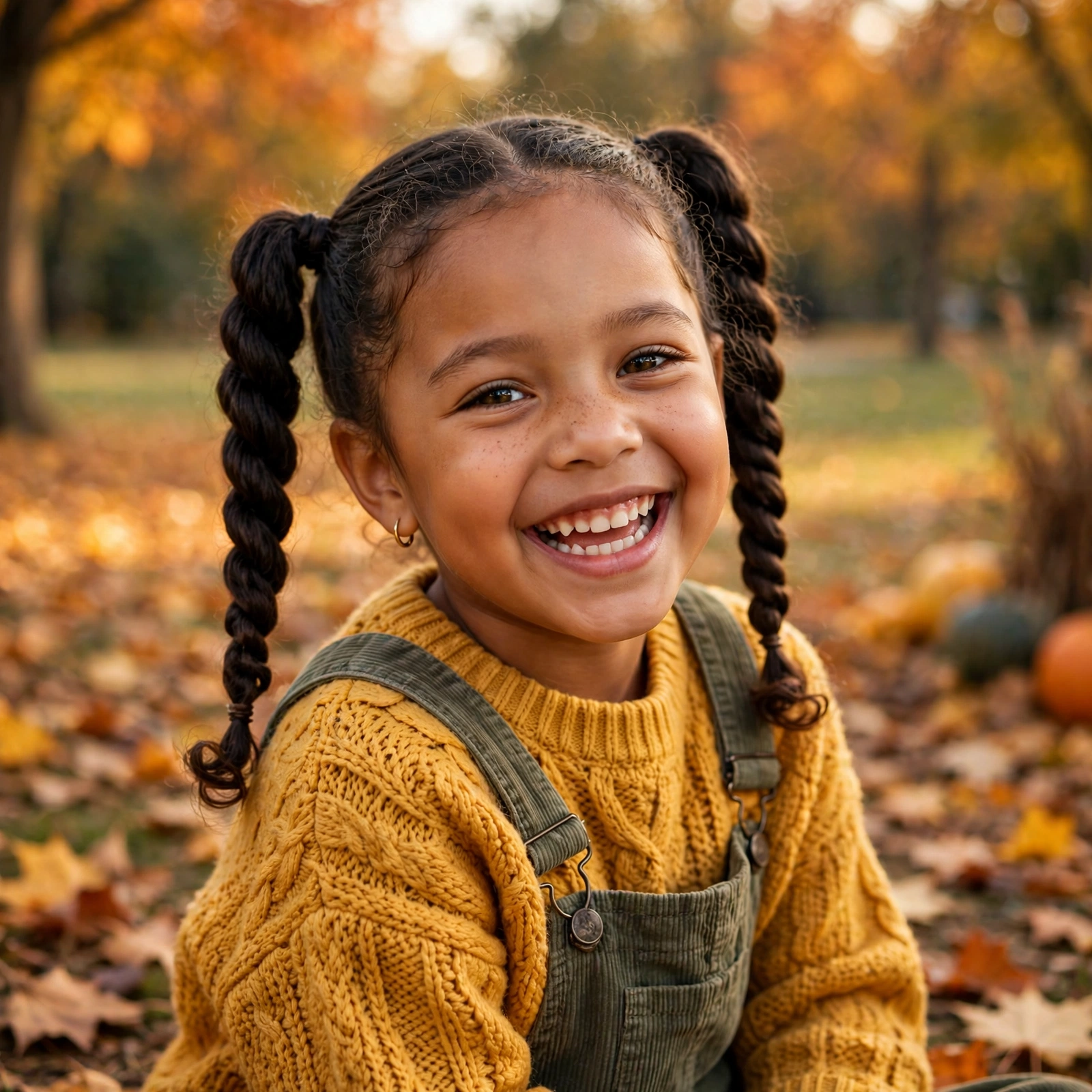
9. Two-Strand Twist Pigtails
Each pigtail twisted as a simple two-strand rope instead of left straight — a small change that makes a huge difference in staying power. Two-strand twist pigtails were the surprise winner in our testing: they’re faster than braids (no over-under pattern to maintain while a toddler squirms), they hold better than straight pigtails on every hair type we tried, and the rope texture looks deliberately styled rather than “just put up.” For fall 2026, add tiny gold or copper-toned elastics at the ends for an autumnal finish that costs nothing.
How to get it: Make two pigtails as in style #1. Split each ponytail into two sections, twist each section the same direction, then wrap them around each other the opposite direction and secure the ends with a small elastic. The opposite-direction wrap is what locks the twist — same-direction wrapping unravels. Turn it into a “twisty snake” story and she’ll watch the twist form in the mirror instead of fidgeting.
Best for: Ages 4–7; all hair types and textures — especially good for thick and curly hair, where twists hold beautifully; shoulder-length and longer.
Maintenance: Low to medium. About 6 minutes for both twists; holds all day and survives hats. The twist structure resists tangling, so evening brushing is quick.
Pro tip: Dampen each section lightly before twisting — damp twists set smoother and hold twice as long as dry ones. If the ends want to unravel, a tiny drop of Cantu Care for Kids leave-in conditioner on your fingertips seals them without any crunch or stiffness.
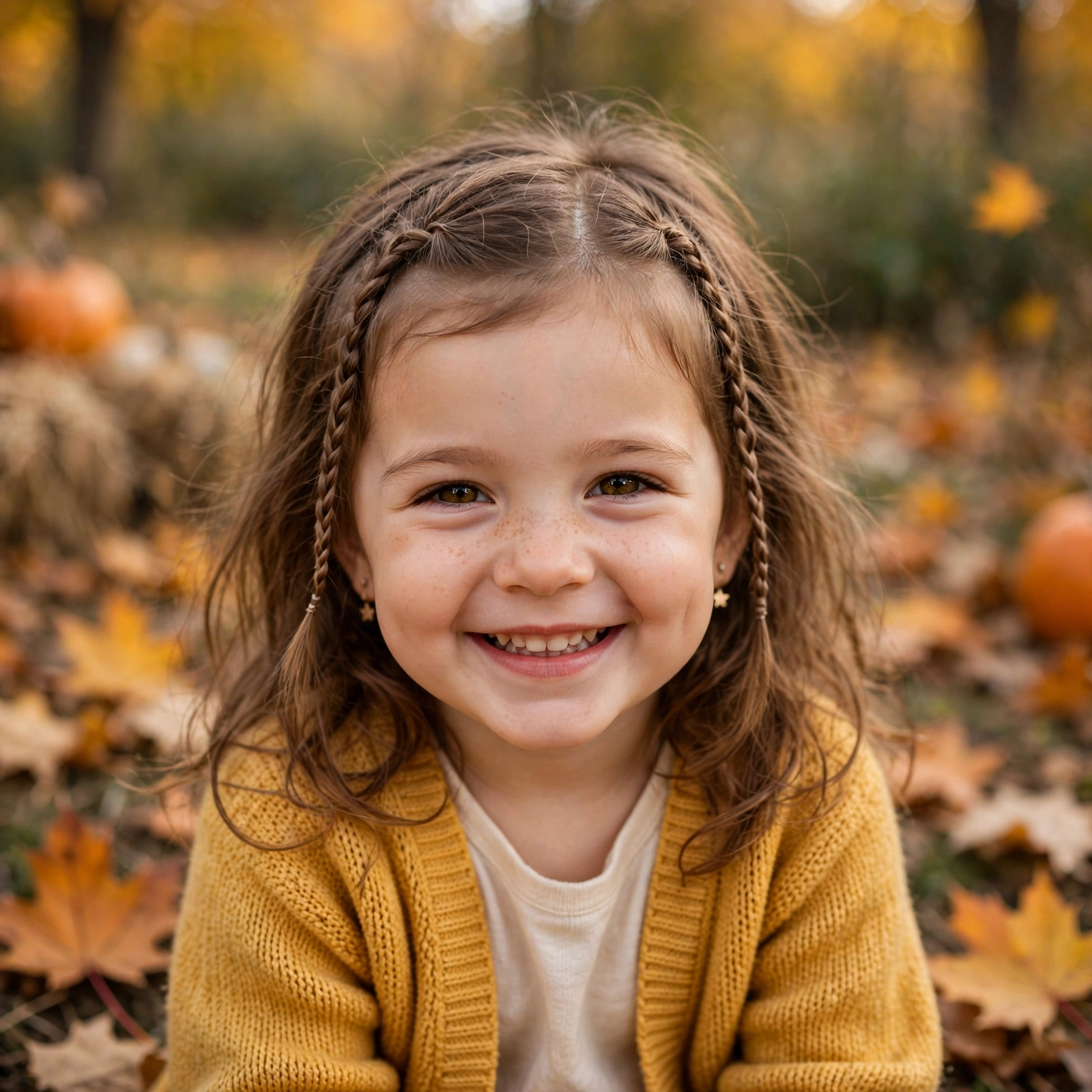
10. Face-Framing Mini Braids
Hair worn down with two tiny braids framing the face, starting at the temples — the boho-cute finish that makes loose hair actually work for little girls. Left completely down, a toddler’s hair ends up in her mouth, her food, and her eyes; two mini braids solve all of that while keeping the flowing-hair look she wants. This style is trending for fall 2026 because it pairs perfectly with knit hats — the braids sit in front of the hat band, framing her face in photos while everything else stays tucked and warm.
How to get it: Part hair down the middle and brush smooth. Take a small section at each temple, braid a simple three-strand braid about 3–4 inches long, and secure each with a tiny clear elastic. That’s it — the rest stays down. Do the braids while she looks in the mirror and “supervises” — giving a four-year-old quality control over your work keeps her engaged and still.
Best for: Ages 3–7; all hair types; chin-length and longer. Wonderful for curly hair, where the mini braids show off the texture.
Maintenance: Low. About 3 minutes; re-braid one side midday if it loosens. The loose lengths will need a quick brush after naps — that’s the tradeoff for wearing it down.
Pro tip: Keep the braids small — pencil-thin, not chunky. Chunky front braids pull and give little girls headaches; thin ones do the job of keeping hair back with almost no tension. Thread a tiny autumn bead onto each elastic before securing for a detail she’ll show everyone at preschool.
Fall Hairstyles for Little Girls: FAQs
How do I detangle my toddler’s hair without tears?
Detangle damp, never dry — that’s the whole secret. Spritz with water plus a little leave-in conditioner, work from the ends upward in small sections, and use a wide-tooth comb or flexible detangling brush instead of a bristle brush. Distraction is a tool, not a cheat: a video, a snack, or letting her brush a doll’s hair buys you the minutes you need. And if she’s crying, stop — a half-done style with a happy kid beats a perfect style with a meltdown, because tomorrow she has to trust you again.
How do I stop car-seat headrests from wrecking her hair?
The damage happens where her head presses and rubs against the headrest — that’s the nest zone. Styles that keep hair off the back of the head win: the twisted side ponytail (#4) swept to one side, the cozy low mini bun (#7), or the soft knit headband swoop (#3) worn with hair tucked forward. For curly and coily textures, which are most vulnerable to friction breakage, protective braided styles make the biggest difference — our kids’ braids guide has options built exactly for that. A silk or satin pillowcase at night fights the same battle while she sleeps.
Which styles survive naps without turning into a nest?
Anything segmented or contained: the bubble braid ponytail (#6) is the nap champion because each elastic acts as a tangle barrier, followed by French braid pigtails (#5) and the two-strand twist pigtails (#9). The styles to avoid for naps are loose down styles and high single ponytails, which concentrate all the friction in one spot. Quick nap rescue: spritz, finger-comb the worst of it, and re-smooth — don’t re-brush from scratch unless you want a second styling session.
When should my daughter get her first trim?
There’s no magic age — trim when the ends tell you to, not the calendar. The signs: ends that look thin or transparent, hair that tangles more than it used to, or styles that won’t hold because the bottom two inches are wispy. For most little girls that’s somewhere between ages 3 and 5, and a “dusting” (just the very tips) is plenty. Regular tiny trims prevent splits from traveling up the shaft, which is what turns manageable hair into a tangle factory — here’s how to handle split ends before they spread. Ask for a dry cut if she won’t sit for a wash, and bring the distraction toolkit.
Can she wear a hat over these styles without ruining them?
Yes — with the right pairing. Low and flat styles slide under hats beautifully: the cozy low mini bun (#7), the soft knit headband swoop (#3) with the band as a base layer, and French braid pigtails (#5), which barely notice a beanie. Avoid high buns and tall ponytails under fitted hats — they’ll get crushed and spring back weird. Pro move: part her hair where the hat’s edge will sit before putting it on, which prevents the dreaded horizontal dent, and choose hats with a smooth lining to reduce static.
The Bottom Line
The best fall hairstyles for little girls aren’t the fanciest ones — they’re the ones that respect her patience, survive her real life, and still make you both smile in the morning mirror. Pick one low-effort style and one “fancy” style from this list, give them a genuine two-week trial the way our editors did, and let this be the autumn that hair time stops being battle time. For warmer-weather ideas when the season turns, our summer hairstyles for school kids guide picks up where this one leaves off. Happy fall, and happy tear-free mornings.