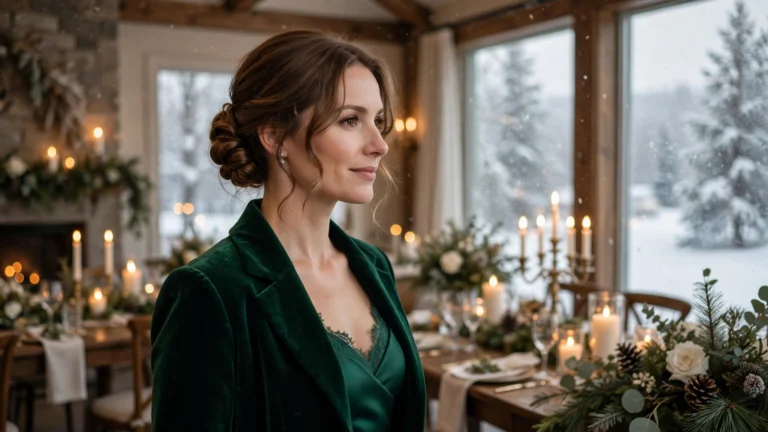
12 Professional Winter Hairstyles for Women (Office-Ready)
If you’re looking for professional winter hairstyles for women that actually survive real life — icy commutes, windy train platforms, hat hair at the office door — you’re in the right place. The best professional winter hairstyles for women in 2026 are the Commuter-Proof Chignon, the Boardroom Blowout, and the Executive Low Ponytail: polished styles that go up or smooth down in minutes and stay neat through office heating, winter wind, and back-to-back meetings. These are work-appropriate winter looks built for your actual mornings, not a magazine shoot.
Winter is the hardest season for office hair, and our editors tested every claim on this list against real commutes. Cold air outside plus bone-dry heating inside means static, flat roots, frizzy ends, and the dreaded beanie dent. The styles below were chosen with that reality in mind — each one either resists those problems by design or can be fixed in sixty seconds at your desk with no heat tools.
The office winter hairstyles of 2026 share one philosophy: controlled polish. Think smooth-but-not-stiff blowouts, low contained buns that slide under a beanie, ponytails placed low enough to survive a coat collar, and twists that keep hair out of your face on camera. The goal isn’t glamour for glamour’s sake — it’s hair that looks intentional at 8 a.m. and still looks intentional at 6 p.m.
But professional doesn’t mean boring, and it definitely doesn’t mean one routine for everyone. A lawyer walking into a 9 a.m. deposition has different hair needs than a designer on a video-call-heavy Wednesday. So this list mixes five-minute grab-and-go updos with fifteen-minute polished blowouts, low-maintenance cuts with clever styling, and strict-boardroom options with ones that slide straight into the office holiday party.
What makes this guide different: every style comes with the full picture. Not just what it looks like, but exactly how to get it, who it suits best, honest maintenance expectations, and a pro tip from our editors’ real-world testing. No fluff — just the 12 most genuinely wearable work-appropriate winter hair ideas of 2026, decoded.
Below, we’ve rounded up the 12 professional winter hairstyles for women worth your mornings. Commute-proof, meeting-ready, and honestly pretty — let’s find your winter office hair.
In this guide: jump straight to any style that catches your eye.
- 1. The Boardroom Blowout
- 2. The Commuter-Proof Chignon
- 3. The Executive Low Ponytail
- 4. The Modern French Twist
- 5. The Inward-Tuck Bob
- 6. The 9-to-5 Half-Up Twist
- 7. The Low Crown Braid
- 8. The Beanie-Ready Low Bun
- 9. The Office Silk Knot
- 10. The Confident Center Part
- 11. Sculpted Office Waves
- 12. The Desk-to-Dinner Low Knot
Editor’s Top 5 Office-Ready Winter Picks
Short on time? These are the five professional winter hairstyles for women our editors reach for on actual workdays — the highest polish-to-effort ratio on the list, and every one of them winter-tested.
1. The Commuter-Proof Chignon
The undisputed champion of our winter commute testing. It sits low at the nape so beanies, coat collars, and headphone straps all clear it cleanly — and because it’s pinned rather than heat-styled, dry office air can’t undo it. If you only adopt one style from this list, make it this one: it works on day-two hair and photographs well on video calls.
2. The Boardroom Blowout
Smooth, face-framing volume with the frizz polished out — the gold standard for big-presentation days. Our editors found that a proper blowout set with a cool shot holds up shockingly well in winter’s dry air, especially with an anti-static finish. It’s the style that says “I have my life together” before you say a word.
3. The Executive Low Ponytail
Minimalism with authority. A low ponytail with a wrapped base reads sharp in every workplace, takes five minutes flat, and — crucially — a beanie slides right over it without leaving a dent. This is our pick for the busiest mornings of the quarter.
4. The Modern French Twist
The classic boardroom updo, de-stiffened for 2026. We tested a softer version with a bit of air at the crown, and it carried our editors from morning meetings through evening client dinners without a single pin adjustment. It’s the closest thing to “set it and forget it” that still reads formal.
5. The Beanie-Ready Low Bun
Engineered for hat season, which for most working women is the entire winter. This low bun is placed and shaped so a beanie sits over it perfectly, then comes off to reveal a finished style instead of a flattened mess. If you walk or take transit to work, this one will change your January.
Polished Hair That Survives the Winter Commute
Here’s what winter actually does to your hair: outdoor cold roughs up the cuticle, then indoor heating blasts it with desert-dry air. The result is static flyaways, ends that look frayed by Friday, and volume that collapses by mid-morning. Professional hair doesn’t fail because it was styled badly — it fails because most routines are still on their summer settings.
The fix starts the night before. Switch to a slightly richer conditioner for winter and add a weekly deep mask — hydrated hair holds styles longer and resists static far better than dry hair does. Sleep on a silk or satin pillowcase; cotton ruffles the cuticle and you’ll spend ten minutes in the morning undoing what the pillow did overnight. And never go to bed with wet hair in winter — it dries into a frizzy shape that no amount of morning effort fully rescues.
On styling mornings, placement matters more than product. Low and contained beats high and loose every time in winter: low buns, low ponytails, and nape-level twists survive scarves, coat collars, headphones, and hats. High styles get crushed, rubbed, and dented. If your signature style sits on the crown, consider its low twin for December through February — same skill, half the heartbreak. For the science of keeping hair healthy through harsh conditions, these dermatologists’ tips for healthy hair are worth bookmarking.
Then there’s static — the true villain of office winter hair. The anti-static routine our editors swear by: a light leave-in or a single drop of hair oil smoothed through mid-lengths and ends (never the roots, or you’ll flatten your volume), and a metal or natural-bristle brush instead of plastic, which generates charge. A dryer sheet lightly swept over the finished style genuinely works in a pinch.
Finally, build a desk kit and forget about it: a small brush, a few bobby pins and a spare elastic, travel dry shampoo, anti-static spray, and a silk scarf. Total desk-drawer real estate: almost none. Winter hair problems are almost always fixable in ninety seconds — but only if the fix is within arm’s reach when the problem appears.
Matching Professional Styles to Your Workplace and Hair Type
Professional is not one dress code, so start with your actual workplace. Strict corporate environments — law, finance, consulting — reward structure: smooth blowouts, neat buns, the French twist, sleek low ponytails. Hair reads as part of the uniform here, so precision matters more than creativity. Creative and startup offices give you room for texture: sculpted waves, the half-up twist, softer buns with lived-in movement. And client-facing roles in any industry benefit from styles that photograph well on video calls, where the camera sees only the top third of your head — which means your crown, part, and front pieces carry the entire professional impression.
Then match the style to your hair, not your aspirations. Fine hair looks most professional in smooth, contained styles — the Executive Low Ponytail, the Inward-Tuck Bob — because fine hair loses its shape in elaborate updos by lunch. Thick hair is the natural home of buns, twists, and chignons, which need density to look full. Curly and wavy textures are honestly winter’s advantage: they hold shape better in dry air than straight hair does. And if you want office staples that work beyond the cold months, our professional hairstyles guide covers the year-round classics.
Be honest about your morning budget, because the best professional hairstyle is the one you’ll actually do at 7 a.m. in February. Under five minutes: low buns, the Beanie-Ready Low Bun, the Executive Low Ponytail, the 9-to-5 Half-Up Twist. Five to ten minutes: the Commuter-Proof Chignon, the Modern French Twist, the Office Silk Knot. Ten to fifteen: the Boardroom Blowout, Sculpted Office Waves, the Confident Center Part. A flawless five-minute style beats a half-finished fifteen-minute style every single time.
One last filter: your commute. Walking or transit through wind and weather demands low, pinned, hat-compatible styles — the Beanie-Ready Low Bun and the Commuter-Proof Chignon were built for exactly this. Driving to a heated garage is far more forgiving, which is where blowouts and the Confident Center Part thrive. Build your winter hair plan around your commute first, your calendar second, and your mirror third.
12 Professional Winter Hairstyles for Women (2026)
1. The Boardroom Blowout
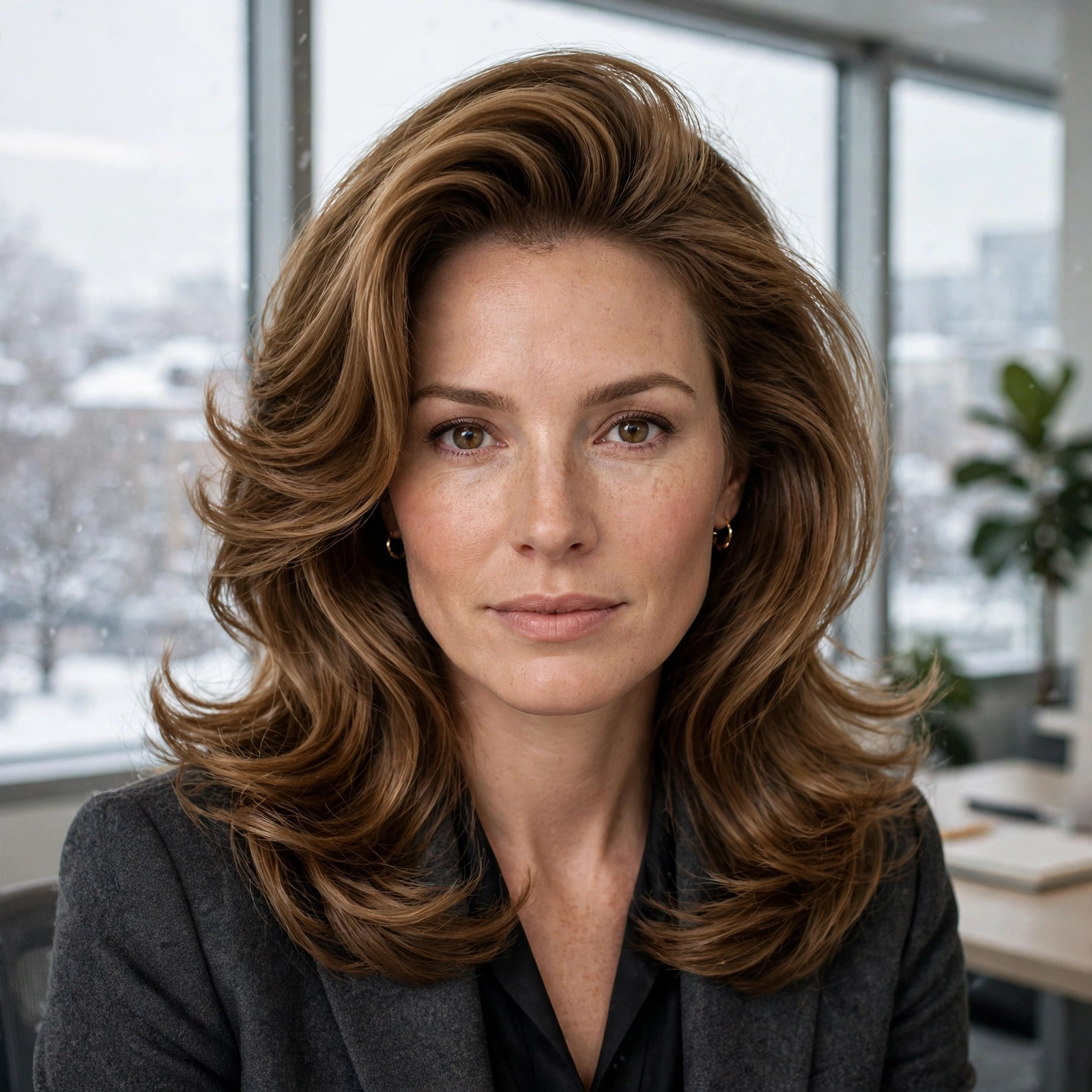
Smooth, voluminous, face-framing — the Boardroom Blowout is the polished standard against which every other office style is measured. It’s trending in work-appropriate winter hair for 2026 because winter’s dry air is secretly a blowout’s best friend: without summer humidity, the volume you build at 7 a.m. is still there at 7 p.m. This is the style for promotion-announcement days, board presentations, investor meetings, and any morning you want to walk in feeling untouchable.
How to get it: Ask your stylist for long face-framing layers starting at the cheekbones — they’re the architecture this style needs. At home, apply a volumizing mousse to damp roots, blow-dry with a large round brush rolling sections away from the face, and set the front pieces in large Velcro rollers while they cool. Finish with the cool shot to set everything, then smooth a single drop of hair oil through the ends for static control.
Best for: Oval, round, and heart-shaped faces; medium to thick hair that sustains volume; medium to long lengths. Fine hair can wear it too — just apply mousse generously at the roots and keep oil strictly to the ends.
Maintenance: Medium. Ten to fifteen minutes for the initial blowout, but it lasts two to three days — revive roots with dry shampoo and sleep on a silk pillowcase. Trims every 8–10 weeks keep the layers intentional.
Pro tip: The cool shot is non-negotiable — heat shapes the hair, cold sets it, and skipping it is the number one reason home blowouts collapse before lunch. For the crown, blow-dry the top sections lifting straight up rather than forward; that’s where the expensive-looking height comes from.
2. The Commuter-Proof Chignon
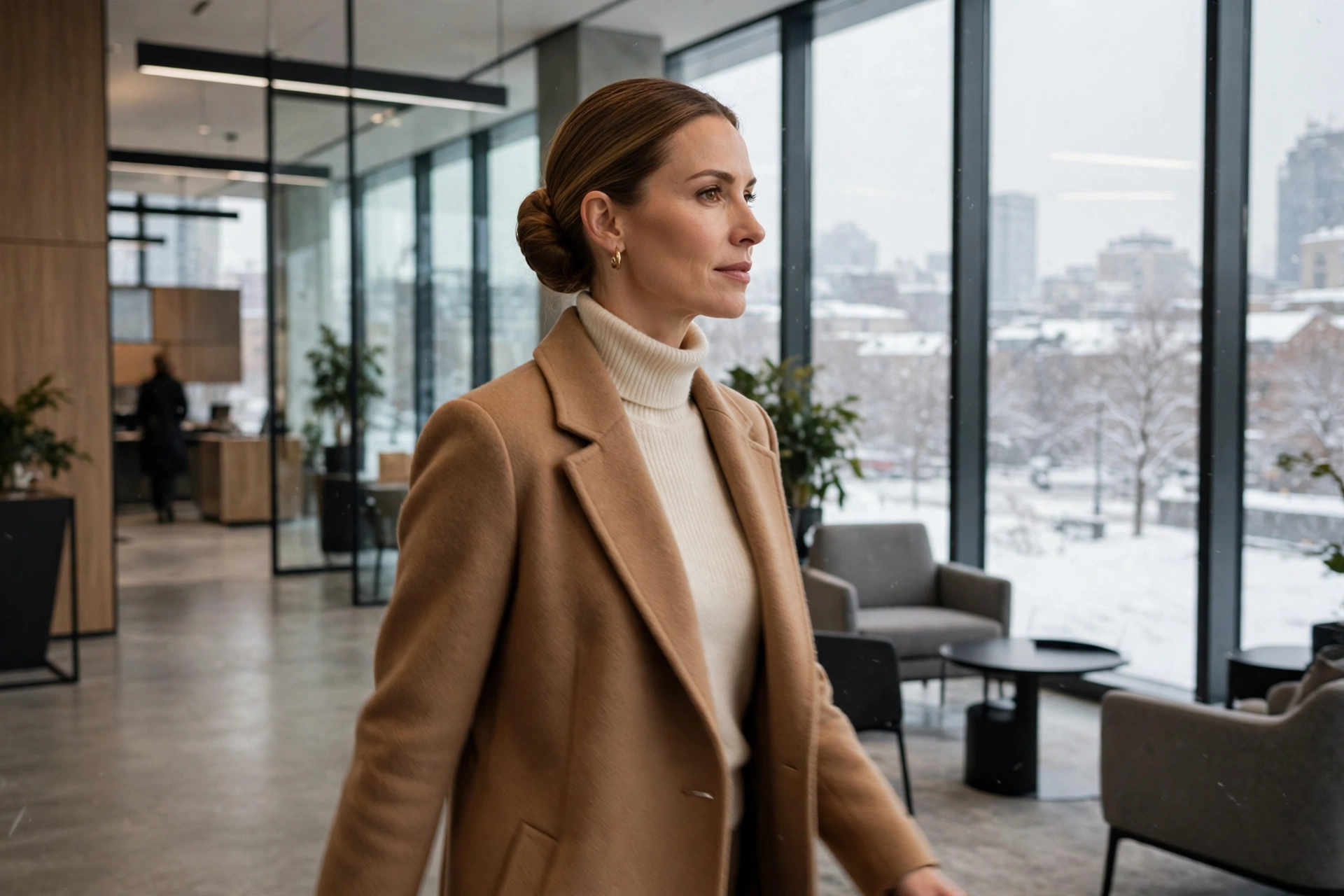
A smooth, low chignon pinned at the nape with the front sections swept cleanly back — the working woman’s answer to winter. We named it the Commuter-Proof Chignon because it earned the title in testing: it slides under beanies, clears coat collars, survives headphone straps, and emerges at the office looking exactly as it did at home. The vibe is quiet authority — early meetings, court days, client lunches, and every morning the weather is doing its worst. Among office winter hairstyles, this is the one our editors would save from a burning building.
How to get it: Smooth damp hair with a light leave-in, create a clean center or side part, and gather everything into a low ponytail at the nape. Twist the ponytail firmly (looser for a softer finish), coil it into a bun, and anchor with U-shaped hair pins rather than bobby pins — they grip more hair and stay invisible. Smooth the surface with a natural-bristle brush and mist lightly with flexible-hold hairspray.
Best for: Medium to long hair; all face shapes — adjust the part to flatter yours; straight to wavy textures look sleekest, but curly hair makes a gorgeous textured version.
Maintenance: Low. Five to seven minutes, and it actively prefers day-two hair. Zero salon upkeep tied to the style itself, though healthy ends keep the bun smooth.
Pro tip: Anchor the chignon slightly off-center if your commute involves a car headrest or train seat — a centered bun presses uncomfortably against headrests and loosens by noon. And do a final static check at the office door: a quick smooth with damp hands tames any flyaways the walk created.

3. The Executive Low Ponytail
Clean part, hair smoothed back and secured low at the nape, a strand wrapped to hide the elastic — minimalism with authority. The Executive Low Ponytail is a cornerstone of professional winter hairstyles for women because it solves winter’s problems by design: the low placement survives hats, hoods, and collars, and the smooth finish laughs at static when prepped properly. The vibe is sharp and self-assured — strategy sessions, performance reviews, travel days, and mornings when you have exactly five minutes and zero tolerance for fuss.
How to get it: Create a precise part on damp hair (center reads modern, deep side reads classic), smooth a lightweight serum or smoothing cream through the lengths, and brush everything back into a low ponytail at the nape. Secure with a snag-free elastic, wrap a small strand around the base, and pin underneath. Run a flat iron over the tail once for glassy polish.
Best for: Straight or straightened hair (smoothness is the point); oval and oblong faces especially; medium to long lengths. All densities work — the style is about the finish, not the volume.
Maintenance: Low. About five minutes; no heat needed if your hair is naturally straight. Works beautifully on day-two hair — even better than fresh, since there’s natural grip.
Pro tip: Tame flyaways the pro way: spritz a clean mascara spoolie or toothbrush with hairspray and smooth it along the part and hairline. It beats heavy edge-control products, which can look stiff under office lighting. And never place this ponytail at the crown in winter — nape placement is what makes it commute-proof.

4. The Modern French Twist
The classic boardroom updo, softened for 2026. The Modern French Twist keeps the elegant vertical line of the original but loosens the crown and softens the edges, so it reads confident rather than severe. It’s a fixture of work-appropriate winter hair because it’s one of the few formal styles that winter can’t touch — everything is pinned up and away from wind, hats, and collars. The vibe is timeless professionalism: formal presentations, awards dinners, important client meetings, and any occasion where your hair should be the last thing anyone worries about.
How to get it: Sweep all hair to one side, secure the sweep with bobby pins in a vertical line up the back of the head, then roll the loose hair up and over the pin line, tucking the ends in and pinning as you go. For the modern softness, gently loosen the crown with your fingertips after pinning and pull a few soft pieces at the temples. A light-hold hairspray keeps it secure without helmet stiffness.
Best for: Medium to long hair with enough length to roll; all face shapes — the height at the back flatters universally; straight to wavy textures roll most cleanly.
Maintenance: Low to medium. Seven to ten minutes once you’ve practiced it twice — the muscle memory comes fast. No salon upkeep tied to the style.
Pro tip: Practice this on a Sunday evening first, not a Monday morning — the technique clicks on the second try and frustrates on the first. And insert pins with the wavy side facing the scalp for maximum grip; upside-down pins are the silent cause of most twist collapses.
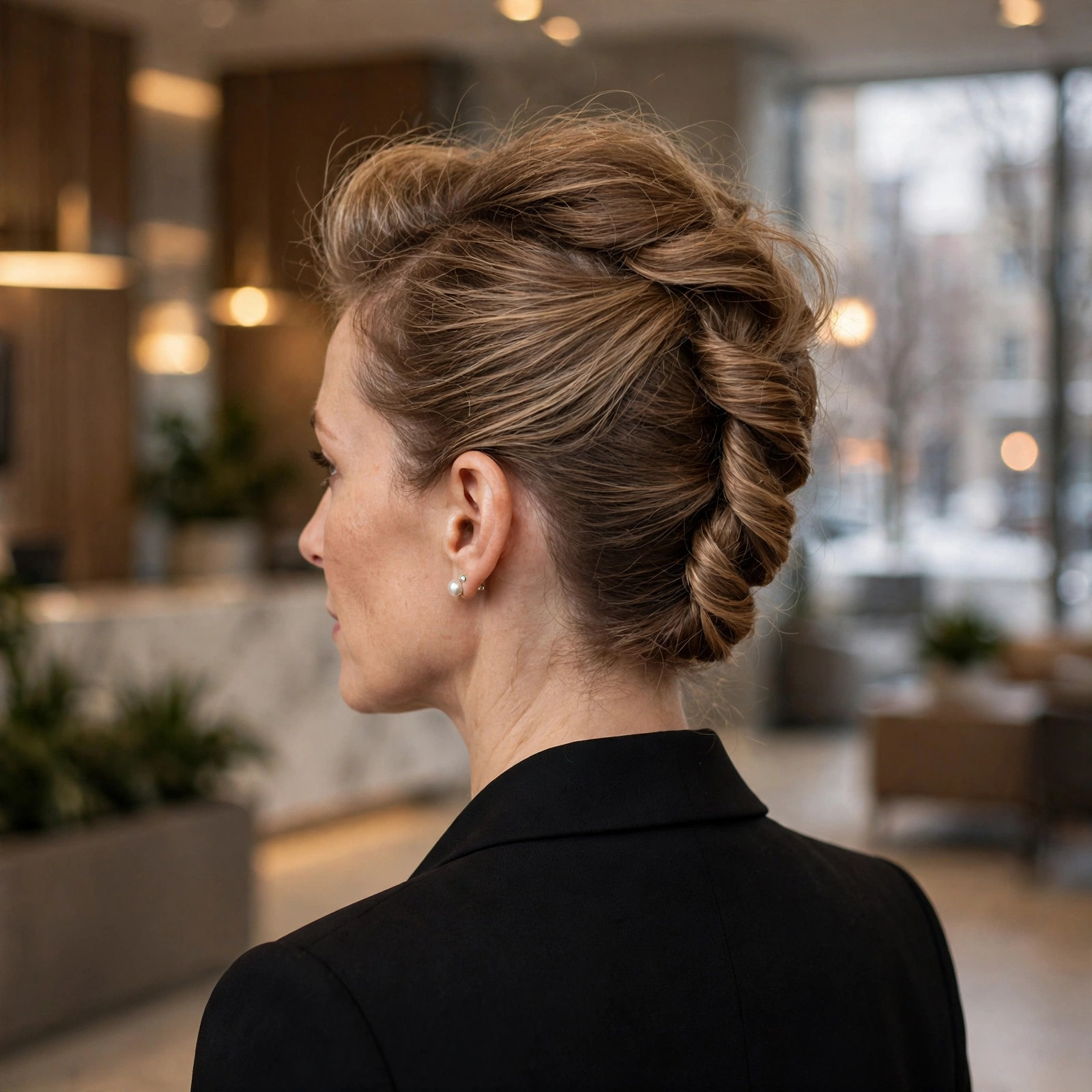
5. The Inward-Tuck Bob
A chin-to-collarbone bob with ends tucked softly inward — the lowest-maintenance professional cut you can own in winter. The Inward-Tuck Bob is everywhere in office winter hairstyles for 2026 because it’s a haircut that styles itself: the tucked ends create a polished curve that scarves and coat collars can’t ruin, and it springs back into shape after a beanie. The vibe is chic efficiency — marketing roles, editorial offices, consultancy, and every working woman who wants to spend four minutes on hair and look like she spent forty.
How to get it: Ask your stylist for a bob that ends between the chin and collarbone, cut with a slight inward bevel at the ends (point-cutting keeps it from looking blunt and heavy). At home, blow-dry with a medium round brush curling the ends under, or — the real trick — tuck the ends behind your ears while your coat is on; body heat resets the curve for free.
Best for: Oval, heart, and square faces (the inward curve softens jawlines); straight to slightly wavy textures; fine to medium hair — the bevel creates the illusion of density.
Maintenance: Low daily, disciplined trims. Four to six minutes of styling; salon visits every 6–8 weeks, since a bob loses its shape as it grows. Grows out into a lob gracefully, so a missed appointment isn’t a crisis.
Pro tip: This cut is the ultimate hat-hair cheat: because the ends curve under by design, a beanie actually reinforces the style instead of destroying it. Just fluff the crown with your fingers after the hat comes off and you’re office-ready in ten seconds.

6. The 9-to-5 Half-Up Twist
Two twisted sections drawn back from the temples and pinned at the crown, with the rest worn smooth or softly waved — polish in the front, ease in the back. The 9-to-5 Half-Up Twist earned its name in our testing because it’s the fastest way to look deliberately styled on a weekday morning. It keeps front pieces off your face during screen-heavy days and survives winter wind without unraveling. The vibe is approachable professionalism — team stand-ups, training sessions, client calls from home, and office days when a full updo feels like too much.
How to get it: Take a two-inch section from each temple, twist each one back toward the crown, cross them over each other, and pin securely where they meet. Smooth the remaining hair — straighten for strict offices, add loose waves for creative ones. A light texture spray before twisting gives the sections grip, especially on freshly washed hair.
Best for: Medium to long hair; round and oval faces benefit most from the crown lift; straight, wavy, and curly textures all work — curly hair makes an especially pretty version.
Maintenance: Low. Under five minutes, no heat required on the twisted sections. No salon upkeep tied to the style.
Pro tip: Backcomb the crown lightly before pinning the twists — that hidden half-inch of lift is what separates a flat half-up from a gorgeous one. And crisscross two bobby pins in an X instead of using one; the hold is dramatically stronger through a windy walk to the office.

7. The Low Crown Braid
A single braid hugging the hairline from temple to temple, feeding into low, smooth lengths or a tucked end — intricate-looking, secretly simple. The Low Crown Braid is a standout in professional winter hairstyles for women because it’s essentially windproof: a style with nothing loose for the weather to attack. It reads polished and intentional in conservative offices, and it photographs beautifully on video calls where the front of your hair is the whole show. Think all-day conferences, panel appearances, and weeks when the forecast is pure wind.
How to get it: Create a deep side part, then Dutch-braid (underhand, so the braid sits raised) along the hairline from the heavier side, curving back toward the ear and continuing into a regular braid down the side. Pancake the braid gently for fullness, then either let it hang over one shoulder or tuck the end under the nape and pin for a fully contained finish. Mist with flexible-hold hairspray.
Best for: Medium to long hair; medium to thick densities hold the braid’s shape best; all face shapes — the side part and braid placement are fully customizable.
Maintenance: Low to medium. Eight to ten minutes once the technique is learned. Bonus: sleep in it and wake up to heatless waves the next morning — the braid doubles as an overnight style.
Pro tip: Braid slightly damp hair for this one — it sets with more texture and grip as it dries, and the style holds through a full day plus a commute. Keep the first three stitches snug against the hairline; that’s what locks the whole braid in place.
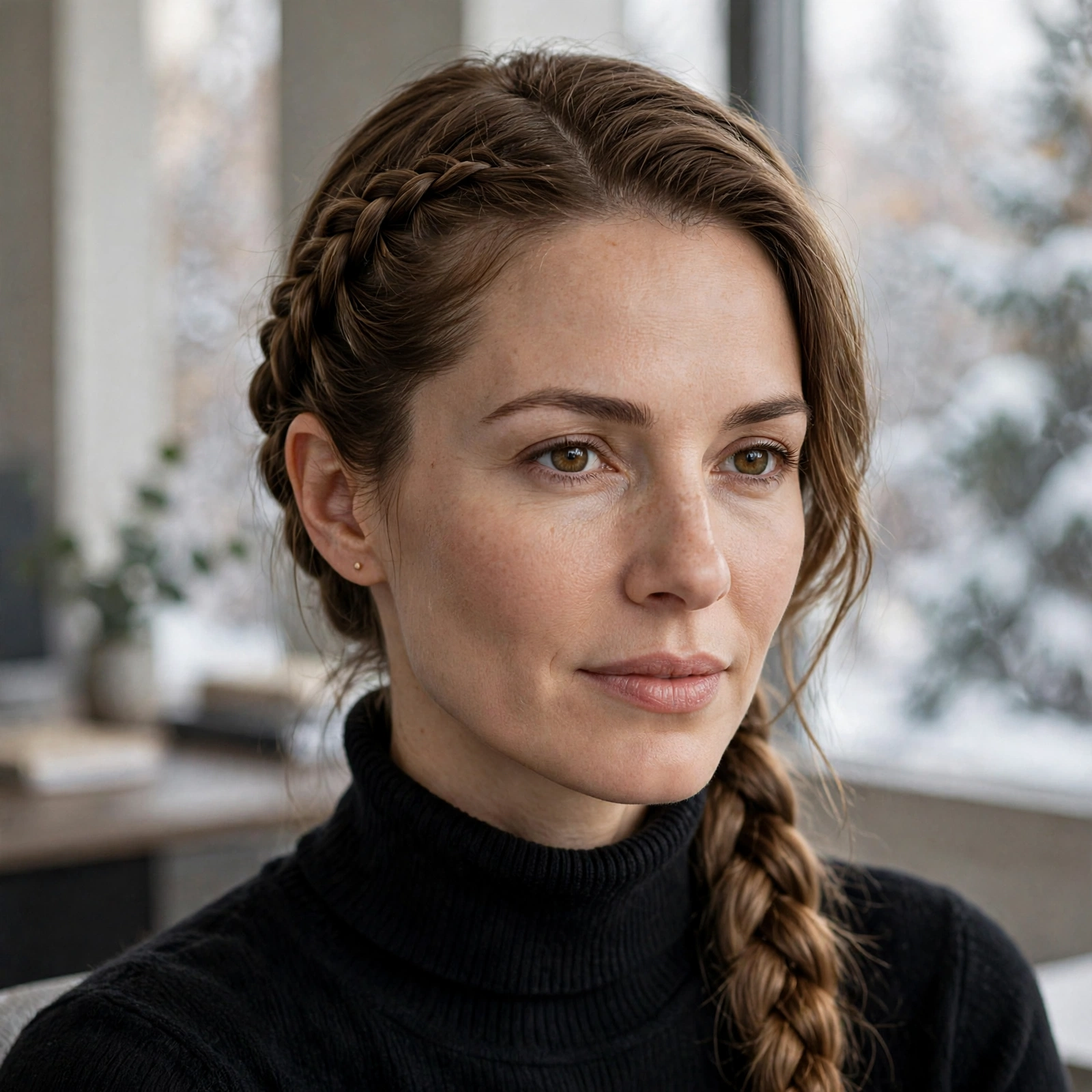
8. The Beanie-Ready Low Bun
A low, compact bun engineered around one reality: the beanie goes on, the beanie comes off, and your hair still has to look professional. The Beanie-Ready Low Bun sits flat enough at the nape that a hat slides over it without denting, and its coiled structure springs back when the hat comes off. It’s the most practical entry in these office winter hairstyles, built for the walking-and-transit crowd. The vibe is quietly competent — snowy commutes, school-drop-off-to-office mornings, and every day the hat is non-negotiable.
How to get it: Gather hair into a low ponytail at the nape, twist it snugly, and coil it flat against the head — flatter and tighter than a decorative chignon, since compression resistance is the goal. Pin generously with U-shaped pins (at least six), then smooth the surface. Before the beanie goes on, apply a pea-sized amount of smoothing cream to the crown to prevent the static halo hats love to create.
Best for: Medium to long hair; all face shapes; all textures — curly and coily hair excels here since the compact coil is the natural shape.
Maintenance: Low. Three to five minutes. Choose a beanie with a silk or satin lining to prevent frizz and breakage — it makes a measurable difference by February.
Pro tip: Part your hair exactly where the beanie’s edge will sit before putting it on — pre-placing the part prevents that horizontal hat dent across the crown. When the hat comes off at the office, flip your head forward once, shake, and flip back: instant volume, zero tools.
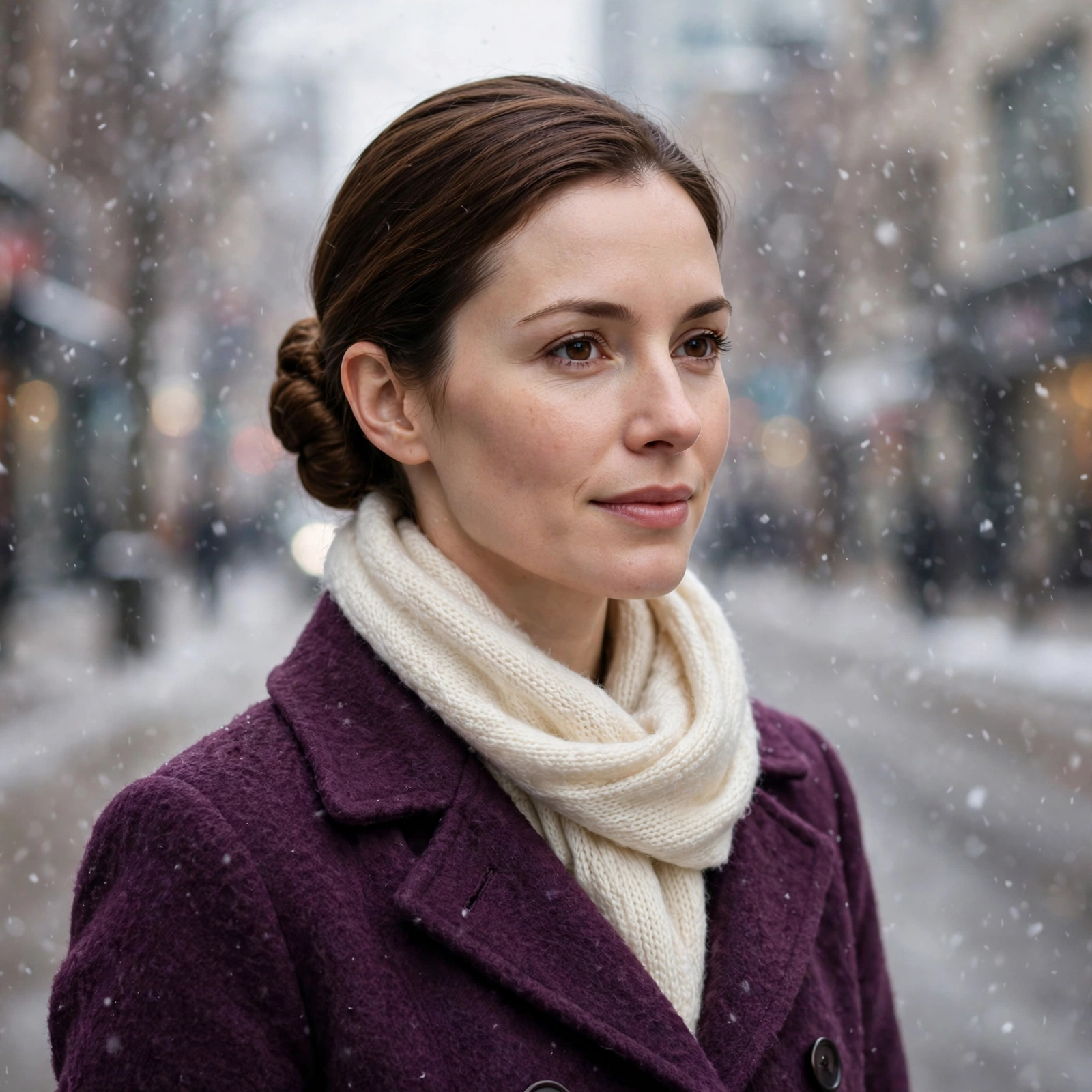
9. The Office Silk Knot
A low, sleek knot at the nape with a mirror-smooth finish — the minimalist’s power updo and the most formal everyday style on this list. It thrives in work-appropriate winter hair because the sealed, smooth surface resists both static and dry-air frizz better than any textured style can. The vibe is executive calm — C-suite meetings, interviews, formal reviews, and days when your hair needs to say “handled” before you do.
How to get it: Smooth damp hair with a heat protectant and blow-dry straight for the glossiest base. Gather into a low ponytail at the nape, split the ponytail in two, and tie the two sections in a single knot, tucking the ends underneath and pinning securely. Smooth the surface with a boar-bristle brush and finish with a shine spray — this style lives or dies on its finish.
Best for: Medium to long hair; oval and heart-shaped faces; straight to wavy textures achieve the silk finish most easily. Curly hair can wear it with a good blowout base.
Maintenance: Low to medium. Seven to ten minutes including the smoothing blow-dry. The style holds all day, but the shine finish needs the ends kept healthy — keep up with trims.
Pro tip: The difference between a silk knot and a sad bun is the base: take the extra three minutes to smooth the hair properly before forming the knot. Our editors found that a single drop of Olaplex No. 7 bonding oil smoothed over the finished knot gives the glassy finish that makes this style work.
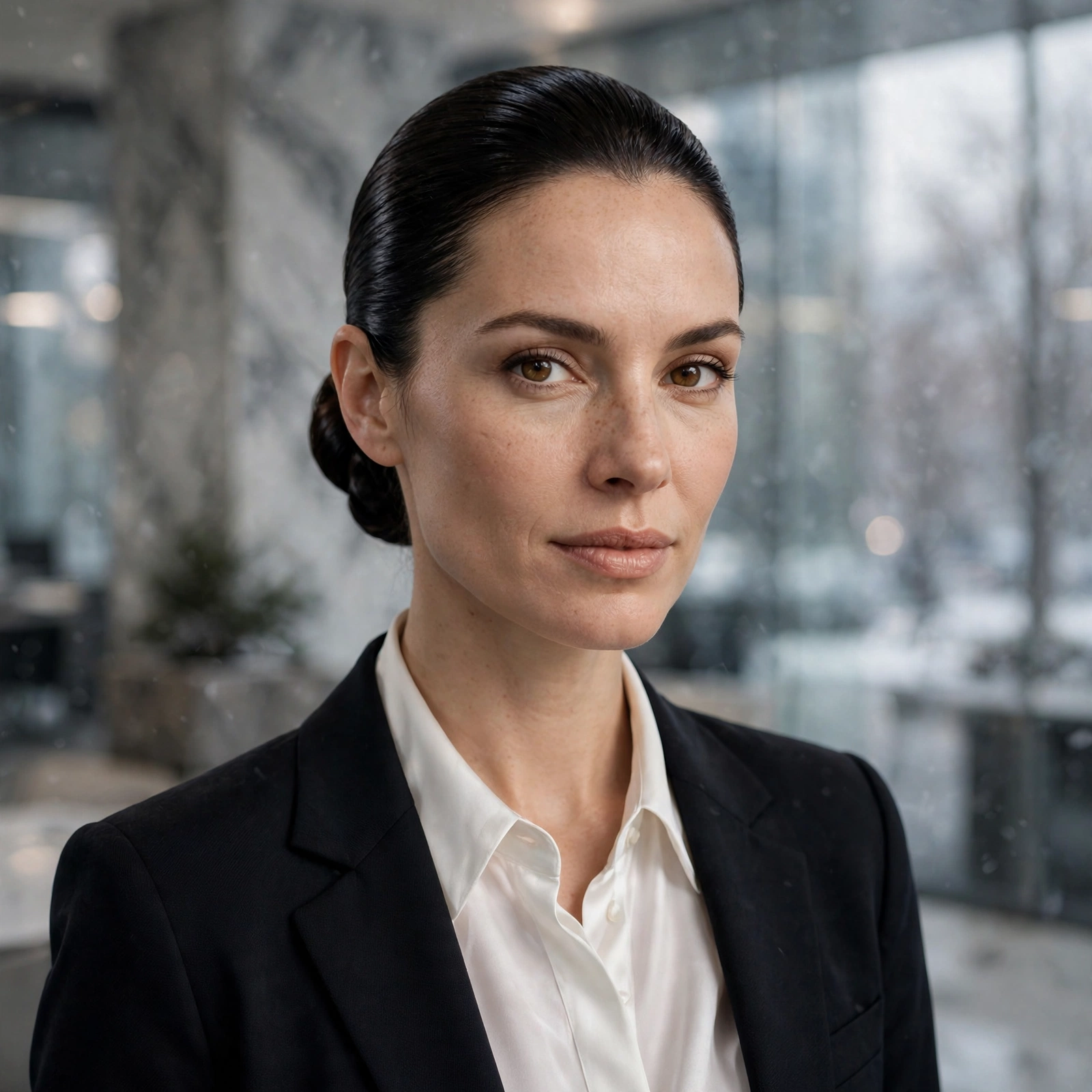
10. The Confident Center Part
Dead-center part, lengths worn long and pin-straight with a high-gloss finish — the boldest minimalist statement in professional hair. The Confident Center Part works in office winter hairstyles for 2026 because winter’s dry air lets straight hair stay straight: no humidity to puff it up, no frizz to fight. It reads modern and self-assured in every industry we’ve tested, and it’s unbeatable on video calls, where the symmetrical frame looks deliberate and composed. The vibe is fashion-editor confidence — creative leadership roles, media, and anyone whose personal brand is precision.
How to get it: Part precisely down the center on damp hair using the tail of a comb — precision at the part is what makes this look intentional rather than accidental. Apply a heat protectant and a smoothing serum, blow-dry straight with a paddle brush, then flat-iron in small sections for the glassy finish. Tuck both sides behind the ears or let them frame the face — pick one and commit, the symmetry is the style.
Best for: Oval and oblong faces (the center part emphasizes symmetry); straight or straightened textures; medium to long lengths. All densities — fine hair looks sleek, thick hair looks luxurious.
Maintenance: Medium. Ten to fifteen minutes with the flat iron, though the style survives the day intact and revives well on day two with a quick touch-up of the front sections only.
Pro tip: In winter, the enemy of this style is static, not frizz — and the fix is a light leave-in conditioner under your serum, not more heat. If flyaways appear midday, smooth them with barely-damp hands rather than re-ironing, which dries the ends further.

11. Sculpted Office Waves
Soft, brushed-out waves with real polish — waves that went to business school. Sculpted Office Waves take the relaxed wave and refine it: the curl pattern is even, the finish is smooth, and there’s no beachy messiness anywhere. They’re a fixture of professional winter hairstyles for women because winter air holds a set curl far longer than summer air, giving you second-day waves that still look fresh. The vibe is warm professionalism — client entertaining, team celebrations, presentation days when you want softness without sacrificing authority.
How to get it: Curl one-and-a-half-inch sections with a 1.25-inch iron, alternating directions for a natural look, leaving the last inch of ends straight for a modern finish. Let every curl cool completely — pin the front sections with clips while they cool — then brush through gently with a soft-bristle brush to meld them into continuous waves. Finish with a light shine spray, never heavy hairspray.
Best for: Medium to long hair; oval, heart, and square faces (the waves soften angles); all textures with heat styling — use a heat protectant, non-negotiable at this temperature in dry winter air.
Maintenance: Medium. Fifteen to twenty minutes for the full routine, but the waves hold for two to three days — sleep in a loose pineapple or braid and revive with a light mist in the morning.
Pro tip: Pin each front curl to your head with a clip while it cools, then release them all at once before brushing. Cooled-set curls hold roughly twice as long as curls you brush through warm — it’s the single biggest difference between waves that survive a workday and waves that don’t.
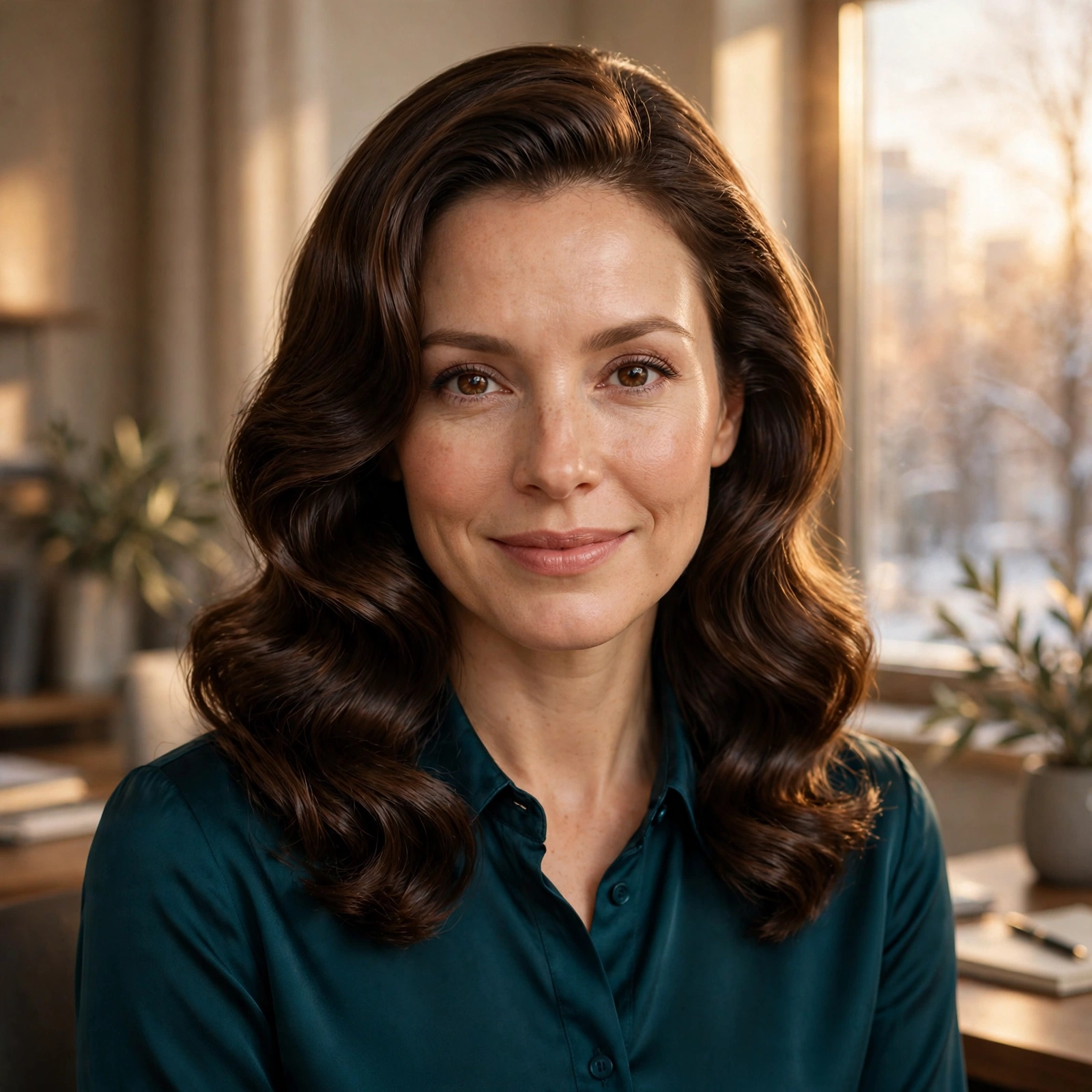
12. The Desk-to-Dinner Low Knot
A low, slightly relaxed knot at the nape with soft face-framing pieces — the style that carries you from the last meeting to the holiday party without a restyling stop. December is its home turf: conservative enough for the workday, romantic enough for the evening, with one five-second transformation (loosen two pins, pull two face-framing pieces) between the two. Think office parties, client dinners, and every evening event your workday feeds into.
How to get it: Gather hair into a low ponytail, twist loosely, and wrap into a relaxed knot at the nape, pinning with U-shaped pins. Leave the two front sections slightly looser than the rest. For the evening shift: gently pull the knot a touch looser for softness, release the face-framing pieces, and add a small statement hair accessory — a gold pin or velvet bow reads festive without trying too hard.
Best for: Medium to long hair; all face shapes — the face-framing pieces get customized to yours; straight to wavy textures look softest, curly hair makes a naturally gorgeous version.
Maintenance: Low. Five to seven minutes in the morning; the evening refresh takes under a minute. No salon upkeep tied to the style.
Pro tip: Keep the evening accessory in your desk drawer from the first week of December — a single gold bobby pin or small velvet bow costs almost nothing and saves the “I wish I’d brought something” regret. Our editors also found that doing the morning knot slightly tighter than you’d like means it relaxes into the perfect evening softness by 6 p.m.

Professional Winter Hairstyles for Women: FAQs
How much morning time should I budget for professional winter hair?
Be honest and plan backward from your alarm. Under five minutes: the Beanie-Ready Low Bun (#8), the Executive Low Ponytail (#3), and the 9-to-5 Half-Up Twist (#6). Five to ten minutes opens up the Commuter-Proof Chignon (#2), the Modern French Twist (#4), and the Office Silk Knot (#9). Reserve ten to fifteen minutes for the Boardroom Blowout (#1) and Sculpted Office Waves (#11) — and do those on days when the calendar justifies it. The biggest time-saver our editors found: prepping the night before (silk pillowcase, loose braid) cuts every morning routine by a third.
Which styles look best on video calls?
The camera sees only the top third of your head, so everything that matters is at the crown, the part, and the front pieces. The Confident Center Part (#10) and the Boardroom Blowout (#1) are our top video-call picks — symmetrical, smooth, and deliberate-looking even on a small screen. The Low Crown Braid (#7) also photographs beautifully since the detail is right where the camera looks. One practical note: ring lights and overhead office lighting expose frizz mercilessly, so run a smoothing pass over the crown before any important call. And avoid styles with height that gets cropped weirdly by the frame — what looks great in person can look odd when the camera cuts it off.
How do I transition from a winter hat to office-ready hair?
The thirty-second hat-to-office reset: remove the hat, flip your head forward, shake once at the roots, flip back, and smooth the crown with your palms. That sequence fixes ninety percent of hat hair. For the rest, style choice is prevention: the Beanie-Ready Low Bun (#8) and the Commuter-Proof Chignon (#2) were designed for exactly this transition, and low styles in general survive hats while high styles get crushed. Two gear upgrades help enormously — beanies with silk or satin linings, and parting your hair where the hat’s edge will sit before putting it on. Keep a travel brush and a few pins at your desk for the stubborn days; the fix takes a minute when the tools are there.
What’s the lowest-maintenance professional cut for winter?
The Inward-Tuck Bob (#5) wins this category by a clear margin: it’s a haircut that styles itself, it actually benefits from hat compression, and it grows out into a lob rather than an awkward phase. Runner-up: long layers with a good blowout routine, since the Boardroom Blowout (#1) lasts two to three days on winter air. Whatever cut you choose, winter maintenance is mostly about ends — dry air makes them fray faster, and frayed ends are what make a professional style look tired. A “dusting” trim every 8–10 weeks and a weekly mask will do more for your winter polish than any styling product. If your ends are already splitting, learn how to get rid of split ends before the damage travels up the shaft and forces a bigger cut.
Can these office styles work for the holiday party too?
Absolutely — and the Desk-to-Dinner Low Knot (#12) was built for exactly that crossover. The general rule: any smooth, contained style can go festive with one change — loosen it slightly, add a metallic or velvet accessory, or pull two face-framing pieces free. The Modern French Twist (#4) and the Office Silk Knot (#9) both read formal enough for evening as-is. The Boardroom Blowout (#1) with a deepened side part and a shine boost is a classic party move. Our editors’ December system: do the morning version slightly tighter and sleeker than usual, and let the day’s natural softening plus one accessory do the evening transformation for you. If you want seasonal inspiration that still reads professional, our professional fall hairstyles guide has more office-ready crossover ideas.
The Bottom Line
The best professional winter hairstyles for women aren’t the most elaborate ones — they’re the ones that respect your mornings, survive your commute, and still look intentional when the office heating has done its worst. Pick one low-maintenance anchor style for daily wear and one polished option for big days, give them a genuine two-week trial, and let this be the season your work hair finally feels easy. If you want more office-ready inspiration, our office hairstyles guide covers year-round professional looks. Stay warm, stay polished, and happy winter.