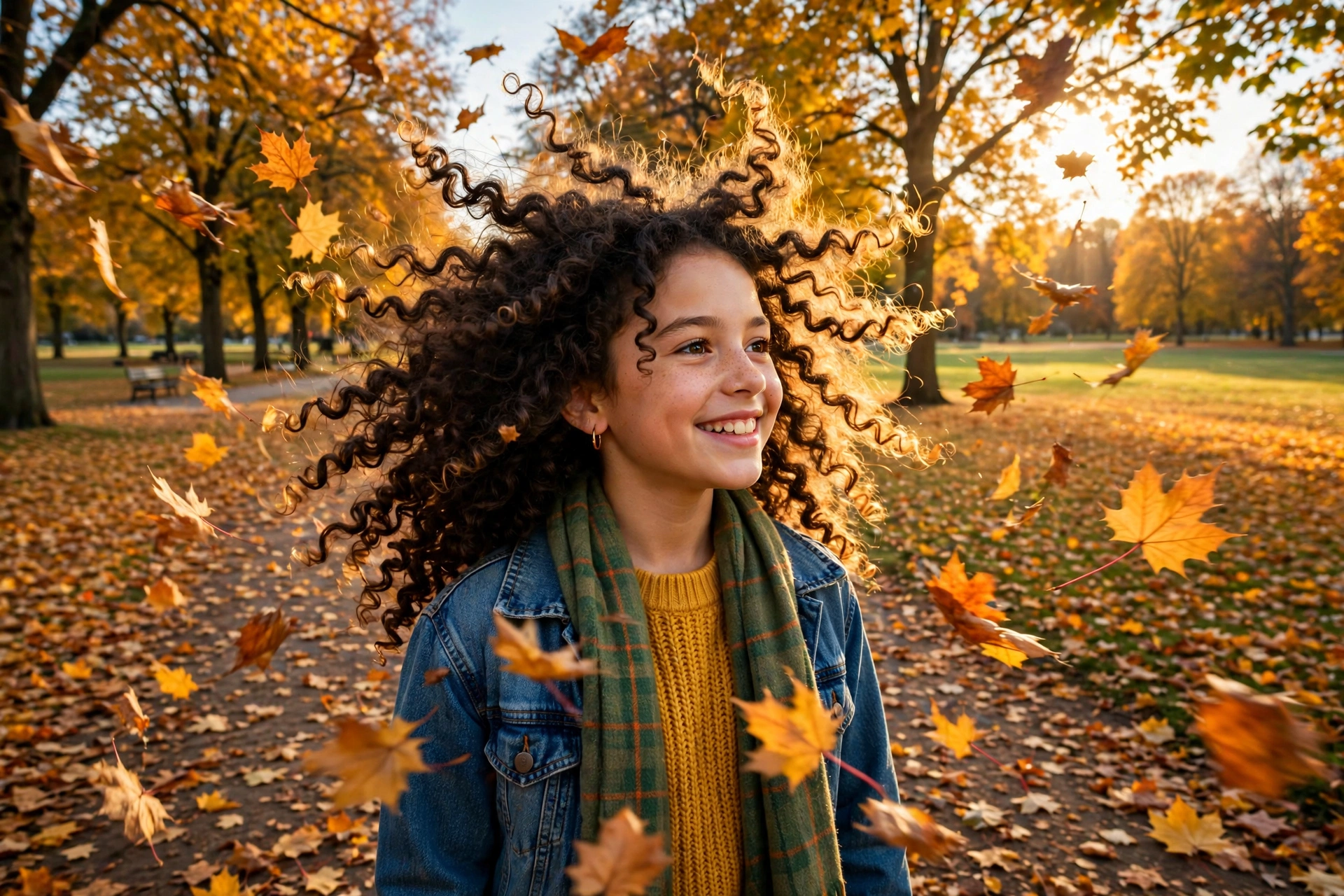
12 Fall Hairstyles for Girls With Curly Hair
If you’re searching for fall hairstyles for girls with curly hair that actually respect those curls — not fight them — you’re in the right place. There’s something about the first cool morning of autumn that changes everything: summer’s humidity loosens its grip, curls hold their shape longer, and hats, scarves, and picture-day season all arrive at once. The best fall hairstyles for girls with curly hair in 2026 are the high pineapple, the crisp fall wash-and-go, twin twisted puffs, protective two-strand twists, and the flat-twist headband crown — and this guide shows parents exactly how to do each one.
Here’s what our editors learned after testing these styles on real curl patterns: fall is secretly the best season for curly hair, but only if you adjust your routine. The air gets drier, and dry air is curly hair’s nemesis — it pulls moisture straight out of the hair shaft, which means more frizz, more tangles, and more breakage if you keep running your summer routine. The parents who win the season are the ones who add moisture before they add style.
And here’s the philosophy behind this list: these styles celebrate the curl. No straightening, no “taming,” no heat tools required for a single one of these twelve looks. Your daughter’s curl pattern — whether it’s loose waves, springy ringlets, or tight coils — is the star, not a problem to solve. What changes for fall 2026 is the approach: richer leave-ins, protective tucking, and styles that survive wind, beanies, and the school-day-to-pumpkin-patch pipeline.
Because the audience here is parents, everything is written for grown-up hands doing the styling. That means realistic time estimates, products you can find at any drugstore, and honesty about which styles your daughter can do herself versus which ones need you.
What makes this guide different: every style below comes with the full picture. Not just what it looks like, but exactly how to get it (including damp-hair prep and product order), who it suits best by age, curl pattern, and length, honest maintenance expectations with nighttime protection, and a pro tip from our testing — the 12 best curly-girl fall styles of 2026, decoded for the parents doing the work.
In this guide: jump straight to any style that catches your eye.
- 1. The Classic High Pineapple
- 2. Crisp Fall Wash-and-Go
- 3. Twin Twisted Puffs
- 4. Protective Two-Strand Twists
- 5. Slicked-Back Curly High Ponytail
- 6. Low Curly Bun with Silk Scarf
- 7. Front Cornrows into a Back Puff
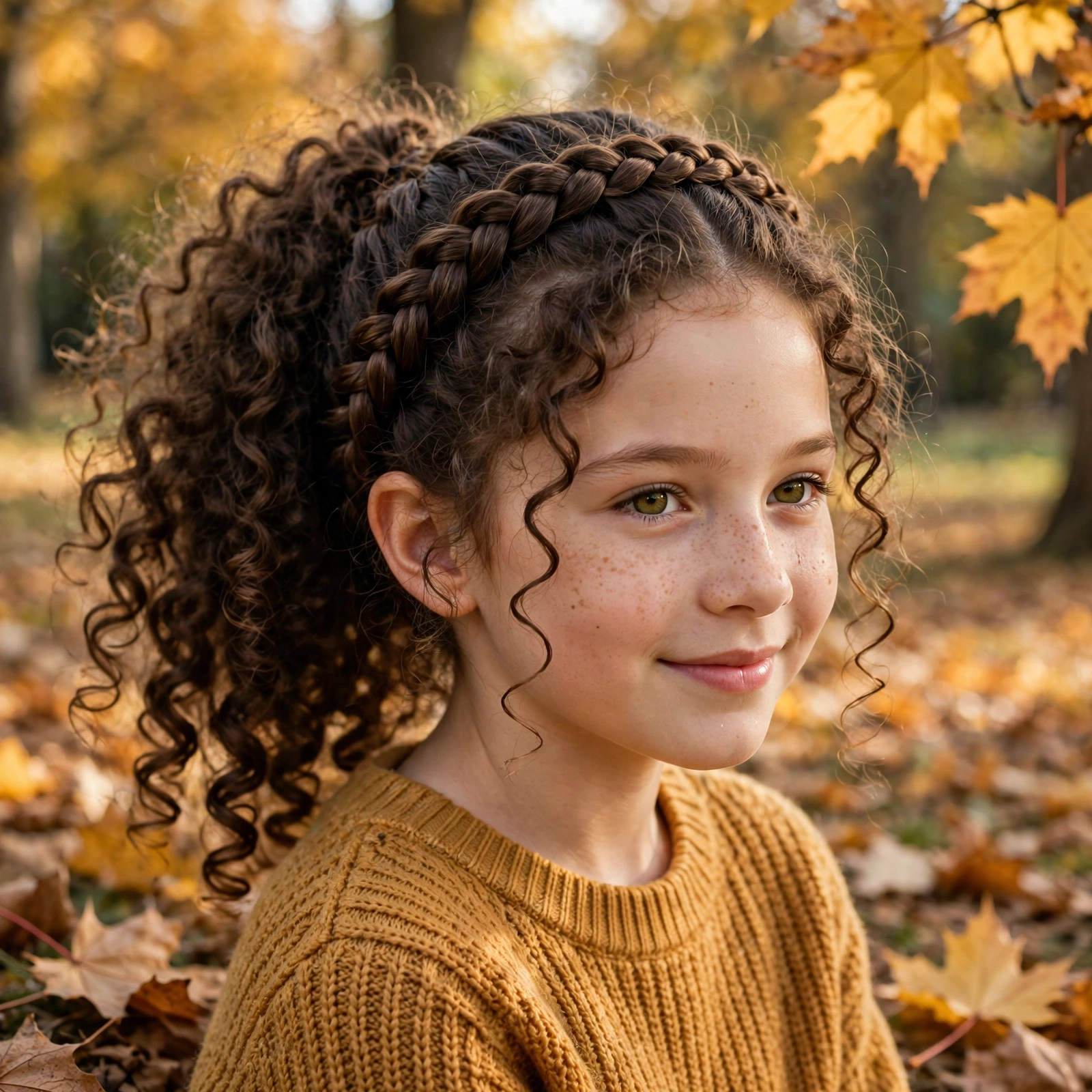
- 8. Flat-Twist Headband Crown
- 9. Chunky Twist-Out Fro
- 10. Braid-Out with Silk Ends
- 11. Half-Up Pineapple with a Scrunchie
- 12. Dutch Braid Crown into Curly Ponytail
Editor’s Top 5 Curly Picks
Short on time? These are the five curly hairstyles for girls our editors keep coming back to this fall — the ones with the highest style-to-effort ratio on the entire list.
The Classic High Pineapple
The undisputed champion of curly girl hair. One scrunchie, two minutes, and her curls are piled high, stretched, and completely protected from wind and coat collars. It’s the style that works on wash day, day three, and every day in between — and it photographs beautifully in fall light.
Crisp Fall Wash-and-Go
The purest celebration of her natural pattern, updated for autumn with heavier moisture so the definition survives dry air. When the prep is right, this is a one-day style that looks like it took an hour but takes twenty minutes — most of it hands-off drying time.
Twin Twisted Puffs
Two high puffs with a twisted part down the middle — playful, symmetrical, and completely secure for school days. It’s the look that gets the most compliments from other kids, which, if we’re honest, is half the battle with a 7-year-old.
Protective Two-Strand Twists
The fall workhorse. Two to three weeks of done-for-you hair with ends fully tucked away from wind, wool, and dry air. If your daughter has tighter coils and you’re tired of daily styling battles, this is the style that changes your mornings.
Flat-Twist Headband Crown
A flat twist arched ear to ear like a headband, with the rest of her curls free. It solves the single most common complaint we hear from curly girls: hair in the face. Elegant enough for family photos, easy enough for a Tuesday.
Fall Curl Care: Fighting Dryness When the Air Turns Cold
Fall dryness is the invisible force behind almost every curly-hair struggle from October through December. Curly hair is naturally drier than straight hair because the scalp’s oils can’t travel down a curved strand easily — and cold air holds less moisture, so the hair loses what little it has even faster. The fix isn’t styling harder; it’s moisturizing deeper before you style at all.
The single biggest fall adjustment our editors recommend is layering products on damp hair — the LOC method (leave-in, oil, cream) — instead of using one product on dry hair. Damp hair absorbs product into the strand; dry hair just wears it on the surface, where wind strips it off by lunch. Apply a leave-in conditioner first, seal with a light oil, then finish with a cream or curl-defining product while the hair is still wet. This one change does more for fall curls than any hairstyle on this list. For the dermatologist-approved fundamentals behind the routine, see these curly hair care tips from dermatologists.
Wash frequency matters more in fall too. Curly hair doesn’t need daily washing — in fact, washing too often strips the natural oils curls desperately need in dry weather. Most curly girls do well with washing every 5–7 days in fall (tighter coils can stretch to every 10–14 days), with scalp refreshes in between. Between washes, revive curls with a water-and-leave-in mist rather than a full rewash; you’ll save time, save moisture, and cut your tangling problems in half.
Nighttime protection is non-negotiable once the heat kicks on and bedroom air dries out. A satin bonnet, a satin pillowcase, or the pineapple method (a loose high ponytail with a satin scrunchie) keeps curls from rubbing against cotton, which is essentially sandpaper for curl definition. Parents tell us this single habit is the difference between a 5-minute morning refresh and a 30-minute detangling session — with a school bus to catch, that math matters.
Choosing Styles by Curl Pattern (Wavy to Coily)
Not every curly style works for every curl pattern, and pretending otherwise is how mornings go wrong. Loose waves (2A–2C) thrive in styles with stretch and movement — the high pineapple, the half-up pineapple, and the braid-out give waves shape without weighing them down. Watch out for heavy butters and oils on wavy hair; they flatten the pattern and leave it stringy. Lighter leave-ins and foams are your friends here.
Classic curls and ringlets (3A–3C) are the sweet spot for nearly every style on this list. Wash-and-gos, twist-outs, puffs, and ponytails all work beautifully — the main fall adjustment is adding enough moisture and hold for definition to survive the day. This pattern shrinks noticeably, so if your daughter wants length to show, styles with tension (banding, twists, braids) reveal it without heat. And if she has an older sister borrowing her products, our curly hairstyles for women guide is built on the same pattern logic.
Tight coils and zigzag patterns (4A–4C) need styles that protect the fragile ends and minimize daily manipulation — this is where two-strand twists, cornrow combos, and the low bun with a scarf earn their place. Shrinkage can hide up to 75% of actual length, so don’t judge a style’s success by how long it looks; judge it by how healthy the ends stay. Detangle only on damp, conditioned hair in sections, and never rush it — patience here prevents the breakage that makes coils look like they “won’t grow.”
One more thing that matters more than pattern: density and porosity. High-porosity curls (hair that gets wet fast and dries fast) drink up product and need the full LOC layering plus a cream with real hold. Low-porosity curls (water beads up and sits) need lighter products applied to very wet hair, or everything just sits on top and flakes.
12 Fall Hairstyles for Girls With Curly Hair
1. The Classic High Pineapple
The pineapple — all her curls gathered loosely at the very top of the head — is the signature curly hairstyle for girls for a reason: it shows off the full volume and spring of her natural pattern while keeping every strand off her neck, coat collar, and face. In fall 2026 it’s trending as the go-to school style because it survives the whole day — wind, gym class, the walk home — and looks intentional from every angle. The vibe is joyful and confident: pure curl celebration, ready in two minutes flat.
How to get it: Start with damp, freshly conditioned hair. Apply a leave-in conditioner and a light curl cream, then flip her head forward and gather all the hair to the crown — don’t pull it tight or smooth it aggressively, the looseness is the point. Secure with a large satin scrunchie (never a thin elastic), then arrange the curls so they cascade forward and to the sides like a fountain.
Best for: Ages 4–14; all curl patterns from 2C waves to 4C coils; medium to long lengths (needs enough length to gather at the crown). Especially great for thick, high-density hair that overwhelms smaller styles.
Maintenance: Low. Two minutes to put up, and it doubles as nighttime protection — just re-pineapple before bed with the satin scrunchie. Refresh in the morning with a water-and-leave-in mist and a gentle shake. Lasts 2–4 days on most curl patterns.
Pro tip: Place the pineapple slightly forward of the crown’s highest point rather than dead-center — it frames the face better and keeps her from feeling the scrunchie when she leans back in the car seat. For extra fall hold, we like a pea-sized amount of SheaMoisture Coconut & Hibiscus Curl Enhancing Smoothie worked through the ends before gathering.
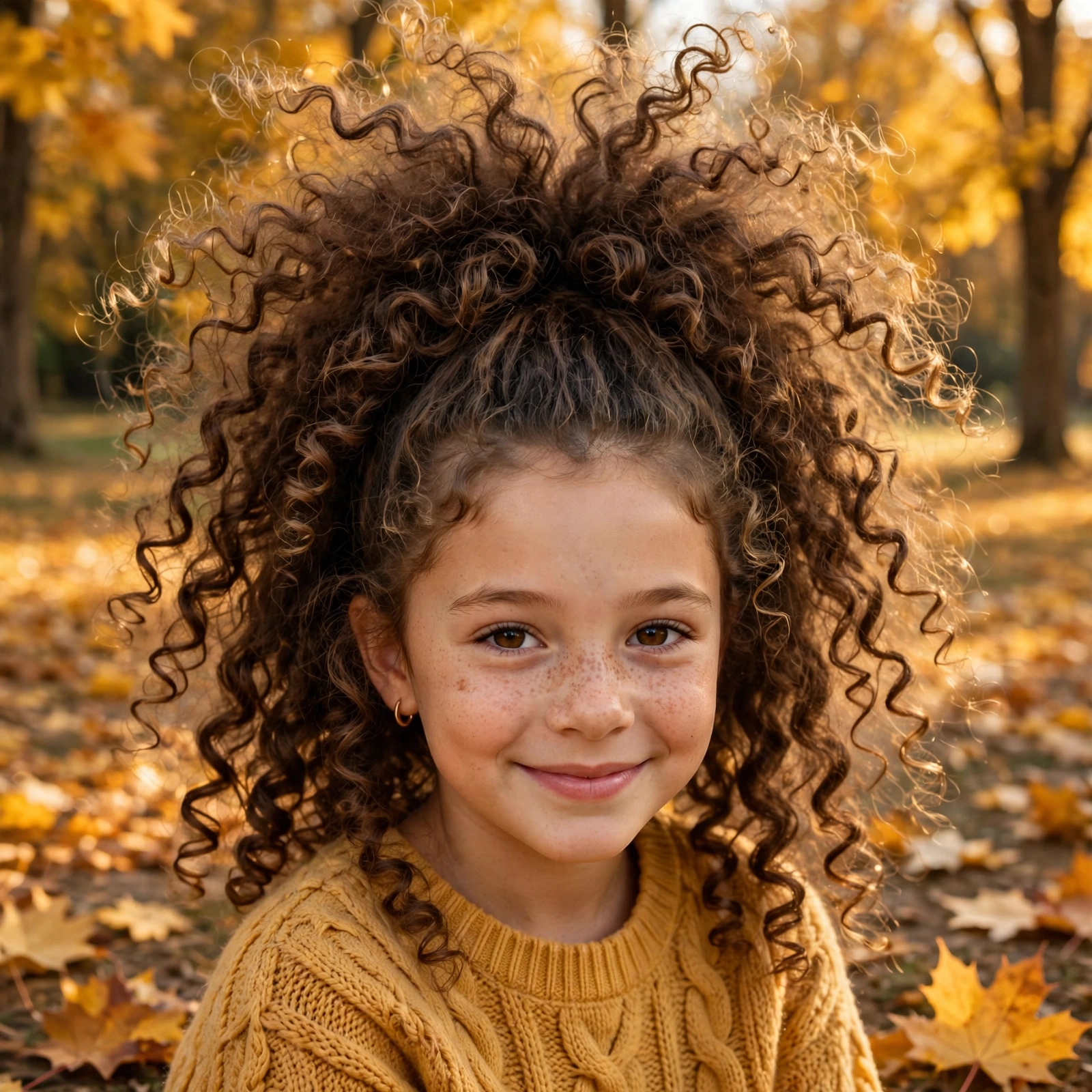
2. Crisp Fall Wash-and-Go
The wash-and-go is the purest fall hairstyle for curly girls: her natural curl pattern, defined and free, with no tools and no tension. The fall 2026 version is all about richer prep — heavier leave-ins and a real hold product — so the definition that looked effortless in August’s humidity survives October’s dry air. The vibe is natural confidence: picture-day pretty without a single pin.
How to get it: Wash and deep-condition, then work in sections on soaking-wet hair — this is the non-negotiable part. Apply leave-in, then a curl-defining cream or gel using the “praying hands” method (smoothing product down each section between flat palms), then scrunch upward to encourage the curl. Air-dry or diffuse on low heat without touching it, then lift the roots with your fingertips once fully dry.
Best for: Ages 6–14 (younger kids rarely sit still for the sectioning); curl patterns 2C–4A with enough length to clump; best on shoulder-length and longer hair where the pattern can fully form.
Maintenance: Medium. The wash day takes 20–30 minutes, but days 2–4 need only a morning mist refresh. Nighttime: pineapple it with a satin scrunchie and a satin bonnet over the top. By day 4–5, transition into a pineapple or puffs rather than rewashing.
Pro tip: The “don’t touch it while it dries” rule is the whole game — touching wet, product-coated curls breaks the clumps and creates the frizz parents blame on the products. Give her a book or a show during drying time. For fall, we add a thin layer of oil after the gel to seal in moisture against dry air.
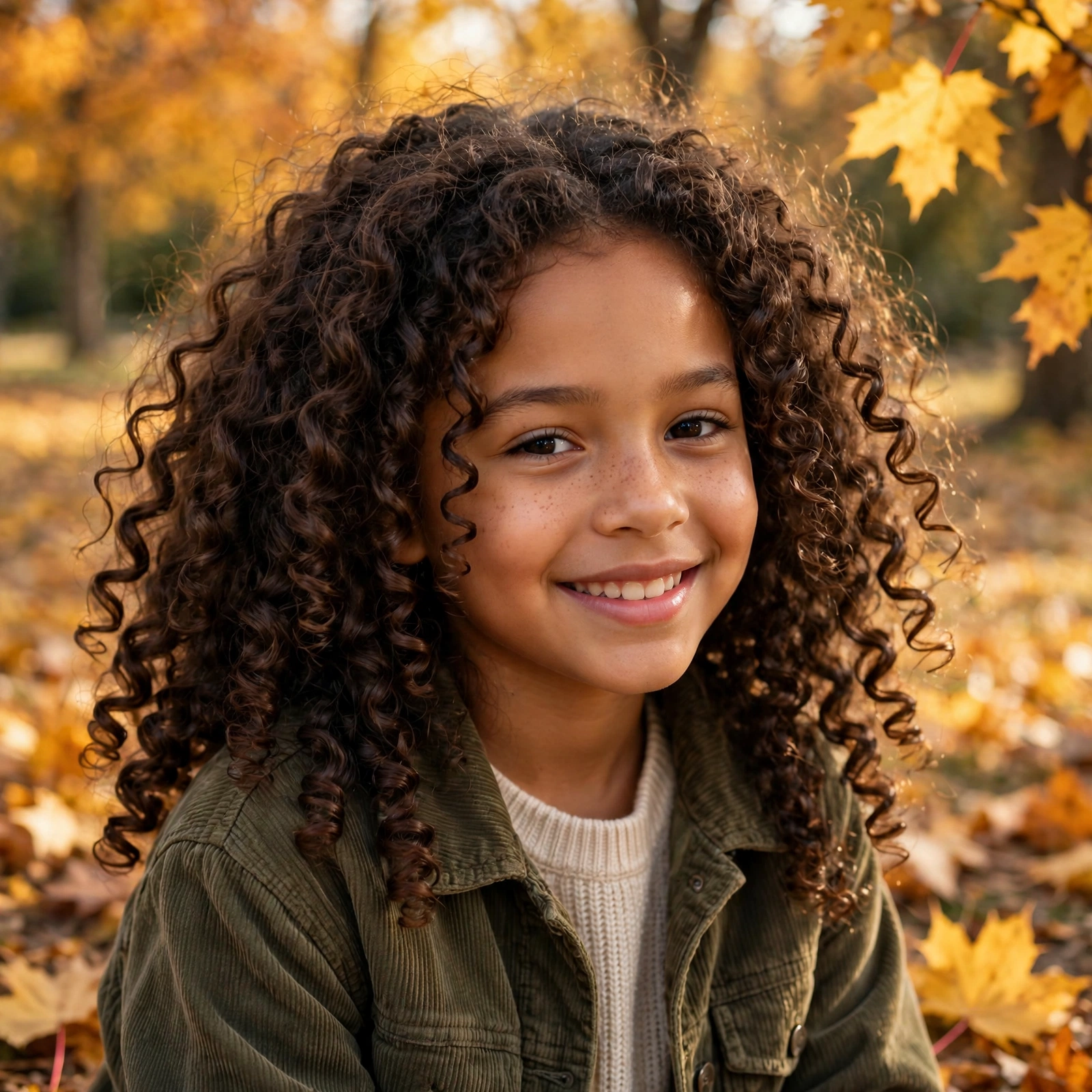
3. Twin Twisted Puffs
Two high puffs with a clean middle part and a small twist along each part line — the playful classic that never misses with the under-10 crowd. The twists along the part add a little polish that elevates it from playground-default to picture-day-ready, which is exactly why it’s trending for fall 2026: parents want one style that does both. The vibe is pure joy — matching puffs bouncing all the way to the bus stop.
How to get it: On damp, conditioned hair, create a clean middle part (use the end of a rat-tail comb). Take a half-inch section along each side of the part and do a quick two-strand twist from front to back, securing each at the crown with a small elastic. Gather each half into a high puff with a covered elastic — don’t pull the puff through on the last loop if her hair is shorter, which creates a fuller rounded puff.
Best for: Ages 4–12; curl patterns 3A–4C (the puff needs curl or coil to hold its round shape); short to long lengths — one of the few styles that works beautifully on shorter curly hair.
Maintenance: Low to medium. About 10 minutes to install; lasts 2–3 days. Nighttime: cover with a satin bonnet and gently re-fluff the puffs in the morning. The part-line twists may need re-doing on day 3.
Pro tip: Wrap the elastic base of each puff with a small section of her own hair to hide the band — it takes ten seconds and makes the whole style look twice as polished. A dab of Cantu Shea Butter Leave-In Conditioning Repair Cream on the puff ends keeps them soft instead of crunchy.
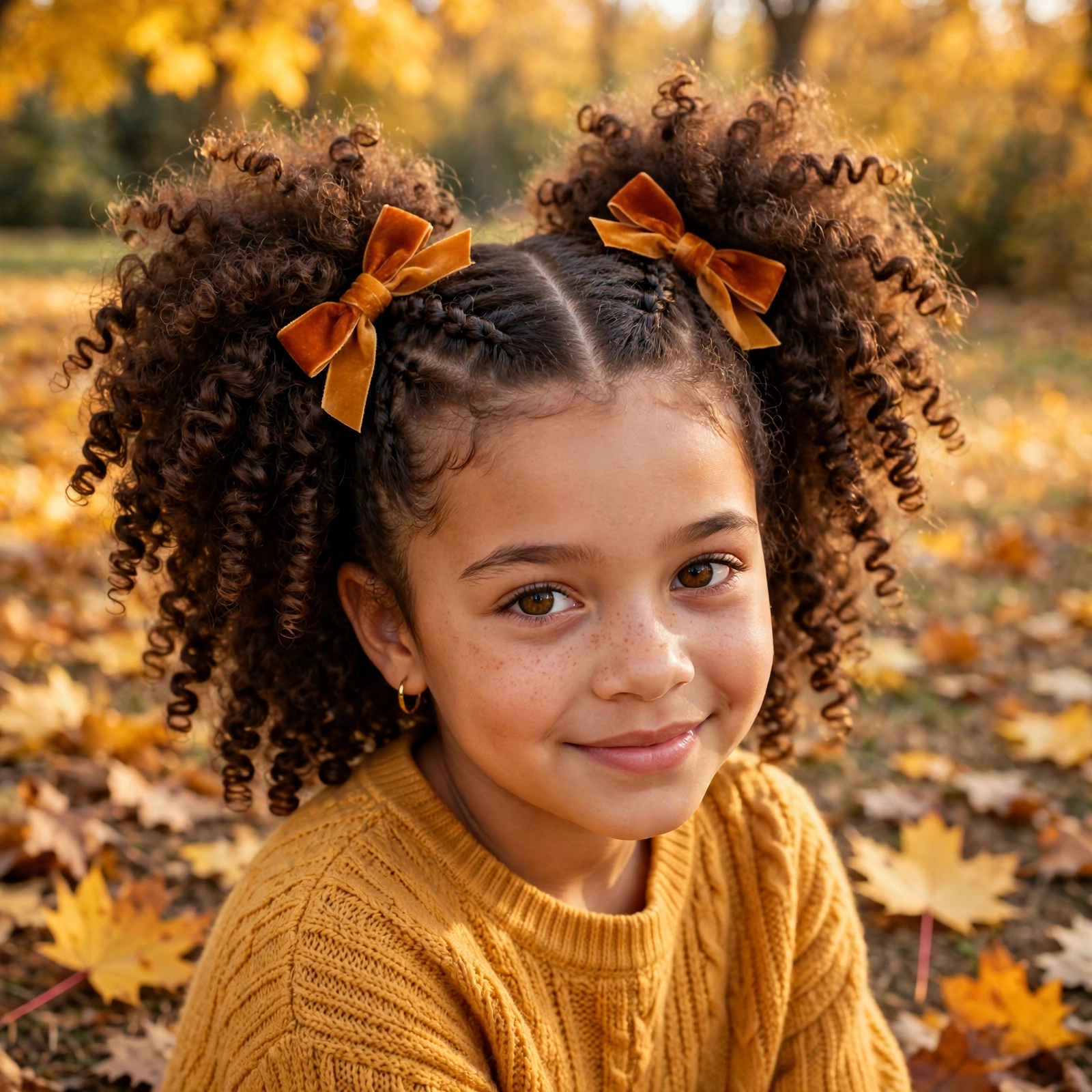
4. Protective Two-Strand Twists
Two-strand twists are the fall workhorse of curly hairstyles for girls: her hair twisted into rope-like sections that protect every fragile end from wind, wool scarves, and dry indoor heat for two to three weeks. This is the lowest-manipulation style on the list — once they’re in, mornings are genuinely zero-effort — which makes it the top pick for busy school weeks and for tighter coil patterns that tangle easily when worn loose.
How to get it: Start with clean, deep-conditioned, fully detangled hair — detangle in small sections with conditioner still in, working from ends to roots. On damp hair, part into sections (half-inch for a fuller look, quarter-inch for longer wear), apply leave-in and a twisting butter or cream to each section, then twist the two strands around each other all the way to the ends, sealing the tips with a tiny twist-and-curl.
Best for: Ages 5–14; curl patterns 3B–4C especially (looser patterns can wear them but they’ll unravel faster); medium to long lengths. Ideal for tender-headed kids who hate daily styling.
Maintenance: Low once installed (installation takes 1–3 hours depending on size and length — put on a movie). Nighttime: satin bonnet every night, no exceptions. Lightly oil the scalp once or twice a week. Take down after 2–3 weeks max — longer risks matting at the roots.
Pro tip: Mist the twists with a water-and-leave-in spray every few days to keep them from drying out mid-week — dry twists get fuzzy and rough. And when it’s time for takedown, unravel each twist with oiled fingers, never dry, to avoid breakage and reveal a gorgeous twist-out as a bonus style.
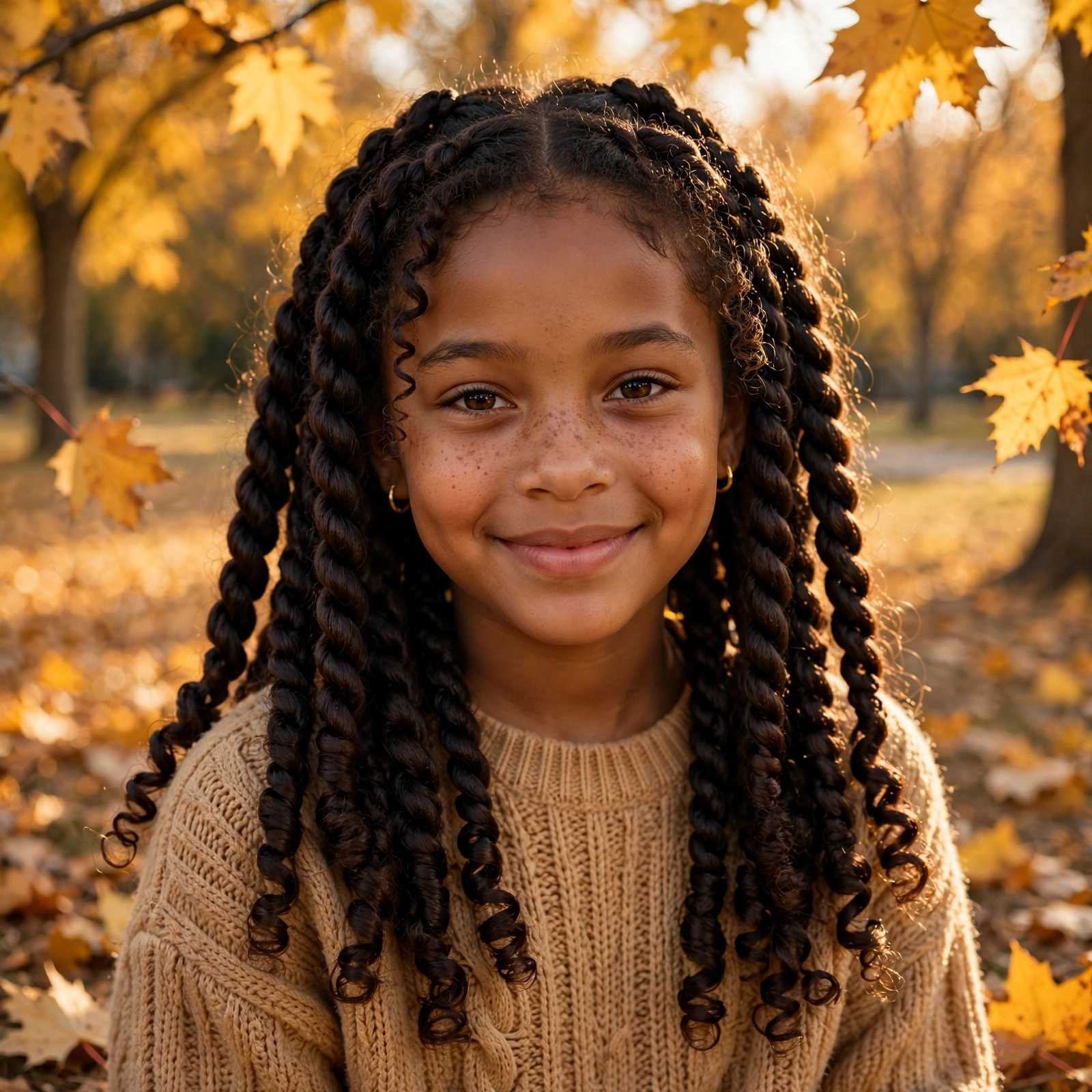
5. Slicked-Back Curly High Ponytail
Smooth, sleek edges flowing into a full curly ponytail — the style that gives you the polish of an updo with the curl celebration of a wash-and-go. It’s trending hard for fall 2026 because it photographs like a dream (hello, holiday cards and family photos) and keeps hair completely contained under hats and hoods. The vibe is confident and a little glamorous — the curly-girl answer to the sleek ponytail trend, and honestly prettier than the original.
How to get it: On damp hair, apply leave-in and curl cream to the ponytail section first (style the curls, then smooth). Brush the front and sides back with a soft boar-bristle brush, smoothing with gel as you go — work in the direction you want the hair to lay. Gather high at the crown and secure firmly with a covered elastic, then wrap a strand of hair around the base to hide the band. Fluff the ponytail curls with your fingers and define a few with extra cream if needed.
Best for: Ages 6–14; all curl patterns; medium to long lengths. Works on most densities — very fine hair may need a volumizing mousse at the ponytail base for fullness.
Maintenance: Low to medium. About 10 minutes to install; the edges may need a morning touch-up with a toothbrush and gel. Nighttime: take it down, pineapple the curls, and re-smooth in the morning rather than sleeping in the tight ponytail — sleeping in tension causes breakage at the hairline.
Pro tip: Never slick dry hair — you’ll get breakage and frizz instead of smoothness. Damp styling is the whole secret. And tie the ponytail with the elastic, then anchor it with two bobby pins in an X underneath for all-day hold without over-tightening.
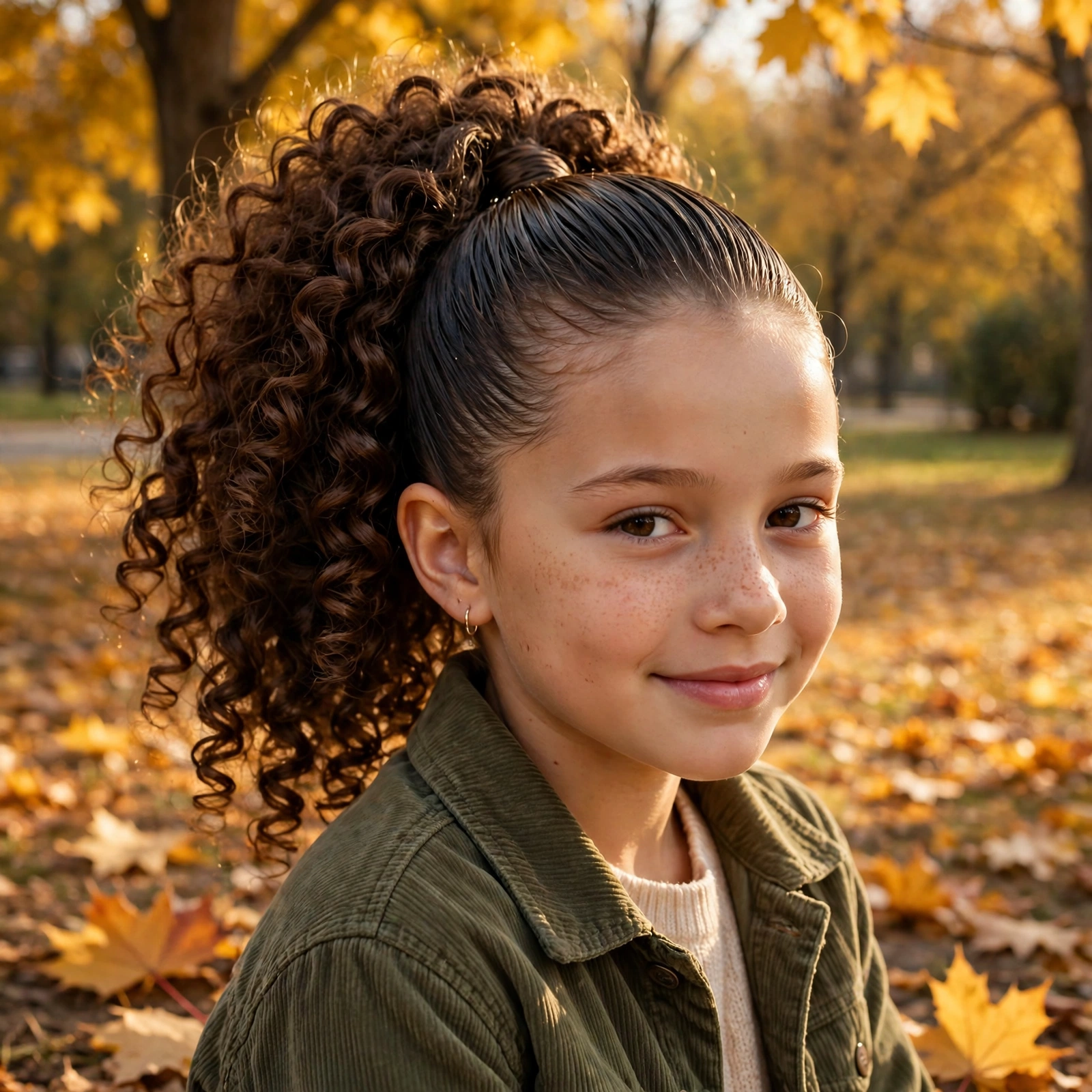
6. Low Curly Bun with Silk Scarf
A soft low bun at the nape with a silk scarf tied around it — part protective style, part fashion statement. The bun keeps her ends tucked safely away from coat collars and backpack straps (two major sources of fall breakage), while the scarf adds the kind of charm that makes strangers stop you at the pumpkin patch. The vibe is sweet and vintage — think storybook heroine with better curls.
How to get it: On damp, moisturized hair, gather everything low at the nape — keep it loose, not scraped tight. Twist the length gently and wrap it into a soft bun, pinning with U-shaped pins (they hold curls better than bobby pins). Leave a few curly tendrils out around the face for softness. Fold a silk or satin scarf into a band and tie it around the bun’s base, knotting at the top or side with the ends left to drape.
Best for: Ages 5–14; all curl patterns; medium to long lengths (needs enough hair to form a bun). Lovely on thick hair that makes a substantial, pretty bun.
Maintenance: Low. Five to ten minutes; lasts 2–3 days with the scarf re-tied each morning. Nighttime: remove the scarf, pineapple the hair, and re-bun in the morning — never sleep in the pinned bun.
Pro tip: Use a real silk or satin scarf, not cotton — cotton absorbs moisture from the hair it’s supposed to be protecting, which defeats the purpose in dry fall air. Thrift stores are full of perfect silk scarves for a dollar or two. A touch of Miss Jessie’s Pillow Soft Curls on the face-framing tendrils keeps them defined rather than frizzy.
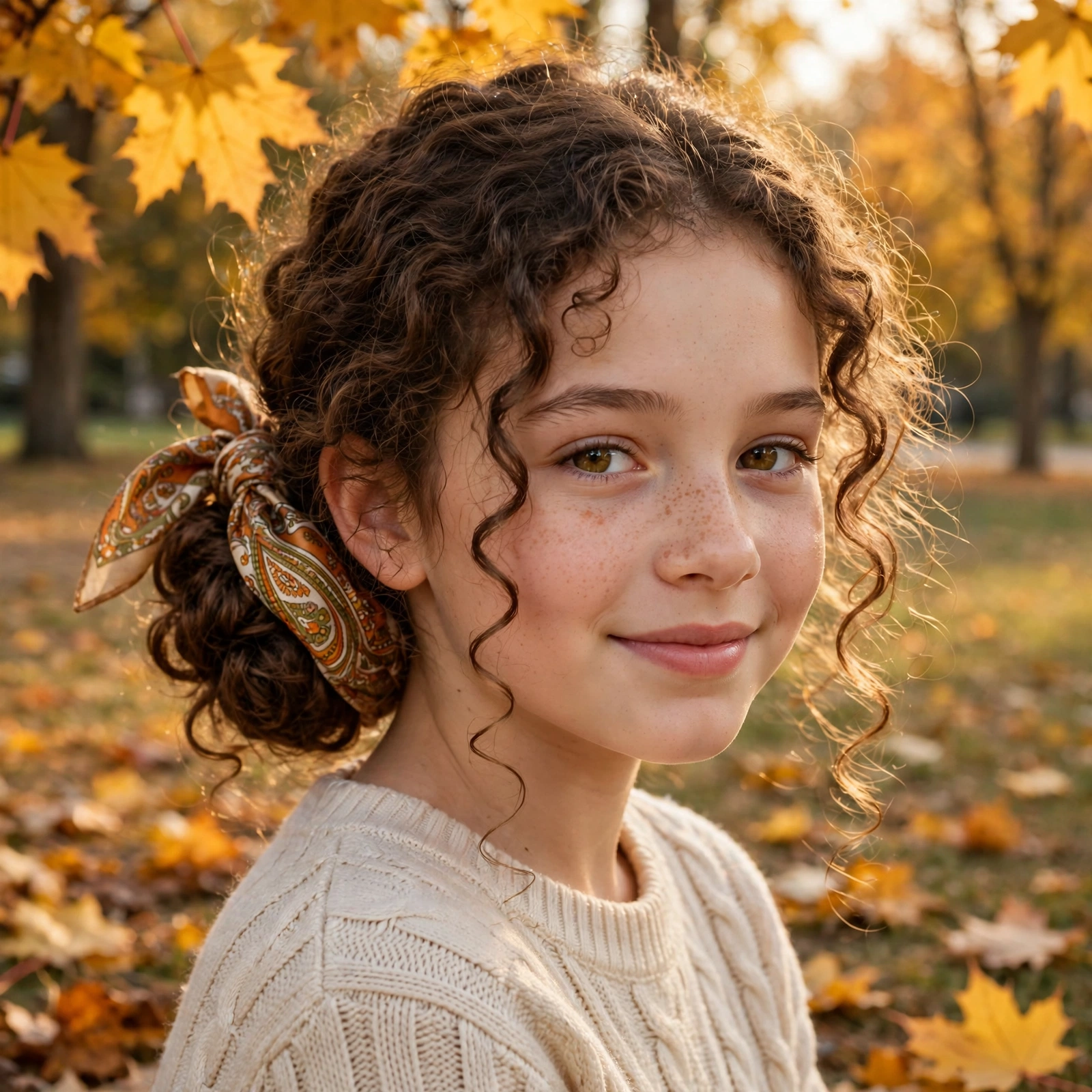
7. Front Cornrows into a Back Puff
A few neat cornrows across the front feeding into a big, free curly puff at the back — the best of both worlds for girls who want their hair out of their face but still want the volume. The cornrows handle the “keep it neat for school” requirement for a week or more while the puff celebrates the curls, and the style holds up beautifully under beanies since the front is already flat.
How to get it: On damp, detangled hair, part the front section (ear to ear) and cornrow 3–5 rows straight back — keep them snug but never painful; a child’s cornrows should never hurt or pull at the hairline. Leave the back section free: moisturize it well, apply curl cream, and gather it into a puff with a covered elastic placed just behind the cornrows. Blend the transition by fluffing puff curls forward over the elastic. Finish edges with a small amount of edge control.
Best for: Ages 5–14; curl patterns 3B–4C (the puff needs texture to hold); medium to long lengths. Excellent for active kids — the style survives sports, playgrounds, and windy sidelines.
Maintenance: Low to medium. Cornrowing takes 20–40 minutes; the style lasts 5–7 days. Nighttime: satin bonnet, and lightly re-moisturize the puff each morning. Don’t keep cornrows in longer than a week on young kids — the regrowth gets itchy and the tension needs a break.
Pro tip: Oil her scalp lightly along the cornrow parts every couple of days — braided scalps get dry and itchy fast in fall, and a calm scalp is what makes the style wearable for a full week.
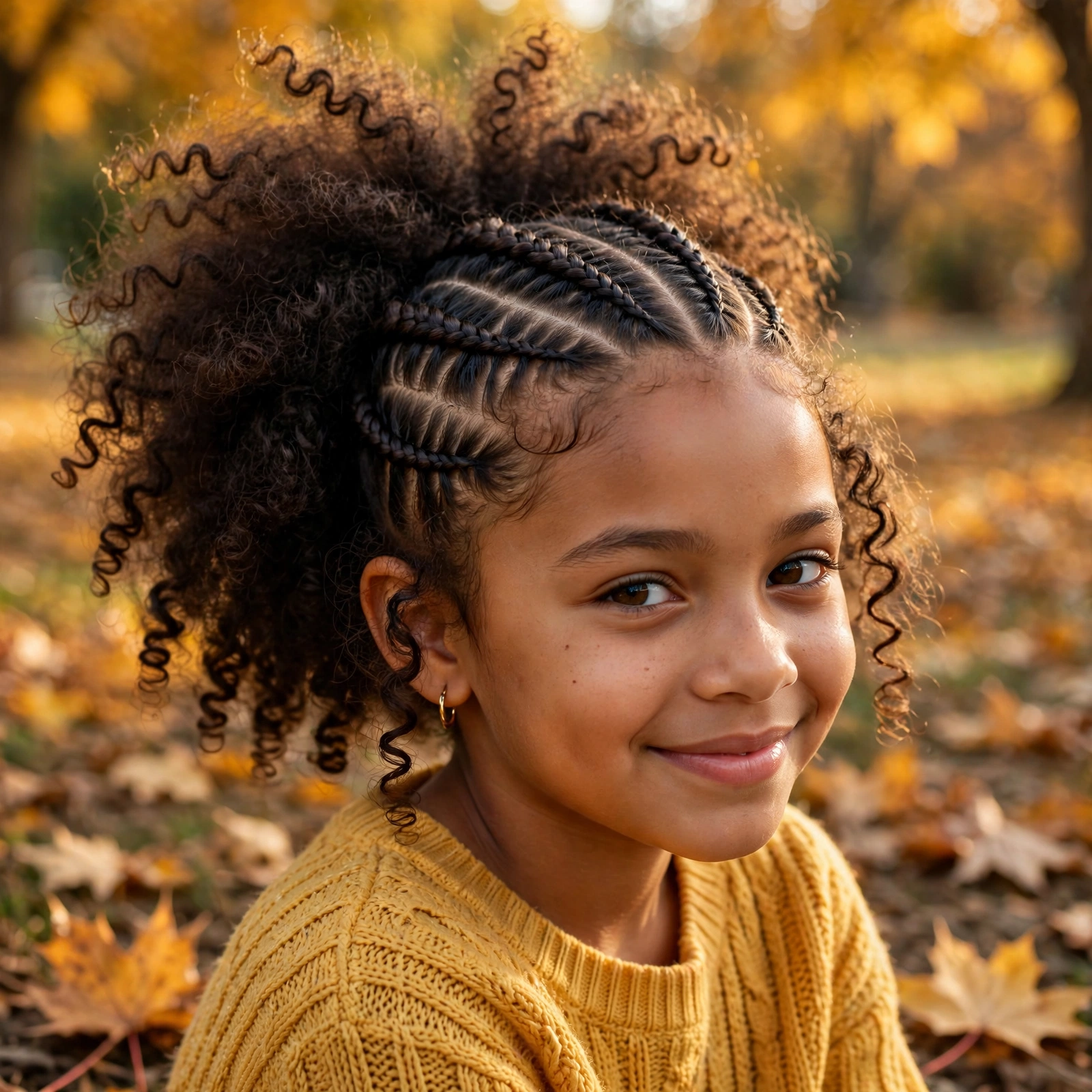
8. Flat-Twist Headband Crown
One flat twist arched from ear to ear like a headband, with the rest of her curls worn loose — the elegant solution to the number-one curly-kid complaint: hair in the face. It reads polished enough for family photos and school concerts but takes minutes, not an hour, which is why it’s a fixture of fall hairstyles for girls with curly hair in 2026. The vibe is princess-adjacent without the costume: neat in front, party in back.
How to get it: On damp, conditioned hair, part off a two-inch section along the front hairline from ear to ear. Starting at one ear, flat-twist (adding hair as you go, like a French braid but with two strands) along the hairline to the other ear, securing the end behind the ear with a small elastic or pin. Style the remaining hair however she likes — a wash-and-go, a pineapple, or a puff all work.
Best for: Ages 6–14; all curl patterns 2C–4C; short to long lengths — one of the few “fancy” styles that works on shorter curly hair since only the front section gets twisted.
Maintenance: Low. About 10 minutes; the twist lasts 2–3 days before it loosens. Nighttime: satin bonnet and re-smooth the twist edges in the morning. If the back is worn loose, refresh it with mist as usual.
Pro tip: Make the twist slightly chunky rather than tiny — chunky flat twists hold longer on kids who toss in their sleep, and they look more deliberate. If her hair is fine or slippery, do the twist on damp hair with a dab of Eco Styler Olive Oil gel for grip; dry fine hair will unravel by lunch.
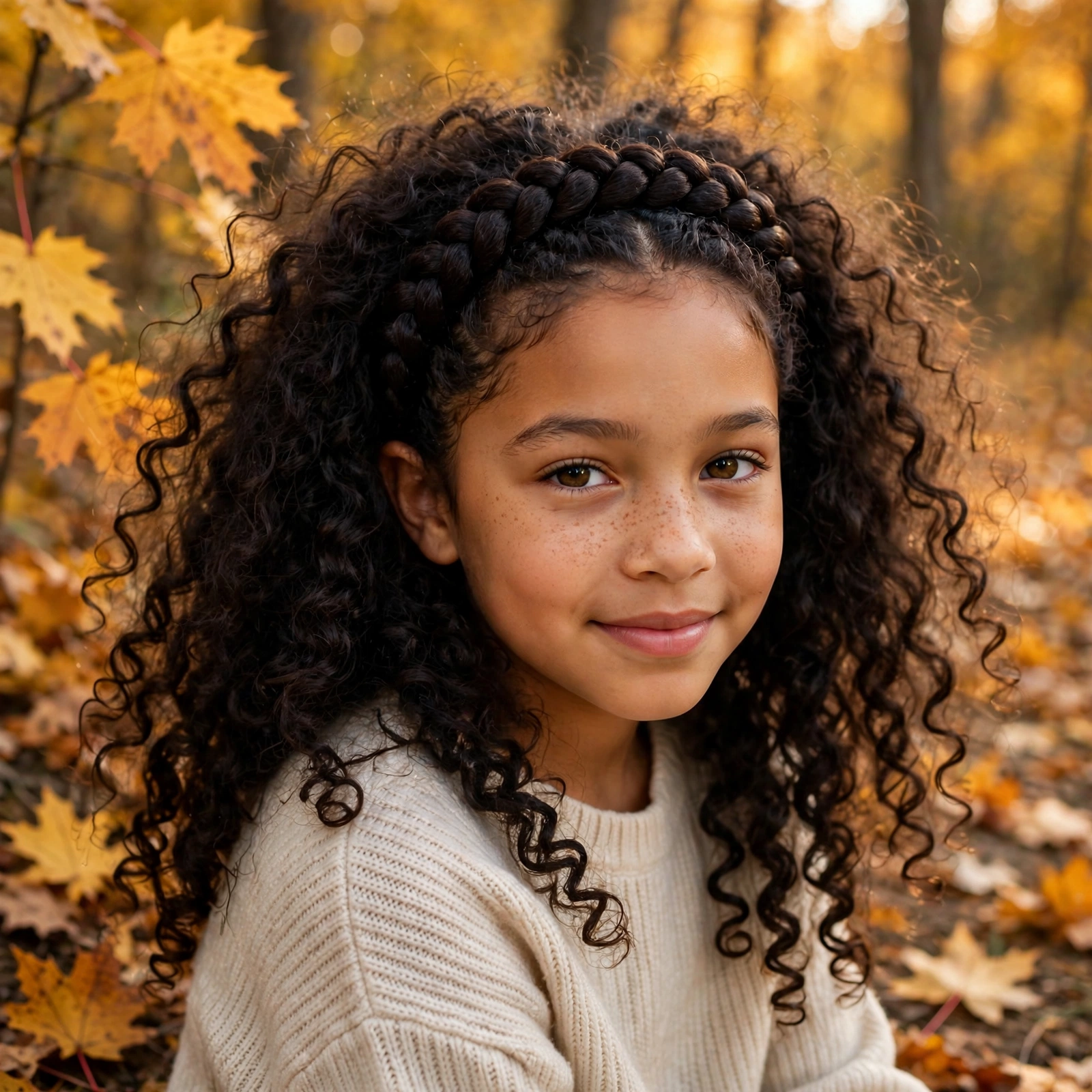
9. Chunky Twist-Out Fro
Big, defined, perfectly imperfect curls released from chunky two-strand twists — the twist-out is the curl-pattern amplifier every curly girl should try at least once each fall. Wearing it in a full, rounded shape leans into volume at its most glorious, and the defined texture holds up in dry autumn air far better than a wash-and-go because each curl was set with tension. The vibe is bold and beautiful: maximum hair, maximum confidence.
How to get it: The night before: on damp, detangled hair, apply leave-in and a twisting cream, then create chunky two-strand twists (about an inch wide each) all over — bigger twists mean a bigger, looser result. Let them dry completely overnight (a hooded dryer or just air-drying under a bonnet). In the morning, coat your fingertips with a light oil and unravel each twist gently, then separate each curl once or twice for fullness.
Best for: Ages 6–14; curl patterns 3A–4C; medium to long lengths (needs length for the twists to set). Fantastic for high-shrinkage hair — the twist-out reveals length a wash-and-go hides.
Maintenance: Medium. The twist session takes 30–60 minutes the night before, but the style lasts 3–5 days. Nighttime: re-twist into 6–8 big loose twists and cover with a satin bonnet; unravel again in the morning. Refresh mid-week with a light mist.
Pro tip: The unravel is everything: if you rush it or use dry fingers, you’ll create frizz that no product can fix afterward. Oiled fingers, slow separation, and patience — treat each twist like you’re unwrapping something fragile. A dime-sized amount of Kinky-Curly Curling Custard per section during the initial twist gives definition that survives all week.
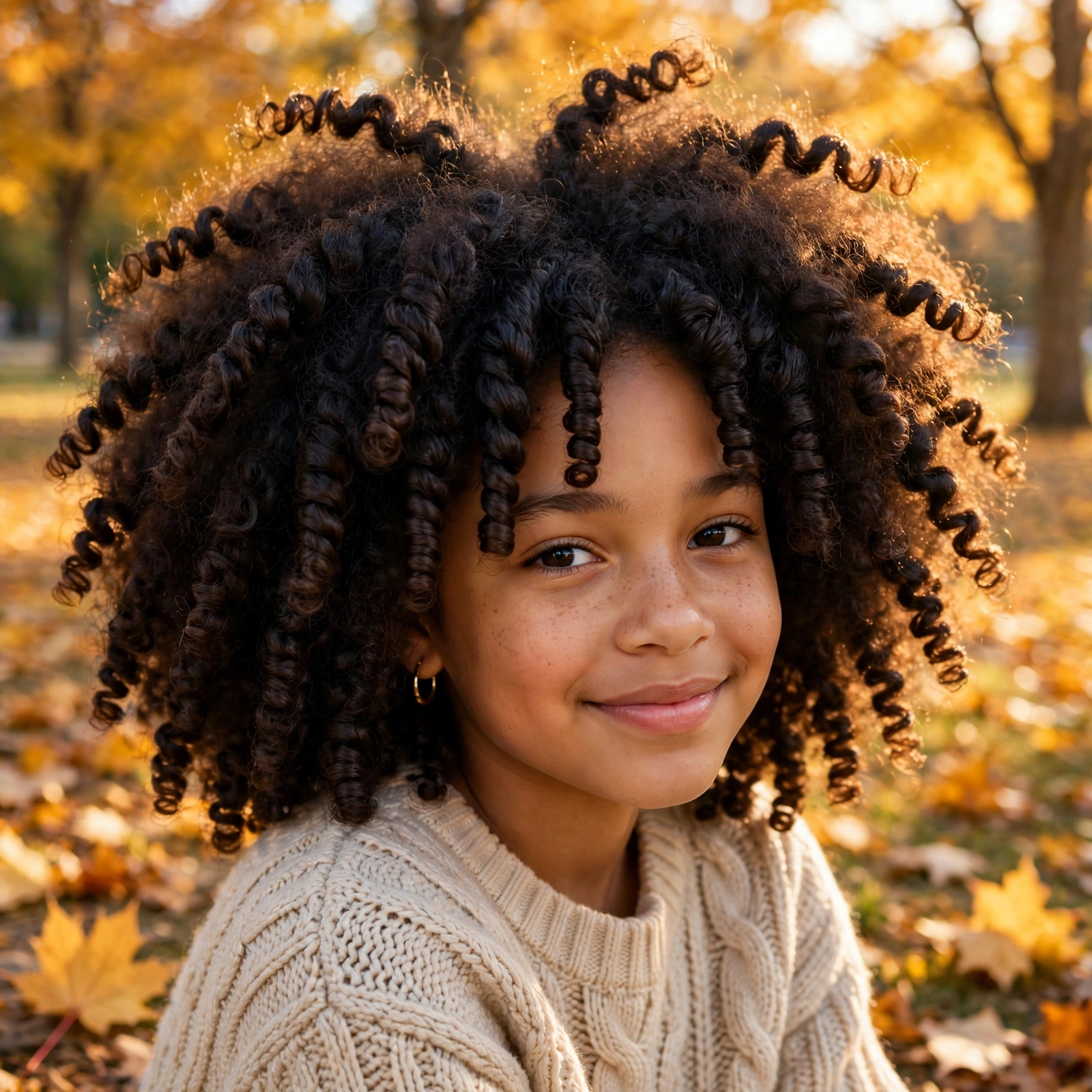
10. Braid-Out with Silk Ends
Soft, stretched waves released from loose braids, with the ends left silky and smooth — the braid-out is the gentler, more elongated cousin of the twist-out, and the “silk ends” finish (a touch of serum on just the tips) keeps the oldest, driest part of her hair looking healthy. It’s trending for fall 2026 because stretched styles show length, resist shrinkage, and tuck neatly under winter hats that are just around the corner.
How to get it: The night before: on damp, moisturized hair, apply leave-in and a light styling cream, then make 6–10 loose three-strand braids all over (looser braids = softer waves). Secure ends with small covered elastics. In the morning, remove the elastics and unravel gently with oiled fingers. Separate the waves lightly for fullness, then smooth a single drop of lightweight serum or oil over just the ends — this “silk ends” step is what keeps the oldest hair from looking dry and frayed in fall air.
Best for: Ages 6–14; curl patterns 2C–4B; medium to long lengths. Especially good for wavy-to-curly hair that doesn’t hold twist-out definition well — braids give waves more structure.
Maintenance: Medium. Braiding takes 20–30 minutes the night before; the style lasts 2–4 days. Nighttime: loosely re-braid into 3–4 big braids and cover with a satin bonnet.
Pro tip: Don’t braid all the way to the very tip and leave the last inch unbraided — instead, braid to the end and twirl the last inch around your finger with a dab of cream. That tiny detail is what creates the “silk ends” effect instead of crimped, frizzy tips. For fine wavy hair, Aunt Jackie’s Quench Moisture Intensive Leave-In keeps the waves soft without weighing them down.
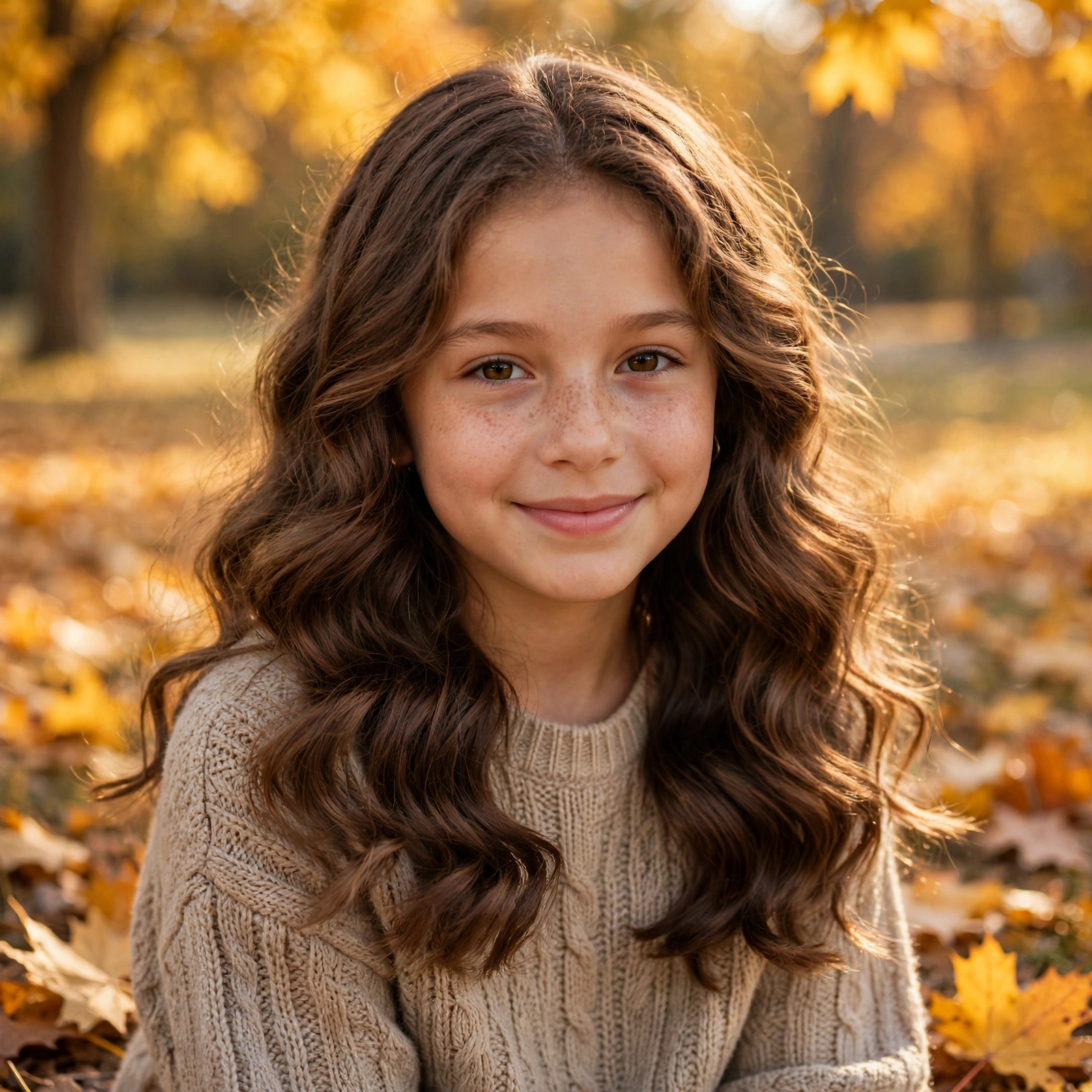
11. Half-Up Pineapple with a Scrunchie
The top half gathered into a mini pineapple while the bottom curls fall free — the half-up is the diplomat of curly hairstyles for girls: it keeps hair out of her face for school while showing off the full length and pattern in back. Add an autumn-colored scrunchie (rust, mustard, forest green) and it’s instantly seasonal without a single extra step. The vibe is sweet and easy — the style a 10-year-old can learn to do herself.
How to get it: On damp or refreshed curls, part the hair horizontally from ear to ear. Gather the top section loosely at the crown — high enough to read as a pineapple, not a ponytail — and secure with a satin scrunchie in a fall color. Gently arrange the top curls so they fountain outward. Leave the bottom section completely free; refresh those curls with a mist if needed. Smooth the part line with a little gel if flyaways bother her.
Best for: Ages 7–14 (great “first style she does herself” pick); all curl patterns; medium to long lengths — needs enough top hair to gather and enough bottom hair to make the contrast worthwhile.
Maintenance: Low. Five minutes; lasts 1–2 days before the top needs re-gathering. Nighttime: take it down completely, pineapple all of it, and redo the half-up in the morning. Teach her the motion once and she’ll own it.
Pro tip: Let her pick the scrunchie — ownership of one small choice makes kids dramatically more willing to sit for hair. And buy the big, oversized satin scrunchies, not the tiny ones: they hold curls without denting them and they’re gentler on the hairline.
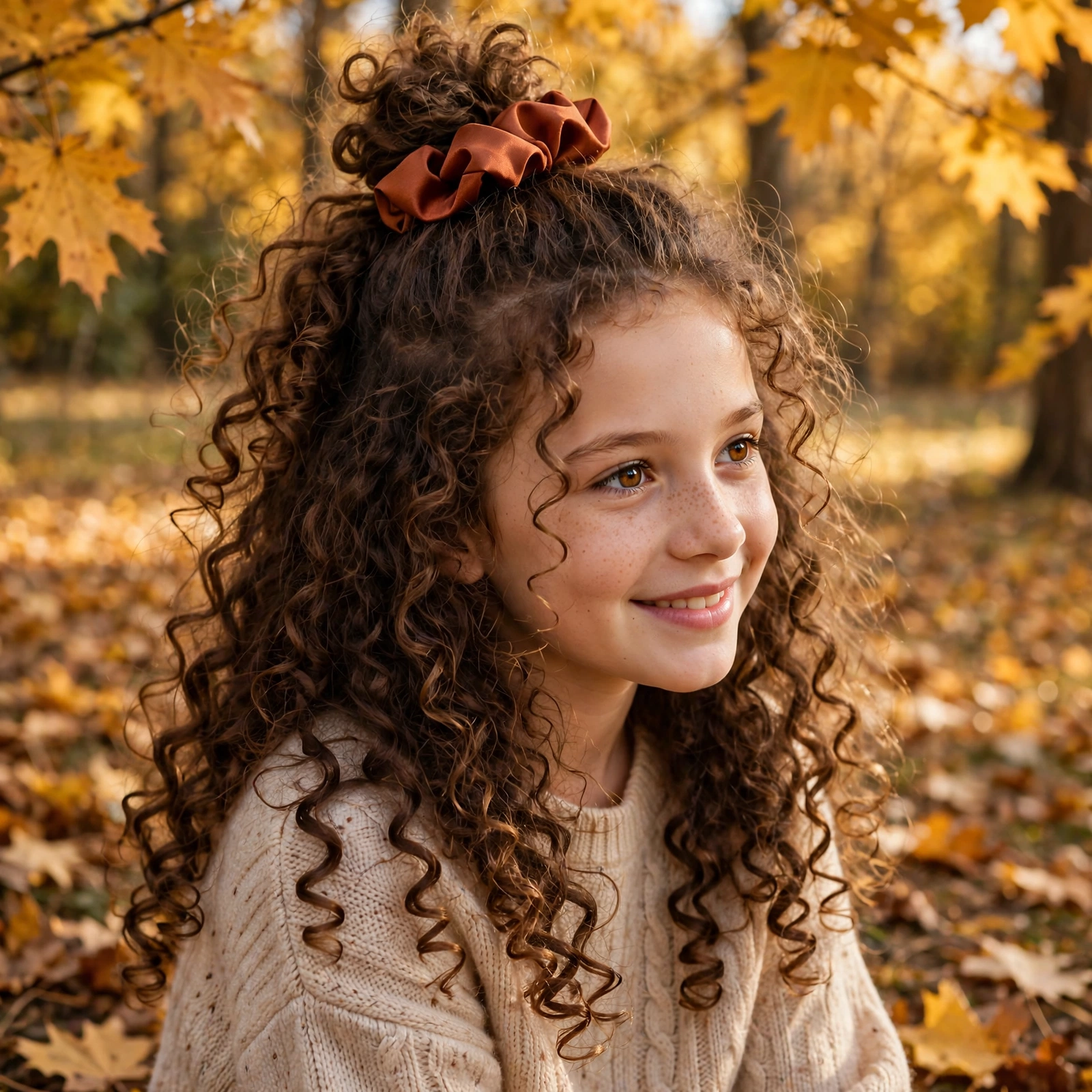
12. Dutch Braid Crown into Curly Ponytail
A Dutch braid arched over the crown like a headband, flowing into a full curly ponytail at the back — the grand finale and the most “special occasion” style on the list. The braid adds intricate detail that looks like it took an hour (it takes fifteen minutes once you’ve practiced), while the ponytail keeps every curl on display. It’s the style our editors would choose for holiday photos, recitals, and the Thanksgiving table.
How to get it: On damp, detangled hair, part the hair from ear to ear, clipping the back section away. Dutch-braid (underhand, so the braid pops outward) the front section from one ear, arcing over the crown toward the other side, adding hair as you go. When you reach the back, gather the braid’s tail together with the back section into a ponytail at the crown and secure firmly. Moisturize and define the ponytail curls with cream, fluffing them for fullness. Tame the braid with a little gel for a clean finish.
Best for: Ages 8–14 (the braiding takes practice — this is a parent-does-it style); all curl patterns; medium to long lengths. Best on hair with enough density for the braid to look substantial.
Maintenance: Medium. About 15 minutes once you’re practiced; lasts 1–2 days. Nighttime: take it down — braids this tight shouldn’t be slept in on young kids. Re-braid in the morning; the ponytail curls can be pineappled overnight to save time.
Pro tip: Braid on damp, product-coated hair, not dry — dry braiding on curly hair creates frizz along every braid edge and the whole thing looks fuzzy by noon. If your Dutch braid skills are shaky, do two regular three-strand braids meeting at the back instead — same crown effect, half the skill required.
Fall Hairstyles for Girls With Curly Hair: FAQs
How do I detangle my daughter’s curly hair without tears?
Detangle only on wet, conditioner-soaked hair — never dry, never with just water. Work in small sections, starting from the ends and moving up toward the roots, using a wide-tooth comb or your fingers. For very tangled hair, add more conditioner and let it sit for five minutes before you start; the slip does the work, not your force. Detangling before shampooing (with conditioner in) actually prevents most wash-day knots from forming. For a kid-focused walkthrough of the fundamentals, this curly hair care guide for kids covers the detangling rules our editors swear by.
How do I fight frizz when the fall wind picks up?
Fall frizz is a moisture problem wearing a wind costume — the wind just exposes dryness that was already there. The fix is sealing moisture in before she walks out the door: leave-in, then oil or cream on damp hair, with a gel or curl-defining product as the outermost layer to form a cast that blocks wind. Styles that contain the hair (pineapples, puffs, braids) frizz less than fully loose styles on windy days, so check the forecast and choose accordingly. A satin-lined beanie prevents the hat-frizz that ruins an otherwise good style — cotton hats rough up the curl cuticle with every step. And protect curls at night the same way: a loose pineapple with a satin scrunchie under a satin bonnet (or a satin pillowcase if she won’t wear one) is the difference between a five-minute morning refresh and a thirty-minute detangle. These tips for sleeping with curly hair explain the pineapple method and other nighttime options in detail.
Her hair shrinks so much — how do I show off the length?
Shrinkage is a sign of healthy, elastic curls, not a problem — but if she wants length to show, use tension-based styles. Twist-outs, braid-outs, banding (covered elastics spaced down a ponytail), and two-strand twists all stretch the pattern without heat and reveal inches a wash-and-go hides. Never stretch dry hair with force; always stretch damp, conditioned hair and let it set. And manage expectations honestly: shrinkage varies by pattern, and the goal is healthy hair first, visible length second. A girl who understands her shrinkage is a girl who stops fighting her hair.
What counts as a protective style for kids, and how long can she wear one?
A protective style tucks the fragile ends away and minimizes daily manipulation — two-strand twists, cornrows, flat twists, and buns all qualify. For kids, keep them in 2–3 weeks maximum (a week for cornrows on young children), with the scalp kept clean and lightly oiled throughout. The style should never hurt, pull at the hairline, or feel tight — pain is a sign to take it down immediately, not to “get used to it.” Our summer hairstyles for teenage girls guide has more sport-friendly contained styles that work as protective options too.
What about swimming lessons and sports in the fall?
Chlorine and sweat are both drying, so the rule is: protect before, rinse after. Before swimming, wet her hair with clean water and apply leave-in conditioner — saturated hair absorbs less chlorinated water — then put it in braids, twists, or a bun under a swim cap. After swimming, rinse immediately and do a proper wash with a moisturizing shampoo. For sports, contained styles win: the front cornrows into a puff (#7), twin puffs (#3), or the slicked-back ponytail (#5) all survive practice and can be refreshed afterward with a mist instead of a full restyle.
The Bottom Line
The best fall hairstyles for girls with curly hair aren’t the ones that fight the curl — they’re the ones that celebrate it while protecting it from dry autumn air. Pick one wash-day style and two or three quick styles from this list, build the moisture-first routine underneath them, and let this be the fall her curls get the appreciation they deserve.