10 Easy Fall Ponytail Hairstyles for Girls
The ponytail is back — and this time it’s anything but basic. The 10 best fall ponytail hairstyles for girls in 2026 are the bubble ponytail, the twisted rope ponytail, and the hair-wrapped high ponytail, and this guide gives you the full parent-friendly playbook for each one. Fall is the perfect ponytail season: the sticky humidity of summer is gone, so styles actually stay put from the morning bus ride to the last bell, and every cozy outfit — chunky knits, flannel, denim jackets — looks instantly cuter with hair pulled up.
Here’s what our editors learned while testing these on real girls: a ponytail only gets worn twice if it hurts, takes too long, or falls apart by lunch. So every style on this list had to pass three tests — five minutes or less in the morning, comfortable enough to forget about, and sturdy enough to survive recess, wind, and a backpack strap. The ten variations below passed all three.
The fun part about ponytails for fall 2026 is how much personality one elastic can carry. A plain ponytail says “I ran out of time.” But add bubbles, a twist, a wrapped base, or a braid feeding into the elastic, and suddenly the same five minutes reads as a deliberate, styled look. These aren’t complicated updos in disguise — they’re small upgrades on something you (or your daughter) already know how to do, which is exactly why they work for busy school mornings.
Parents, this guide is written for you as much as for your girls. Every style includes exact steps you can follow on a squirmy seven-year-old or talk a twelve-year-old through doing herself. We’ve noted which styles suit fine hair, thick hair, curls, and shorter lengths, how long each one takes, and the one trick that makes it last — including which elastics won’t snap hair or cause the dreaded ponytail headache. No heat styling required anywhere on this list.
Fall also brings its own hair realities: static from wool hats, dry ends from cooler air, and second-day hair that needs a rescue plan. The two guide sections below — placement and elastic tips — cover all of that before the styles even start, so you’re not just copying looks, you’re understanding how to make ponytails work for your girl’s specific hair. Ten creative ponytail variations, two practical guides, five honest FAQs — let’s find her fall ponytail.
In this guide: jump straight to any style that catches your eye.
- 1. Bubble Ponytail with Fall Ribbon
- 2. Twisted Rope Ponytail
- 3. Hair-Wrapped High Ponytail
- 4. Side-Swept Low Ponytail
- 5. Dutch-Braid-into-Ponytail
- 6. Double Bubble Ponytails
- 7. Fishtail Ponytail
- 8. Curly Voluminous High Pony
- 9. Half-Up Twisted Ponytail
- 10. Scrunchie Low Ponytail with Face-Framing Strands
Editor’s Top 5 Ponytail Picks
Short on time? These are the five fall ponytail looks our editors keep coming back to — the ones with the highest style-to-effort ratio for girls’ hair this season.
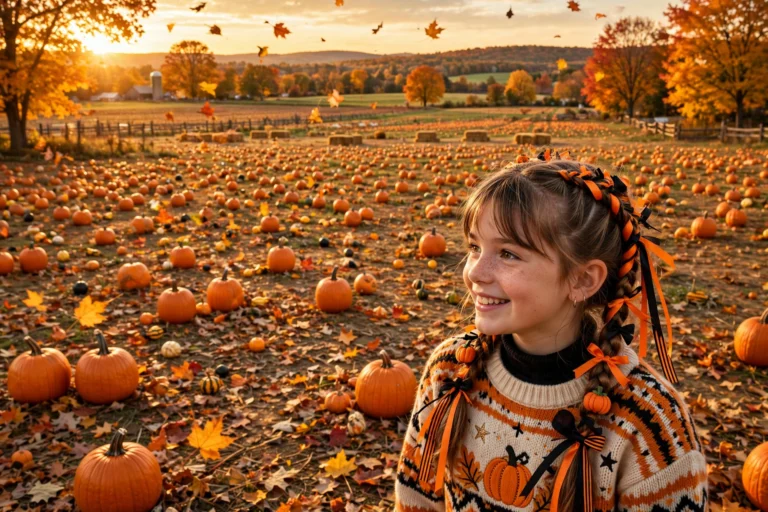
1. Bubble Ponytail with Fall Ribbon
The undisputed star of fall 2026 for girls. A high ponytail sectioned into soft “bubbles” with extra elastics, finished with a ribbon in burnt orange or plaid — it takes four minutes, photographs beautifully, and holds up through an entire school day. If a girl only tries one new ponytail this season, our editors say make it this one: it works on nearly every hair type and looks far fancier than it is.
2. Twisted Rope Ponytail
Two twisted sections coiled around each other into a rope, then secured — sleek, sporty, and nearly indestructible. This is the ponytail our testers chose for soccer practice and windy days, because the twist structure grips itself. It looks polished enough for picture day and tough enough for the playground, which is a rare combination.
5. Dutch-Braid-into-Ponytail
A Dutch braid started at the hairline, feeding into a ponytail at the back — the “I woke up like this” style that secretly does the most work. It keeps front layers and bangs out of the face all day without a single bobby pin, which makes it a parent favorite for school. The braid does the holding; the ponytail does the pretty.
6. Double Bubble Ponytails
Two side ponytails, each bubbled — maximum cute for the under-ten crowd and surprisingly easy to execute. Our editors loved this one for fall festivals and birthday parties because it’s festive without a single accessory purchase. Symmetrical, bouncy, and basically impossible to mess up.
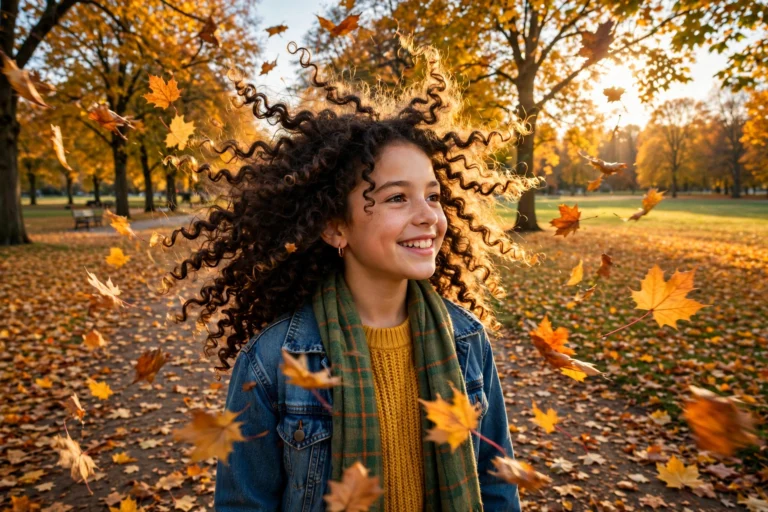
8. Curly Voluminous High Pony
The celebration ponytail: a high pony with the crown gently lifted and natural curls (or waves) left full and free in the tail. It earned its top-five spot because it’s the best ponytail for curly and coily hair — it celebrates texture instead of fighting it. Holiday dinners, recitals, family photos: this is the one.
Ponytail Placement: High, Low, or Side — What Flatters Whom
Where you put the elastic changes everything — the same hair reads sporty, elegant, or playful depending on placement alone. A high ponytail (at or above the crown) lifts the whole face, shows off the neck and shoulders, and gives fine hair the illusion of fullness because gravity pulls the volume upward. It’s the most energetic placement: perfect for sports, school days, and rounder faces, where the height on top adds flattering length to the face. The trade-off is tension — high ponies pull hardest on the hairline, so they’re the placement most worth doing gently (more on that in the elastic section below).
A low ponytail (at the nape or just above) is the sophisticated sibling: calm, neat, and endlessly versatile. It flatters longer faces and looks especially pretty with middle or side parts, and it’s the kindest placement for hair because the weight hangs close to the head with minimal pulling. Low ponies pair beautifully with fall fashion — turtlenecks, collars, scarves — and they’re the placement teachers tend to love for picture day and performances. If a girl’s hairline is sensitive or she’s prone to headaches, low is the default our editors recommend.
A side ponytail (over one shoulder) is the playful wildcard of the three. It’s asymmetric, so it softens strong jawlines and adds instant charm — think cozy fall festivals, birthday parties, and casual weekends. The catch: side ponies swing and loosen faster than centered ones, so they need a firmer elastic and work best on medium-to-long hair. A good rule of thumb from our testing: match the placement to the day. High for active days, low for dressy or long days, side for fun days — and any girl can wear all three across a single week.
No More Ponytail Headaches: Elastic Tips for Comfort & Healthy Hair
Ponytail headaches are real, and they’re almost always caused by two things: the wrong elastic and too much tension in one spot. Thin rubber-band-style elastics concentrate all the pulling force on a narrow band of hair, which is why they hurt within an hour and snap strands on the way out. The fix our editors swear by is almost embarrassingly simple: switch to thick, fabric-covered elastics — the classic Goody Ouchless type — or soft scrunchies, which spread the grip over a wider area. One wider elastic holds better and hurts less than two thin ones stacked together.
Placement rotation matters more than most parents realize. Wearing the ponytail in exactly the same spot every day stresses the same follicles repeatedly, and dermatologists warn that tight, repetitive pulling can lead to hairstyles that pull and damage the hairline over time. The easy habit: alternate high, low, and side across the week, and give hair a full day down between tight-ponytail days when you can. If a style ever causes pain, it’s too tight — loosen it immediately, because a ponytail should never hurt.
Two more comfort tricks from our testing. First, the two-elastic method: for heavy or long hair, secure the ponytail with one elastic, then add a second elastic right below it — the weight distributes between them and the headache vanishes. Second, never rip an elastic out of dry hair; slide it down the tail instead of pulling it over the ends, and spritz a little water or detangler on the base first if it’s stuck. For a bigger library of school-morning ponytail ideas beyond this fall list, our ponytail hairstyles for school girls guide has even more everyday options.
10 Easy Fall Ponytail Hairstyles for Girls
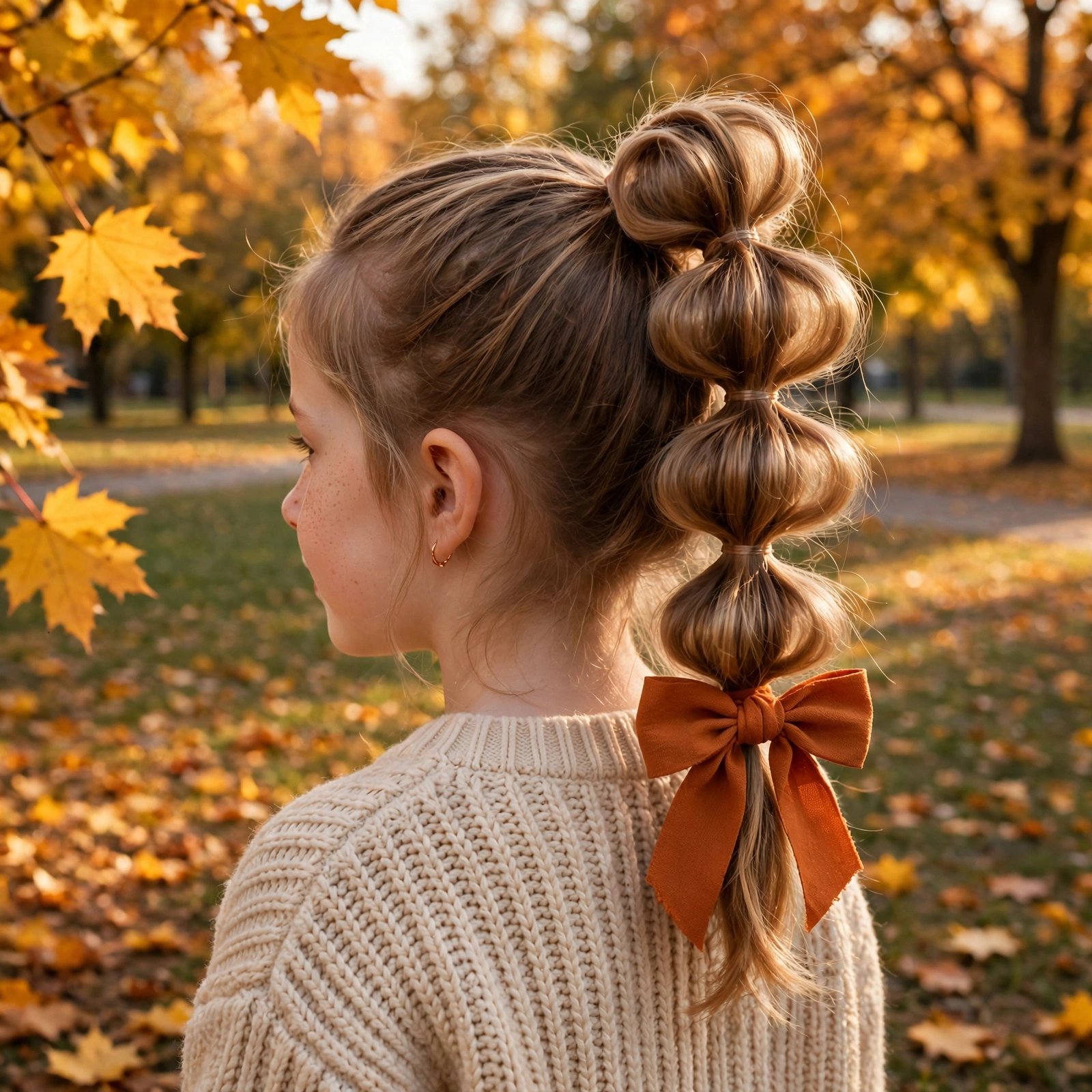
1. Bubble Ponytail with Fall Ribbon
The bubble ponytail is fall 2026’s defining girls’ hairstyle, and it’s easy to see why: a high ponytail divided into puffy sections looks like it took a stylist, but it’s just one ponytail plus a few extra elastics. In our testing it survived entire school days — bus, recess, gym class — without collapsing, because each bubble is anchored independently. Finished with a ribbon in burnt orange, mustard, or plaid, it reads unmistakably autumn: perfect for school days, fall festivals, apple-picking outings, and Halloween-week spirit days.
How to get it: Brush hair smooth into a high ponytail and secure with a fabric-covered elastic. Starting about two inches down, add another elastic around the tail, then gently tug the hair between the two elastics outward to puff it into a bubble. Repeat every two inches down the tail (three to four bubbles total), then tie a ribbon in a bow around the base elastic and trim the ends at an angle so they don’t fray.
Best for: Ages 5–14; medium to long hair (shoulder length and beyond); straight to wavy textures bubble most evenly, but curly hair makes gorgeous textured bubbles too. Fine hair benefits from a light texturizing spray first so the bubbles hold their shape.
Maintenance: Low. Four to five minutes in the morning; the bubbles typically last all day and can be fluffed back up with a quick tug at lunch. Redo daily — it doesn’t survive sleep well.
Pro tip: Match the elastics between bubbles to the hair color so they disappear, and make the first bubble the biggest — a slightly larger top bubble gives the whole ponytail that coveted fountain shape instead of a skinny column.
2. Twisted Rope Ponytail
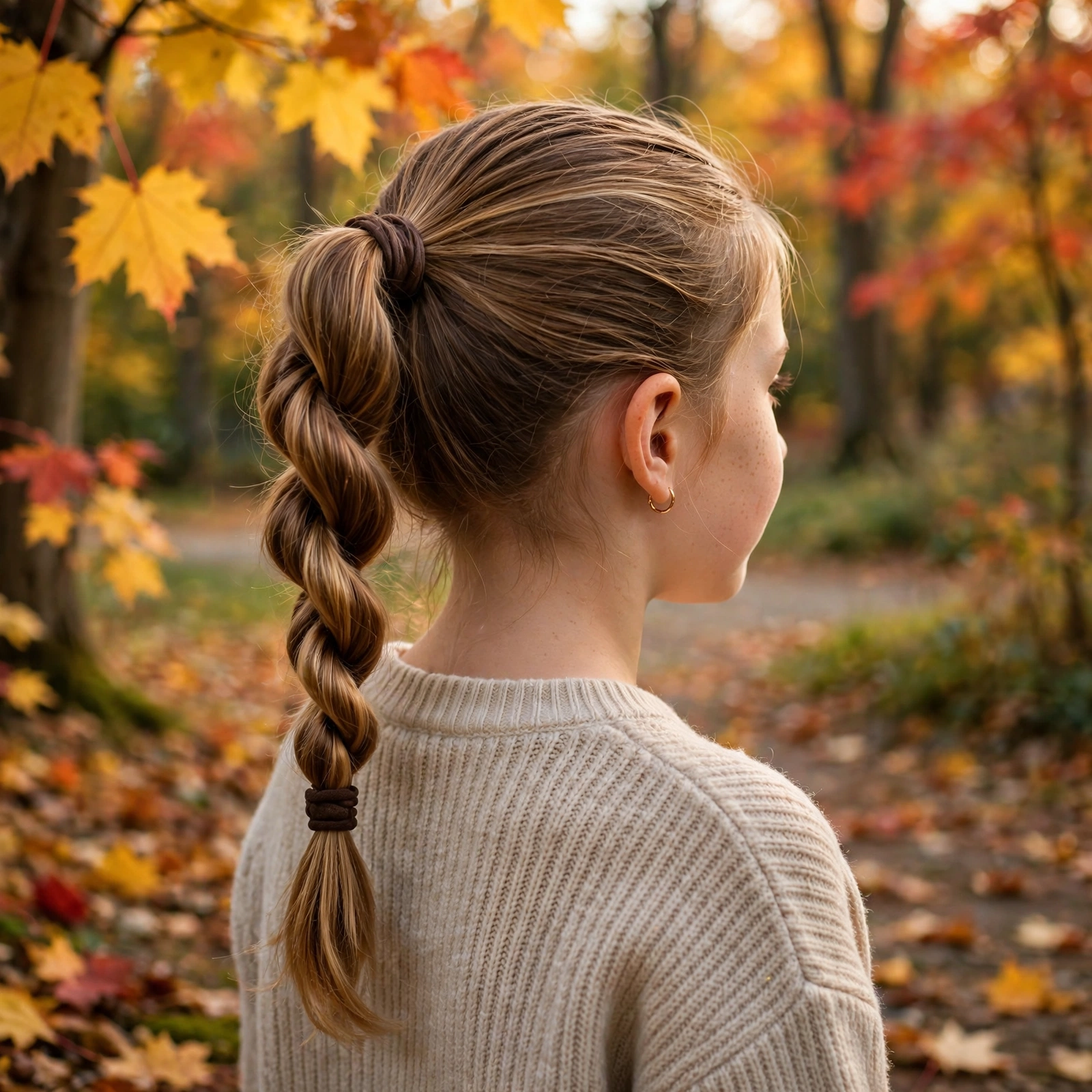
Two sections twisted in the same direction, then coiled around each other in the opposite direction — the rope twist is the sportiest ponytail on this list and the one our testers trusted most for active days. The twist structure grips itself, so it genuinely holds better than a plain ponytail with no extra pins or product. It has a sleek, almost equestrian polish that looks sharp for picture day, yet it’s unfussy enough for everyday wear. Think soccer practice, windy recess days, school photos, and any morning where “staying put” is the entire brief.
How to get it: Gather hair into a mid-high ponytail and secure it. Split the tail into two equal sections. Twist each section clockwise individually, then wrap the two twisted sections around each other counter-clockwise, all the way down. Secure the end with a small elastic — and here’s the key: twist tighter than you think you need to, because rope twists always relax a little in the first hour.
Best for: Ages 7–14 (younger girls may need a parent to do the twisting); medium to long hair; straight and wavy textures twist most smoothly, while curly hair creates a beautiful chunky rope. Excellent for thick hair that usually escapes plain ponytails.
Maintenance: Low. About four minutes; holds all day with zero touch-ups and can even be slept in loosely for second-day texture. Redo every one to two days.
Pro tip: Lightly dampen the tail before twisting — damp hair twists tighter and sets with more definition as it dries. And always twist the two sections in the opposite direction from how you coil them together; that’s the physics that keeps a rope twist from unraveling.
3. Hair-Wrapped High Ponytail
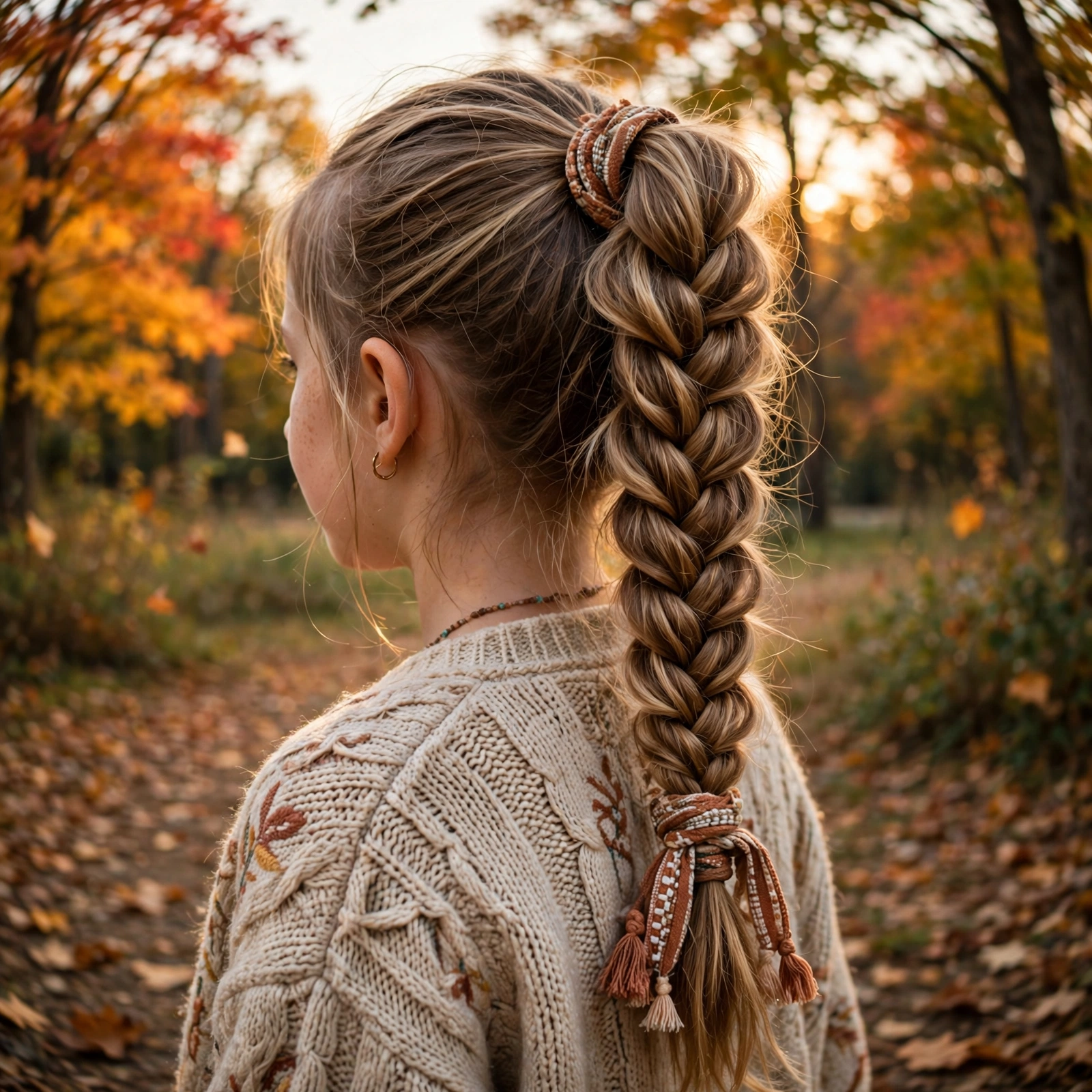
The oldest ponytail upgrade in the book, and still one of the best: take a strand from the tail, wrap it around the elastic, and suddenly a basic ponytail looks styled. This is the “dressy ponytail” of the list — the elastic disappears, the base looks seamless, and the whole thing reads polished in photos. Our editors love it for occasions where a plain ponytail would feel underdone: holiday dinners, school concerts, family photo sessions, and Thanksgiving at grandma’s. It takes thirty extra seconds and changes the entire impression.
How to get it: Secure a high ponytail with an elastic. Take a half-inch strand from the underside of the tail, smooth it with a tiny bit of water or serum, and wrap it neatly around the base, covering the elastic completely. Tuck the end under the wrap and pin it with a small bobby pin pushed upward into the base so the pin hides inside.
Best for: Ages 8–14 (the wrapping is fiddly for little fingers, though parents can do it on any age); medium to long hair with enough length to wrap — at least shoulder length. Works on all textures; on curly hair the wrap looks naturally textured and pretty.
Maintenance: Low. Five minutes total including the wrap; the wrap usually stays put all day since it’s pinned from below. Redo daily.
Pro tip: Use the strand from directly underneath the ponytail, not the side — the underside strand is hidden when you take it, so the visible tail stays full. And push the bobby pin in wavy-side-down against the head; it grips twice as well as wavy-side-up.
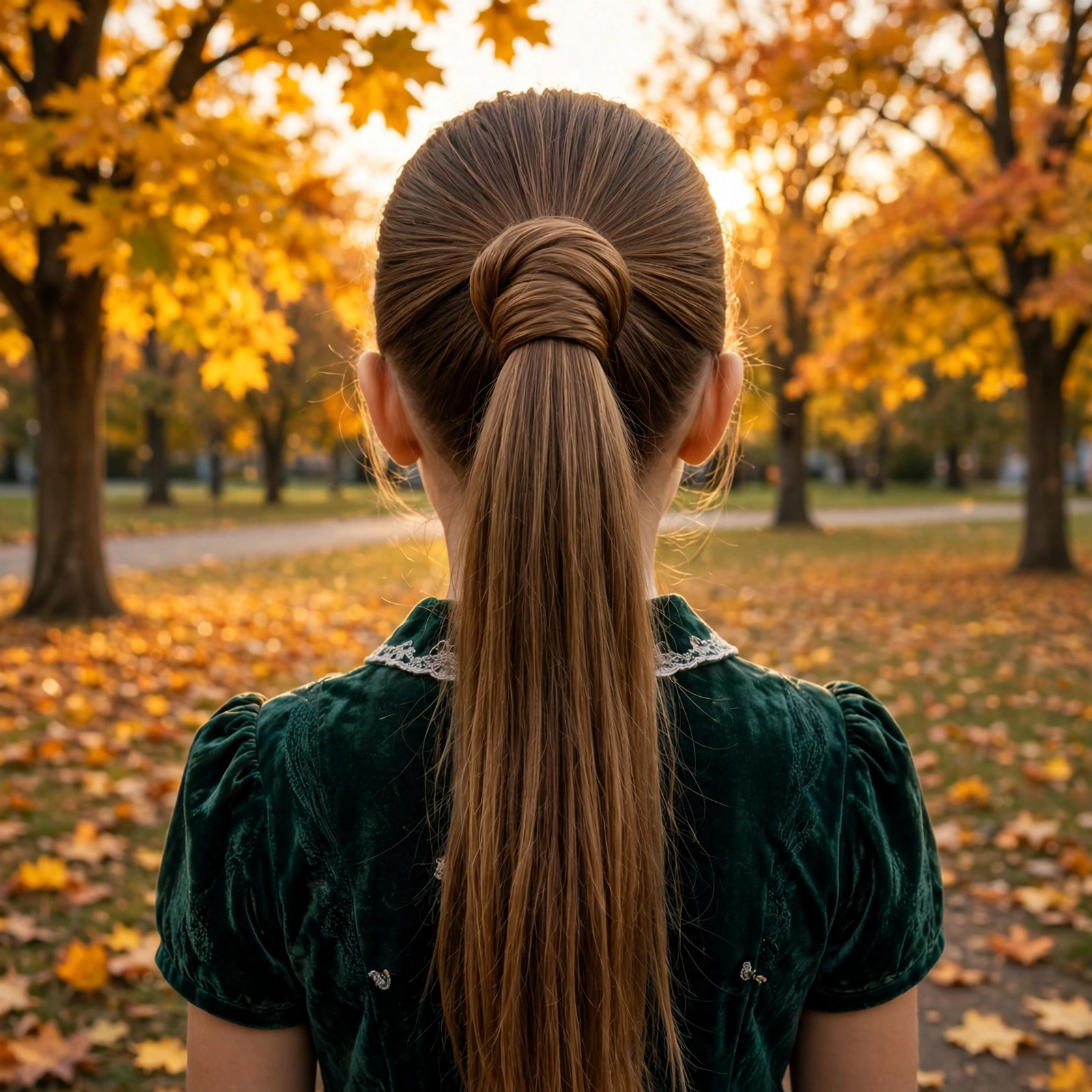
4. Side-Swept Low Ponytail
Swept over one shoulder and secured low behind the ear, the side ponytail is pure charm — a little retro, a little romantic, and completely effortless. It’s the softest ponytail on this list, which makes it a lovely choice for girls who find high ponytails too severe or sporty. In fall it looks especially pretty with the tail draped over a chunky sweater or flannel shirt. Our testers reached for it on weekends, birthday parties, and cozy family outings — any day where the mood is relaxed but the hair should still look intentional.
How to get it: Create a deep side part, then sweep all the hair over to one side and gather it just behind the ear at the nape. Secure with a soft scrunchie or fabric elastic — scrunchies grip side ponies best because they don’t slide. Leave a few face-framing strands out on the opposite side of the part, and gently loosen the crown with your fingertips so it doesn’t look scraped back.
Best for: Ages 5–14; medium to long hair (the tail needs enough length to drape over the shoulder); all textures. Particularly flattering on girls with strong jawlines or very round faces, since the asymmetry softens and elongates.
Maintenance: Low. Three to four minutes; may need one re-tightening after very active play since side ponies loosen faster. Redo daily.
Pro tip: Anchor it with two crisscrossed bobby pins right above the elastic, pushed into the hair at the nape — invisible, and it stops the slow slide that side ponytails are famous for. A velvet scrunchie in a fall shade like rust or forest green doubles as the accessory.
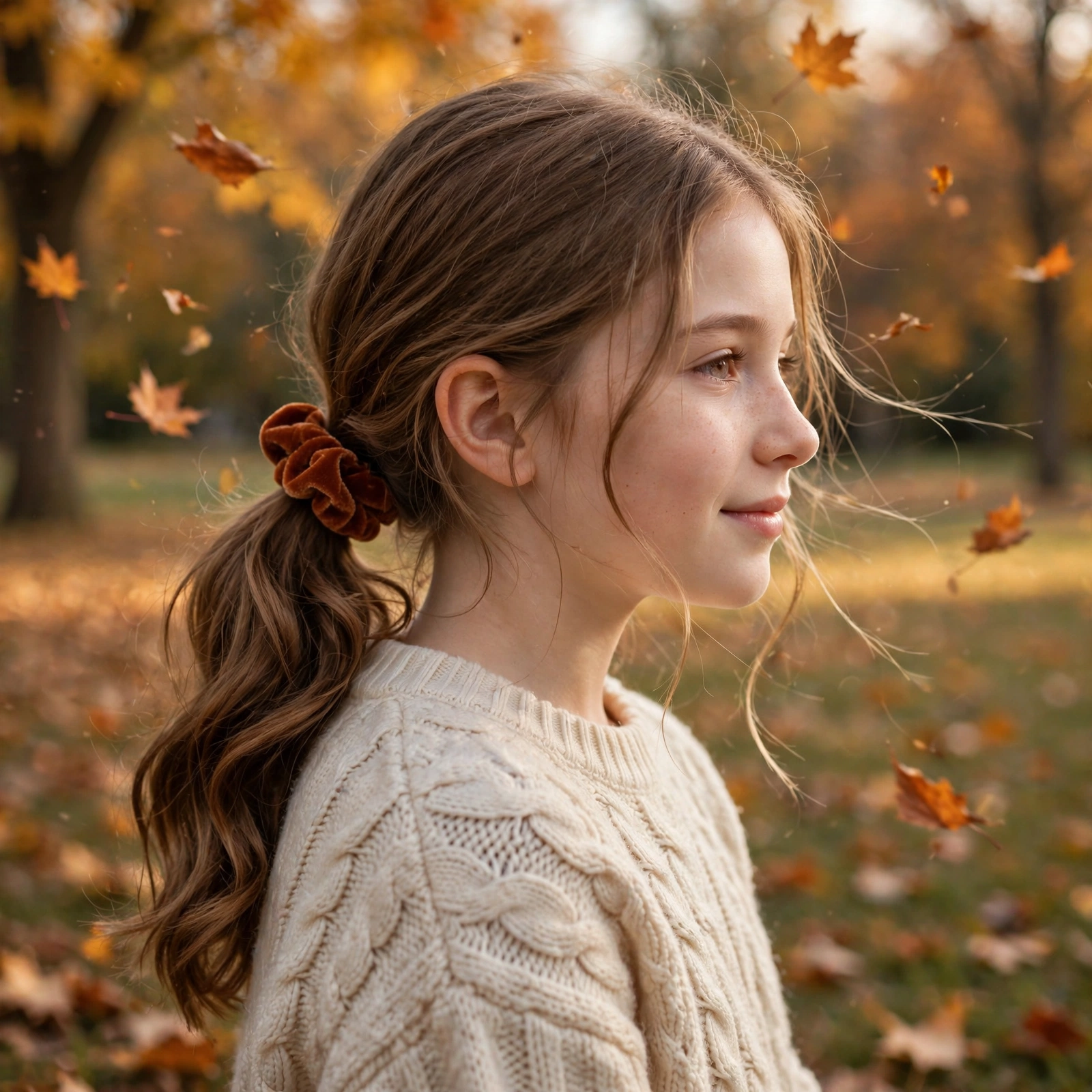
5. Dutch-Braid-into-Ponytail
A Dutch braid (the “inside-out” braid that sits on top of the hair) started at the front hairline, running back and feeding directly into a ponytail — this is the hardest-working style on the list. The braid locks down bangs, layers, and flyaways at the front while the ponytail keeps the back neat, so it’s genuinely an all-day style with no midday rescue needed. Parents in our testing called it the ultimate school hairstyle: it looks intricate, keeps hair out of the face during class, and survives everything the day throws at it. Dress it up or down depending on the ponytail height — high for sporty, low for polished.
How to get it: Starting at the front hairline on one side of the part (or center), Dutch-braid back toward the crown: cross the outer strands under the middle strand instead of over, adding hair from the sides as you go. When you reach the spot where you want the ponytail, gather the braid together with all remaining hair and secure with an elastic. Gently tug the edges of the braid outward (“pancaking”) to make it look fuller.
Best for: Ages 7–14, or younger with a parent braiding; medium to long hair (the braid needs enough length to travel). Works on all textures — on curly hair, braid on damp, detangled hair for the smoothest result. Great for girls with bangs or face-framing layers that usually escape.
Maintenance: Medium. Five to eight minutes once the braiding is practiced; holds flawlessly all day and often into day two. Redo every one to two days.
Pro tip: Braid on slightly damp hair with a pea-sized amount of leave-in conditioner — our testers found this cut frizz in half and made the braid dramatically easier to handle. And pancake the braid before securing the ponytail, not after; it’s much easier to adjust.
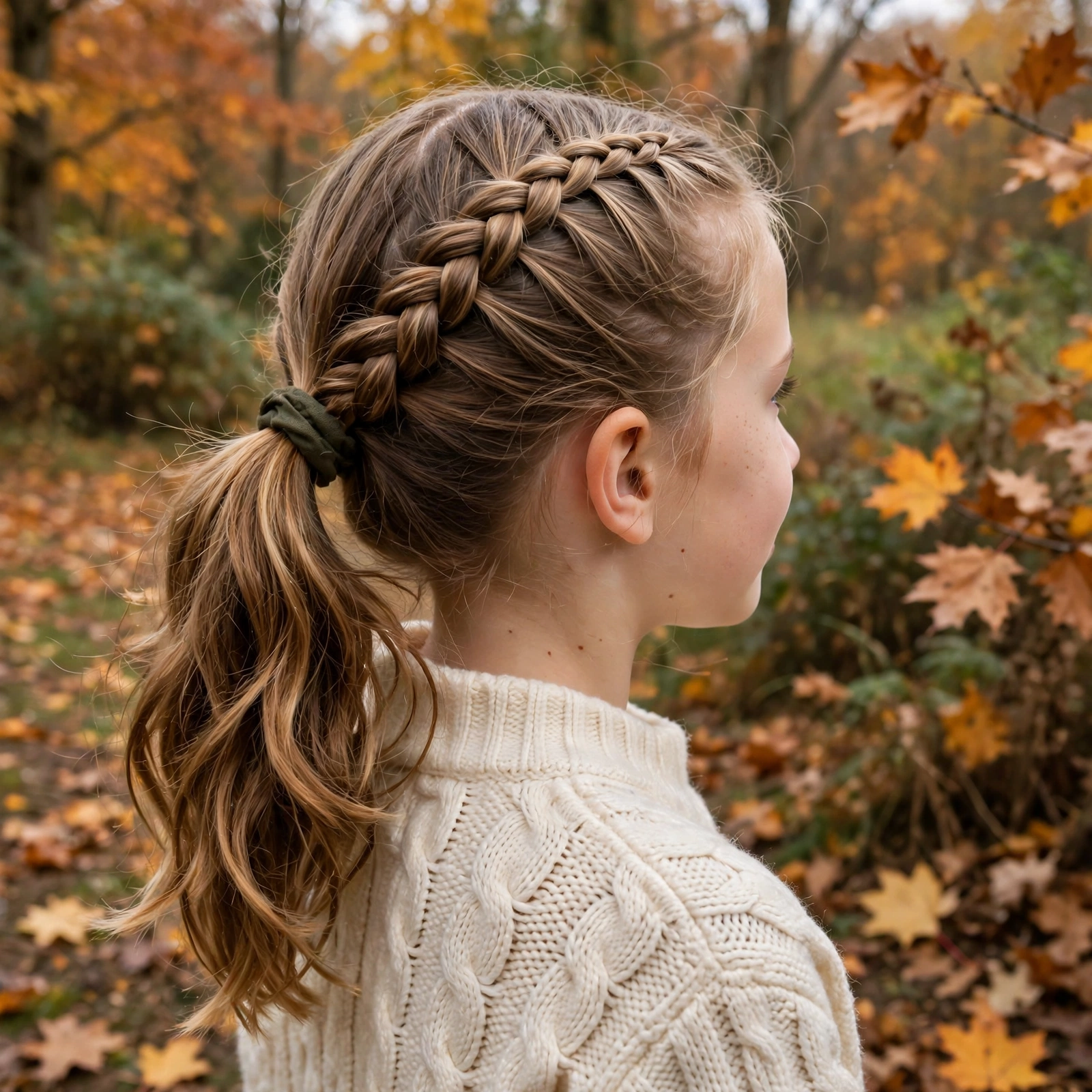
6. Double Bubble Ponytails
Two high side ponytails, each bubbled like style #1 — this is the maximum-cute option and the runaway favorite among our youngest testers. There’s something about the symmetry that reads pure joy, and in fall it pairs adorably with beanies worn behind the bubbles, plaid dresses, and Halloween costumes. It’s festive without requiring a single store-bought accessory, which parents appreciated. Our editors found it nearly impossible to mess up: even uneven bubbles look charming on a six-year-old, which is exactly the point.
How to get it: Part hair down the middle and gather each side into a high ponytail above the ears, securing both with fabric elastics. On each tail, add two more elastics spaced about two inches apart, then gently pull the sections between elastics outward to form bubbles. Tie small matching ribbons or bows at the base of each ponytail for the full fall effect.
Best for: Ages 5–10 (older girls can wear it ironically-cute too, but the core audience is little ones); medium to long hair, though shorter hair makes adorable stubby bubbles. All textures; fine hair may need a little dry shampoo at the roots first for grip.
Maintenance: Low. Five to six minutes for both sides; holds through active play since the weight is split between two ponytails. Redo daily.
Pro tip: Do the part with the handle of a rat-tail comb while the hair is damp — a clean center part is what makes double ponytails look deliberate instead of messy. And place the ponytails slightly forward of the ears, not directly behind them; it gives the bubbles better lift and photographs cuter.
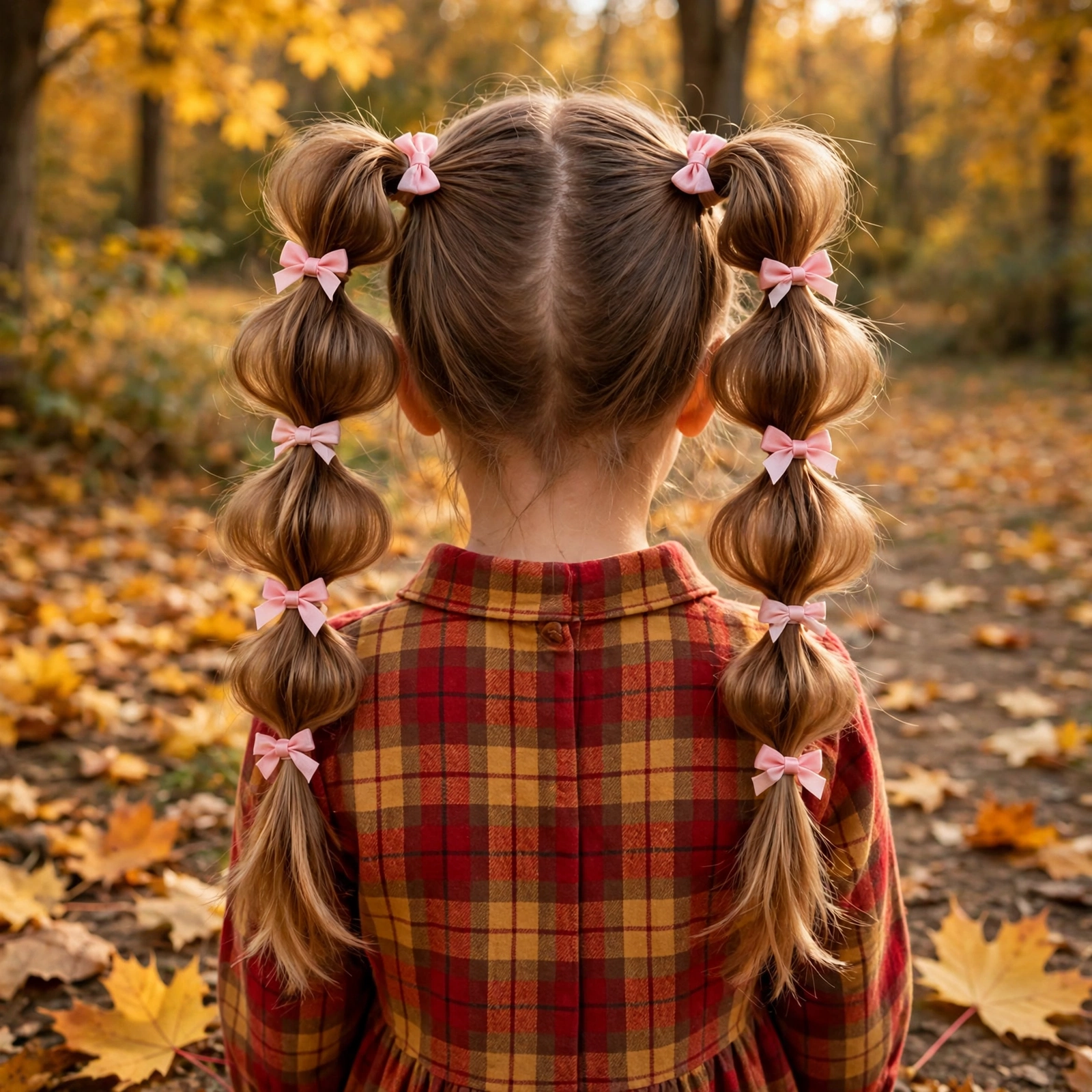
7. Fishtail Ponytail
A fishtail braid worked down the length of a ponytail tail — intricate-looking, surprisingly simple, and one of the most complimented styles in our testing. The fishtail’s woven texture catches fall light beautifully, especially on highlighted or multi-tonal hair, and it has a boho-meets-polished vibe that works for both school and special occasions. Girls who’ve outgrown “little kid” styles but aren’t ready for complicated updos land here: it looks advanced, but it’s just two strands crossed back and forth.
How to get it: Secure a mid-high ponytail. Split the tail into two equal halves. Take a thin strand from the outside of the left half, cross it over and add it to the inside of the right half; then take a thin strand from the outside of the right half, cross it over to the inside of the left. Repeat all the way down and secure with a small clear elastic. Gently pull the braid edges outward for a fuller, messier finish.
Best for: Ages 9–14 (the fishtail technique takes a little practice; parents can do it on younger girls); medium to long hair — the longer the tail, the more impressive the fishtail. Straight and wavy textures show the weave most clearly; works on all densities.
Maintenance: Medium. Eight to ten minutes the first few tries, dropping to five once learned; holds all day and looks even better slightly loosened by evening. Redo every one to two days.
Pro tip: Use smaller outer strands than you think — skinny sections make the fishtail pattern crisp and detailed, while chunky sections just look like a messy regular braid. And do it on day-old hair; freshly washed slippery hair is the fishtail’s worst enemy.
8. Curly Voluminous High Pony
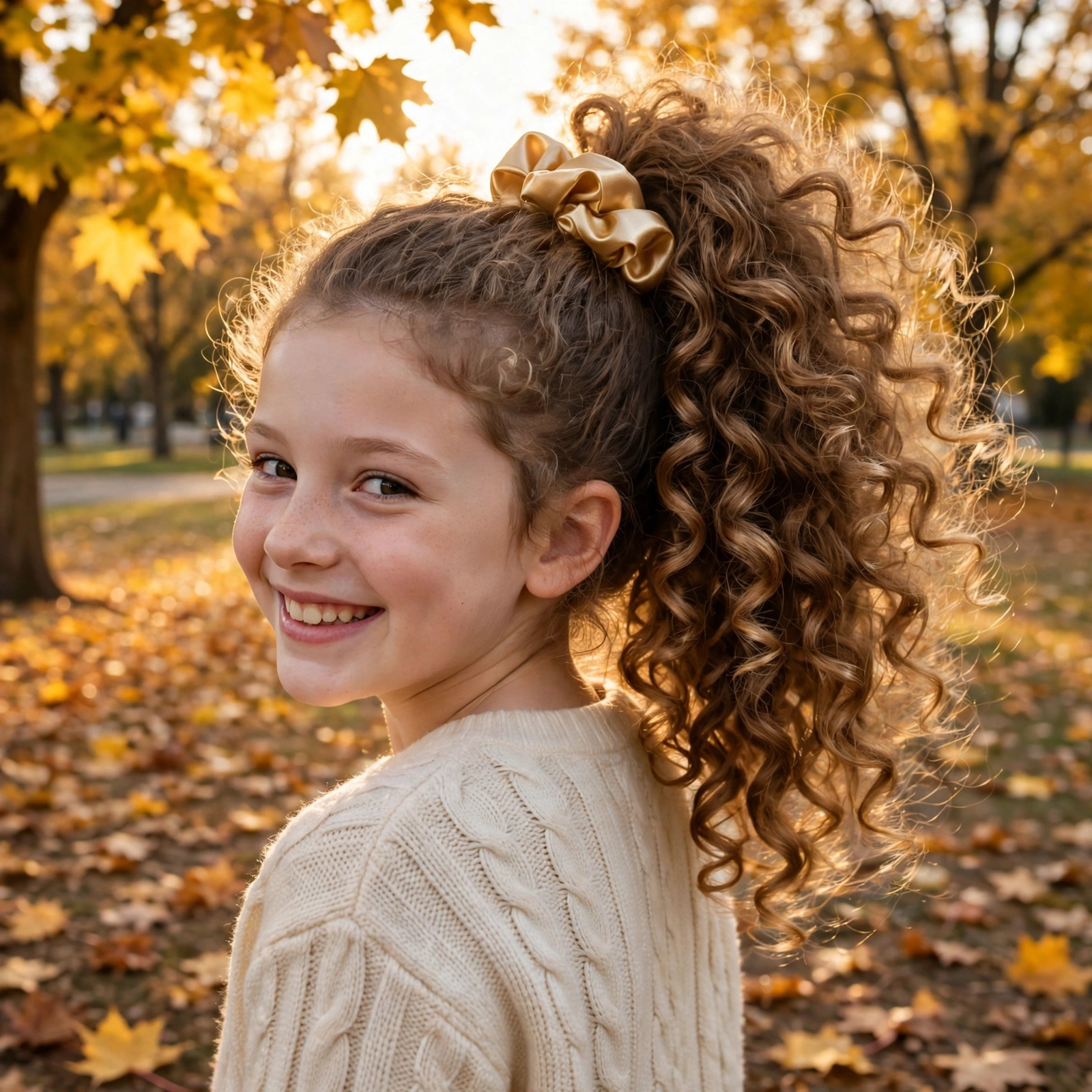
This is the celebration ponytail for curly, coily, and wavy hair: gathered high, crown gently lifted, and the tail left completely free to do what it does naturally. Instead of smoothing texture away, this style builds the whole look around it — the volume is the style. Our editors found it to be the most joyful ponytail on the list and the best option for girls whose curls get fought into submission by other styles. It shines at holiday dinners, recitals, birthday parties, and family photos, where big, happy hair is exactly right.
How to get it: On damp, conditioned hair, flip the head forward and gather everything to the crown, smoothing only the very front with your palms and a little leave-in — don’t brush the curls out. Secure with a wide fabric elastic or a satin scrunchie. Once upright, gently lift the hair at the crown with your fingertips for height, and fluff the tail by separating a few curl clumps. Let it air-dry or diffuse fully before touching it again.
Best for: Ages 5–14; curly, coily, and wavy textures (this style was made for them); medium to long hair. Also lovely on straight hair with heatless overnight waves — braid damp hair the night before, undo in the morning, then gather.
Maintenance: Low to medium. Five minutes to gather; the curls themselves need their normal wash-day routine. Holds all day; refresh the tail with a water spritz on day two.
Pro tip: A satin or silk scrunchie is non-negotiable for curly ponytails in our testing — regular elastics create a frizz halo at the base by bedtime, while satin lets curls slide without snagging. Pineapple the pony (loose high pony) overnight to preserve it for day two.
9. Half-Up Twisted Ponytail
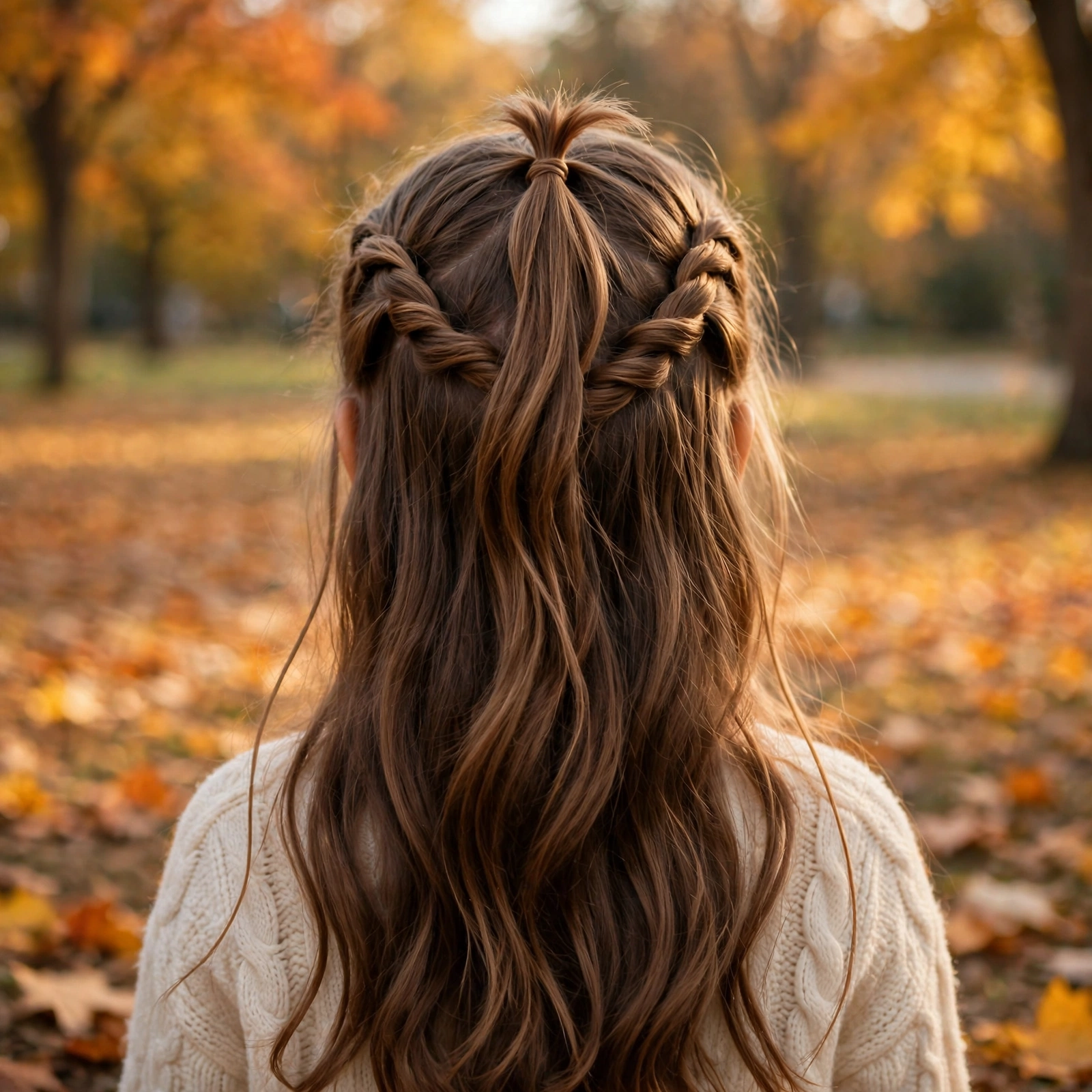
Two twisted sections from the temples, drawn back and joined into a small ponytail at the crown while the rest of the hair flows free — the best of both worlds for girls who won’t commit to a full ponytail. It’s romantic and soft, keeps the front pieces out of the face, and shows off length at the back, which is why it tested so well with the 8–12 crowd. In fall it looks lovely with the loose hair tucked behind a scarf or collar. School days, weekend outings, Thanksgiving dinner — it fits everywhere a full ponytail would feel like too much.
How to get it: Take a two-inch section of hair from each temple and twist each one back toward the crown. Cross the two twists over each other where they meet and secure them together with a small elastic, forming a mini ponytail. Let the rest of the hair fall freely; gently tug the twists outward to make them look fuller, and pull out two thin face-framing strands at the front.
Best for: Ages 6–14; medium to long hair (needs enough length for the twists to reach the crown); all textures — wavy and curly hair makes especially pretty twists. Ideal for girls growing out bangs or with lots of face-framing layers.
Maintenance: Low. Three to four minutes, no heat, and it works beautifully on second-day hair. Redo daily, or refresh just the twists.
Pro tip: Crisscross two bobby pins in an X over the small elastic at the back — it locks the twists in place far better than the elastic alone, and the X is invisible under the hair. A tiny bow clipped over the elastic turns it into a party style in seconds.
10. Scrunchie Low Ponytail with Face-Framing Strands
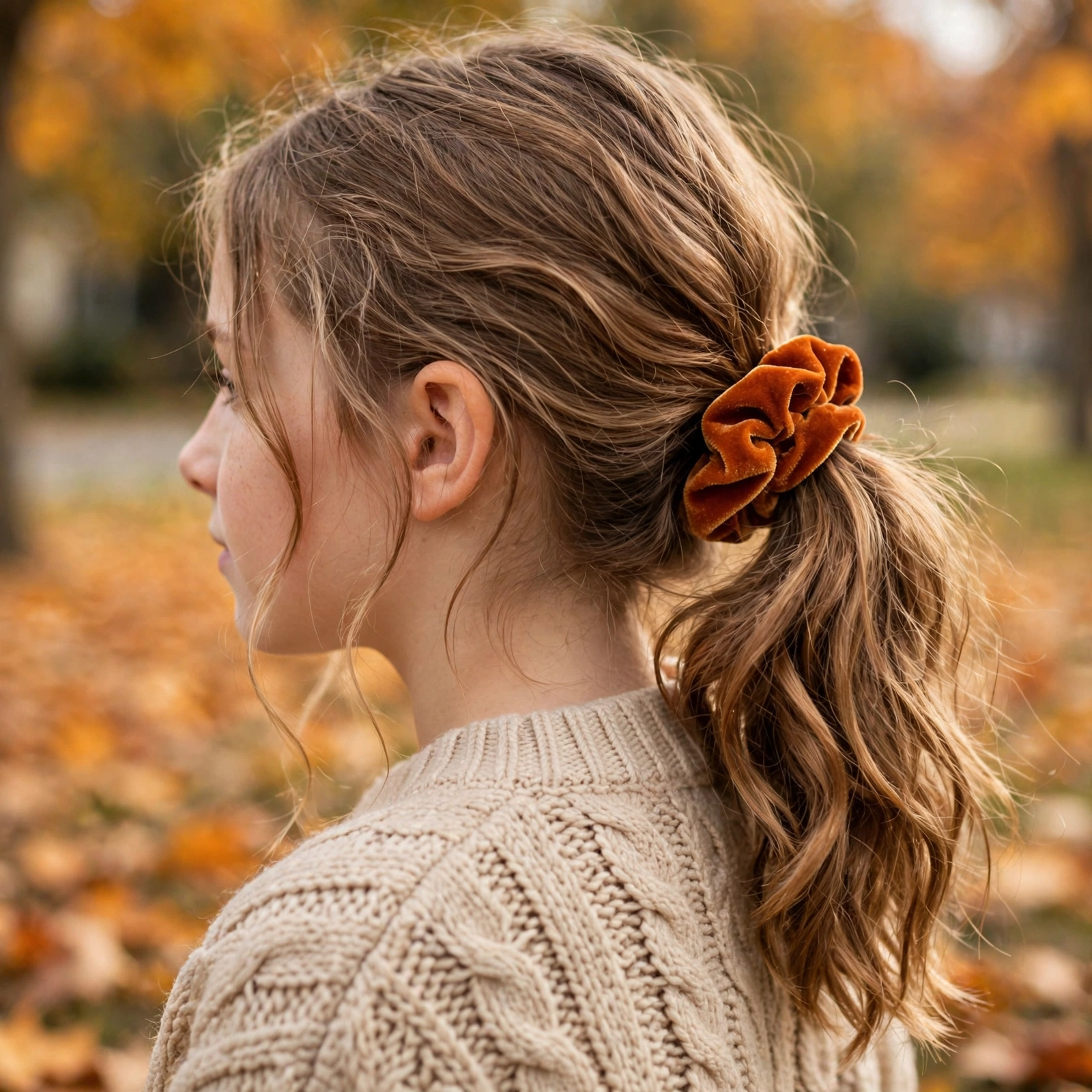
The cozy-girl finale: a loose low ponytail secured with a plush scrunchie, with soft strands left out around the face. It’s the most relaxed style on the list — intentionally undone, comfortable for all-day wear, and very 2026 with the scrunchie revival in full swing. Our editors found it to be the ultimate low-effort fall look: it takes two minutes, never causes headaches because nothing is pulled tight, and the scrunchie does all the visual work. Lazy Sundays, movie nights, long car rides to visit family, homework afternoons — this is the ponytail for real life.
How to get it: Create a loose middle or slightly off-center part and pull out two thin strands at the front on each side. Gather the rest loosely at the nape — don’t brush it smooth; the softness is the point — and secure with a large scrunchie, wrapping it only twice so it stays relaxed. Gently tug the hair above the scrunchie for a little fullness, and let the face-framing strands fall naturally.
Best for: Ages 5–14; all hair types, textures, and lengths (even shorter bobs can do a stubby version). The kindest option on this list for sensitive scalps, tender heads, and girls who complain about tight hairstyles.
Maintenance: Low. Two minutes; the loosest hold on the list, so expect to re-secure once during very active days. Redo daily — or don’t; it looks fine slightly messy.
Pro tip: Choose a scrunchie in a fall fabric — velvet, corduroy, or flannel — and let it be the statement. Our testers found that a great scrunchie makes this two-minute style look completely deliberate, and satin-lined scrunchies (like the Scünci satin styles) are gentlest on fine hair.
Fall Ponytail Hairstyles for Girls: FAQs
How do I get rid of the ponytail “bump” at the crown?
The bump happens when hair is gathered upward and the top layer buckles. Three fixes from our testing: first, gather the hair with the head tilted slightly back rather than forward — it keeps the top smooth. Second, after securing the elastic, slide a tail comb or your fingertip under the hair just above the elastic and gently lift to smooth the buckle flat. Third, for a truly sleek finish, mist the crown lightly with water before gathering and smooth it with the flat of your hand as you pull the hair up. If the bump keeps returning, the ponytail is probably sitting too high for the hair’s natural fall — drop it half an inch and try again.
Can daily ponytails cause breakage or hair loss?
A loose, comfortable ponytail worn with a fabric-covered elastic is perfectly fine for daily wear — the problems start with tight ponytails worn in the same spot every single day. Constant tension can snap strands at the elastic line and, over time, stress the follicles along the hairline, a condition dermatologists call traction alopecia; here’s how traction alopecia develops and how to spot it early. The parent-proof prevention plan: rotate ponytail placement (high, low, side) through the week, never secure a ponytail so tight it hurts, give hair down-days when possible, and watch for warning signs like thinning at the temples or tiny broken hairs along the hairline. Caught early, it’s reversible — which is exactly why varying the styles on this list is healthier than wearing the same one daily.
Which ponytail holds best for sports and PE?
The twisted rope ponytail (#2) won our sports test by a clear margin — the twist structure grips itself and barely loosened after an hour of activity. The Dutch-braid-into-ponytail (#5) is the runner-up, since the braid anchors the front while the elastic holds the back. Two universal sports tips: use a no-slip elastic (fabric-covered, not smooth) and do the style on slightly damp or day-old hair, which grips far better than freshly washed slippery hair. For very long or heavy hair, the double-elastic trick from the comfort section above distributes the weight and stops the mid-game sag.
My daughter has thin, fine hair — how do I make ponytails look fuller?
Volume tricks for fine hair, all tested: tease the crown lightly with a fine-tooth comb before gathering (just the under-layers, never the top surface), gather the ponytail slightly higher than usual since height reads as fullness, and choose the bubble ponytail (#1) — the bubbles literally manufacture volume that isn’t there. A light mist of dry shampoo or texturizing spray at the roots before styling gives fine hair the grit it needs to hold shape. Avoid heavy conditioners or oils near the roots on ponytail days; they flatten everything. And keep the elastic snug but the tail fluffy — a tight flat tail is what makes fine hair look thinner. If the ends look wispy and transparent, a small trim helps more than any styling trick; dealing with split ends promptly keeps fine hair looking thicker at the bottom edge.
What’s the best second-day ponytail refresh?
Second-day hair is actually ideal ponytail hair — the natural oils give it grip that fresh hair lacks. To refresh: flip the head forward, massage the roots with fingertips to revive volume, and hit the crown and hairline with a quick spritz of dry shampoo. Then choose a style that hides oily roots — the half-up twisted ponytail (#9) and the bubble ponytail (#1) are both excellent because the texture at the base disguises everything. Smooth the tail with a brush (a Wet Brush is gentlest on tangles) and you’re out the door in three minutes. If the hairline still looks oily after dry shampoo, a quick wipe with a damp cloth along the hairline before styling makes a surprising difference.
The Bottom Line
The best fall ponytail hairstyles for girls aren’t the most complicated ones — they’re the comfortable, five-minute styles she’ll actually ask for again tomorrow. Pick one bubble, one braid, and one twist from this list, rotate them through the week to keep her hairline happy, and let this be the fall the ponytail finally gets interesting. For more everyday ideas once these ten are in rotation, our back-to-school hairstyles for girls guide has plenty more to try. Happy fall, and happy ponytail days ahead.