
15 Cozy Winter Hairstyles for Women You’ll Live In (2026)
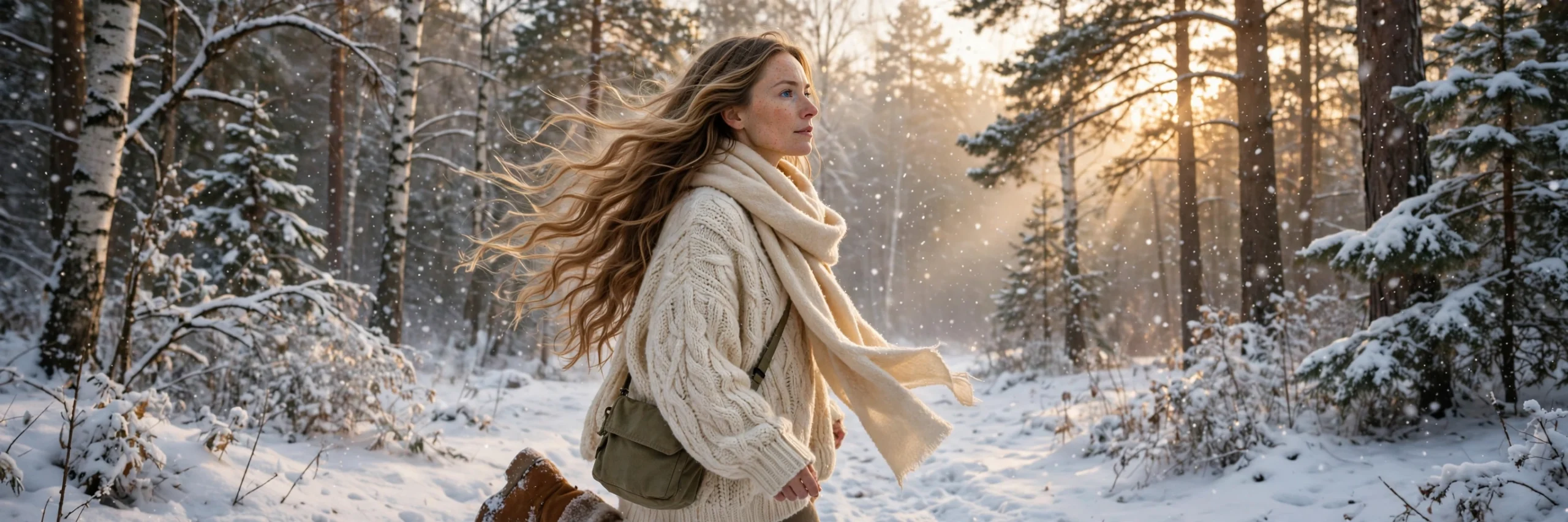
If you’re hunting for winter hairstyles for women that survive the season’s real challenges — bone-dry indoor air, static that defies gravity, beanies, turtlenecks, and scarf friction — you’re in the right place. Winter hair lives a double life: it has to look good under a hat and after the hat comes off. The best winter hairstyles for women in 2026 are the beanie-proof braided ponytail, the cozy cashmere blowout, and the fireside lob — here’s why each one earns its spot, and how to wear all fifteen.
Here’s the open secret stylists will tell you: winter is the season of texture and containment. The enemy isn’t frizz the way it is in summer — it’s dryness, dullness, and electrical charge. In our testing, the styles that win winter are the ones that keep hair moisturized, tucked away from friction, and working with hats rather than against them. Loose, hydrated waves beat pin-straight hair every time. If you’ve been scrolling for winter hair ideas that feel warm, wearable, and genuinely pretty, this is your season.
The winter hair trends for 2026 share one unifying theme: cozy polish. Think buttery blowouts that glow in low winter light, braids engineered to slide under beanies without denting, rich copper and chestnut tones that catch candlelight, and updos that sit low at the nape so they never fight your turtleneck. Velvet ribbons, silk scarves, and tortoiseshell claw clips are the season’s accessories. The “fireside glam” aesthetic is having a major moment, and honestly, it’s the most flattering trend cycle we’ve seen in years.
But cozy doesn’t mean careless, and it definitely doesn’t mean one-look-fits-all. This season’s best styles are full of thoughtful details — a braid that starts at the nape instead of the crown so your beanie sits flat, layers cut to fall under a scarf rather than bunch against it, a gloss treatment that makes color glow in grey daylight. Whether you’ve got five minutes or thirty, fine hair or thick, a bob or waist-length lengths, there’s a look on this list built for your actual winter mornings.
What makes this guide different: every style below comes with the full picture. Not just what it looks like, but exactly how to get it (what to tell your stylist, plus DIY steps), who it flatters most, honest maintenance expectations, and a pro tip you won’t find in a caption. No fluff — just the 15 most wearable cold-weather hairstyles of the season, decoded.
Below: the 15 coziest winter hair trends 2026 has to offer — let’s find your winter hair.
In this guide: jump straight to any style that catches your eye.
- 1. Cozy Cashmere Blowout
- 2. Beanie-Proof Braided Ponytail
- 3. Fireside Lob with Warm Layers
- 4. Chunky-Knit Top Knot
- 5. Velvet Ribbon Half-Up Twist
- 6. Sleek Winter Glass Ponytail
- 7. Turtleneck-Approved Twisted Chignon
- 8. Hot Cocoa Defined Curls
- 9. Double Dutch Snow-Day Braids
- 10. Candlelit French Twist
- 11. Static-Proof Sleek Bob
- 12. Alpine Shag with Curtain Fringe
- 13. Frosted Milkmaid Braids
- 14. Cozy Claw-Clip Twist Updo
- 15. Hot-Toddy Copper Layers
Editor’s Top 5 Cozy Winter Picks
Short on time? These are the five cozy winter hair looks our editors keep coming back to this season — the ones with the highest style-to-effort ratio on the entire list, tested through actual hat season.
1. Cozy Cashmere Blowout
The undisputed hero of winter 2026. It’s all the bounce and shine of a salon blowout, but built on hydration-first prep so it doesn’t collapse into static by noon. Soft, touchable volume that glows in low winter light and somehow looks even better peeking out from under a coat collar. If you only try one thing this season, make it this one — it’s the rare style that makes dry winter air work for you instead of against you.
2. Beanie-Proof Braided Ponytail
The style that ends hat-hair anxiety. By starting the braid low at the nape, the beanie slides on flat and slides off to reveal perfectly intact texture — no dent, no frizz halo, no flat crown. It’s the ultimate commuter hairstyle: ten minutes in the morning, zero fixing all day. This is the “I have somewhere to be in a snowstorm” style of the season.
3. Fireside Lob with Warm Layers
Collarbone-grazing layers with a warm-toned gloss that catches candlelight and fireplace glow. The lob sits above scarf-bunch territory but stays long enough to pull back, and the warm layers mean it looks intentional even air-dried on lazy days. It’s the cut our editors recommend most when someone says “I want a change but nothing dramatic.”
4. Chunky-Knit Top Knot
High, loose, deliberately imperfect — the weekend uniform of winter 2026. It keeps hair completely off your coat collar and scarf, survives under a hood, and takes genuine two minutes on hair that hasn’t been washed in days. Pair it with an oversized sweater and you’ve nailed the season’s entire aesthetic without trying.
5. Hot Cocoa Defined Curls
Winter is secretly the best season for curls: low humidity means your definition holds for days instead of hours. This routine-based approach — hydration, gel cast, scrunch — gives ringlets that stay springy through scarves and static season. If you’ve been fighting your curls, winter is the season to finally make peace with them.
How to Fight Winter Static and Dryness
Winter static is physics, not a styling failure. Cold air holds almost no moisture, indoor heating dries it further, and every time your hair rubs against wool, acrylic, or a plastic brush, electrons transfer and your strands end up with matching positive charges that repel each other. The fix starts with moisture, because hydrated hair simply builds up less charge. In our testing, the single highest-impact change is switching to a richer, sulfate-free shampoo and a conditioner you actually leave in long enough to work, plus a weekly deep mask.
Your tools and fabrics matter as much as your products. Swap plastic brushes for natural boar-bristle or wooden ones — plastic generates charge with every stroke, while natural materials distribute your scalp’s oils and neutralize static. Line your beanies with silk or satin (or buy satin-lined ones), because cotton and acrylic are the worst offenders for friction. And if you want a routine rebuild grounded in expert advice, start with these dermatologists’ tips for healthy hair before you buy a single new product.
Dryness is static’s quiet partner, and winter attacks on both fronts: cold air outside, hot dry air inside, and hot showers that strip your natural oils. Turn the water temperature down to lukewarm, because hot water lifts the cuticle and lets moisture escape. Add a humidifier to your bedroom; it does as much for your hair overnight as it does for your skin. Seal your ends with an oil or serum after every wash, since ends are the oldest, driest part of your hair and the first to go straw-like in winter. If your ends are already fraying despite all this, they’re telling you something a product can’t fix — book the trim.
One more underrated weapon: your wash schedule. Over-washing is the fastest way to strip the oils that protect your hair from winter air, and most hair types do better at two to three washes per week in the cold months. On non-wash days, dry shampoo at the roots absorbs oil while a light oil on the ends adds moisture — the two products work as a team.
How to Choose a Cozy Winter Style for Your Hair Type
Start with your hair’s natural texture, not the texture you wish you had — winter rewards this honesty more than any other season. Natural waves and curls thrive in cold, low-humidity air: styles like the hot cocoa curls (#8), double Dutch braids (#9), and the alpine shag (#12) practically do themselves, and fighting your texture every morning when the air is already fighting you is a losing battle. If your hair is naturally straight, lean into sleekness and structure instead: the glass ponytail (#6), the static-proof bob (#11), and polished chignons (#7, #10) will be your lowest-effort wins.
Consider density and thickness next, because winter changes how hair behaves. Fine hair goes limp faster under hats and gets staticky more easily — it needs root lift, lightweight products, and cuts with blunt perimeters like the sleek bob (#11) or fireside lob (#3) that create the illusion of density. Thick hair has the opposite problem: it can look bulky under beanies and take forever to dry in cold weather, so contained styles like braids (#2, #9, #13) and the claw-clip twist (#14) are your best friends. And if your hair seems to be shedding more than the usual seasonal amount rather than just feeling fine, it’s worth reading up on the common causes of hair loss in women and mentioning it to a dermatologist.
Be brutally honest about your mornings and your hat habits. If you wear a beanie daily, build your whole routine around beanie-proof styles (#2, #9, #13). If you have five minutes, live in top knots, claw clips, and braided ponytails, and choose cuts (like the shag or textured lob) that look good air-dried. If you have twenty, blowouts and French twists open up. And factor in your calendar: holiday photo season rewards styles with shine and polish (#1, #10, #15), while everyday winter rewards styles that survive real life.
Finally, factor in how your hair changes with the years — texture, density, and growth patterns all shift, and the most flattering winter style is the one that works with today’s hair, not the hair you had at twenty-five. If you’re navigating those changes, our youthful hairstyles for women over 50 guide pairs beautifully with this list. One more practical filter: your grow-out tolerance. Cuts with curtain fringe, textured layers, and shags grow out gracefully and buy you 10–12 weeks between appointments, while precision bobs and pixies demand discipline every 4–6 weeks.
15 Cozy Winter Hairstyles for Women You’ll Love
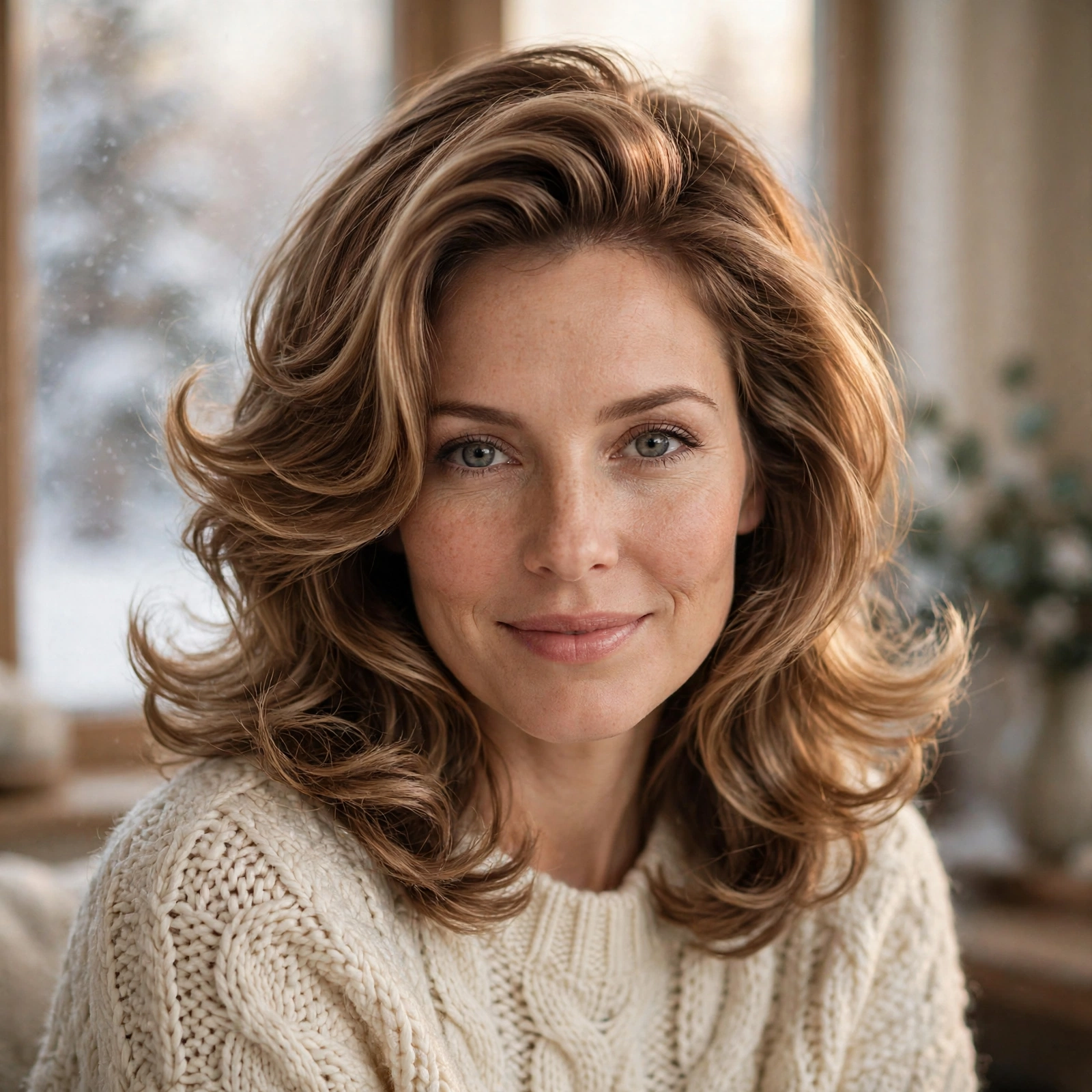
1. Cozy Cashmere Blowout
Soft, bouncy, touchable volume with ends that flip gently outward — the cozy cashmere blowout is winter 2026’s answer to the salon blowout, rebuilt around hydration so it survives dry air instead of collapsing into static. It’s trending because it delivers that expensive, healthy glow in the season’s low, golden light. The vibe is warm luxury — holiday parties, winter date nights, family photos, and any day you want to feel like the best version of yourself.
How to get it: Ask your stylist for long, soft layers with blended ends — they’re the architecture this style needs. At home, apply a heat protectant and volumizing mousse to damp roots, blow-dry with a large round brush rolling sections away from the face, and set the front pieces in Velcro rollers while they cool.
Best for: Oval, round, and heart-shaped faces; medium to thick hair that holds volume; medium to long lengths.
Maintenance: Medium. Ten to fifteen minutes for the blowout, but it lasts two to three days — sleep on a silk pillowcase and revive roots with dry shampoo.
Pro tip: Always finish with the cool shot — heat shapes the hair, but cold sets it. And for shine that survives dry winter air, we smooth a single drop of Olaplex No. 7 Bonding Oil through the ends after styling.
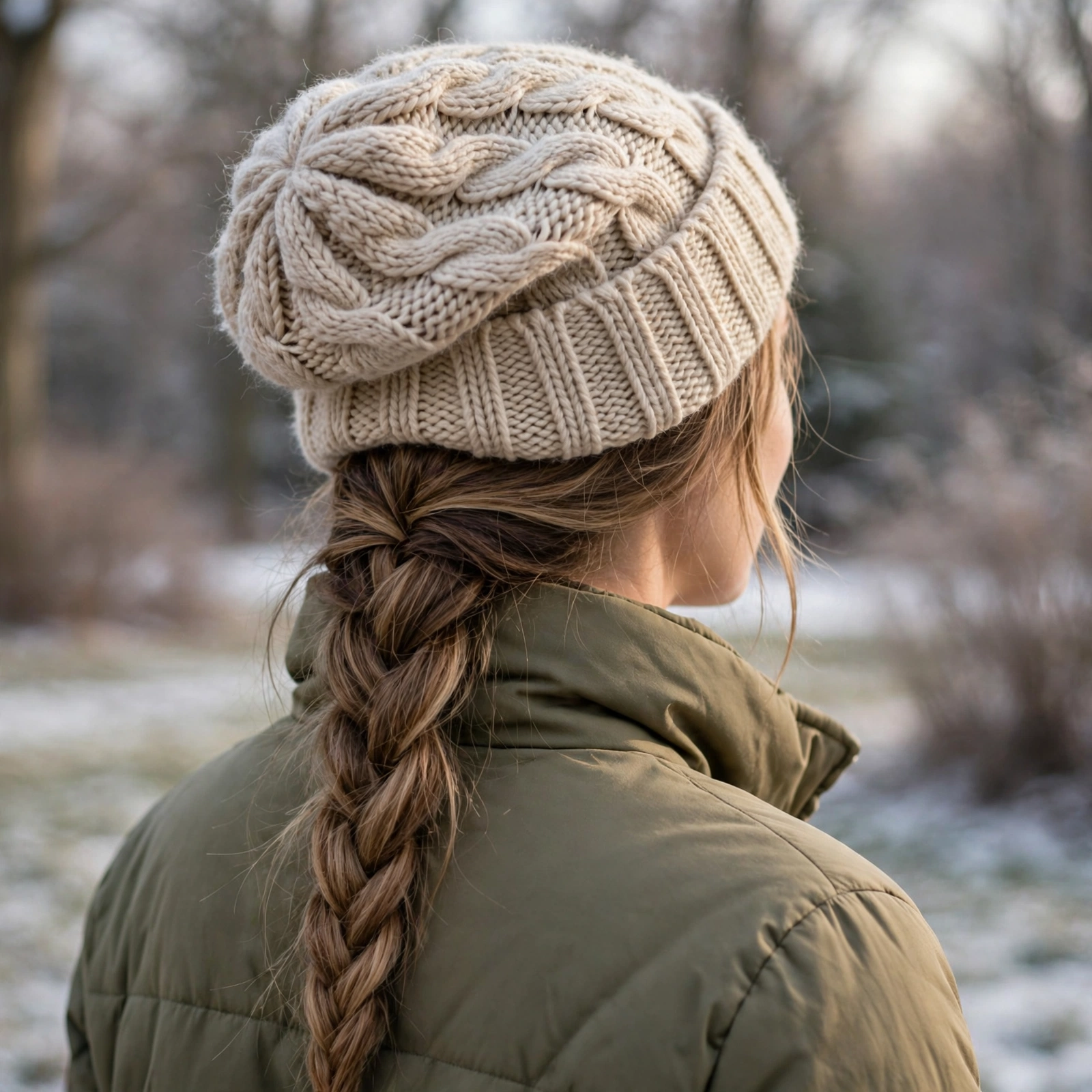
2. Beanie-Proof Braided Ponytail
A low ponytail at the nape, braided loosely down its full length and gently pulled apart for softness — engineered from the start to live under a beanie. It’s the defining practical style of winter hair trends 2026 because it solves hat season’s core frustration: the braid starts below where the hat sits, so the beanie slides on flat and comes off to reveal perfectly intact texture. The vibe is capable and cute — snowy commutes, ski weekends, school runs in freezing rain, and every day your hat is non-negotiable.
How to get it: No salon visit needed. Smooth hair into a low ponytail at the nape (placement is everything — higher and the beanie dents it), secure with an elastic, then braid three-strand style down the full length, keeping tension medium-loose.
Best for: Medium to long hair; all face shapes — loosen front pieces to flatter yours; straight to wavy textures show the braid best, but it works on curls too.
Maintenance: Low. Under ten minutes, no heat, and it genuinely looks better on day-two hair. No salon upkeep tied to the style.
Pro tip: Mist the braid lightly with a flexible-hold hairspray before the beanie goes on, not after. Pre-setting the style means the hat compresses a finished look instead of a vulnerable one.
3. Fireside Lob with Warm Layers
The collarbone-grazing lob, cut with soft warm layers and finished with a demi-permanent gloss in a honeyed or coppery tone that catches fireplace and candlelight. It’s all over cozy winter hair roundups for 2026 because it nails the season’s sweet spot: short enough to stay above scarf-bunch territory, long enough to pull into a stubby pony. The vibe is approachable polish — office days, holiday gatherings, weekend brunches, and anyone who wants a change that doesn’t feel like a gamble.
How to get it: Ask your stylist for a collarbone-length cut with point-cut ends for lived-in texture, face-framing layers starting at the cheekbones, and a warm demi-permanent gloss (caramel, honey, or copper depending on your base).
Best for: Oval, round, heart, and square faces (the layers are customizable to all); straight to wavy textures; fine to medium hair that needs the illusion of volume.
Maintenance: Low to medium. Five to ten minutes on styling mornings; air-dries decently on lazy days. Salon visits every 8–10 weeks, with a gloss refresh around week six to keep the warmth glowing.
Pro tip: The gloss is the whole trick — book it before holiday photo season, not during it, so the tone settles into its most natural version.

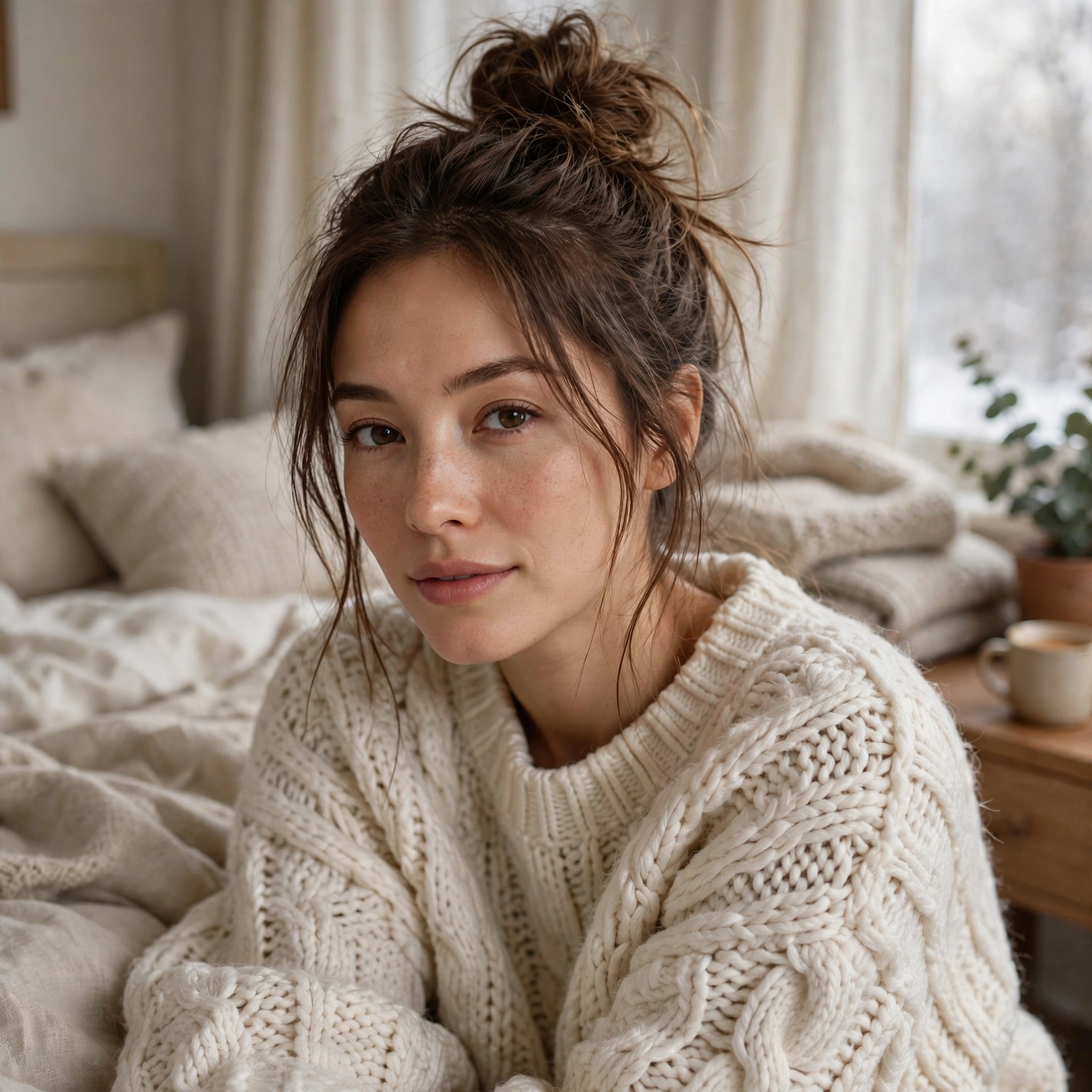
4. Chunky-Knit Top Knot
High on the crown, twisted loosely, ends left slightly undone — the top knot is winter’s weekend uniform and a permanent resident of every cozy winter hairstyles list worth reading. It’s trending for 2026 because it might be the only style that genuinely looks better on unwashed hair: second-day texture gives it grip and body that fresh hair can’t. The vibe is model-off-duty — lazy Sundays, oversized sweaters, gym-to-brunch, and mornings when the snooze button won.
How to get it: Flip your head over, gather hair high on the crown (hands only — no brush, the texture is the point), twist loosely, wrap into a knot, and pin. Pull out a few pieces around the face to soften it, and don’t aim for neat — the slight messiness is the entire aesthetic.
Best for: Medium to long hair; oval and round faces (the height elongates); all textures — curly hair makes an especially gorgeous top knot.
Maintenance: Low. Two minutes, zero heat, and it actively prefers day-two or day-three hair. No salon upkeep.
Pro tip: Place the knot slightly forward of the crown’s highest point rather than dead-center back — it photographs better, balances your profile, and won’t press uncomfortably when you lean against a couch or car seat.
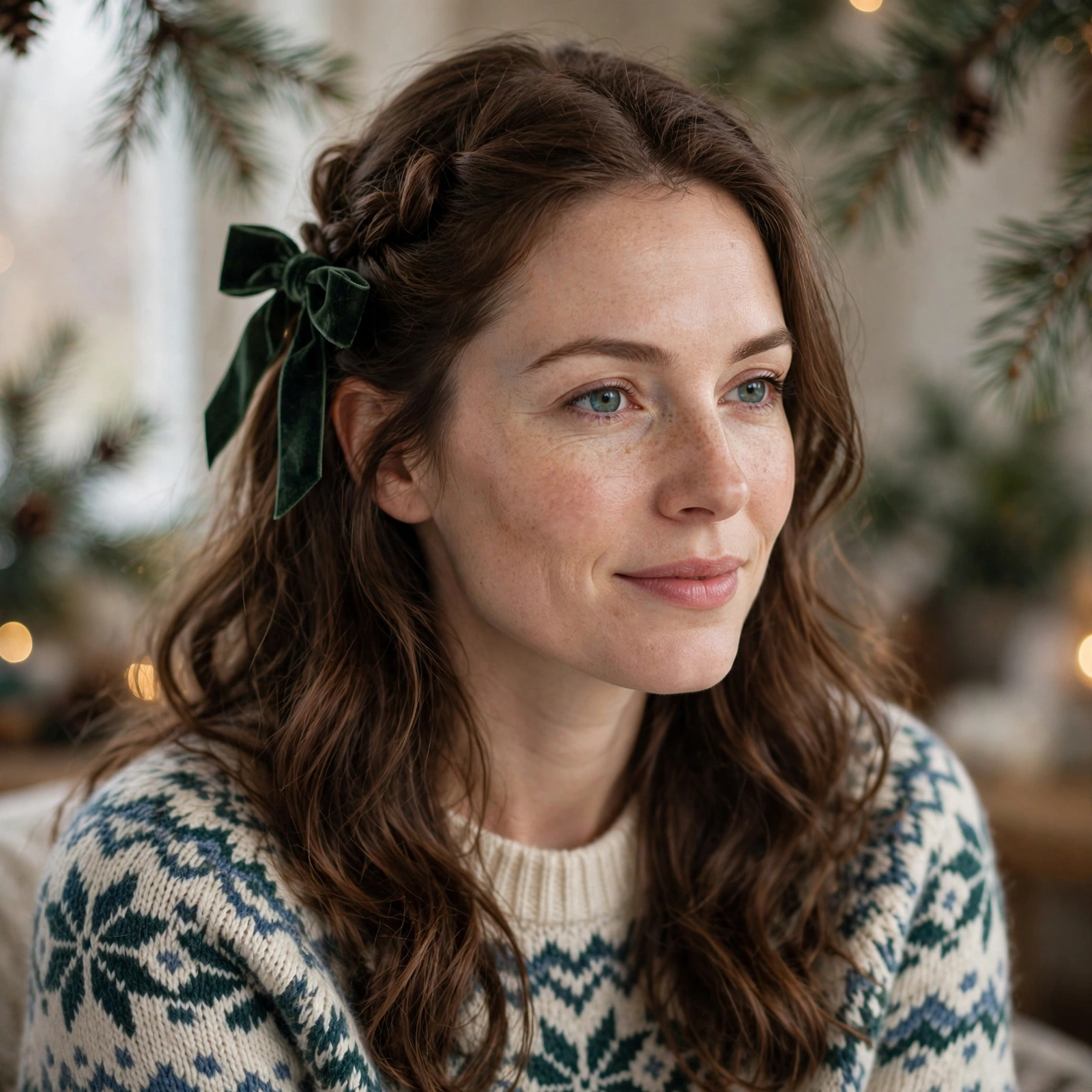
5. Velvet Ribbon Half-Up Twist
Two twisted sections drawn back from the temples, secured with a velvet ribbon bow at the crown — romance with a winter wardrobe. It’s the accessory-driven star of winter hair trends 2026 because velvet reads instantly seasonal: rich, soft, and warm in a way no other fabric manages. The vibe is festive-feminine — holiday parties, winter weddings as a guest, date nights, and office days when you want one beautiful detail.
How to get it: Take a two-inch section from each temple, twist each one back toward the crown, cross them over, and tie them together with a velvet ribbon in a bow — deep green, burgundy, or black all read perfectly seasonal.
Best for: Wavy and curly textures (the twists look especially pretty with natural texture); medium to long lengths; round and oval faces benefit most from the crown lift.
Maintenance: Low. Under five minutes, no heat required, works on unwashed hair. No salon upkeep tied to the style.
Pro tip: Tie the ribbon over a small clear elastic rather than directly onto hair — the elastic does the holding, the ribbon does the looking, and the bow won’t slowly slide out by dessert.
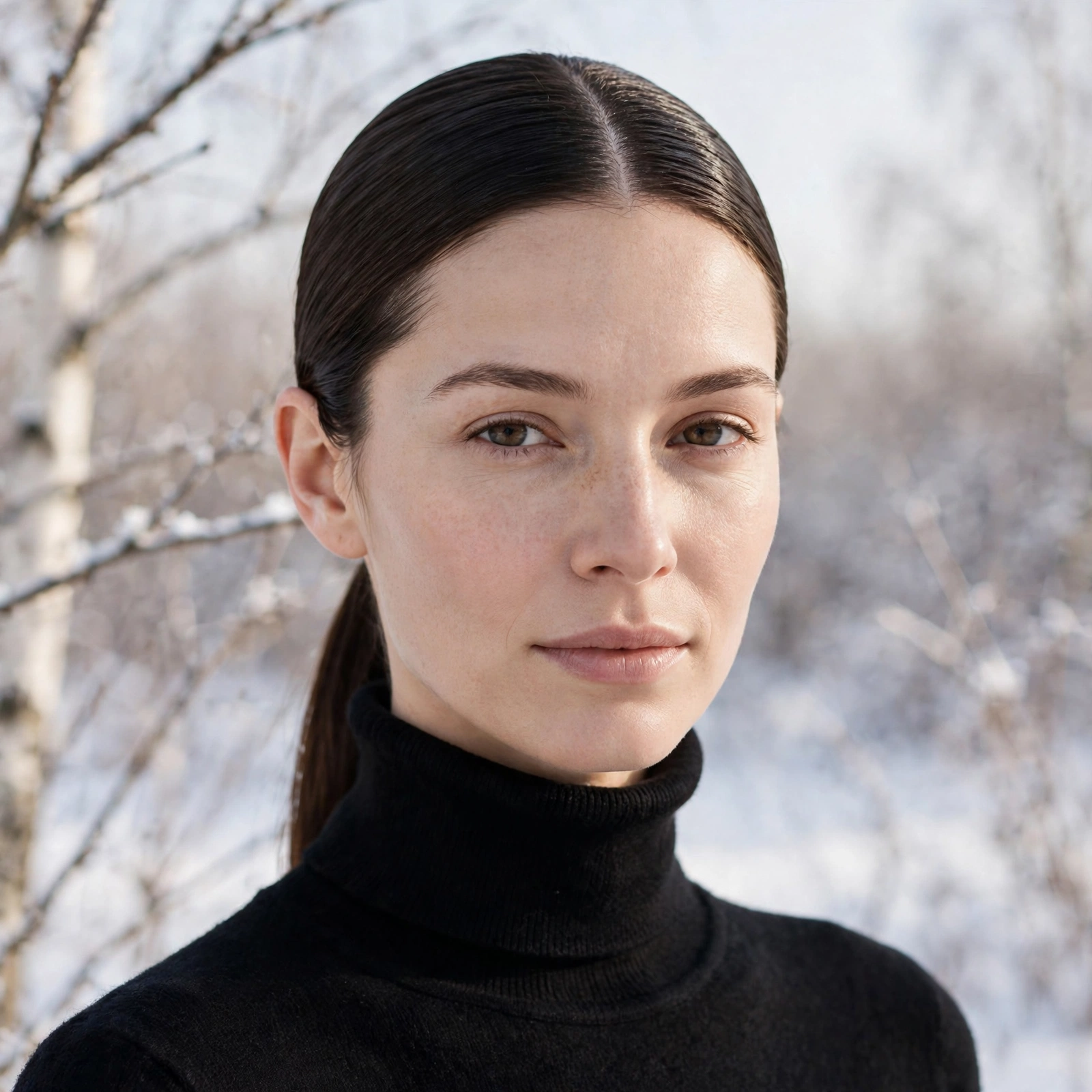
6. Sleek Winter Glass Ponytail
Clean center part, hair smoothed glass-smooth and secured low at the nape, with a wrapped strand hiding the elastic — minimalism at its most powerful. It’s a staple of cold-weather hairstyles for 2026 — flawless with wool coats, blazers, and turtlenecks. The vibe is quiet confidence — boardrooms, evening events, gallery openings, and any moment you want to look sharp without looking like you tried. Bonus: contained, smoothed hair is genuinely protected from wind and scarf friction.
How to get it: Create a precise center part on damp hair, smooth a lightweight serum through the lengths, and brush everything back into a low ponytail at the nape. Secure with an elastic, wrap a small strand of hair around the base and pin underneath, then flat-iron the tail in small sections for that glass finish.
Best for: Straight or straightened hair (the sleekness is the point); oval and oblong faces; medium to long lengths. Works on all hair densities.
Maintenance: Low. About five to eight minutes; no salon maintenance specific to the style.
Pro tip: Winter air makes flyaways worse on sleek styles, so the finish matters: spritz a clean toothbrush with hairspray and brush it along the part and hairline.
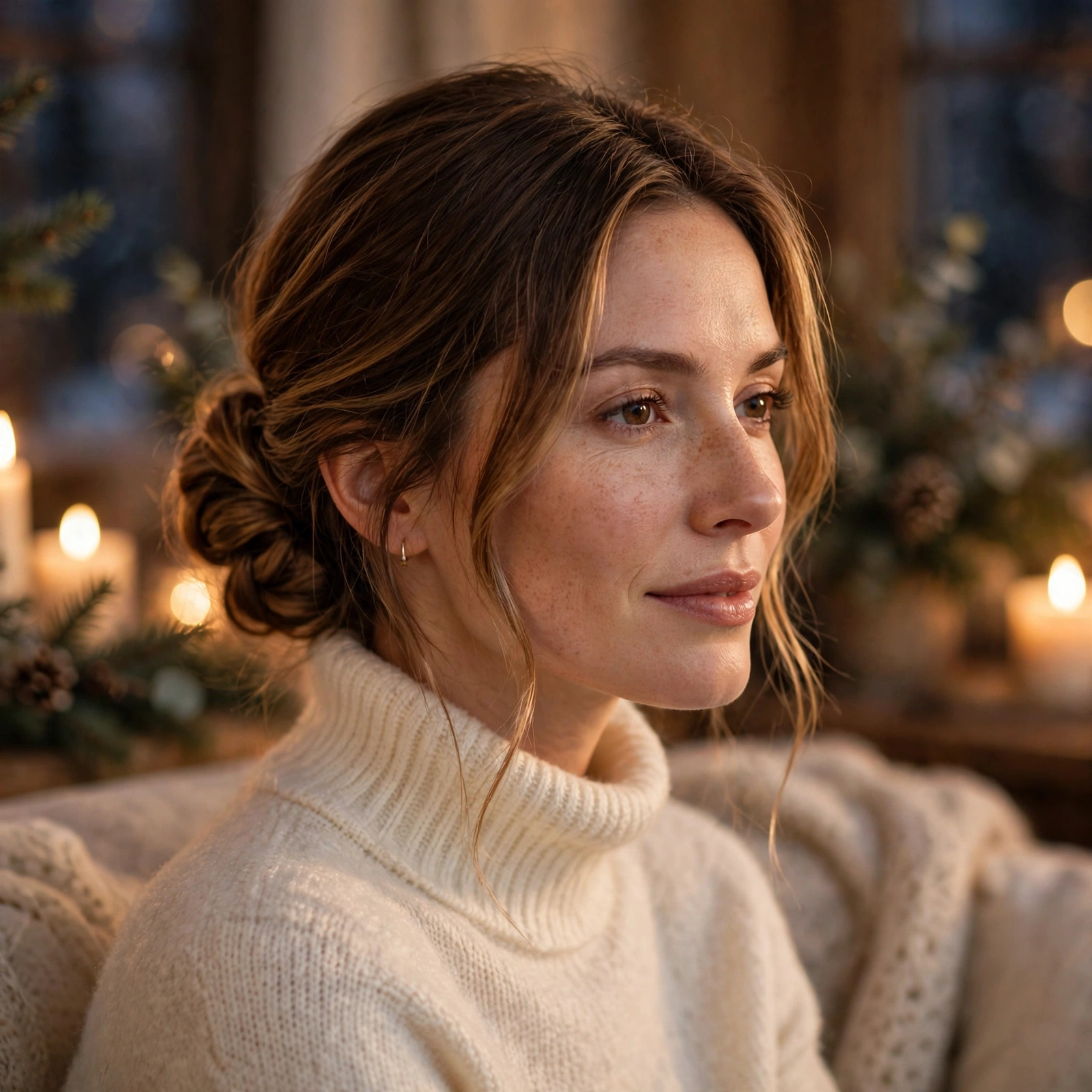
7. Turtleneck-Approved Twisted Chignon
A soft twisted bun sitting low at the nape, deliberately placed to clear every turtleneck collar — the quiet-luxury hero of cozy winter hair. It’s trending hard for 2026 because it solves a genuinely seasonal problem: high buns bunch against collars and scarves, but this one sits below all of it. The vibe is soft elegance — candlelit restaurants, winter weddings, holiday family photos, and any day you want to look pulled-together in under five minutes.
How to get it: No salon visit required. Gather hair into a low ponytail at the nape, twist it loosely, wrap into a bun, and secure with U-shaped pins, leaving a few face-framing pieces out.
Best for: Medium to long hair (shoulder length and beyond); all face shapes — adjust the face-framing pieces to flatter yours; straight, wavy, or curly textures.
Maintenance: Low. About three minutes, and it genuinely looks better on day-two hair. Zero salon maintenance.
Pro tip: Swap bobby pins for U-shaped hair pins — they grip more hair with less visible hardware and the style holds twice as long.
8. Hot Cocoa Defined Curls
Winter is secretly curl season — low humidity means definition holds for days instead of frizzing out by noon. Hot cocoa curls maximize that advantage: hydrated, defined, springy ringlets with a rich, dimensional brunette or warm tone that glows like its namesake. It’s trending for 2026 as more women stop fighting their natural texture and build routines around it instead. The vibe is warm and joyful — holiday gatherings, cozy weekends, and anyone ready to make peace with their curls.
How to get it: This is a routine, not a cut — though long layers help curls stack beautifully. On wash day, apply leave-in conditioner to soaking-wet hair, follow with a curl-defining cream, then a gel to create a “cast.” Scrunch with a microfiber towel or cotton T-shirt (never terry cloth), then diffuse on low heat or air-dry.
Best for: Naturally curly and coily textures (2C through 4C); all face shapes — layers get customized to yours.
Maintenance: Medium. Wash day takes 30–45 minutes, but results last three to five days — pineapple hair overnight in a satin bonnet and refresh with a water-and-leave-in mist.
Pro tip: Winter’s dry air is curls’ secret ally but also their enemy: definition holds, but moisture evaporates. Seal every wash day with a heavier cream or a few drops of oil than you’d use in summer.

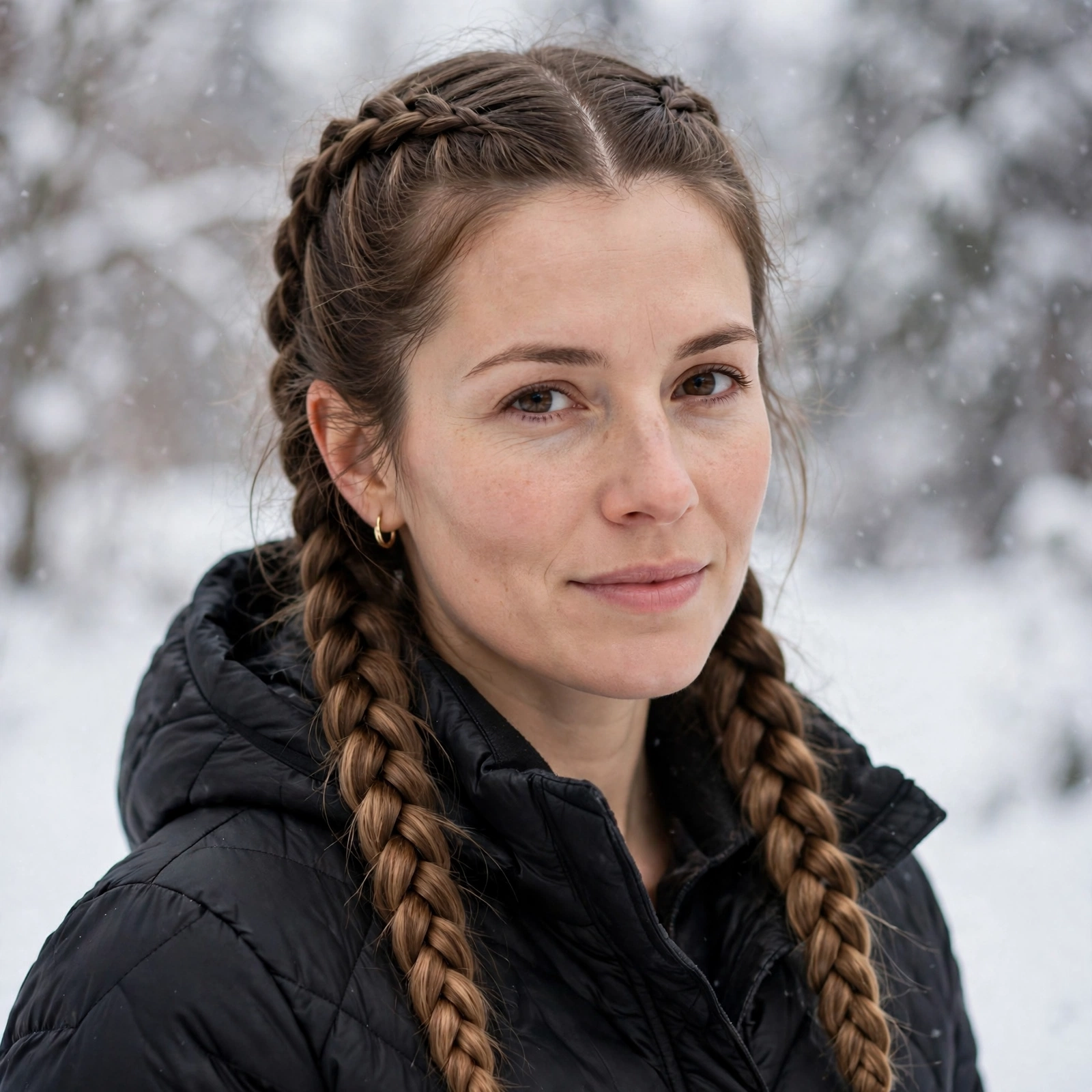
9. Double Dutch Snow-Day Braids
Two inverted Dutch braids running from the hairline to the nape, finished as twin braids or joined into one — the ultimate winter sport-and-storm hairstyle. It’s essential to any winter hairstyles for women list because it’s genuinely protective: every strand is contained, ends are tucked away from wind and scarf friction, and a beanie slides right over the top. The vibe is capable-cool — ski trips, snowy hikes, blizzard commutes, and gym days when your hair needs to stay put for hours.
How to get it: Part hair down the middle, then Dutch-braid (crossing sections under instead of over) each side from the hairline to the nape, keeping tension firm but comfortable.
Best for: Medium to long hair; medium to thick densities hold the inverted shape best; all face shapes — the center part and pulled-back front are universally flattering.
Maintenance: Low. Ten to fifteen minutes once you know the technique. Bonus: sleep in them and wake up to heatless crimped waves the next morning.
Pro tip: Braid on slightly damp hair with a dab of styling cream — it sets with more texture and less frizz as it dries, and the style holds a full day longer.
10. Candlelit French Twist
The classic French twist, softened for 2026 — slightly undone, with face-framing pieces left out and the finish more romantic than severe. It’s the special-occasion anchor of winter hair trends 2026 because nothing catches candlelight like a polished updo. The vibe is timeless glamour — winter weddings, New Year’s Eve, formal dinners, and any evening you want maximum elegance.
How to get it: Gather hair to one side at the nape, twist it upward against the head, tuck the ends into the twist’s pocket, and secure with large bobby pins or a French twist comb. Leave soft pieces around the face and gently loosen the twist’s surface for that modern, undone finish.
Best for: Medium to long hair (shoulder length and beyond); oval, heart, and oblong faces; straight to wavy textures roll most smoothly.
Maintenance: Medium. Ten to fifteen minutes with practice; it holds all evening. No salon maintenance tied to the style.
Pro tip: The modern twist lives or dies on the face-framing pieces: curl just those two sections with a small iron and let them fall naturally. That single detail is what separates “board meeting 1994” from “winter gala 2026.”
11. Static-Proof Sleek Bob
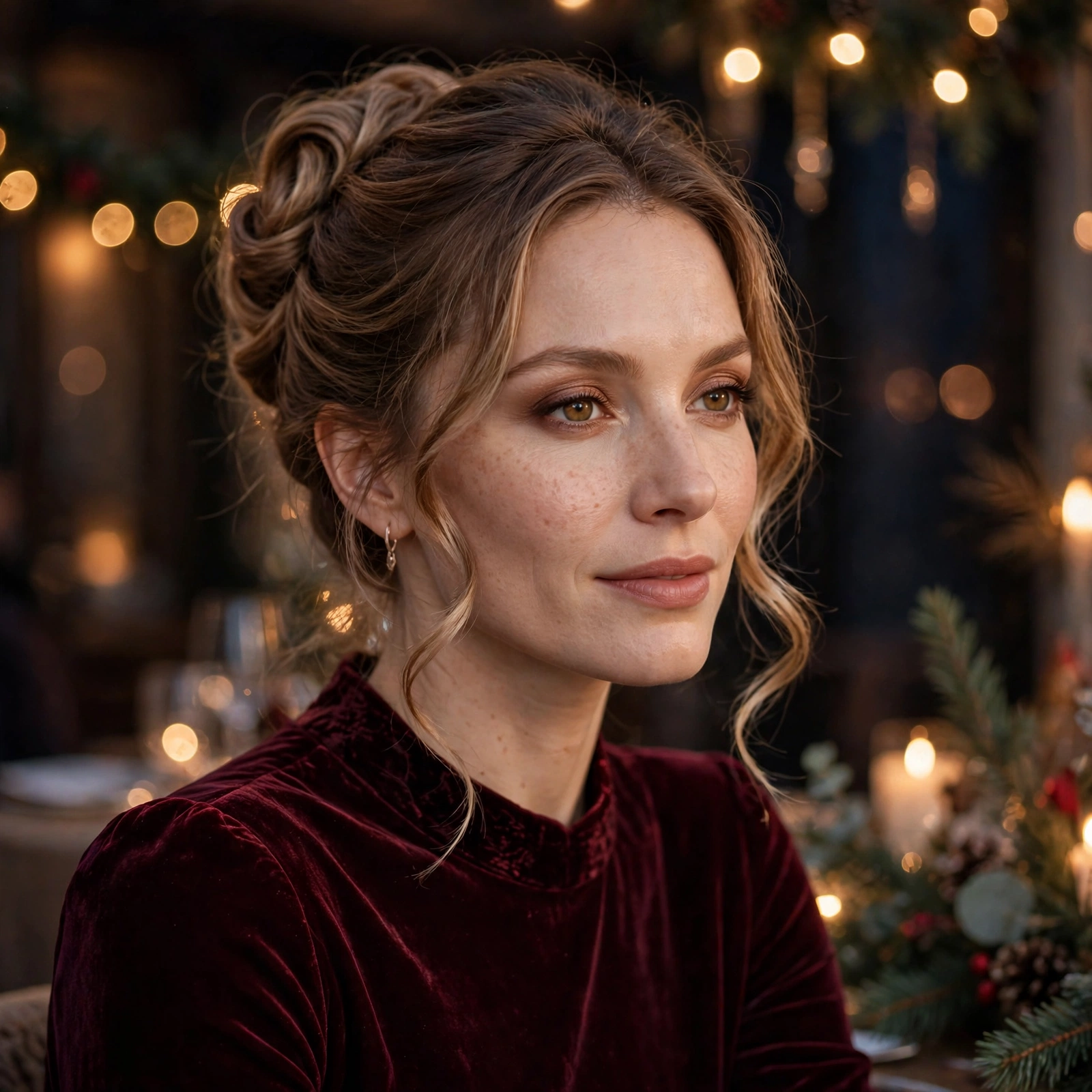
A chin-to-jaw-length bob with a blunt perimeter and glassy-smooth finish — the anti-static haircut, because shorter lengths mean less surface area for charge to build on, and a blunt cut means ends behave instead of flying. It’s trending for winter 2026 as more women trade high-maintenance long hair for precision cuts that stay neat under hoods, beanies, and scarves. The vibe is confident minimalism — creative offices, fashion-forward workplaces, and anyone done with twenty-minute mornings.
How to get it: Ask your stylist for a blunt bob hitting between the chin and jawline, with minimal layering — the clean perimeter is what keeps it sleek. At home, blow-dry smooth with a paddle brush, then pass a flat iron over the lengths in small sections.
Best for: Oval, heart, and square faces; straight to slightly wavy textures; fine to medium hair looks fuller in this cut than in longer lengths.
Maintenance: Low daily, higher salon frequency. Five minutes each morning — but book trims every 6–8 weeks, because a blunt bob loses its edge fast as it grows.
Pro tip: This is the one cut where an ionic blow dryer genuinely earns its price: ionic technology neutralizes the positive charge that causes static as you dry.
12. Alpine Shag with Curtain Fringe
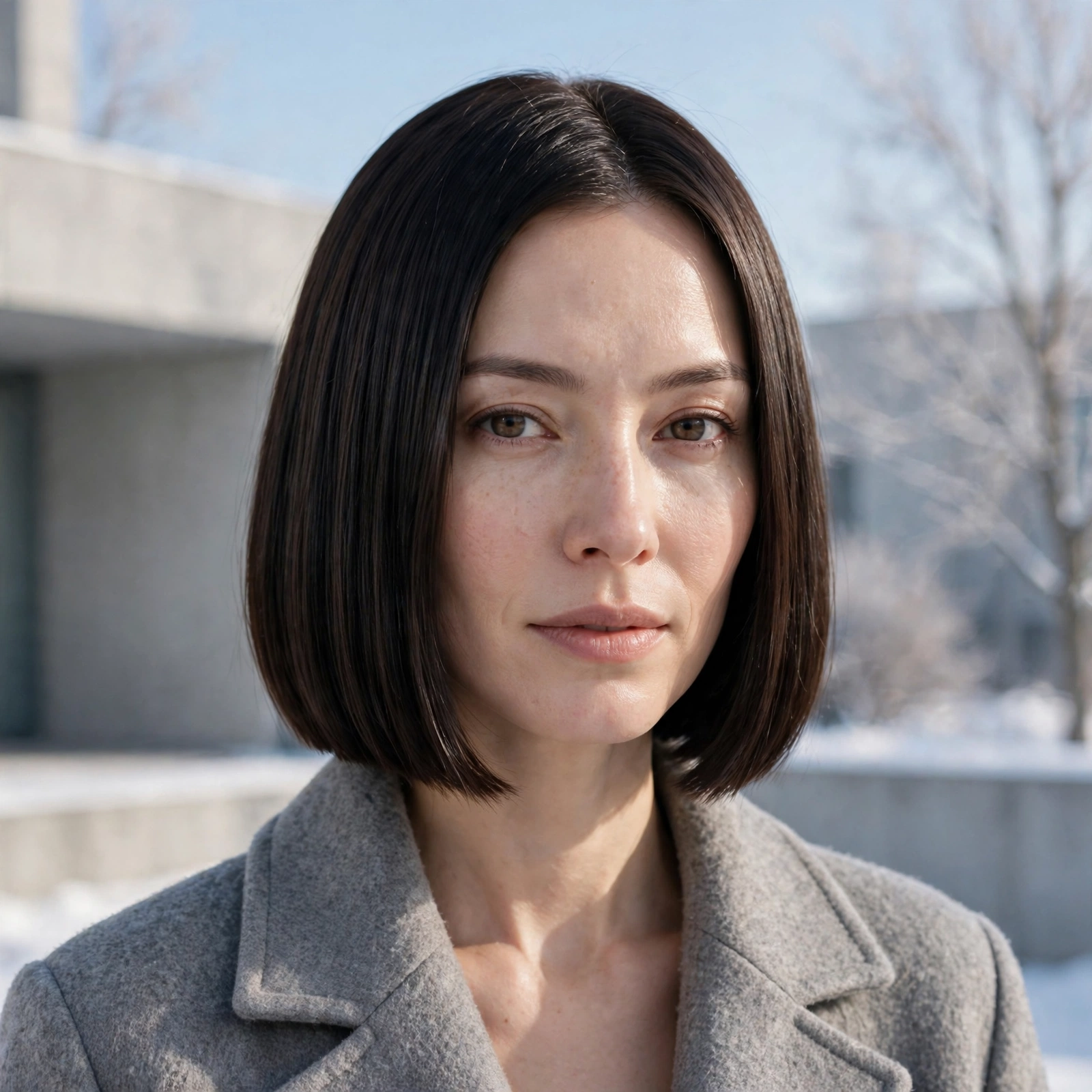
The modern shag — disconnected layers, softness through the crown, piece-y ends — paired with a curtain fringe that parts in the middle and sweeps to each side. It’s the cool-girl cornerstone of winter hair trends 2026 because it’s the ultimate wash-and-go: the cut creates the style, so winter mornings require almost nothing. The vibe is artsy and confident — creative workplaces, concerts, cabin weekends, and anyone whose personal style leans more “interesting” than “polished.”
How to get it: Ask your stylist for a shag with shorter layers through the crown, longer disconnected ends, and a curtain fringe starting around the cheekbones. At home, scrunch a curl cream or texture spray into damp hair and air-dry; that’s genuinely the whole routine.
Best for: Naturally wavy and thick hair (the cut was made for it); oval and heart-shaped faces; medium lengths.
Maintenance: Low. Wash-and-go on good days; a quick refresh with texture spray on others. Trims every 10–12 weeks — shags grow out beautifully.
Pro tip: Never brush a shag dry — finger-comb only, or you’ll turn deliberate piece-y layers into one big pouf.
13. Frosted Milkmaid Braids
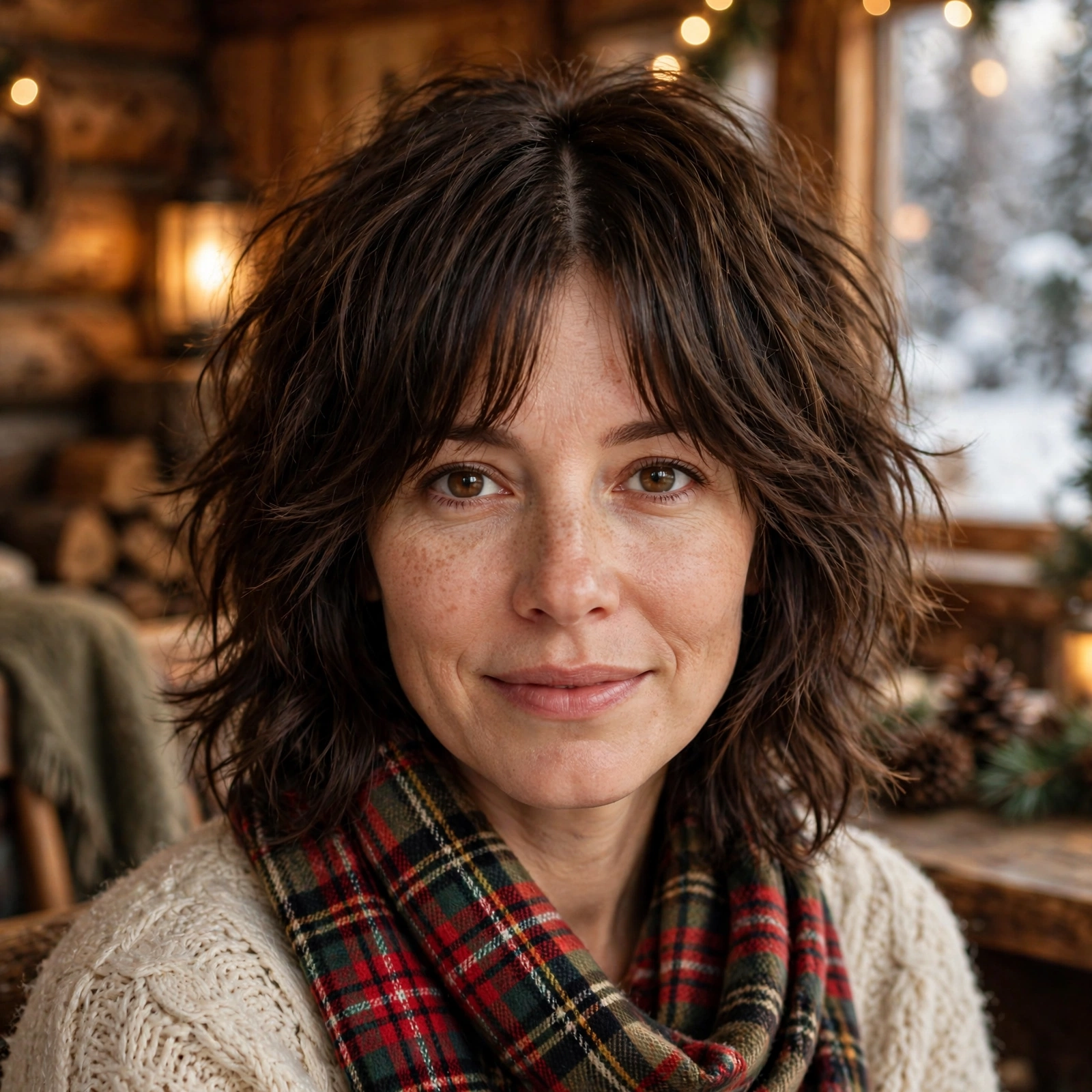
Two braids wrapped up and over the crown and pinned like a headband — the milkmaid style, given a winter refresh with soft, face-framing pieces left loose to frost the frame. It’s a standout of cozy winter hair for 2026 because it’s fully beanie-compatible (the braids sit flat where the hat goes) and fully protective (zero ends exposed to wind). The vibe is storybook-romantic — winter markets, holiday photos, snowy date days, and anyone who wants to look like a winter heroine.
How to get it: Part hair down the middle and make two regular three-strand braids, one behind each ear. Pull each braid up and over the crown to the opposite side, tuck the ends under, and pin securely with bobby pins.
Best for: Medium to long hair (the longer, the easier the wrap); all face shapes — the loose front pieces are customizable; straight to wavy textures.
Maintenance: Low to medium. Ten to fifteen minutes once you’ve practiced it twice. No salon upkeep tied to the style.
Pro tip: Pin in an X pattern — two bobby pins crossed over each other at each anchor point — and the braids will survive a full day including a beanie on and off.
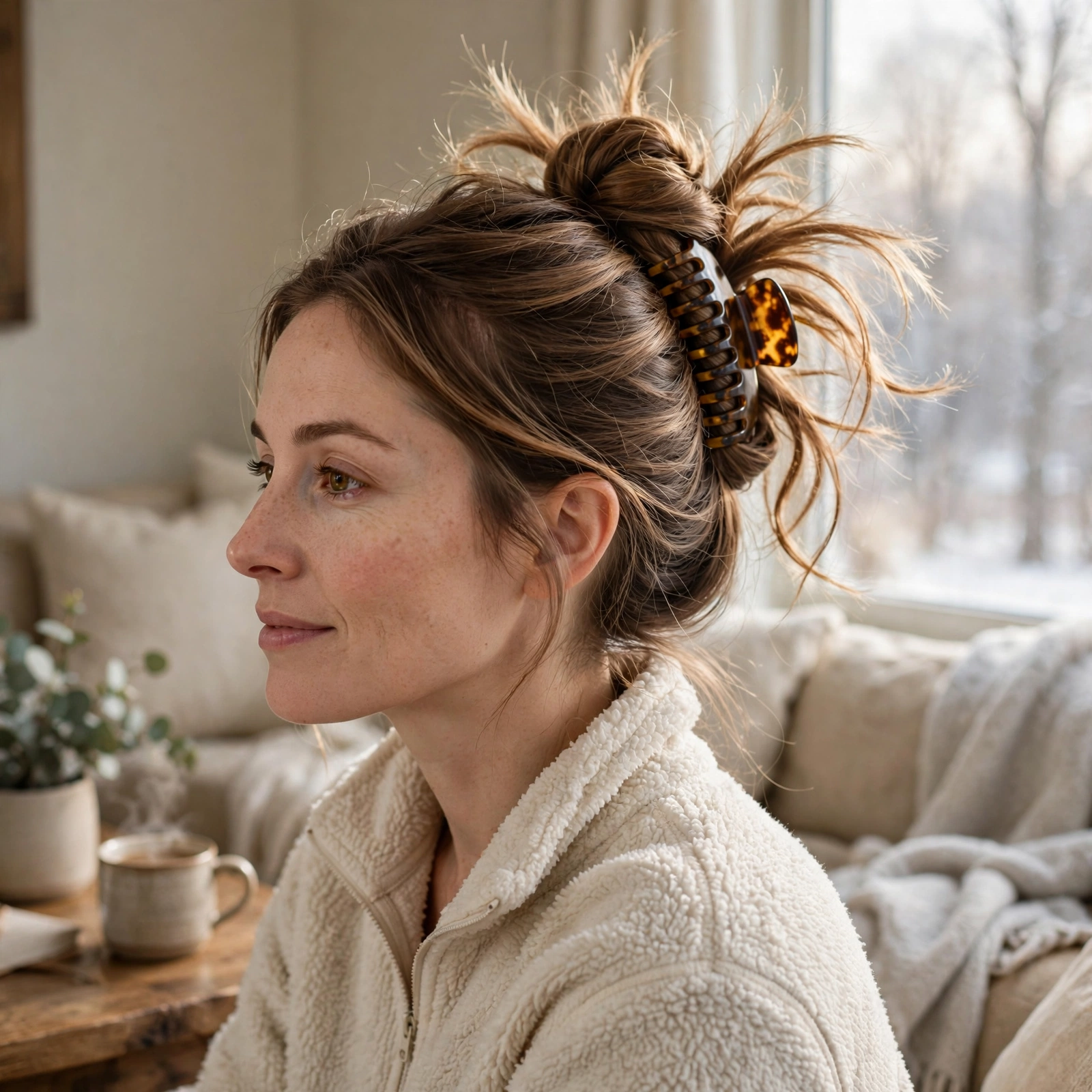
14. Cozy Claw-Clip Twist Updo
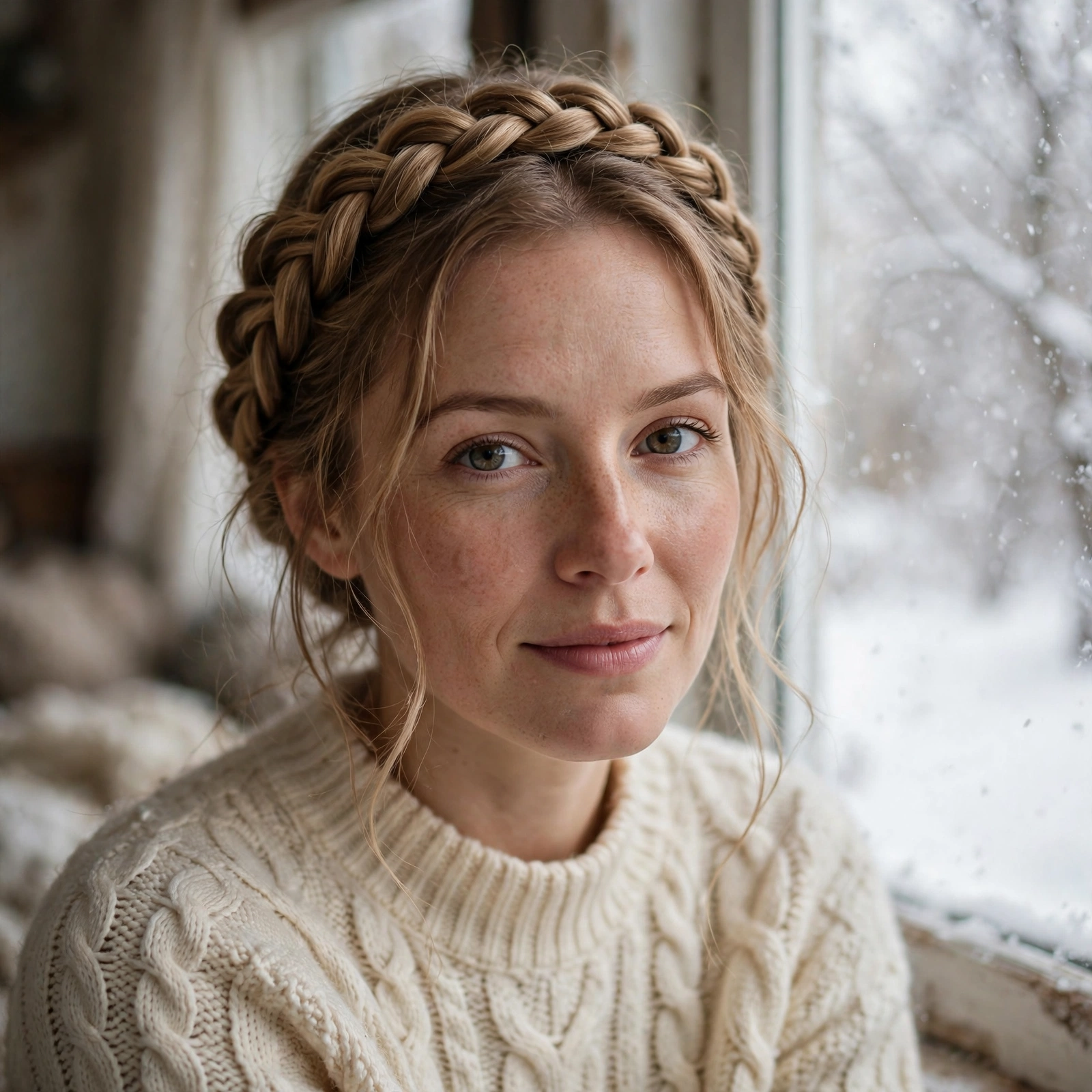
Gather, twist upward, clamp, let the ends fan out — the fastest updo in existence, in its coziest winter form. The claw-clip twist refuses to leave the trend cycle because it hits the exact intersection of practical and pretty: it gets long hair off your neck and coat collar, survives a full day, and looks deliberately chic rather than rushed. The vibe is off-duty model — work-from-home days, school runs, grocery trips you still want to look good on, and every “I have somewhere to be in ten minutes” winter morning.
How to get it: Gather all your hair as if making a low ponytail, twist it upward against the back of your head, fold it over, and clamp a large claw clip over the twist, letting the ends fan out over the top.
Best for: Medium to long hair (the more hair, the better the twist holds); thick hair in particular; all face shapes — pull out face-framing pieces to soften.
Maintenance: Low. Literally one minute. No heat, no products required, no salon upkeep.
Pro tip: Match the clip to your hair: flat-profile clips grip fine hair without slipping, while thick hair needs a large clip with strong teeth — or cheat with two medium clips stacked.
15. Hot-Toddy Copper Layers
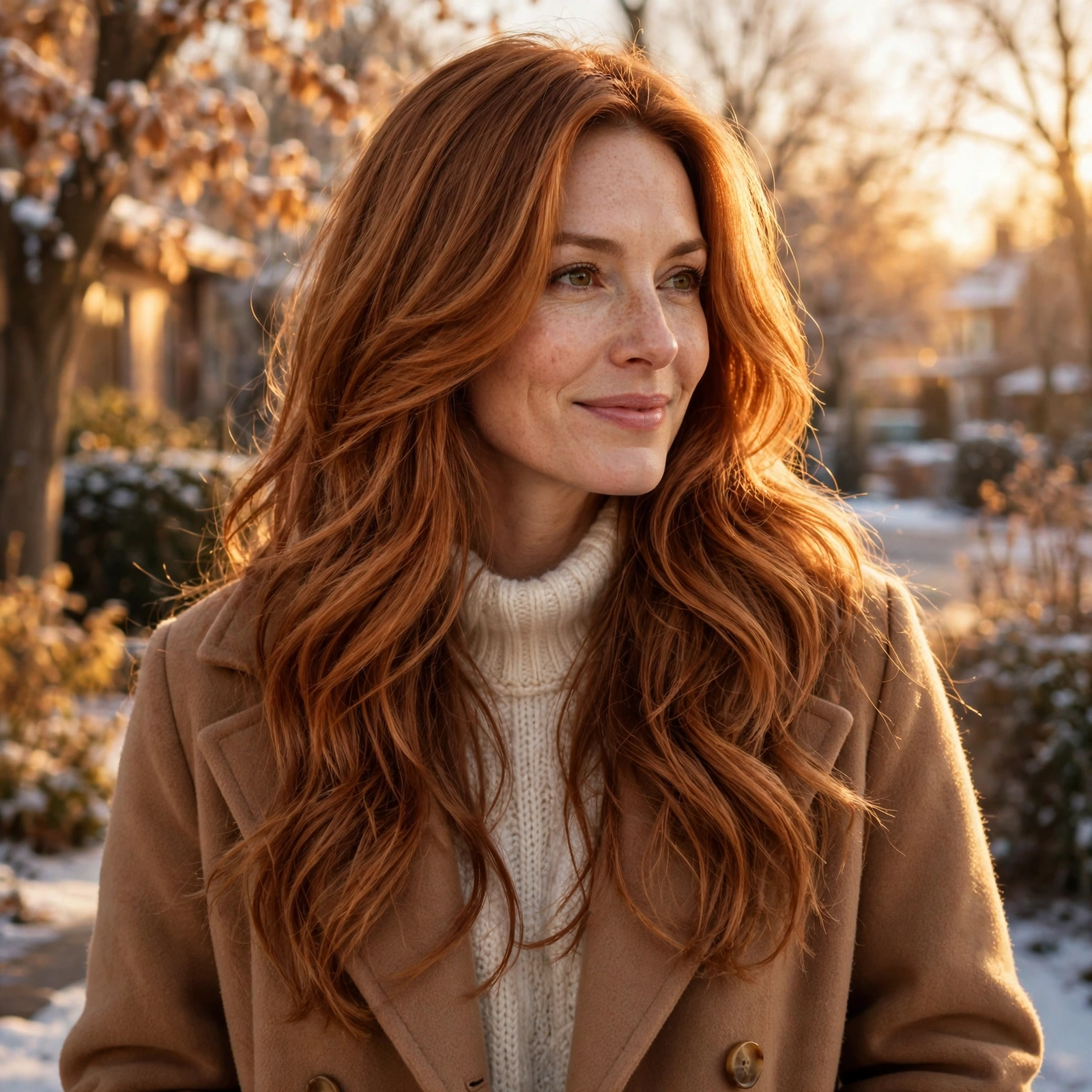
Long, flowing layers infused with a warm copper or cinnamon gloss — the color-forward finale of this list, because winter light makes warm tones glow like nothing else. It’s trending for 2026 as the low-commitment color refresh: a demi-permanent gloss adds dimension and shine, fades gracefully over 6–8 weeks, and causes zero damage. The vibe is radiant warmth — holiday parties, winter photos, date nights, and anyone whose hair needs a seasonal wake-up call.
How to get it: Ask your colorist for a demi-permanent gloss in a warm copper, cinnamon, or chestnut tone over your natural base — or ask for face-framing highlights in a warm tone if you want more dimension. Pair it with long layers starting below the chin to keep the movement.
Best for: Long hair (bra-strap and beyond); warm and neutral skin tones glow most in copper, but your colorist can adjust the tone; medium to thick textures show the dimension best.
Maintenance: Medium. Fifteen to twenty minutes for the curl routine; gloss refresh every 6–8 weeks. Use a color-safe, sulfate-free shampoo to protect the tone.
Pro tip: Wash with lukewarm — never hot — water to keep the gloss from fading prematurely; heat opens the cuticle and lets tone escape.
Winter Hairstyles for Women: FAQs
Why does my hair get so staticky in winter, and how do I actually stop it?
Static is caused by dry air plus friction: winter air holds almost no moisture, and every rub against wool, acrylic, or plastic transfers electrons until your strands carry matching charges that repel each other. The real fix is a three-part system, not a single product. First, hydrate — richer conditioner, a weekly mask, and oil on the ends, because moisturized hair builds up far less charge. Second, reduce friction — satin-lined beanies, natural-bristle or wooden brushes instead of plastic, and silk pillowcases. Third, neutralize on the go — anti-static spray or a single drop of hair oil smoothed over the surface kills flyaways instantly.
What hairstyles actually survive beanie and hat season?
Low, contained styles win hat season every time: the beanie-proof braided ponytail (#2), double Dutch braids (#9), frosted milkmaid braids (#13), and low chignons (#7) are your best friends. The physics are simple — anything piled high on the crown gets crushed, while anything at the nape slides right under. Three more tricks: place your part where the hat’s edge will sit before putting it on, choose beanies with silk or satin lining to prevent frizz and breakage, and when you take the hat off, flip your head upside down and shake once for instant volume restoration.
My ends are dry and my scalp is flaky in winter — what should I do?
Treat them as two separate problems, because they are. Dry ends need sealing: a trim to remove splits, then oil or serum on the ends after every wash, plus protective styles that tuck ends away from scarf friction. For the scalp, switch to lukewarm water and try a gentle exfoliating scalp scrub once a week. If flakes persist, are yellowish, or come with redness, read up on how to manage a dry, itchy scalp and see a dermatologist — some scalp conditions need more than a routine tweak.
How often should I wash my hair in winter?
Less than you think: two to three times per week is the sweet spot for most hair types in winter. Cold air and indoor heating already strip moisture, and daily washing compounds the dryness while making static worse. On non-wash days, use dry shampoo at the roots for oil and a light oil on the ends for moisture — they work as a team. Stretch washes further with second-day styles from this list: braids, top knots, and claw-clip updos all look better on unwashed hair anyway. If you’re building a lower-wash routine, our wash-and-go hairstyles guide has second-day styling ideas that translate perfectly to winter.
Should I change my hair color for winter, or stick with what I have?
Winter is the ideal season for a color refresh because low, warm light makes rich tones glow — but “refresh” doesn’t have to mean dramatic. The lowest-commitment move with the highest payoff is a demi-permanent gloss in a warm tone (copper, cinnamon, honey, chestnut): it adds shine and dimension, fades gracefully over 6–8 weeks, and causes zero damage — see style #15 for the full playbook. If you’re blonde, consider adding lowlights rather than going darker all over; if you’re brunette, face-framing highlights in a warm tone brighten without a full appointment.
The Bottom Line
The best winter hairstyles for women aren’t the most complicated ones — they’re the ones that stay hydrated in dry air, survive your beanie, and still make you feel great catching your reflection in a frosted shop window. Pick one cut and two or three styling ideas from this list, give them a genuine two-week trial — the same trial our editors ran — and let this be the winter your hair finally feels easy. If you love the throwback side of this season’s trends, our Y2K hairstyles guide has even more revival inspiration. Stay warm, and happy hair days ahead.
