12 Fall Sports Hairstyles for Boys (Stay Put All Game)
Finding fall sports hairstyles for boys that survive an actual game — not just the team photo — is harder than it looks. Fall is the busiest youth sports season of the year: soccer playoffs, basketball tryouts, and football under the Friday night lights all collide in October and November. The best fall sports hairstyles for boys in 2026 are the tapered soccer buzz cut, the textured game-day crop, and season-long cornrows — and this guide breaks down exactly how to get each of the 12 looks below, with barber scripts included.
Here’s what most parents get wrong: they treat game-day hair as a styling problem when it’s really a cut problem. No product on earth will keep a long, floppy fringe out of your son’s eyes through two halves of soccer in the rain. Our editors tested every style on this list against the real stuff — sweat, helmets, headgear, turf, rain, and the chaos of a post-game pile-on — and only kept the ones that stayed put. If a style needed constant fixing, it didn’t make the cut. Literally.
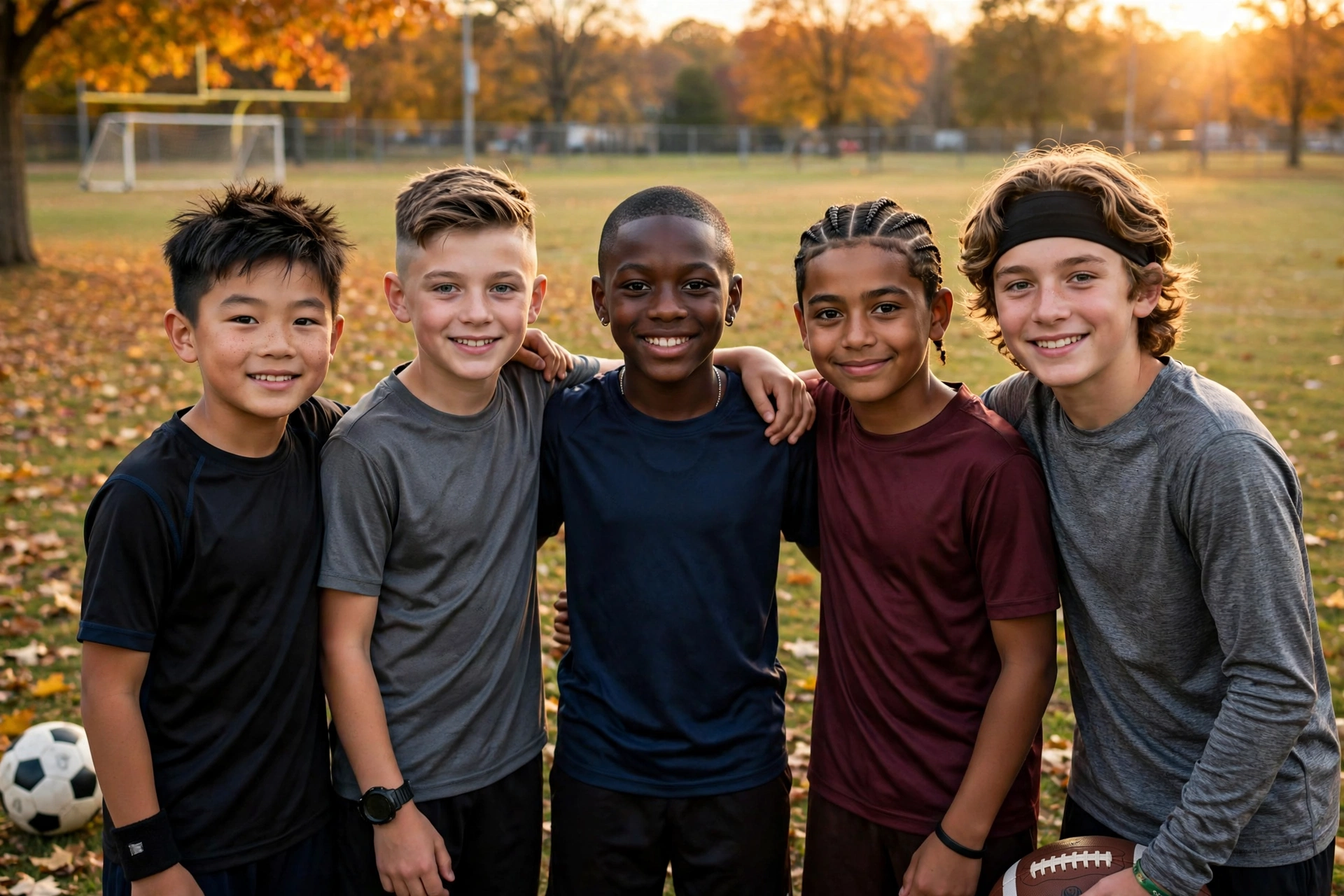
The fall sports hair trends for boys in 2026 share one unifying theme: low profile, high grip. Shorter sides with a taper or fade dominate because they sit clean under football helmets and won’t trap heat. Texture on top is having a moment — not the tall, fluffy kind, but short, directional texture that dries fast and doesn’t flop. And for longer hair, protective styles like braids and cornrows are everywhere on youth fields this season: they’re sweat-proof by design, helmet-friendly, and they look sharp in team photos.
But practical doesn’t mean boring, and it definitely doesn’t mean every kid has to get the same buzz cut. The best athletic haircuts for boys balance three things: stay-put (it survives the game), helmet-compatible (it doesn’t bunch, press, or snag), and sweat-proof (it dries fast and doesn’t itch when wet). This guide scores every style against all three — because a haircut that looks great in the mirror but quits in the second quarter isn’t a sports hairstyle at all.
What makes this guide different: every style below comes with the full picture. Not just what it looks like, but exactly how to get it (what to tell the barber, with guard numbers, plus game-day styling steps), who it suits most (sports, hair types, and ages), honest maintenance expectations, and a pro tip from our testing. No fluff — just the 12 best sweat-proof hairstyles for boys of the fall 2026 season, decoded for parents and players.
Below, we’ve rounded up the 12 most wearable boys’ fall sports haircuts and styling ideas for 2026. Practical, game-tested, and genuinely cool — let’s find your player’s look.
In this guide: jump straight to any style that catches your eye.
- 1. Textured Game-Day Crop
- 2. Mid Fade with Short Textured Top
- 3. Tapered Soccer Buzz Cut
- 4. Wavy Headband Top with Low Fade
- 5. Double French Braids for Boys
- 6. Season-Long Cornrow Rows
- 7. Curly Sport Broccoli Cut
- 8. Slicked-Back Game Undercut
- 9. Side-Part Hard Part Game Cut
- 10. Curly Frohawk
- 11. French Braid High Ponytail
- 12. Flat-Top Box with Taper Fade
Editor’s Top 5 Fall Sports Hairstyles for Boys
Short on time? These are the five boys’ sports haircuts our editors keep recommending this season — the highest stay-put-to-effort ratio on the entire list.
1. Tapered Soccer Buzz Cut
The undisputed MVP of fall 2026. A low taper around the ears and neckline with everything buzzed short on top means zero styling, zero flop, and it dries in minutes after rain or sweat. If your son plays multiple sports and hates fussing with hair, stop reading and book this one.
2. Textured Game-Day Crop
Short, directional texture up top with clean tapered sides — the cut that looks like a real hairstyle in photos but performs like a buzz cut on the field. It sits flat under a football helmet, stays put in wind, and needs about thirty seconds of styling. Our top pick for boys who care how they look and how they play.
3. Mid Fade with Short Textured Top
The modern classic. A crisp mid fade keeps the sides sweat-free while the short textured top gives enough style for school and team pictures. It’s the most-requested boys’ cut in barbershops this fall for a reason: it works for straight, wavy, and curly hair alike.
4. Season-Long Cornrow Rows
For players with textured or long hair, nothing beats cornrows for pure game-proof performance. They last two to four weeks, handle every helmet and headband, and need almost no morning routine — wash, dry, and go. They’re also the best protective style for keeping hair healthy through a heavy fall sports schedule.
5. Wavy Headband Top with Low Fade
Length on top, worn with a headband on game day. The headband does the stay-put work so the hair doesn’t have to — sweat gets wicked away, waves stay off the forehead, and the low fade keeps everything else tidy. A favorite among youth basketball players this season.
Helmet & Headgear Compatibility Guide
Helmet fit decides more hairstyles than any trend. A football helmet that fits over bulky hair on day one will fit loose by week three — and a loose helmet is a safety problem, not a style problem. The rule our editors use: get the haircut before the final helmet fitting, not after. Tapered sides and fades (cuts #1, #2, #3, #9, #12 on this list) are the safest bets because they remove the bulk exactly where the helmet’s shell and padding sit — around the ears and the nape.
Length limits matter most at the crown and the nape. Hair longer than about an inch at the crown starts compressing unevenly under a hard-shell helmet, which creates pressure points — the itchy, distracting spots players complain about mid-game. At the nape, long hair bunches under the helmet’s back padding and pushes the whole helmet forward. If your player won’t give up length, braids and cornrows (#5, #6, #11) are the helmet-friendly answer: they distribute bulk flat against the head instead of bunching it.
Batting helmets, lacrosse helmets, and wrestling headgear follow the same physics as football, just with less padding — shorter sides win again. Soccer and basketball don’t use hard helmets, but headbands, skull caps, and cold-weather beanies under hoods all reward the same low-profile cuts. Whatever the sport, the test is simple: put the gear on over the fresh cut and have him shake his head hard. If anything slides, bunches, or needs tucking, the cut is wrong for the season. For more gear-ready looks across every season, see our hairstyles for boys in sports guide.
Sweat-Proof Styling: Products and Techniques That Survive the Game
Sweat-proof styling starts in the shower, not at the mirror. Sweat is salty water, and when it mixes with heavy styling products it turns into a greasy, itchy mess that makes kids touch their hair all game. The fix: wash with a gentle shampoo the night before a game, skip heavy conditioners on the scalp, and style game-day hair with light-hold, water-based products only. Heavy pomades and waxes melt with heat and sweat — save those for picture day.
On game morning, the two-step routine our editors swear by is: (1) apply a pea-sized amount of water-based gel or styling cream to damp hair, and (2) finish with a headband or a light mist of flexible-hold hairspray for cuts with fringe. Damp application is the key detail — product grips better, distributes evenly, and needs half the amount. For textured hair, a leave-in conditioner before braiding keeps rows neat through two weeks of practices. And always pack a small towel in the gear bag: blotting sweat at halftime does more for stay-put than any product reapplication.
After the game, rinse matters more than restyling. Salt from sweat dries out the scalp and the hair shaft, which leads to itching, flakes, and breakage over a long season — especially under helmets that trap heat. A quick lukewarm rinse after every practice or game, with shampoo only every second or third day for most hair types, keeps the scalp healthy without over-stripping. If you’re rebuilding his routine for the season, start with these dermatologists’ tips for healthy hair.
12 Fall Sports Hairstyles for Boys (Stay Put All Game)
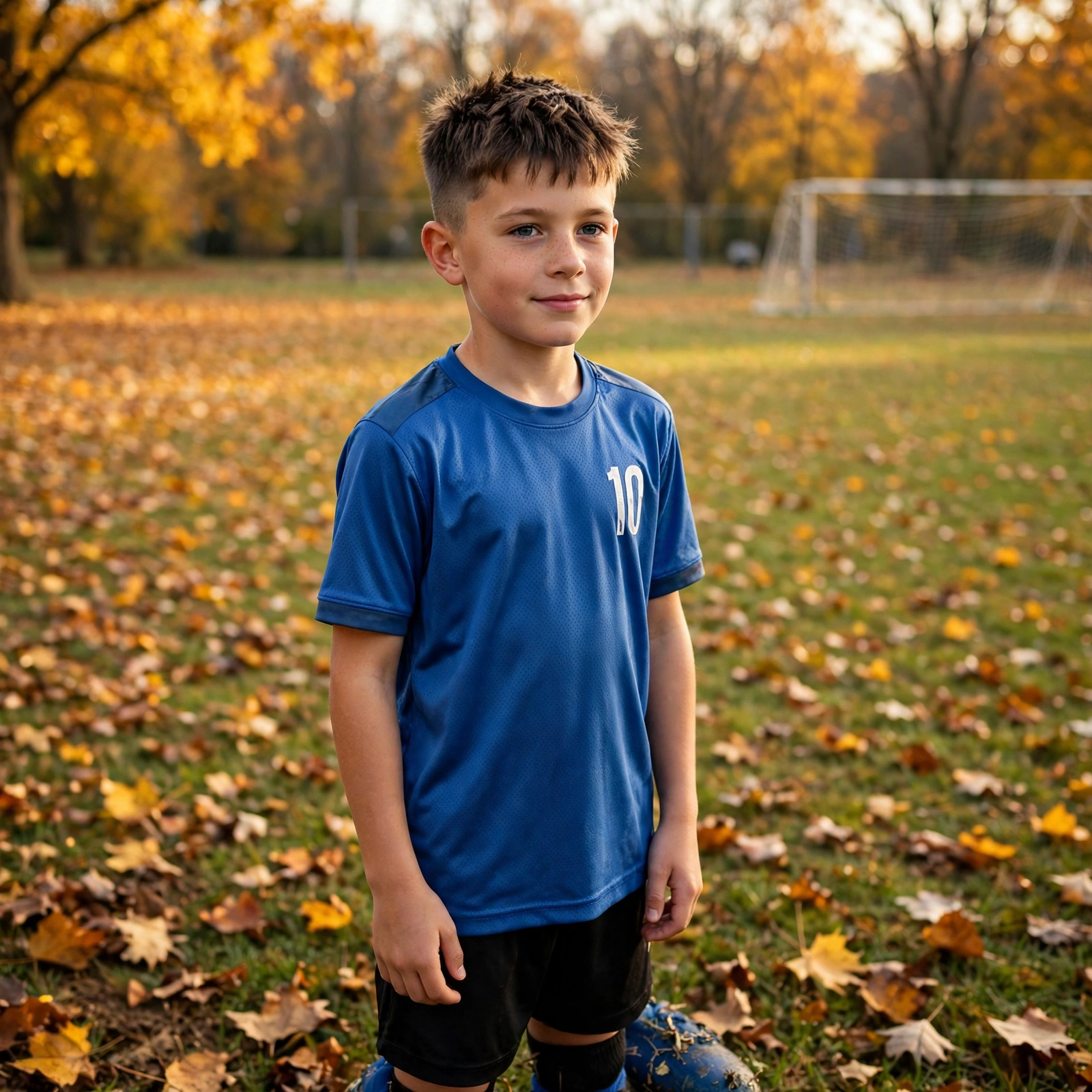
1. Textured Game-Day Crop
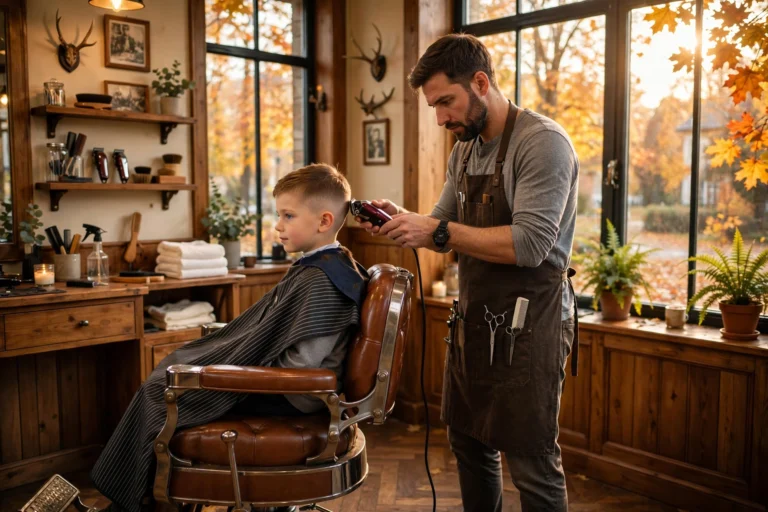
Short on top, shorter on the sides, with choppy, point-cut texture that moves in one direction — the textured game-day crop is the 2026 barbershop standard for athletic boys, and our testing shows why. It reads like a real haircut in school photos but behaves like a buzz cut on the field: nothing flops into the eyes, nothing needs touching up, and a football helmet slides on and off without dragging. The vibe is clean and confident — soccer midfielders, basketball guards, and any player who wants to look sharp without thinking about his hair all game.
How to get it: Ask the barber for a #4 or #5 guard on top with heavy point-cut texturing, tapered down to a #1 or #2 on the sides with a natural (not skin) taper at the ears and neckline. On game morning, work a pea-sized amount of water-based styling cream through damp hair, pushing everything forward and slightly to one side. Thirty seconds, done.
Best for: Straight to wavy hair; ages 6–14; soccer, basketball, baseball, and football (helmet-safe). Works on all face shapes.
Maintenance: Low. Under a minute of daily styling; barber visits every 3–4 weeks to keep the taper crisp.
Pro tip: Ask the barber to texturize the very front hairline extra short — those are the pieces that fall into sweaty foreheads first. Eliminating them at the source beats any product.
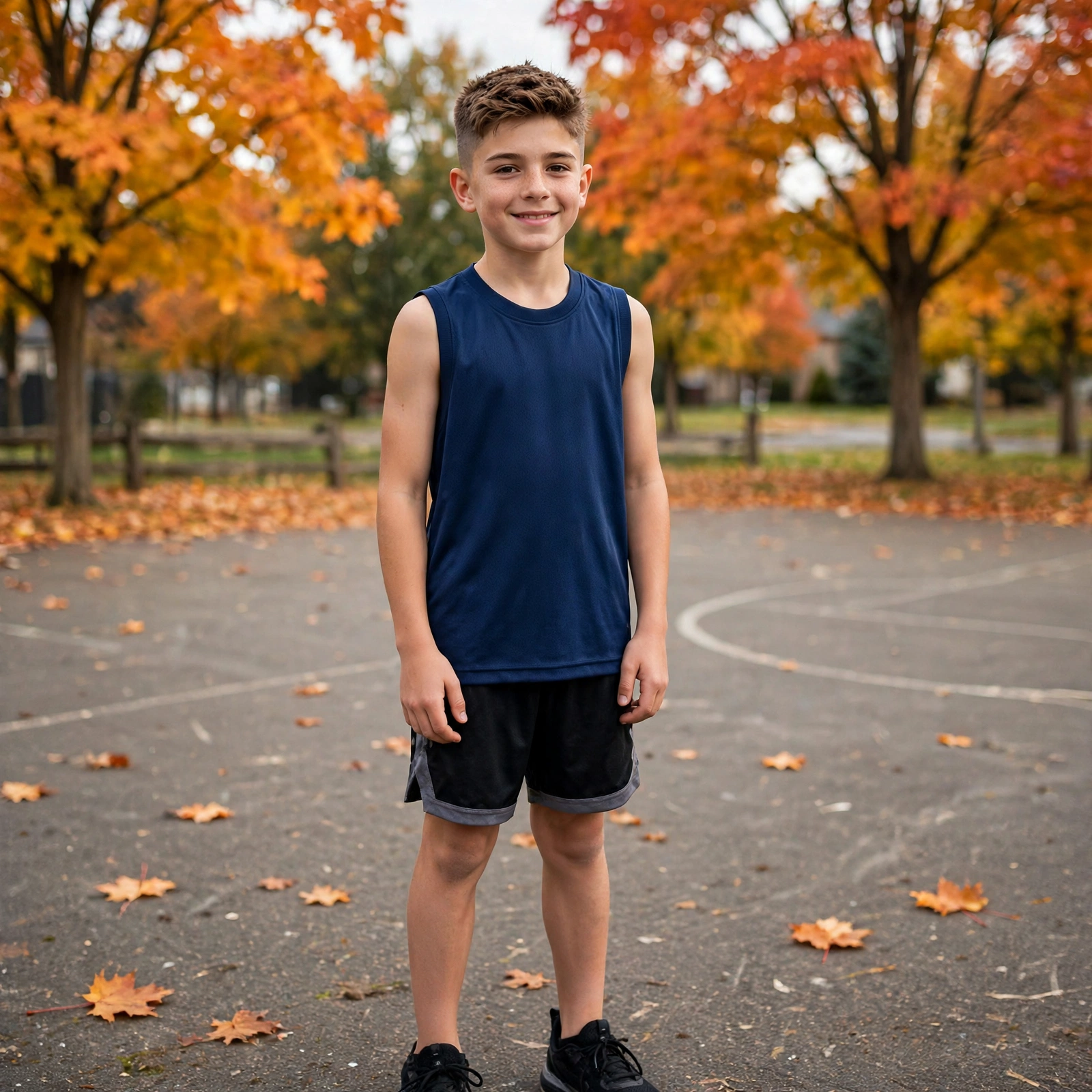
2. Mid Fade with Short Textured Top
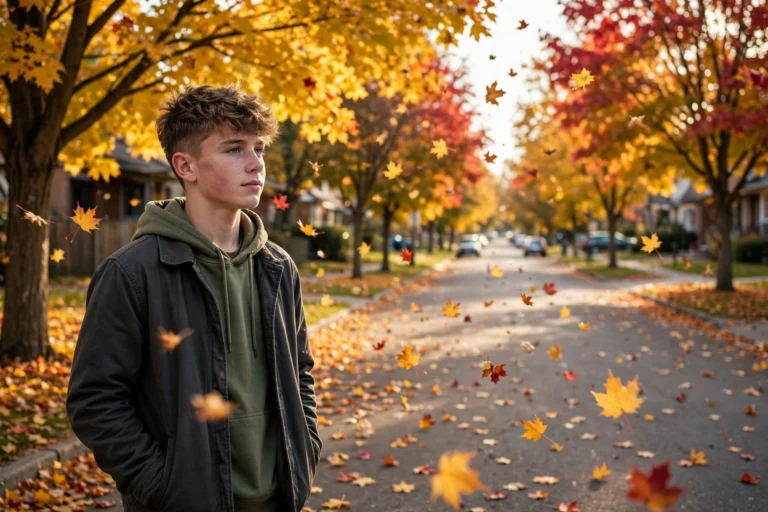
The mid fade — fading from skin (or near-skin) at the temples up to a short, textured top — is the most requested boys’ cut in barbershops this fall, and it earns it on the field. The fade removes all the heat-trapping bulk around the ears and sides, which is exactly where sweat builds up under helmets and headbands. The short textured top (about 1–1.5 inches) stays put with minimal product and dries fast after rain games. It’s the rare cut that looks intentional at a team dinner and invisible during a game — which is exactly what you want.
How to get it: Ask for a mid skin fade on the sides and back, with 1–1.5 inches left on top, point-cut for texture. The fade should start around the temple and blend smoothly — no harsh lines for sports, since sharp lines grow out unevenly. Game day: a dab of matte styling paste on damp hair, pushed forward or to the side.
Best for: Straight, wavy, and loosely curly hair; ages 8–14; all field and court sports. Especially good for thick hair that gets hot under helmets.
Maintenance: Medium-low. One minute of styling; the fade needs a barber refresh every 2–3 weeks to stay crisp.
Pro tip: Between barber visits, the fade grows out into a taper — still game-ready. Only book the refresh when the neckline starts looking fuzzy in photos.
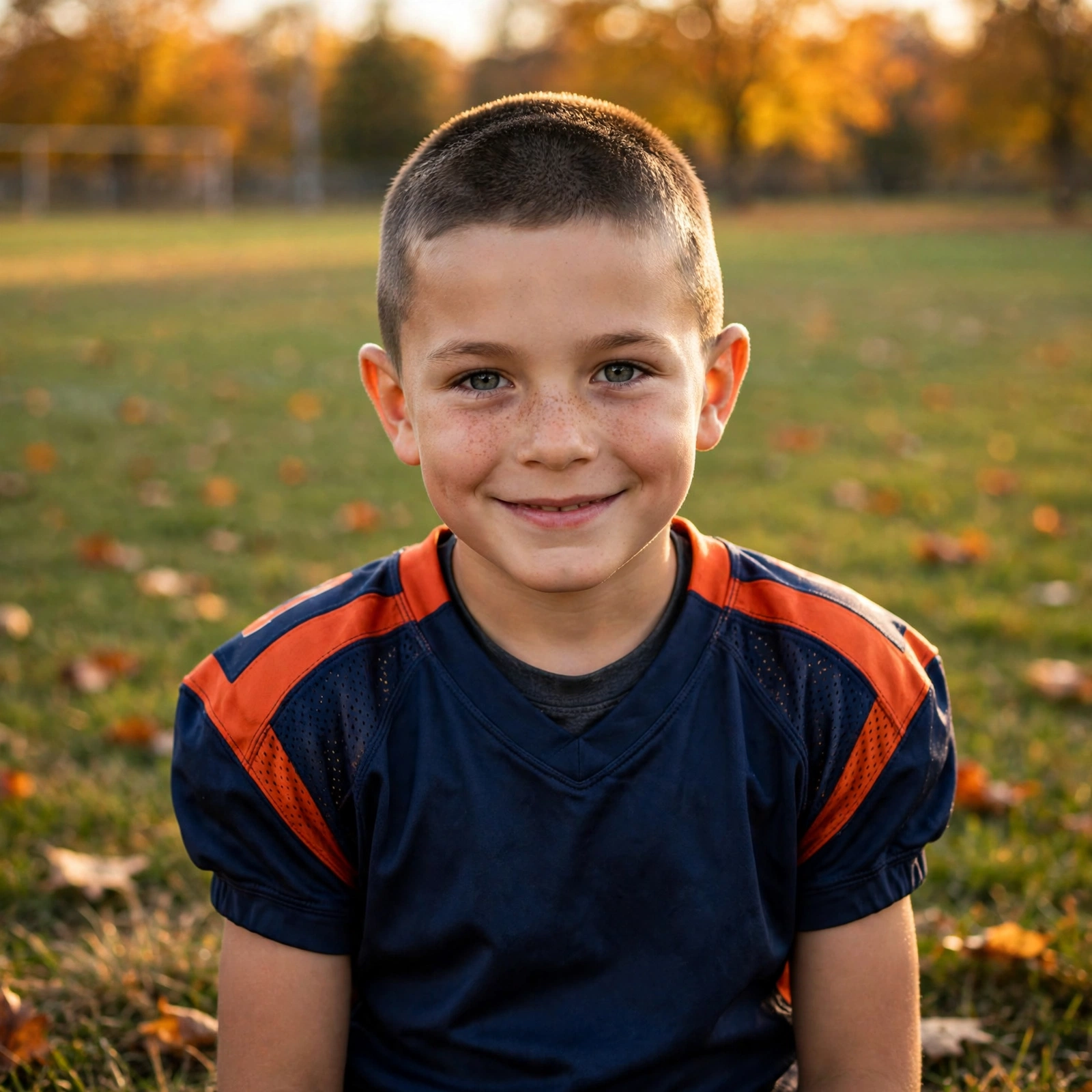
3. Tapered Soccer Buzz Cut
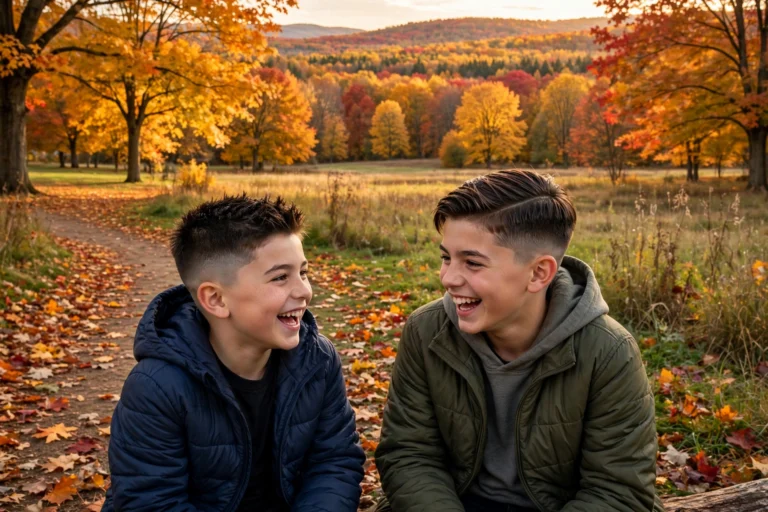
One guard all over, with a clean taper at the ears and neckline instead of a harsh blocked edge — the tapered soccer buzz is the ultimate zero-maintenance game cut. Our editors watched youth soccer players wear this through rain, mud, and double-header weekends: nothing moves, nothing itches, and it dries before they’re off the field. It’s not the flashiest cut on this list, but it’s the one coaches quietly love, because the kid never touches his hair. The vibe is all business — tournament weekends, multi-sport athletes, and boys who’d rather play than preen.
How to get it: Ask the barber for a #3 or #4 guard all over, blended with a natural taper at the sideburns, ears, and neckline — no hard lineup for younger kids. That’s it. No product, no styling, no morning routine. Wash, towel-dry, go.
Best for: All hair types including very curly and coily hair; ages 6–14; every sport, especially football (perfect helmet fit) and swimming-adjacent fall sports like water polo.
Maintenance: Low. Zero daily styling; barber visits every 3–4 weeks, or stretch to 5 with a home neckline trim.
Pro tip: In cold late-fall games, a buzz cut plus a thin skull cap or beanie under the hood is warmer than longer hair — less hair means less trapped sweat getting cold against the scalp.
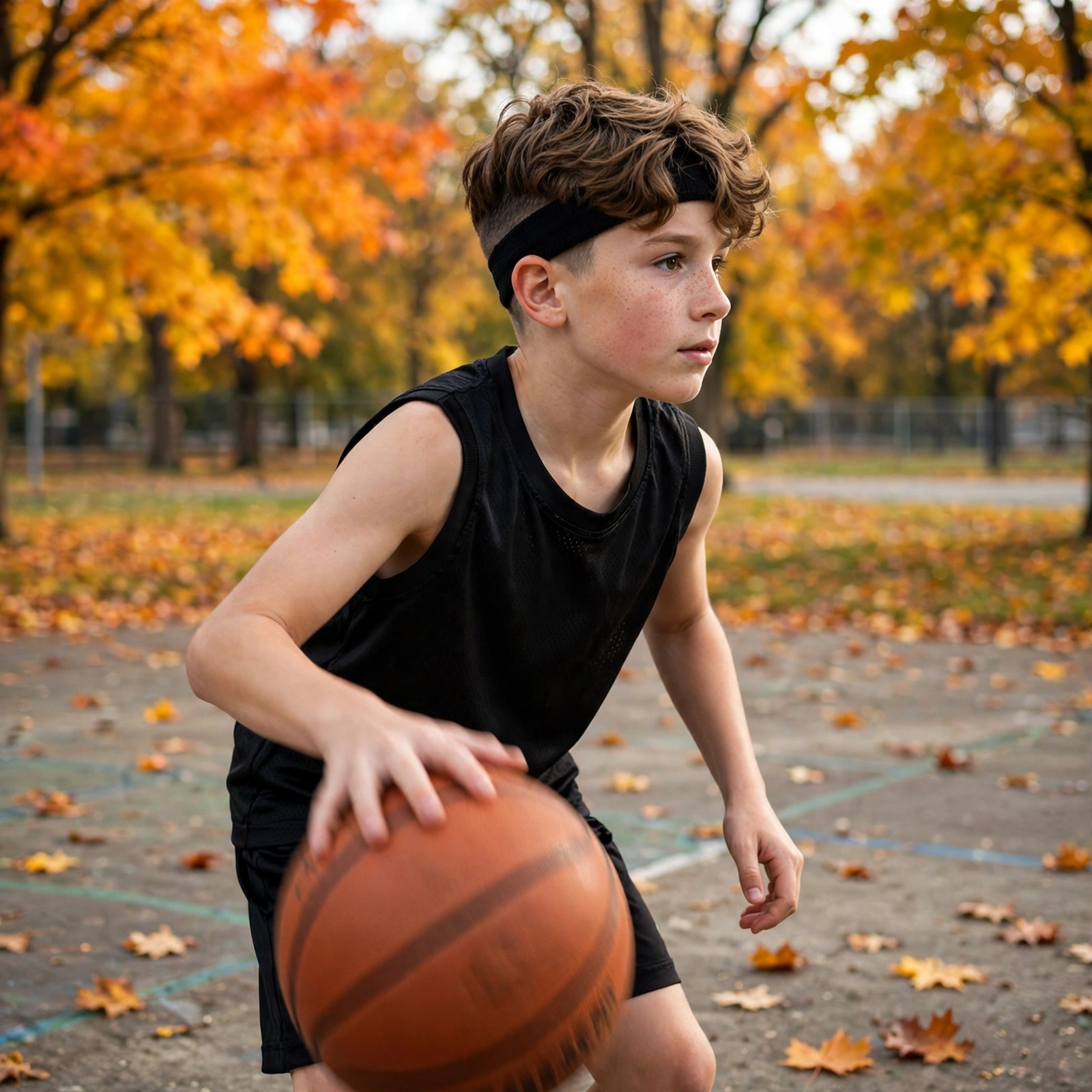
4. Wavy Headband Top with Low Fade
Real length on top — 3 to 4 inches of natural wave or curl — kept in check by a headband on game day, with a low fade keeping the sides tidy. This is the cut for the kid who refuses to go short but still needs to see the ball. The headband does the heavy lifting: it wicks sweat, pins the waves back, and turns a style that would be chaos into a game-ready look. Off the field, the waves fall naturally for school and photos. It’s huge in youth basketball this fall, where headbands are practically uniform.
How to get it: Ask the barber for a low fade on the sides and back, leaving 3–4 inches of length on top with light layering to encourage the wave. Game day: dampen the top, scrunch in a little curl cream, and slide on a wide, non-slip athletic headband (silicone-grip ones stay put best). Push the headband back about an inch behind the hairline for the classic look.
Best for: Naturally wavy to curly hair; ages 8–14; basketball, soccer, tennis, and track. Not ideal under hard-shell football helmets — the length bunches.
Maintenance: Medium. Two to three minutes on game mornings; the low fade needs a refresh every 3–4 weeks. Wash headbands weekly — they collect serious sweat.
Pro tip: Pack a spare headband in the gear bag. The number one mid-game hair emergency our editors saw was a stretched-out headband sliding down — a fresh one at halftime fixes it in ten seconds.
5. Double French Braids for Boys
Two tight French braids running from the hairline to the nape, secured with small elastics — the double French braid is the sweat-proof answer for boys with medium to long hair who play hard. Our editors tested these through full soccer matches: braids started at 9 a.m. looked identical at the final whistle. Everything stays off the face, off the neck, and flat under helmets. The vibe is tough and tidy — wrestlers, football players with longer hair, and any athlete tired of ponytails whipping around.
How to get it: No barber visit needed — this is pure styling. Start with damp, detangled hair and a little leave-in conditioner for grip. Part down the middle, French-braid each side tightly from the front hairline straight back, and secure with small clear or team-color elastics. For extra hold, braid the night before — they set tighter and last through back-to-back game days.
Best for: Medium to long hair (shoulder length and beyond); straight, wavy, and curly textures; ages 8–14; football, wrestling, soccer, and lacrosse.
Maintenance: Low once braided. Ten to fifteen minutes to braid; the style lasts 1–3 days. Redo after washing.
Pro tip: Braid slightly damp hair, never soaking wet — wet braids take forever to dry under a helmet and can mildew-smell by day two. Damp gives the best grip-to-dry-time ratio.
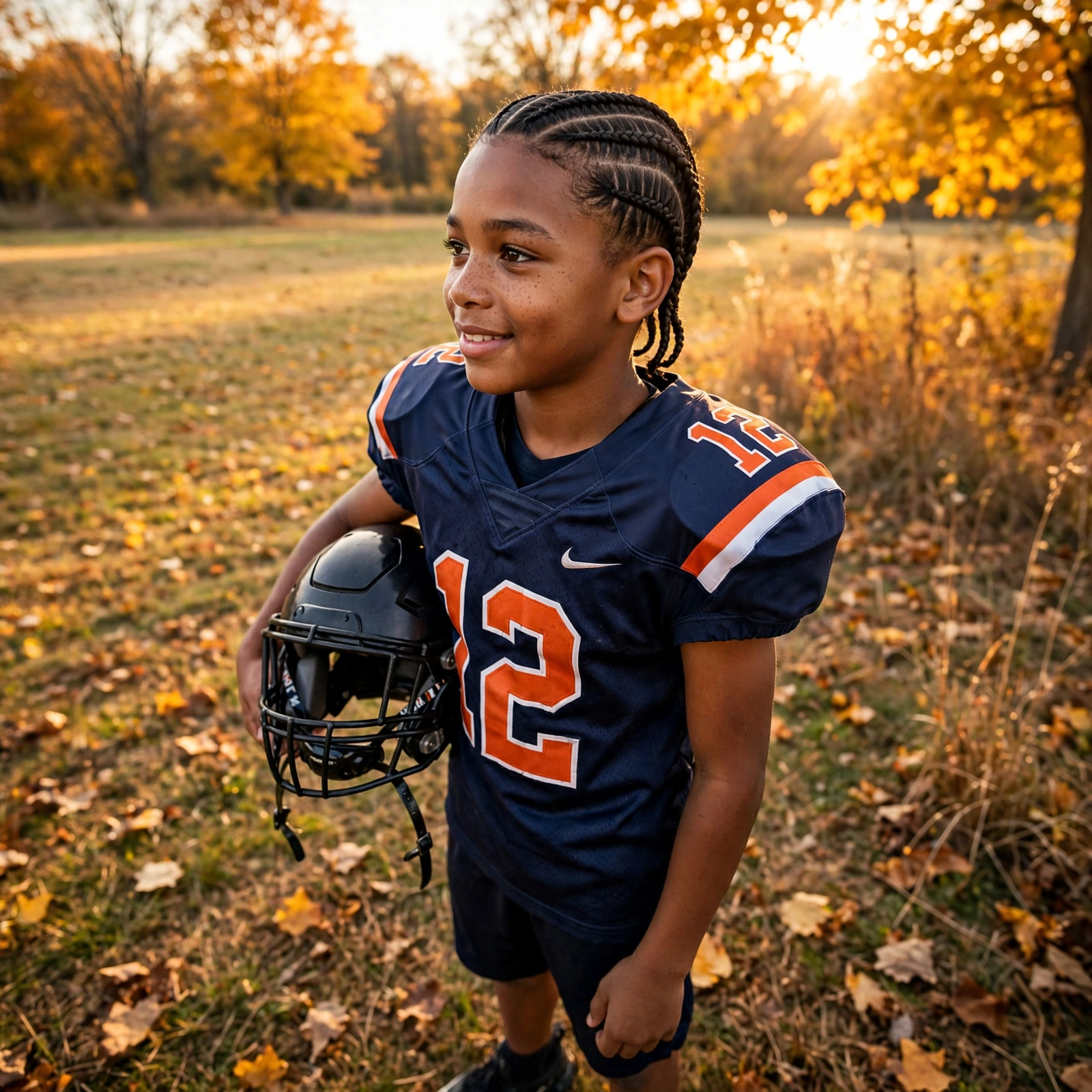
6. Season-Long Cornrow Rows
Straight-back cornrows — anywhere from 4 to 10 neat rows, depending on hair density — are the longest-lasting game-proof style on this list. Done well, they survive two to four weeks of practices, games, helmets, and showers, which makes them the lowest-effort option per day of the entire fall season. They’re also genuinely protective: the hair is tucked away from friction, sweat rinses through easily, and there’s nothing to restyle on rushed school mornings. The vibe is sharp and confident — a season-long signature look.
How to get it: Book a braider, not a barber — ask for straight-back cornrows with medium tension (not painfully tight) and clean parts. Bring a reference photo of the row count you want. For game days, that’s the whole routine: nothing needed. Between washes, a light oil on the scalp keeps things comfortable.
Best for: Textured, coily, and curly hair; medium to long lengths; ages 8–14; every sport including football and wrestling — cornrows are the most helmet-friendly long-hair option.
Maintenance: Low daily, medium upkeep. Almost zero morning routine; re-braid every 2–4 weeks. Wash weekly with diluted shampoo, focusing on the scalp.
Pro tip: Sleep in a durag or satin cap — it keeps the rows neat twice as long and stops the hairline from frizzing. Skip this step and you’ll be re-braiding in ten days instead of three weeks.
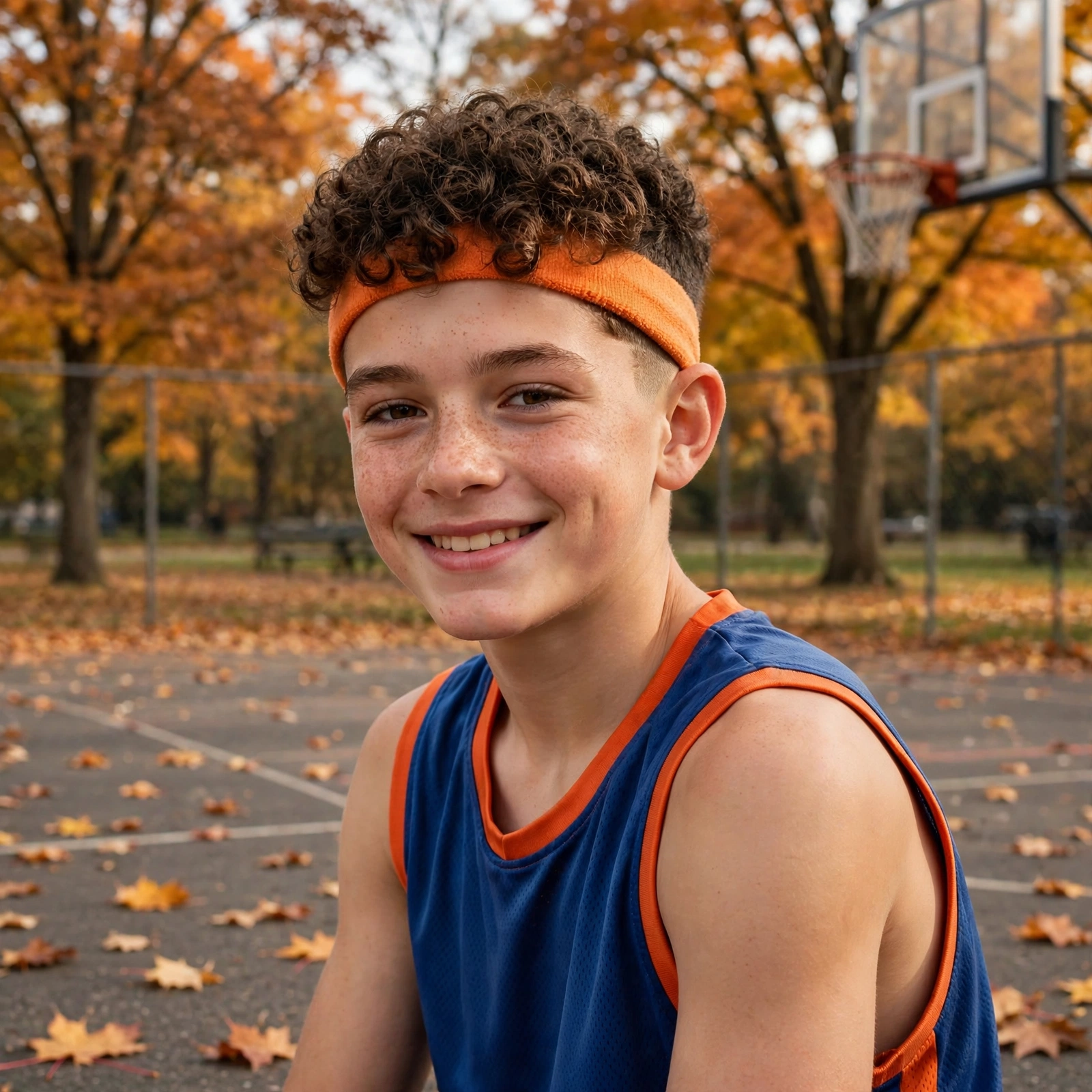
7. Curly Sport Broccoli Cut
Short, faded sides with a full mop of defined curls on top — the “broccoli” cut is the defining youth haircut of the mid-2020s, and the sport version keeps the curls shorter and tighter for the field. The trick that makes it game-viable: keep the top to 2–3 inches max and define the curls with product the night before, so they hold their shape instead of expanding into a frizz halo by halftime. Our editors found it works best with a headband for the sweatiest sports. The vibe is pure Gen Alpha athlete — basketball courts and soccer fields everywhere.
How to get it: Ask the barber for a mid or high fade on the sides, leaving 2–3 inches of curl on top with the perimeter shaped round. Night before a game: apply curl cream to damp hair and let it air-dry or diffuse — defined curls stay put far longer than brushed-out ones. Game day: headband on, nothing else.
Best for: Naturally curly to coily hair; ages 9–14; basketball, soccer, and track. Challenging under football helmets — the volume compresses unevenly.
Maintenance: Medium. Five minutes on curl-definition days; the fade needs a refresh every 2–3 weeks.
Pro tip: Never brush the curls dry on game day — that creates the frizz halo. If the top looks flat in the morning, mist it with water and scrunch; it reactivates yesterday’s product in seconds.
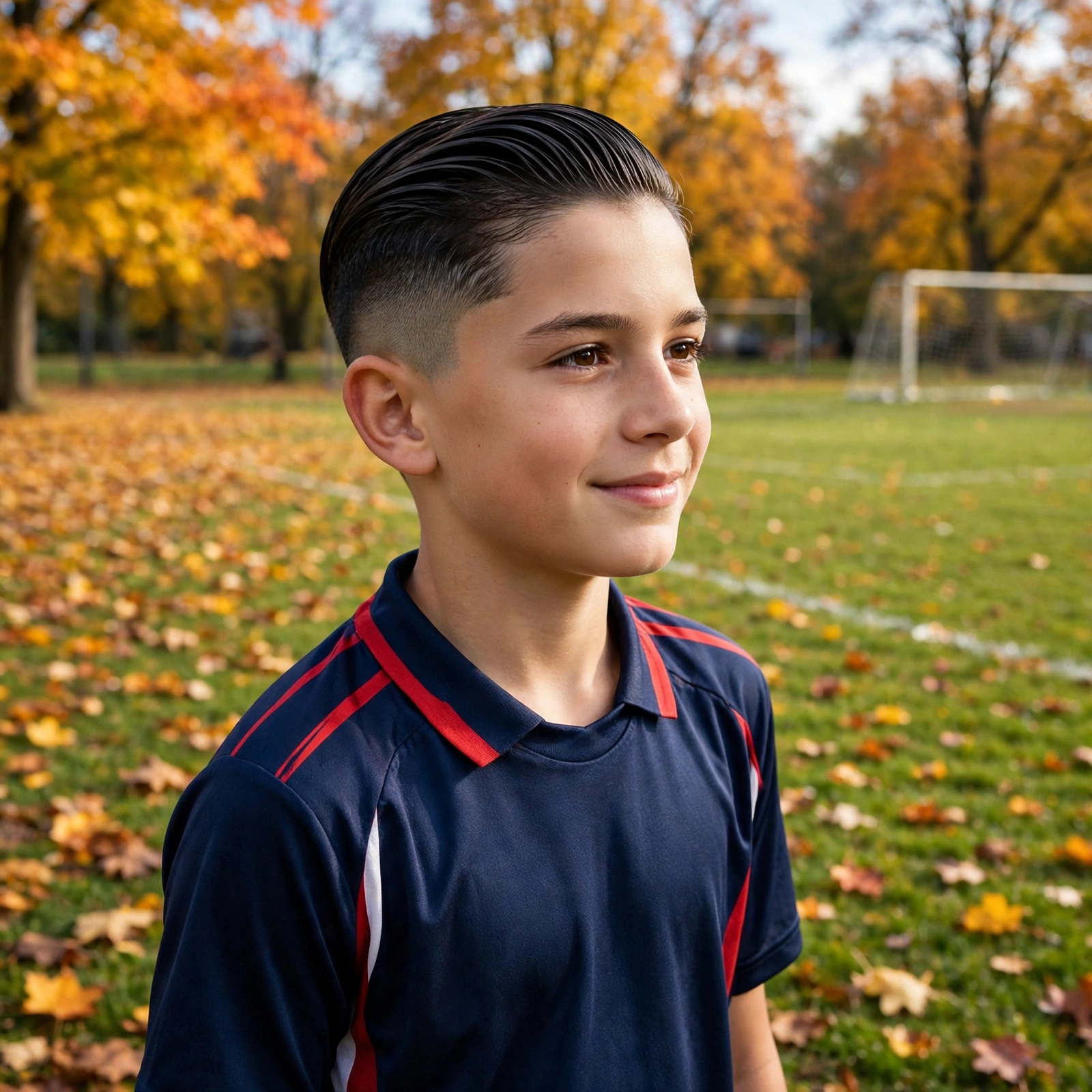
8. Slicked-Back Game Undercut
Disconnected or faded sides with 3–4 inches on top, combed straight back — the slicked-back undercut looks like a fashion cut but performs like a sports cut when you use the right product. The secret is water-based gel with strong hold applied to damp hair: it locks the top back through sweat and wind, and unlike pomade, it rinses out with water alone after the game. The vibe is sharp and a little swaggering — quarterbacks, point guards, and team-photo day.
How to get it: Ask the barber for an undercut or high fade on the sides with 3–4 inches left on top, no layering. Game morning: on damp hair, work a quarter-sized amount of strong-hold water-based gel (Got2b Ultra Glued is the classic for a reason) from front to back with a comb. Let it set for five minutes before warmups.
Best for: Straight to wavy hair with medium density; ages 10–14; soccer, basketball, tennis, and golf. Skip for football — the length shifts under helmets.
Maintenance: Medium. Three to five minutes of game-day styling; barber visits every 3–4 weeks to keep the undercut sharp.
Pro tip: In rain games, add a light mist of hairspray over the gel — the combo survives downpours that melt gel alone. And rinse the gel out the same night; sleeping in strong-hold gel dries out the scalp fast.
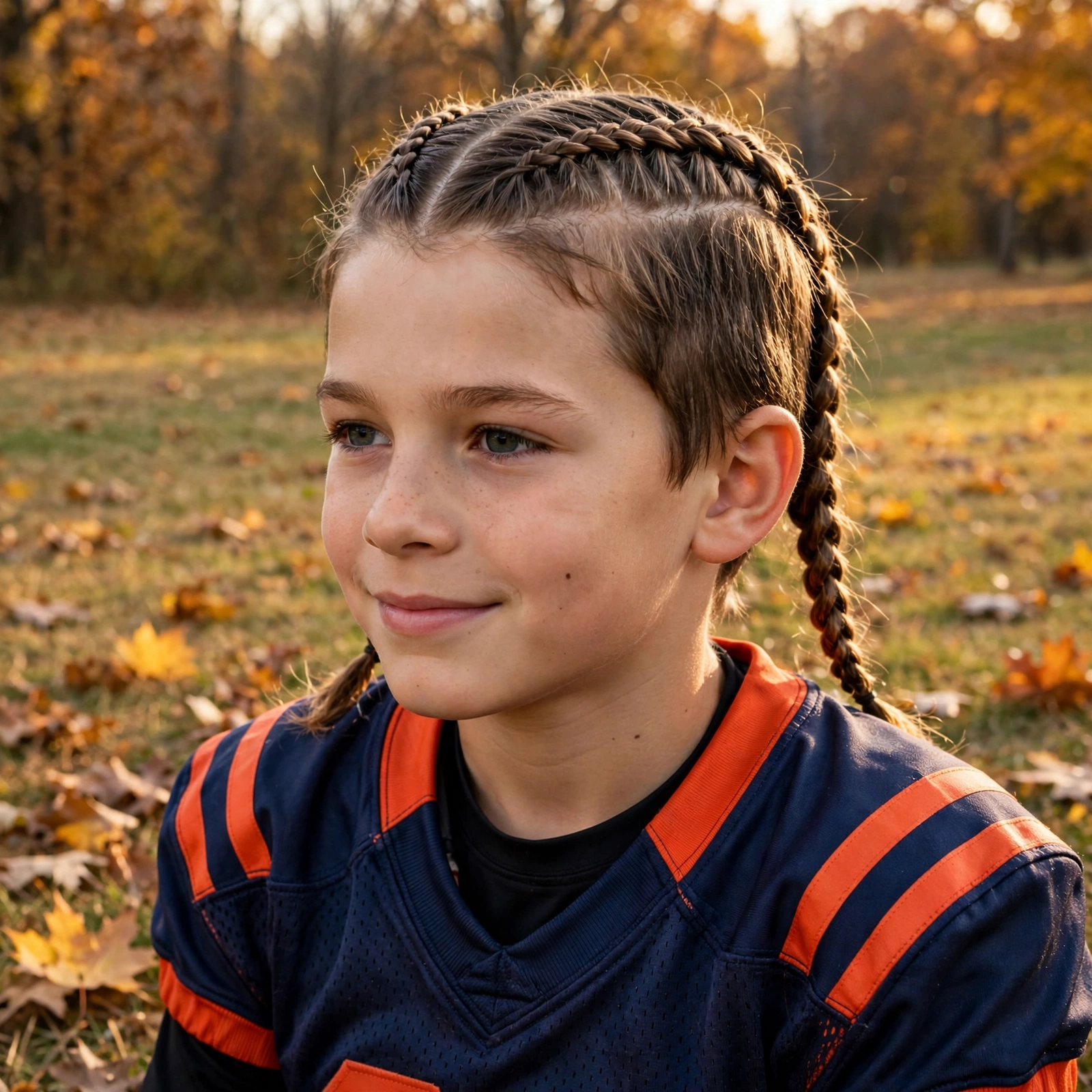
9. Side-Part Hard Part Game Cut
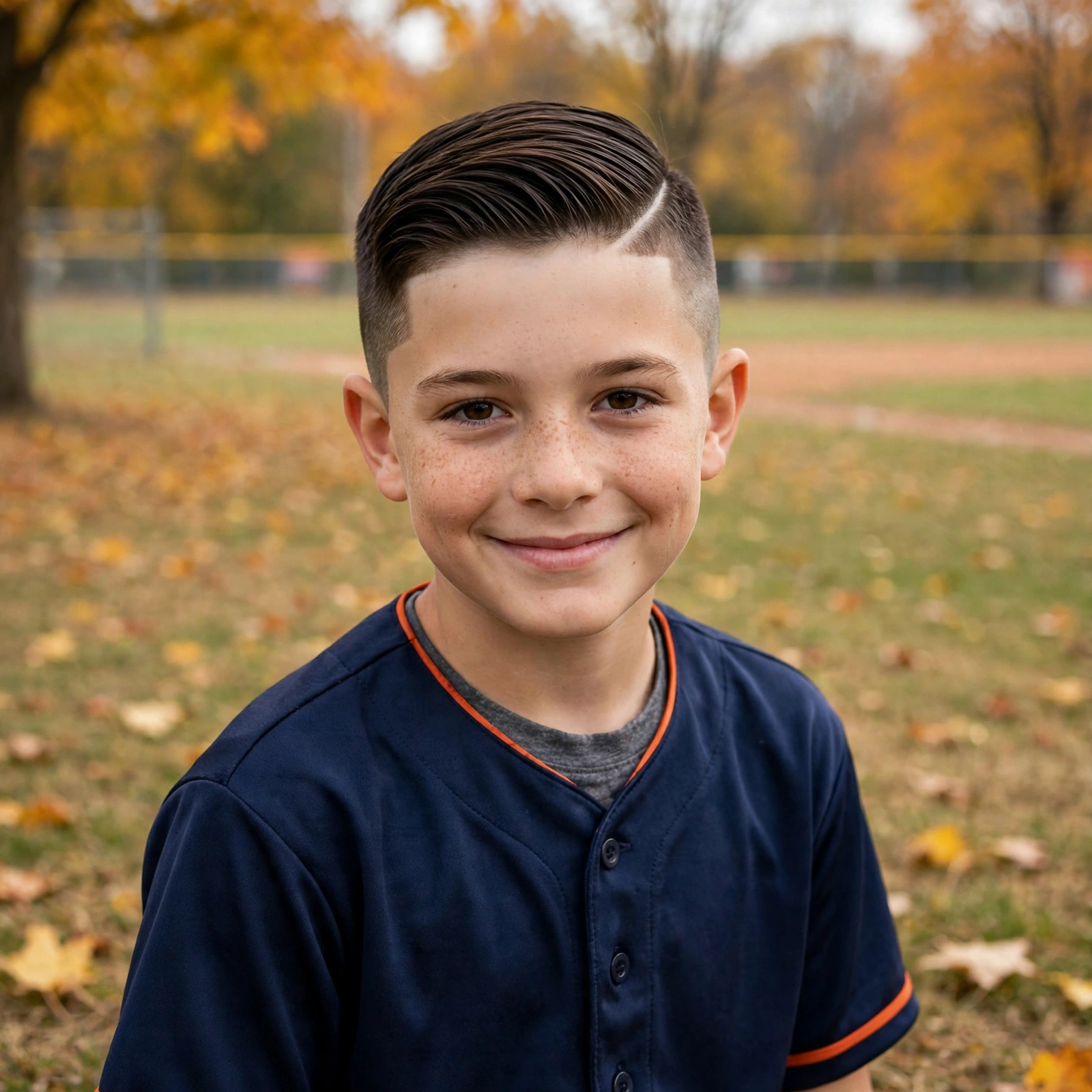
A crisp side part with a shaved hard-part line, tapered sides, and a neat combed top — the hard part game cut is the “dressed up but durable” option. The hard part line is shaved in, so it survives sweat, rain, and helmet removal without fading the way a combed part does. Keep the top short (under 2 inches) and it stays in place all game with a dab of product. The vibe is polished athlete — picture day, playoff games, and boys who like looking sharp.
How to get it: Ask the barber for a side part with a razor-shaved hard part line, a low or mid taper on the sides, and 1.5–2 inches on top combed to the side. The hard part needs re-shaving every 2–3 weeks or it grows out blurry. Game day: small amount of styling cream on damp hair, comb into the part, done.
Best for: Straight to wavy hair; ages 8–14; soccer, basketball, baseball. The hard part line can look too “done” for contact sports with heavy helmet use — ask for a softer version for football.
Maintenance: Medium. Two minutes of daily styling; barber visits every 2–3 weeks to keep the hard part line crisp.
Pro tip: The hard part looks best when the barber aligns it with his natural crown growth pattern — ask them to find where the hair naturally wants to part before shaving the line. Fighting the growth pattern means fighting it every morning.
10. Curly Frohawk
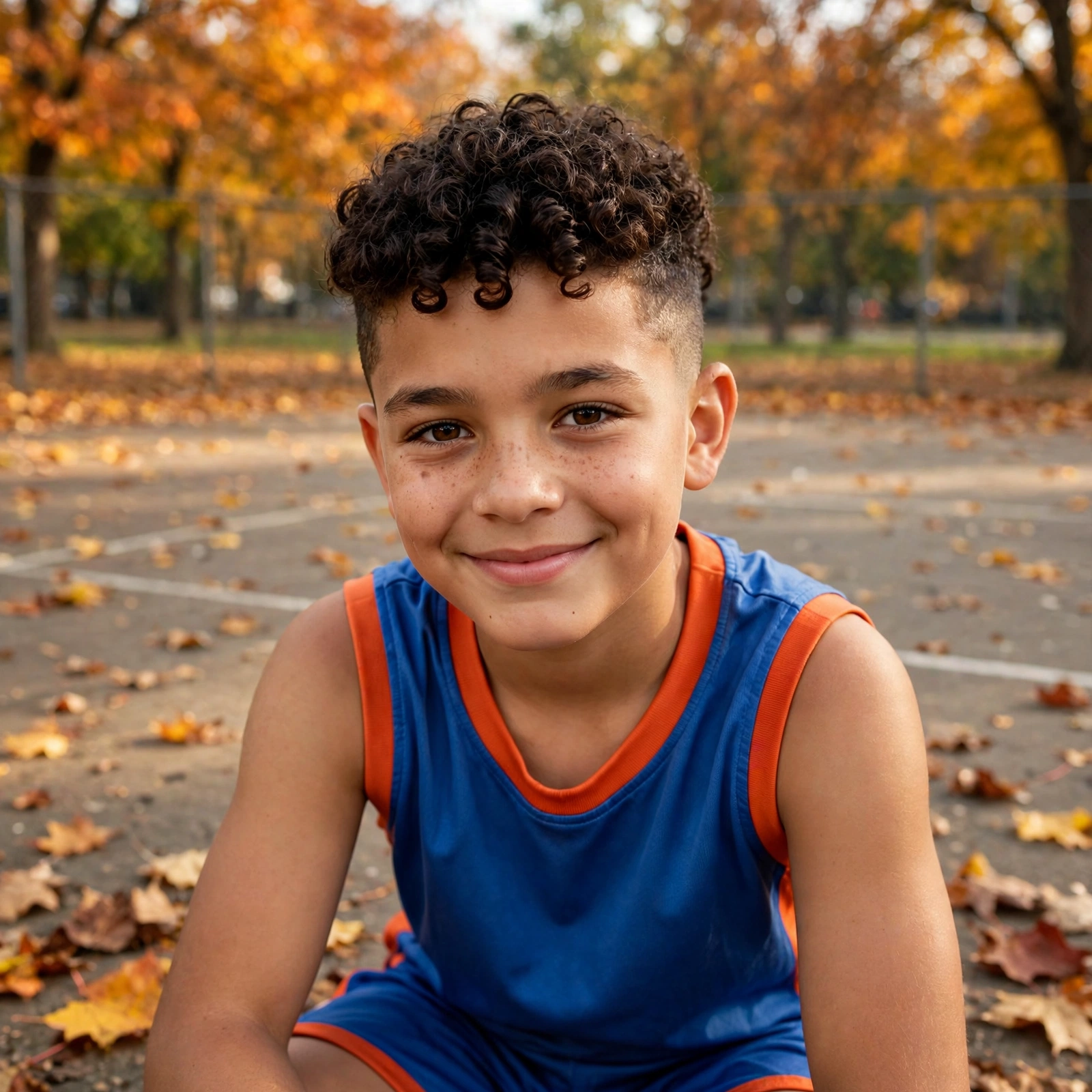
Short faded sides with a strip of tight curls running front to back — the curly frohawk (faux hawk) is the boldest cut on this list, and it’s more game-proof than it looks. The sides are faded close, so there’s no bulk to trap heat, and the central strip is short enough (1.5–2 inches) that it doesn’t flop when sweaty. It photographs incredibly well and gives curly-haired players a signature look without the maintenance of a full head of long curls. The vibe is confident showman — skills competitions, all-star games, and highlight reels.
How to get it: Ask the barber for a high fade or burst fade on the sides, leaving a 2–3 inch wide strip of curl on top, about 1.5–2 inches long. Night before games: define the strip with curl cream on damp hair. Game day: a tiny bit of gel scrunched in to hold the shape — no headband needed since there’s nothing near the forehead.
Best for: Naturally curly to coily hair; ages 9–14; basketball, soccer, track. Not helmet-friendly — the height compresses badly under hard shells.
Maintenance: Medium-low. A few minutes on curl days; the fade needs a refresh every 2–3 weeks.
Pro tip: Keep the strip narrower than you think — about two inches wide. A wide strip reads messy by the fourth quarter; a narrow one stays sharp all game.
11. French Braid High Ponytail
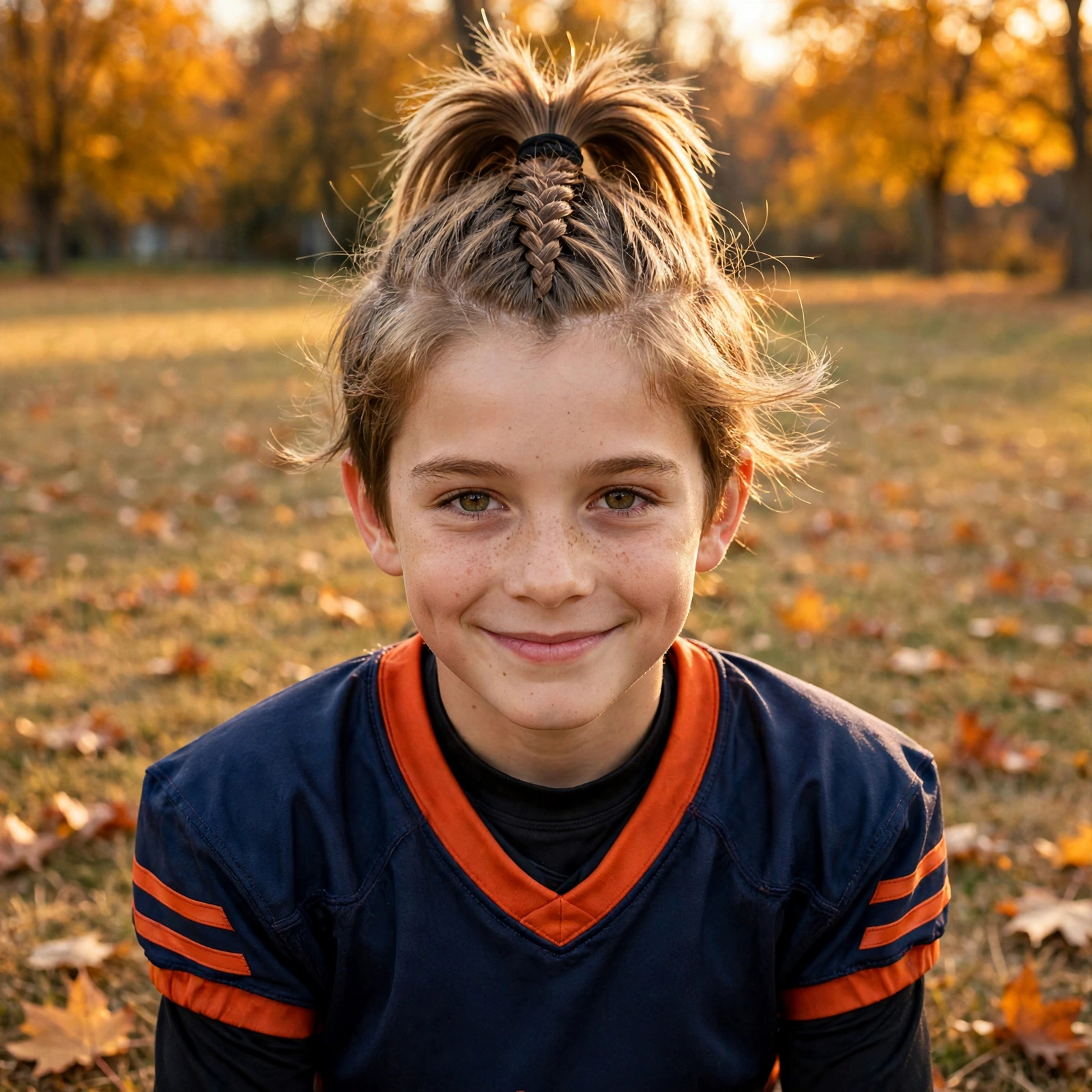
One French braid starting at the front hairline, feeding back into a high ponytail — the best of both worlds for boys with long hair. The braid locks down the front (no strands in the eyes, ever), while the ponytail keeps the length contained and off the neck. It’s the go-to for long-haired players in contact sports: wrestlers and football players wear versions of this everywhere, because a single braid-plus-pony survives grabs, tackles, and helmet straps better than any loose style. The vibe is warrior-practical — long hair, zero excuses.
How to get it: Start with damp, detangled hair. French-braid from the front hairline straight back to the crown, then gather everything — braid tail included — into a high ponytail secured with a strong elastic. Wrap a small section of hair around the elastic and pin it for a clean finish. For the tightest hold, braid the night before game day.
Best for: Long hair (shoulder length and beyond); all textures; ages 8–14; football, wrestling, lacrosse, and rugby-style contact sports.
Maintenance: Low once done. Ten minutes to style; lasts a full day, redo after washing. Use snag-free elastics to avoid breakage.
Pro tip: Double up the elastic — one at the base of the ponytail and a second one an inch down. The second elastic stops the ponytail from loosening and whipping during sprints, which is the main failure mode our editors saw.
12. Flat-Top Box with Taper Fade
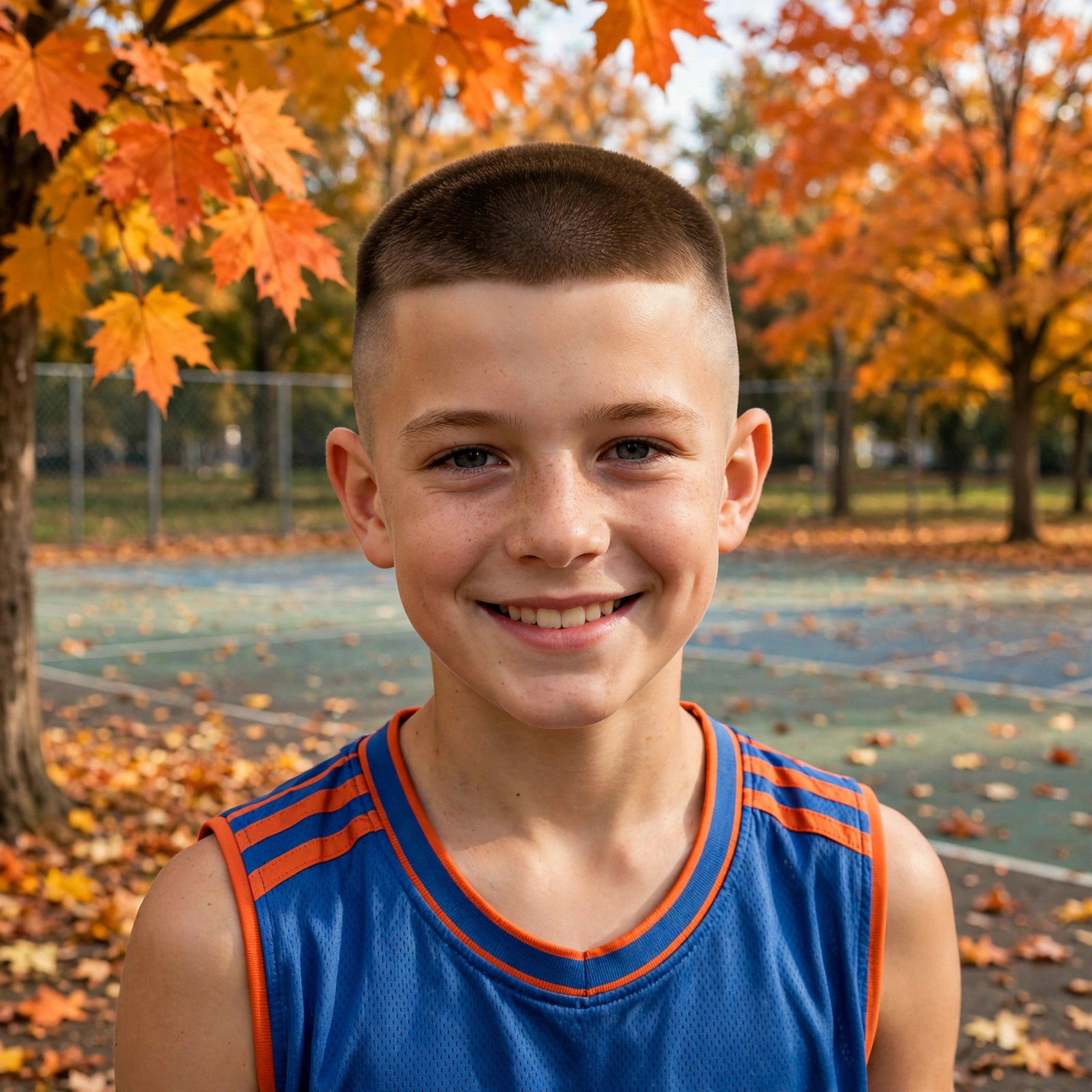
A level, squared-off flat top with a clean taper fade on the sides and back — the flat-top box is a classic that’s having a real moment in youth sports again. The geometry is the game advantage: the flat top is cut to hold its shape, so sweat and wind barely change it, and the tapered sides keep everything cool and helmet-compatible. It needs a barber who knows the cut (not all do), but once it’s in, it’s one of the most stay-put styles on this list. The vibe is old-school cool — throwback energy with modern fade work.
How to get it: Ask the barber for a flat top — level across, squared corners — with a taper fade on the sides and back. This cut is all about the barber’s clipper work, so bring a reference photo. Game day: nothing needed, though a light brush-up with a flat-top comb before leaving keeps the shape crisp.
Best for: Thick, coarse, or coily hair that stands up well; ages 8–14; basketball, football (short version fits helmets), and track.
Maintenance: Medium. Almost zero daily styling, but the shape needs a barber touch-up every 2–3 weeks — a grown-out flat top loses its edge fast.
Pro tip: For football, ask for the flat top cut slightly lower than the fashion version — about half an inch. Full-height flat tops compress under helmets and spring back unevenly; the lower version pops right back into shape.
Fall Sports Hairstyles for Boys: FAQs
How do I fix helmet hair after the game?
Helmet hair is mostly a moisture problem: trapped sweat flattens the hair against the scalp and it dries in that shape. The fastest fix is water and friction — dampen the hair slightly, massage the roots with fingertips (not a brush, which just re-flattens), and let it air-dry for ten minutes. For cuts with texture on top (#1, #2), a pea-sized amount of styling cream reapplied after the game restores the shape instantly. Prevention beats the cure though: the shorter and more tapered the cut, the less helmet hair there is to fix. That’s why buzz cuts and crops dominate this list.
Can sweat damage my son’s scalp or hair over a long season?
Sweat itself isn’t damaging, but dried sweat left sitting on the scalp is. Salt residue dries out both the scalp and the hair shaft, which leads to itching, flaking, and breakage over a months-long season — especially under helmets that trap heat and moisture. The fix is simple: rinse with lukewarm water after every practice or game, and shampoo every second or third day for most hair types. If itching, redness, or persistent flakes show up, that’s a scalp issue worth reading up on — start with the American Academy of Dermatology’s scalp care guidance and see a dermatologist if it doesn’t clear up.
Are braids allowed for boys in youth sports?
In almost all cases, yes — braids, cornrows, and French braids are fully allowed in youth soccer, basketball, football, baseball, and track, and they’re increasingly common on youth fields. The main exceptions to check: wrestling, where some leagues require long hair to be contained in a legal hair cover or cap (braids alone may not qualify — check your league’s rulebook), and a few football leagues with rules about hair length under helmets. Decorative additions like beads or metal cuffs are the most likely thing to get flagged — keep it simple with plain elastics for game days. Our two-braids hairstyles for boys guide has more braid variations that work for sports.
How often should a young athlete wash his hair?
More often than a non-athlete, but not after every single practice. The sweet spot for most boys ages 6–14 playing fall sports: rinse with water after every practice or game, and shampoo 3–4 times per week (roughly every other day). Daily shampooing strips the scalp’s natural oils and can cause rebound oiliness and itching — but skipping washes entirely lets sweat salt build up. Curly and coily hair needs less frequent shampooing (1–2 times per week) with conditioner-focused washing in between. Always shampoo after games played in rain or mud, and after any pool session — chlorine is far harsher on hair than sweat.
Does chlorine or sweat cause split ends and breakage?
Chlorine, yes — it’s a strong oxidizer that strips the hair’s protective outer layer, and fall athletes who swim for cross-training should always rinse before and after pool time and wear a swim cap. Sweat is milder, but the salt crystals left behind create friction between hair strands, which weakens the shaft over a long season — that’s why helmet-area breakage is so common in football players with longer hair. Protective styles (braids, cornrows) and regular trims are the best defense: trimming every 6–8 weeks stops splits before they travel up the shaft. If the ends are already fraying, learn how to get rid of split ends before the damage spreads.
The Bottom Line
The best fall sports hairstyles for boys aren’t the trendiest ones — they’re the ones that stay put through sweat, survive the helmet, and still look good in the team photo. Pick one cut from this list that fits his sport and hair type, give it a genuine two-week trial through practices and games — the same trial our editors ran — and let this be the season his hair stops being a distraction. And if he likes the quick-style side of game-day hair, our rubber-band hairstyles for boys guide has even more fast options. Play hard, and happy fall.