
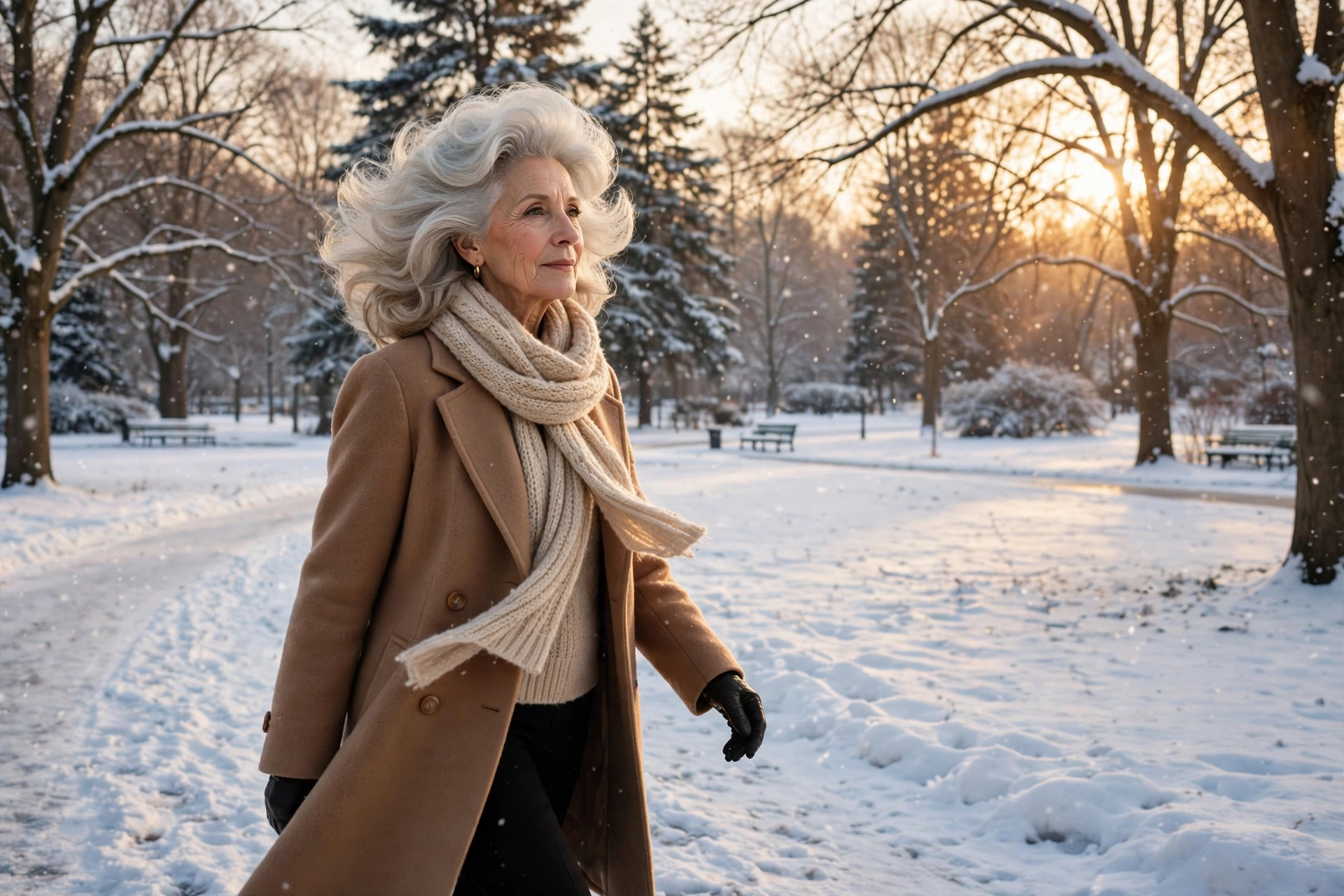
15 Flattering Winter Hairstyles for Women Over 50
If you’re looking for winter hairstyles for women over 50 that work with your hair — not against it — you’re in exactly the right place. Winter is the season when mature hair needs the most thought: cold air pulls out moisture, heated indoor air brings static, and the textures we’ve gained over the years (finer strands, softer density, more gray) all respond differently to January than they did to July. The most flattering hairstyles for women over 50 in winter build in softness, strategic volume, and easy recovery from hats — and this guide breaks down exactly how to get each one.
Here’s what years of salon chair wisdom and our own editor testing keep confirming: after fifty, the goal isn’t younger hair — it’s hair that looks like the best version of your hair. Density changes, texture shifts, and gray regrowth are completely normal, and the right cut can make every one of them an asset. The trick is choosing styles that flatter the hair you have today.
Winter, surprisingly, can be mature hair’s best season. Drier air means styles hold longer with less product — and less product is kinder to fine, thinning hair. Hats and scarves give structure to styles that need a framework, and holiday gatherings reward hair that looks healthy and intentional rather than overworked. The winter hair trends for 2026 favor exactly what flatters women over fifty: softness over sharpness, movement over stiffness, and cuts that look even better on day two.
But flattering doesn’t mean frumpy, and it definitely doesn’t mean the dreaded “age-appropriate” chop. The women over fifty in our style testing wanted what every reader wants: hair that photographs well, survives a real week, and makes them feel like themselves — only better. So this list includes pixies with edge, bobs with bounce, elegant updos for holiday parties, and hat-proof everyday styles that respect a busy life.
What makes this guide different: every style below comes with the full picture — exactly how to get it (what to tell your stylist, plus realistic home steps), who it flatters most, honest maintenance expectations, and a pro tip you won’t find in a caption. No fluff — just 15 tested, wearable mature winter hair ideas, decoded.
Below, we’ve rounded up 15 flattering winter hairstyles for women over 50. Soft, practical, and genuinely elegant — let’s find your winter hair.
In this guide: jump straight to any style that catches your eye.
- 1. Silver Feather Lob
- 2. Wool-Collar Textured Pixie
- 3. Cashmere Wave Bob
- 4. The Low Winter Chignon
- 5. Frosted French Twist
- 6. Silk-Scarf Low Bun
- 7. Beanie-Proof Side Sweep
- 8. Tousled Chin-Length Bob
- 9. Velvety Short Shag
- 10. Graceful Gray-Blended Layers
- 11. Cozy Half-Up Twist
- 12. Polished Low Ponytail
- 13. Fullness Curtain Blowout
- 14. Fireside Collarbone Layers
- 15. Snowlight Braided Updo
Editor’s Top 5 Winter Picks for Women Over 50
Short on time? These are the five mature winter hair looks our editors kept coming back to in testing — the ones with the highest elegance-to-effort ratio on the entire list, and each one flatters real hair changes: thinning, graying, or texture shifts.
1. Silver Feather Lob
The undisputed hero for women over fifty this winter. A softly feathered shoulder-length cut that turns thinning into texture and gray into a feature — the feathered layers create movement and fullness where hair has grown finer, while the length is long enough to style but short enough to hold winter volume.
2. Fullness Curtain Blowout
Big, soft, face-framing volume engineered for finer hair — the blowout that refuses to fall flat by noon. A round brush, a little root lift, and ten minutes give you a finish that looks salon-expensive and survives winter’s dry air beautifully.
3. The Low Winter Chignon
A soft, slightly loose bun at the nape that takes five minutes and reads pure elegance. It keeps hair clear of coat collars and scarves, holds up under a hat, and moves from a workday straight to a holiday dinner.
4. Wool-Collar Textured Pixie
A textured pixie cut to sit just above the collar, softened through the top with piece-y layers. It’s the bravest-feeling and easiest-wearing cut on this list — thick or thin, it frames the face beautifully, never fights a turtleneck, and needs about three minutes a day.
5. Graceful Gray-Blended Layers
For women growing out their gray or blending it in, this is the style that makes the transition look intentional. Soft layers with deliberate tonal blending through the mid-lengths catch winter’s soft light and turn regrowth into dimension.
Flattering Winter Cuts When Hair Texture Changes
Here’s the honest truth every stylist eventually tells their over-fifty clients: your hair isn’t the hair you had at thirty-five, and that’s fine — but it does need a different strategy. Strands grow finer, density softens at the crown and temples, and gray or white hairs are coarser and drier than their pigmented neighbors. Winter piles on: cold air outside and heated air inside strip moisture, static clings to fine hair, and heavy scarves flatten roots. The cuts that flatter in this season share a philosophy — softness, built-in fullness, and forgiveness.
Softness beats sharpness after fifty. Blunt, severe lines draw the eye to every place hair has thinned or features have sharpened; feathered ends, point-cut texture, and soft face-framing layers do the opposite — they blur, they lift, they suggest. Ask your stylist for “softness through the ends” and “face-framing starting at the cheekbones” rather than a rigid line. This one shift in language changes the entire outcome of a haircut appointment.
Built-in fullness matters more than length. Long, one-length hair on thinning density can look stringy no matter how you style it — but you don’t have to go short. The sweet spot for most women over fifty is somewhere between the chin and the collarbone: a lob, a textured bob, or long layers with real shape through the crown. Shorter perimeters make ends look thicker, and crown layers create the lift that thinning hair can’t generate on its own.
Forgiveness is the winter superpower. Choose cuts that look good a little imperfect: styles that survive a beanie, a windy commute, or a long day without collapsing into something sad. Textured pixies, soft shags, layered lobs, and low updos all improve as they loosen — they don’t punish you for living your life. If you’re rethinking your whole routine for the season, start with these dermatologists’ tips for healthy hair, which cover the care basics every age group needs.
Volume, Color, and Maintenance After 50
Volume after fifty is mostly a product-and-technique game, not a genetics game. The three moves that mattered most in our testing: mousse on damp roots before any heat (it gives fine hair something to grip), a round brush lifting up at the crown rather than under, and dry shampoo on day two as a styling tool — the grit it adds is exactly what thinning hair needs.
Color in winter should be softer and warmer than summer, and for women over fifty the friendliest strategy is blending, not covering. Harsh, single-process dark color against winter-pale skin can look stark; adding face-framing highlights, a demi-permanent gloss in a warm tone, or deliberately blended gray creates dimension that reads as healthy. Gray regrowth actually reflects winter light beautifully — several testers found that leaning into it looked more luminous than fighting it.
Maintenance gets kinder with age if you pick the right cuts. The styles on this list are weighted toward honest upkeep: most need a trim every 8–12 weeks, not 4–6, and textured finishes hide grow-out gracefully. A weekly deep-conditioning mask and a silk or satin pillowcase are the two habits that pay off most in winter. If you’ve been weighing how your over-fifty hair should evolve season to season, our fall hairstyles for women over 50 guide covers the autumn transition this winter routine builds on.
15 Flattering Winter Hairstyles for Women Over 50
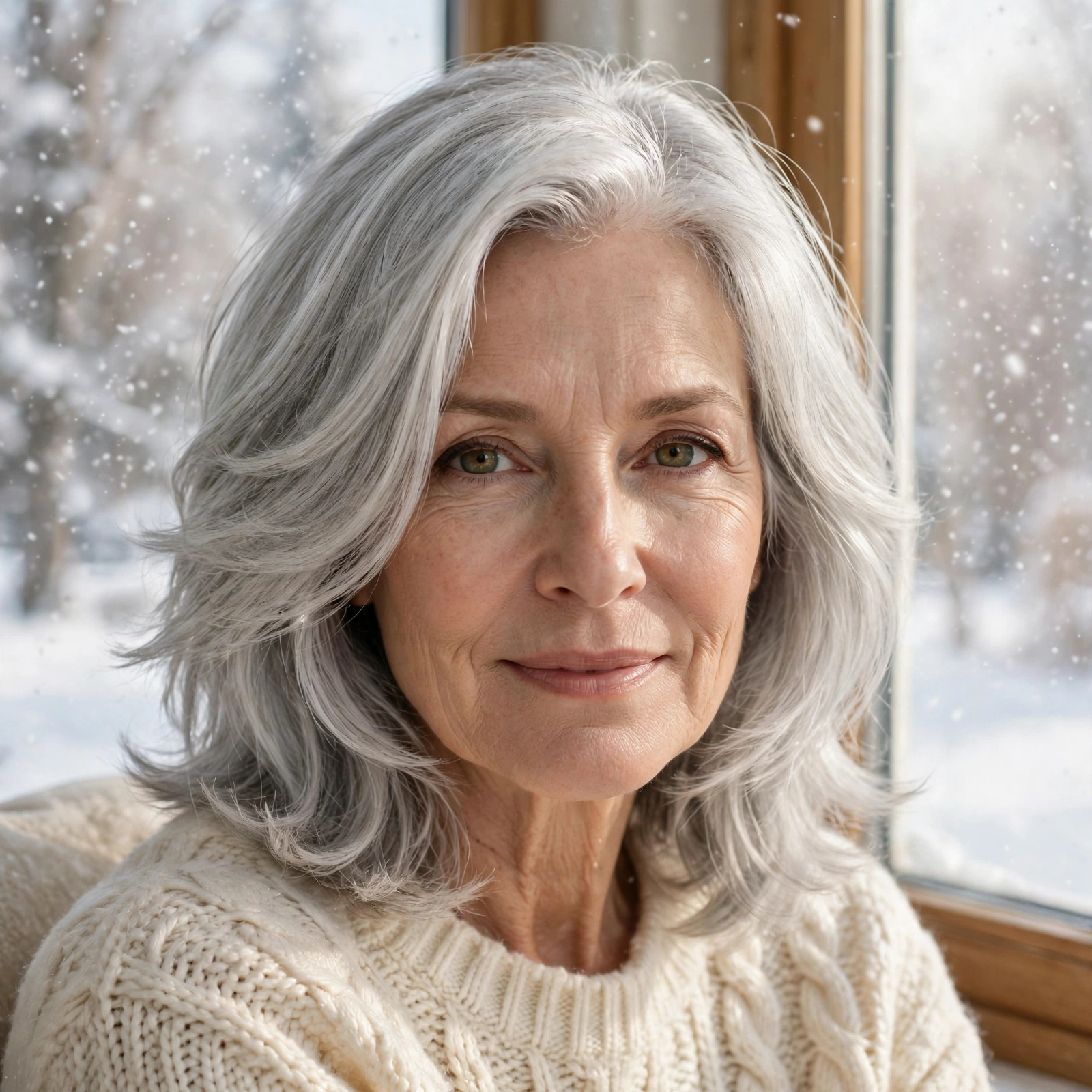
1. Silver Feather Lob
A shoulder-grazing cut with softly feathered layers through the ends and around the face — the winter hairstyles for women over 50 list starts here for a reason. In our editor testing, this was the single most forgiving cut: the feathering disguises thinning at the ends, the face-framing layers lift cheekbones, and whether your hair is silver, salt-and-pepper, or colored, the soft texture makes it look fuller and healthier. Think holiday gatherings, office days, dinners out — the everyday-elegant default.
How to get it: Ask your stylist for a shoulder-length cut with feathered, point-cut ends (not blunt) and face-framing layers starting at the cheekbones. Bring photos — “feathered” means different things to different stylists. At home, blow-dry with a round brush rolling sections away from the face, or simply scrunch a little mousse into damp hair and air-dry for a softer finish.
Best for: Fine to medium hair that needs the illusion of density; all face shapes; naturally gray or growing-out-gray hair (the feathering blends regrowth beautifully); shoulder length and slightly longer.
Maintenance: Low to medium. Five to ten minutes on styling mornings, genuinely optional on others. Trims every 8–10 weeks — it grows out gracefully.
Pro tip: On gray and silver hair, switch to a purple shampoo once a week through winter — heated indoor air dulls silver fast, and a weekly tone refresh keeps it luminous rather than yellowed. We used Clairol Shimmer Lights for this with consistently good results.
2. Wool-Collar Textured Pixie
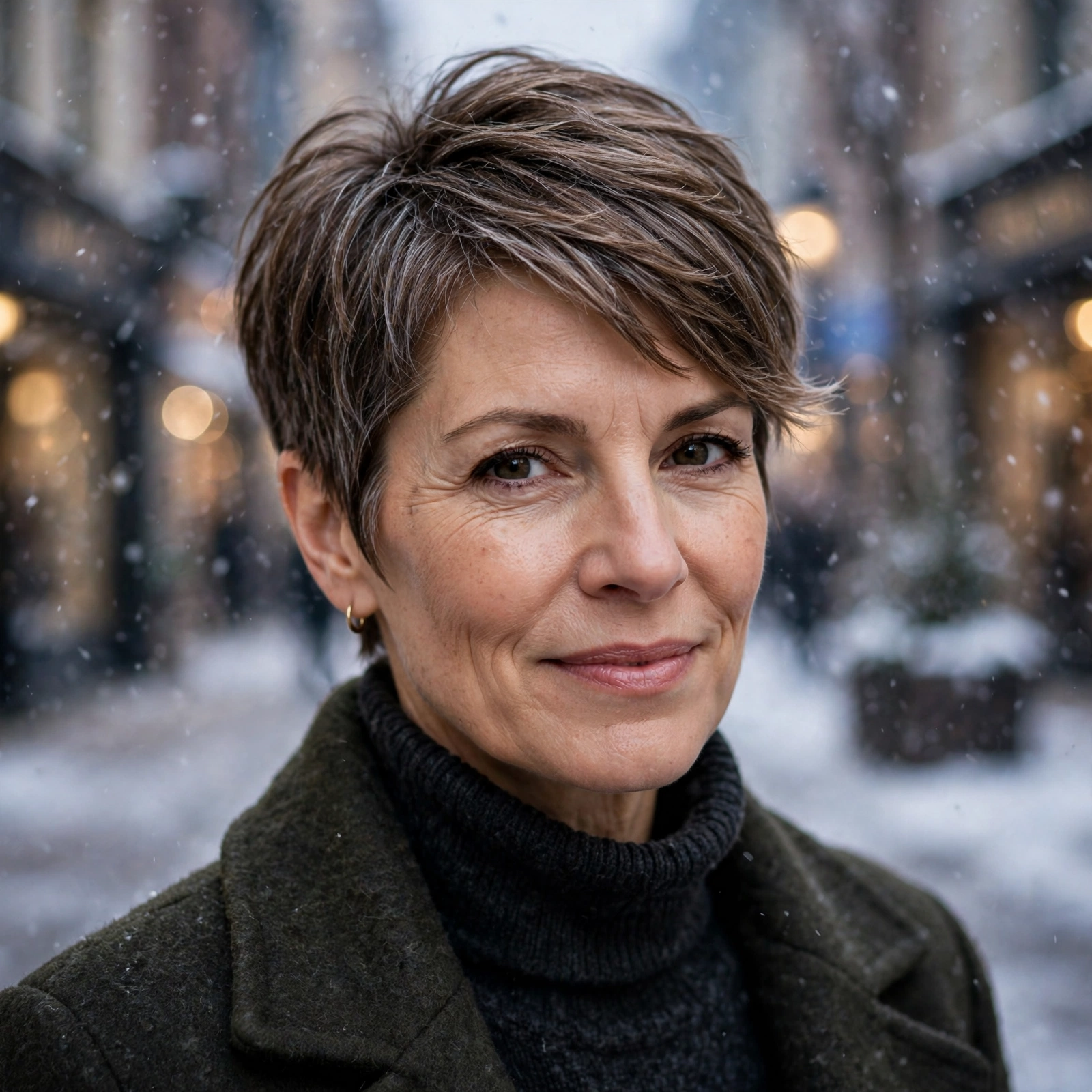
A pixie cut a touch longer through the top, with piece-y texture that sits just above a turtleneck or coat collar — never touching, never fighting. This is the cut our testers called “the bravest ten minutes of my year” — and then refused to grow out. The textured top flatters thinning crowns by turning sparse density into deliberate, airy movement, and the slightly longer pieces around the face soften everything winter light makes stark.
How to get it: Ask for tapered (not shaved) sides and back, with 2–3 inches of textured length on top, cut with point-cutting for piece-y separation. At home, warm a pea-sized amount of styling cream between your palms, rake through the top, and pinch a few pieces for definition. That’s the entire morning routine.
Best for: Fine or thinning hair (shortness = instant thickness illusion); oval, heart, and square faces; women ready to stop fighting grow-out. Strong cheekbones look especially striking with this cut.
Maintenance: Low daily, disciplined salon schedule. Two to three minutes each morning — but book trims every 4–6 weeks, because pixies lose their shape fast. Winter static is the enemy here: a silk pillowcase helps enormously.
Pro tip: Skip waxes and heavy pomades in winter — they flatten fine pixies by midday. A lightweight styling cream like TRESemmé Flawless Curls Defining Cream gives separation without the weight, and a dab of dry shampoo at the crown on day two restores the lift.
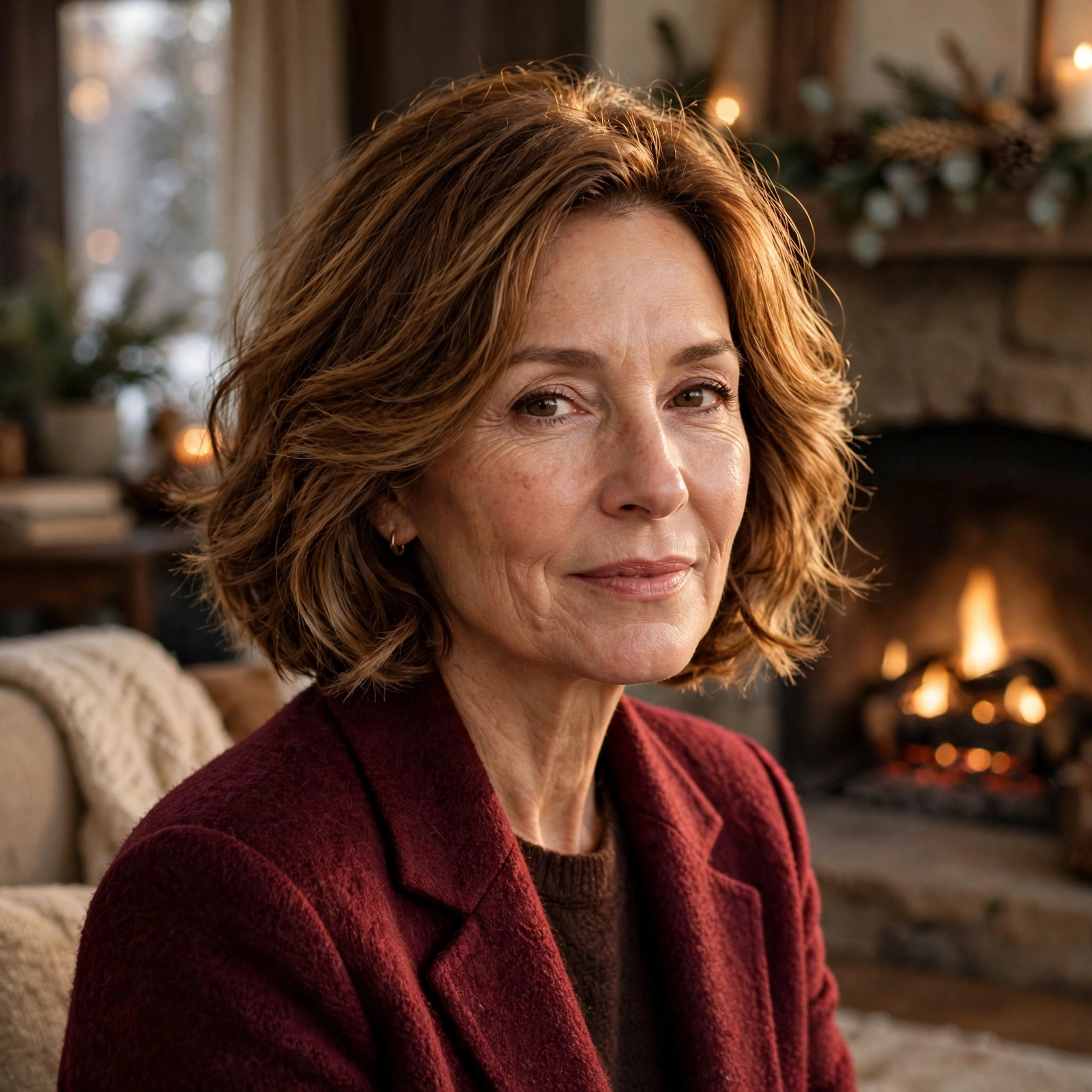
3. Cashmere Wave Bob
A chin-to-jaw-length bob worn with soft, brushed-out waves — like cashmere for your hair: smooth, warm, and quietly luxurious. In testing, this cut made every woman look instantly more polished without reading “done.” The waves add width and fullness exactly where thinning hair needs it, the chin length frames the jawline beautifully, and it sits perfectly under hats without crushing.
How to get it: Ask your stylist for a bob hitting between chin and jaw with soft, internal layers — no harsh steps. At home, curl one-inch sections away from the face with a 1.25-inch iron, let them cool completely, then brush through with a soft-bristle brush to melt them into waves. Finish with a light shine mist, never heavy hairspray.
Best for: Straight to wavy textures; round and square faces (the waves soften angles); fine to medium density; chin to jaw length.
Maintenance: Medium. Fifteen minutes for the full wave routine, though it holds a day or two with dry shampoo at the roots. Trims every 6–8 weeks to keep the shape crisp.
Pro tip: Let every curl cool fully before brushing through — cooled-set curls hold roughly twice as long, and on fine mature hair that difference is everything. Clip each curl to the scalp while it cools, then release and brush in one go.
4. The Low Winter Chignon
A soft, slightly loose bun gathered at the nape — the quiet-luxury answer to winter evenings and the most repeated style in our testing. The trick is looseness: a soft chignon with a few face-framing pieces reads romantic and effortless, never severe.
How to get it: This is pure styling — no cut required. Gather hair into a low ponytail at the nape, twist loosely, wrap into a bun, and secure with U-shaped pins (they grip better and show less than bobby pins). Leave two soft pieces out around the face, and gently tug the bun after pinning for that undone finish.
Best for: Shoulder-length and longer hair; all face shapes — adjust the front pieces to yours; straight, wavy, or curly textures. Fine hair benefits most from day-two texture and a little teasing at the crown first.
Maintenance: Low. About five minutes, and it genuinely prefers day-two hair. No salon upkeep tied to the style.
Pro tip: If your hairline is thinning, don’t pull the front too tight — tension emphasizes sparse spots. Tease the crown lightly first, then smooth only the very surface with a soft brush. Fullness at the crown plus softness at the hairline is the whole game.

5. Frosted French Twist
The classic French twist, softened for 2026: instead of the stiff formal version, this one is looser, with a little texture and a few wispy pieces — frosted, not frozen. Our testers wore it to holiday parties and came home still looking elegant, which is the real test of any updo. This is the special-occasion answer that takes ten minutes, not an appointment.
How to get it: Sweep all hair to one side, pin it vertically along the back of the head to create an anchor, then fold the length back over the pins and tuck the ends in, securing with more pins. Don’t aim for perfection — gently pull a few pieces loose around the face and at the nape for softness.
Best for: Medium to long hair (shoulder length and beyond); oval and oblong faces especially; all textures. Gray and highlighted hair shows the twist’s dimension best.
Maintenance: Low to medium. Ten minutes to put up; holds through an evening. No salon maintenance specific to the style.
Pro tip: Work on hair with some grip — freshly washed hair slips. A light mist of flexible-hold hairspray on each section before twisting gives the structure mature fine hair needs without stiffness. We like L’Oréal Paris Elnett Satin for this: strong enough to hold, soft enough to brush out.
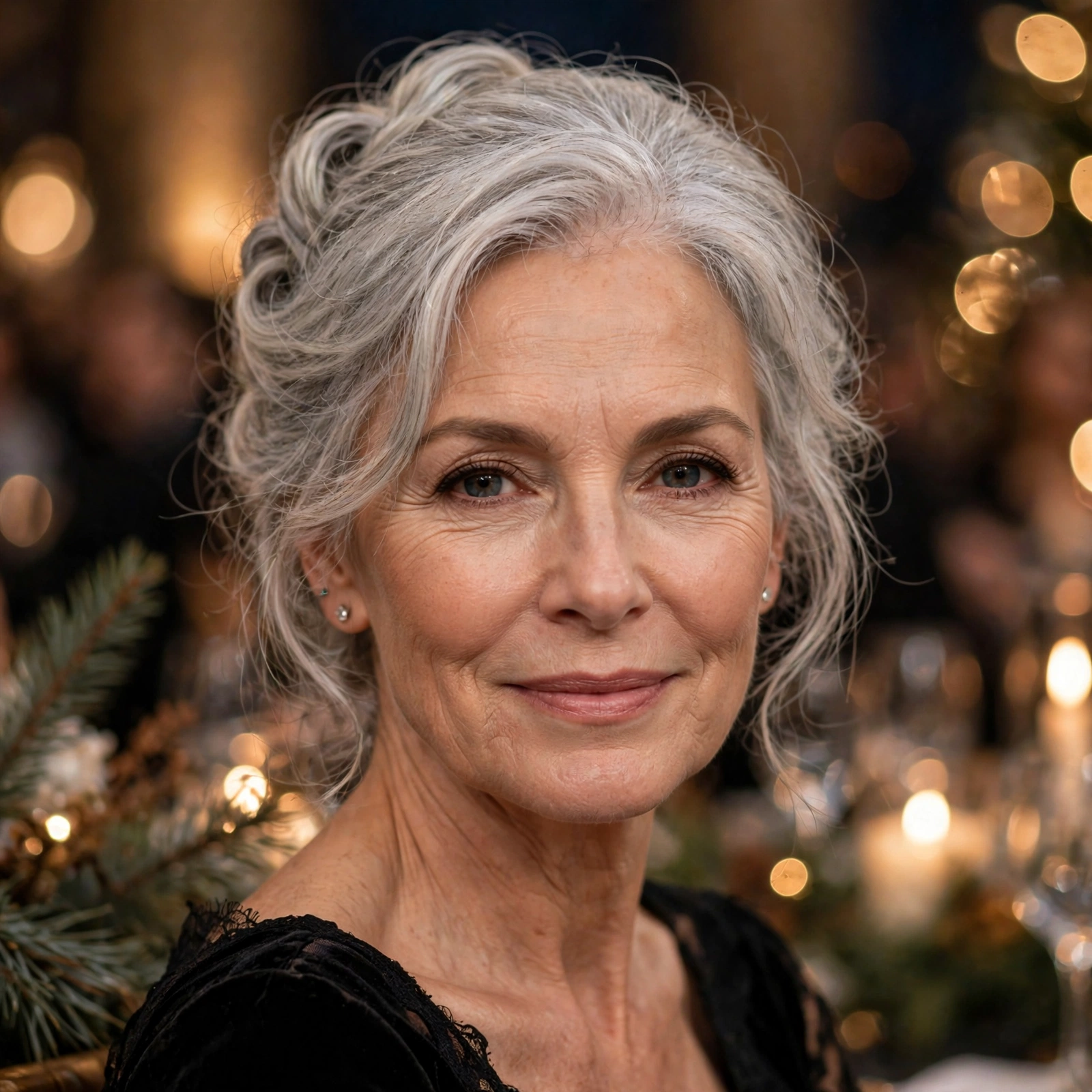
6. Silk-Scarf Low Bun
A low bun elevated with a silk scarf tied around its base — the easiest way to make a five-minute updo look deliberate and chic. The scarf does triple duty in winter: it hides the elastic, adds a color accent against dark coats, and the silk protects the hairline from friction where wool scarves rub. In testing, this got more compliments than any other everyday style — proof that a small accessory can carry a whole look.
How to get it: Make a low bun at the nape (twisted or simple — it doesn’t matter), then fold a silk or satin scarf into a band and wrap it around the bun’s base, tying it in a small bow or knot to one side. Tuck any flyaways with a spritz of hairspray on a clean toothbrush.
Best for: Medium to long hair; all face shapes; anyone who wants polish with zero heat. Especially kind to fine hair, since the scarf disguises a small bun’s size.
Maintenance: Low. Three minutes. No heat, minimal product, no salon upkeep.
Pro tip: Choose a scarf in a color that flatters your skin tone, not just your outfit — a warm camel, soft burgundy, or deep teal near the face brightens winter-pale skin. And always use real silk or satin: cotton scarves absorb moisture and rough up the hairline.
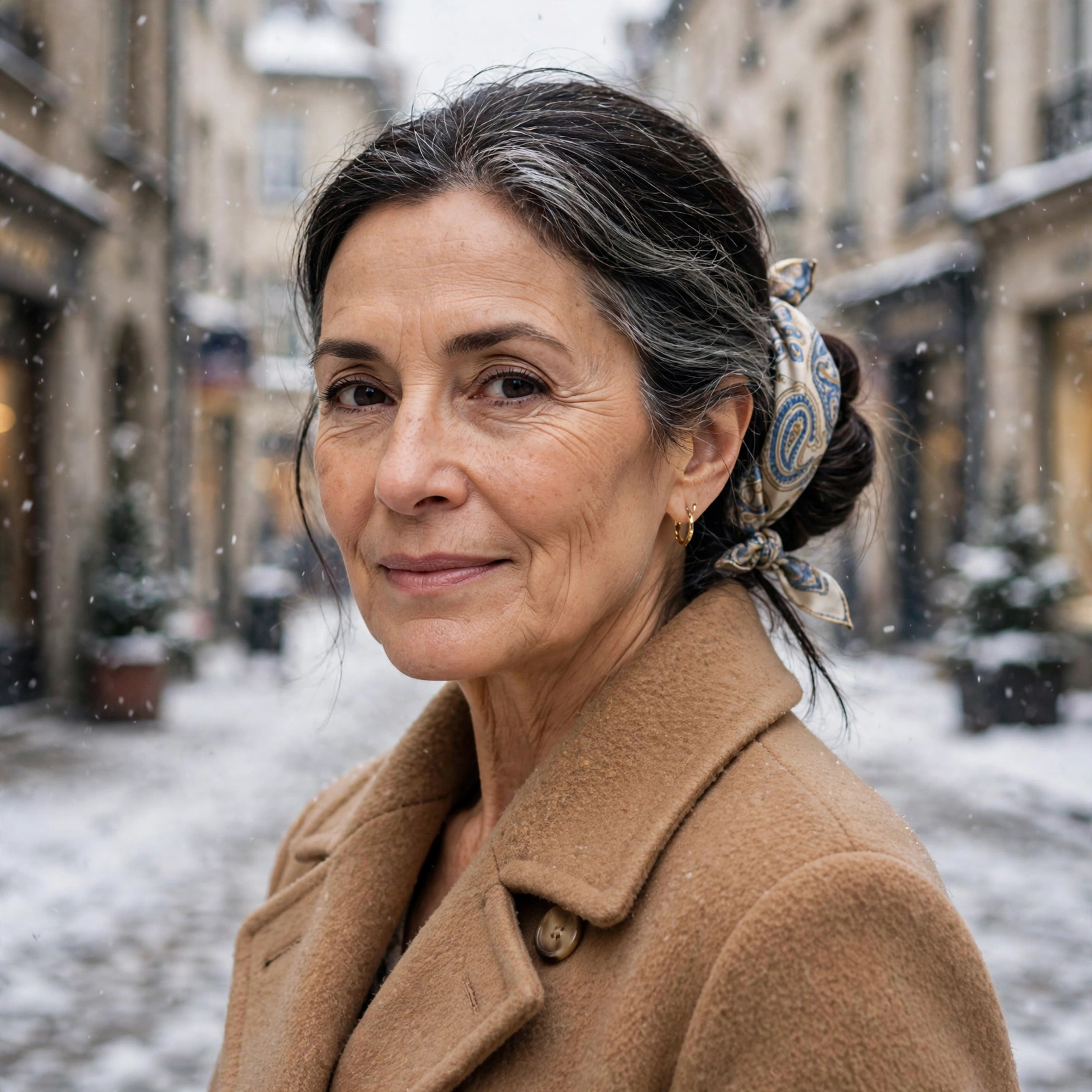
7. Beanie-Proof Side Sweep
Longer layers on top swept dramatically to one side — a style designed from the start to survive hat season. You style it knowing a beanie is going on, so taking the hat off reveals perfectly relaxed texture instead of a dented mess. In our testing this was the number-one answer to hat hair after fifty: the deep side part gives the illusion of crown volume even when flattened, and the sweep flatters every face shape.
How to get it: Ask your stylist for longer layers through the top with a natural deep side part built into the cut. At home, blow-dry the top sections with a round brush sweeping to your preferred side, set with a cool shot, then pop your beanie on — when it comes off, the style has settled into relaxed perfection. Part your hair where the hat’s edge will sit to prevent dents.
Best for: Fine to medium hair that loses volume under hats; all face shapes; shoulder length and shorter (works on pixies and bobs too, not just long hair).
Maintenance: Low. Five minutes of styling, then the hat does the rest. Trims every 8–10 weeks.
Pro tip: A quick shot of anti-static spray on the inside of your beanie stops flyaways before they start — winter static is worse on fine mature hair than on any other type. Batiste Original Dry Shampoo at the roots before the hat goes on adds the grit that keeps volume alive underneath.
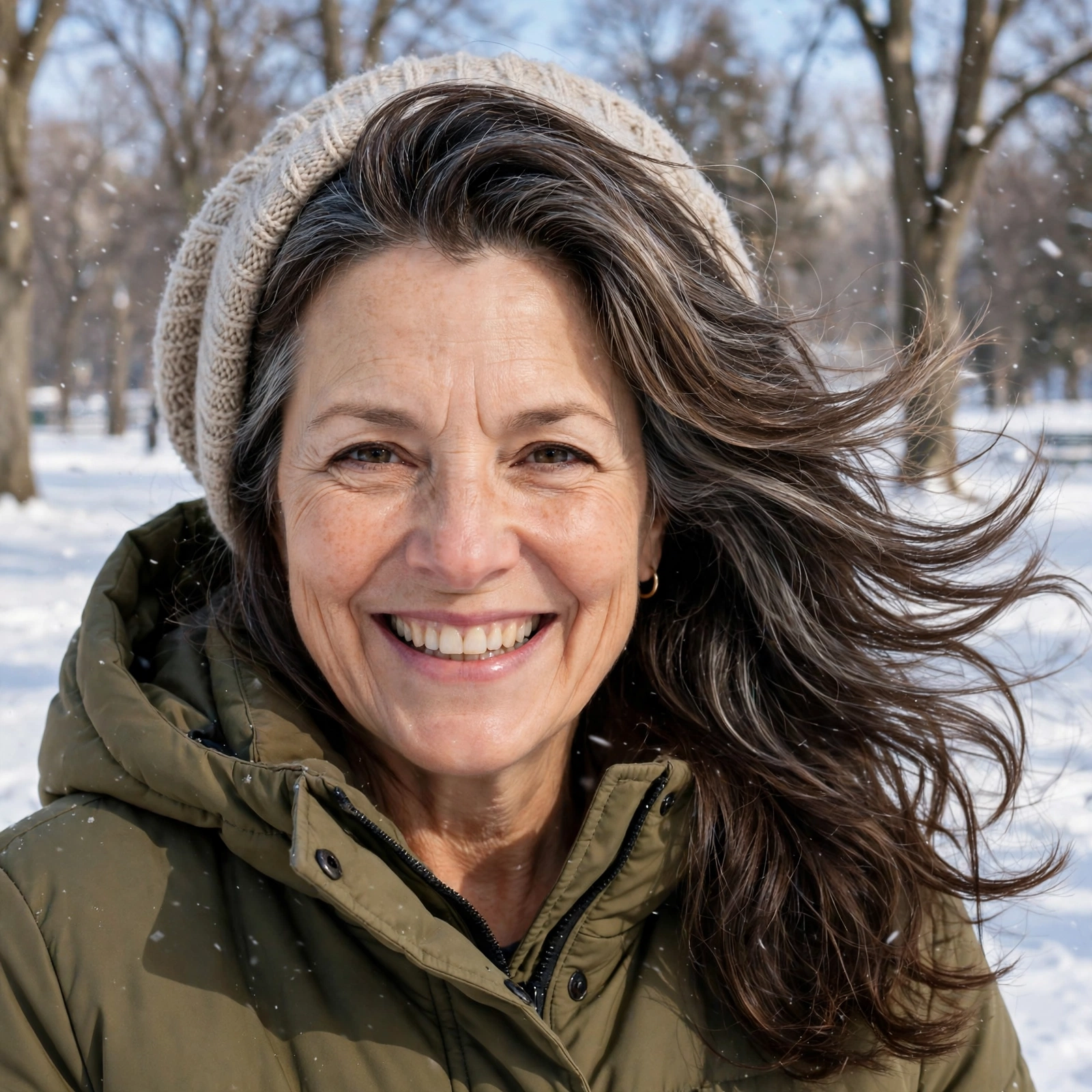
8. Tousled Chin-Length Bob
A chin-length bob worn deliberately tousled — finger-combed, piece-y, and relaxed. This cut earned its place because it’s the rare short style that flatters without any round-brush skill: the tousle does the work. The chin length is magic for women over fifty — it frames the jawline, makes the neck look elegant, and creates the impression of density because the perimeter stays full.
How to get it: Ask your stylist for a chin-length bob with textured, point-cut ends — specify “I want to air-dry this” so they cut for your real routine. At home, work a small amount of texture cream through damp hair, scrunch, and let it air-dry. Finger-comb only, never brush dry — brushing turns deliberate tousle into frizz.
Best for: Naturally wavy or textured hair (the cut cooperates beautifully); round, oval, and heart faces; fine to medium density. Very straight hair needs the texture cream to hold the tousle.
Maintenance: Low. Wash-and-go on good days; a quick scrunch of texture spray on others. Trims every 6–8 weeks — the shape matters here.
Pro tip: If your crown is thinning, ask for slightly shorter layers through the top — the tousled texture disguises sparse spots far better than one-length hair. And sleep on a satin pillowcase: it preserves the tousle overnight so mornings need only a shake and go.

9. Velvety Short Shag
A modern shag cut short — soft layers through the crown, wispy ends, and face-framing pieces — but refined and velvety rather than rock-and-roll. The shag is the ultimate thinning-hair disguise: all those layers create texture and movement that reads as fullness, and nothing about it demands sleekness.
How to get it: Ask your stylist for a short shag with soft layers through the crown, longer wispy ends, and face-framing pieces starting at the cheekbones (curtain bangs optional but excellent). Bring reference photos. At home, scrunch texture spray into damp hair and air-dry — that’s genuinely the routine. A diffuser on low heat adds extra fullness on special days.
Best for: Fine or thinning hair (the layers manufacture fullness); wavy textures especially; oval and heart-shaped faces; chin to shoulder length.
Maintenance: Low. Wash-and-go, with a texture-spray refresh on non-wash days. Trims every 10–12 weeks — shags grow out gracefully.
Pro tip: Root-lifting powder at the crown is the shag’s secret weapon on fine hair — a tiny amount worked into dry roots creates lift no mousse can match. Keep it travel-size; a midday crown refresh takes ten seconds and changes the whole silhouette.

10. Graceful Gray-Blended Layers
Medium to long hair with soft layers and deliberate tonal blending through the gray — not covered, not ignored, but woven in. This is the style for women in the gray transition or fully silver, and in winter light it is genuinely luminous: the lower sun catches the tonal variation and the hair looks dimensional rather than flat. Our testing confirmed what stylists say — gray worn intentionally, with shaped layers and good conditioning, reads as a confident style choice rather than an absence of one.
How to get it: Ask your colorist for blended lowlights or a gloss that softens the demarcation line (if transitioning), or simply for shaped, soft layers if you’re already fully gray. At home, the routine is conditioning-first: a rich mask weekly, because gray hair is coarser and drier and winter makes that worse. Style with soft waves or a smooth blowout — both show off the dimension.
Best for: Women embracing or transitioning to gray; medium to long lengths; all face shapes — the layers get customized to yours. Coarse gray texture benefits most from the conditioning routine.
Maintenance: Medium. The color side is low-commitment (blending fades gracefully), but conditioning is non-negotiable. Trims every 8–10 weeks.
Pro tip: Gray hair yellows from heat styling and hard water — keep heat tools one notch lower than you used to, and always use a heat protectant. A weekly purple mask (not just shampoo) keeps silver bright through the dullest months; Amika Bust Your Brass Cool Blonde Repair Mask worked well in our testing.

11. Cozy Half-Up Twist
Two twisted sections drawn back from the temples and pinned at the crown, with the rest of the hair falling free — romance you can do in a parking lot. It’s the style that solves winter’s small annoyances: front pieces whipping across your face, hair catching on scarf zippers, the flat top that hats leave behind. The crown lift flatters beautifully after fifty — a little height on top elongates and lifts the whole face.
How to get it: Take a two-inch section from each temple, twist each one back toward the crown, cross them over, and pin where they meet. Backcomb the crown lightly before pinning for hidden lift. Mist with texture spray first for grip and lived-in texture.
Best for: Medium to long hair; wavy textures especially (the twists look prettiest with natural wave); round and oval faces benefit most from the crown lift.
Maintenance: Low. Under five minutes, no heat, works on unwashed hair. No salon upkeep tied to the style.
Pro tip: Crisscross two bobby pins in an X rather than using one — the hold is dramatically stronger, which matters when a winter coat collar is tugging at everything. And pull a few face-framing pieces loose after pinning: softness around the face is what keeps this from reading “severe.”
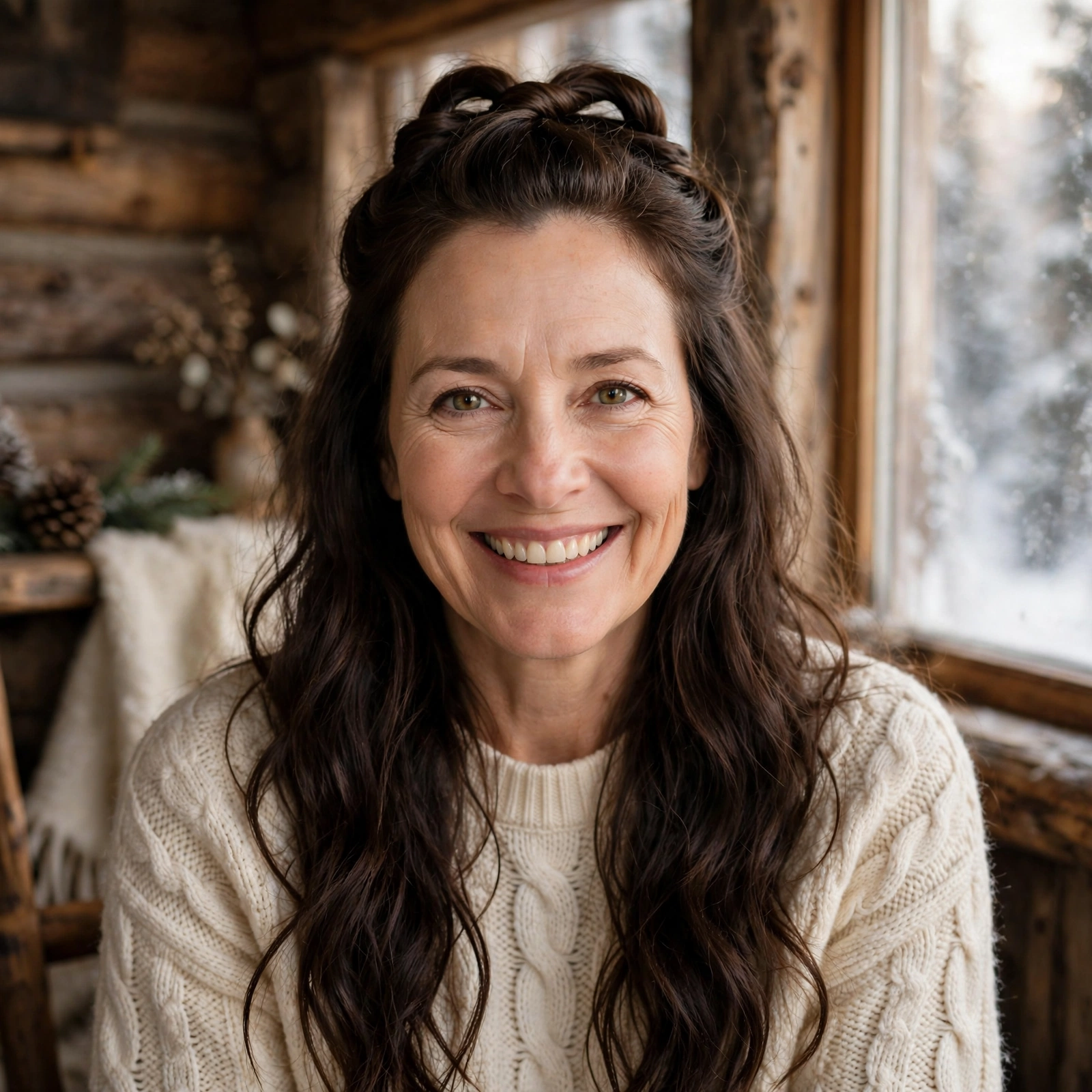
12. Polished Low Ponytail
A clean side or middle part, hair smoothed back and secured low at the nape, with a wrapped strand hiding the elastic — minimalism at its most flattering. After fifty, a low ponytail worn soft (not scraped tight) is quietly elegant: it shows off the face, works under every winter coat, and takes four minutes. The key detail is the wrapped strand — it turns “I gave up” into “I meant this.”
How to get it: Part on damp hair, smooth a lightweight serum through the lengths, and brush everything back into a low ponytail at the nape (placement matters — crown ponytails read younger and less elegant here). Secure, then wrap a small strand around the elastic and pin underneath. Keep it soft: don’t pull the front tight.
Best for: Straight to wavy textures; medium to long lengths; oval and oblong faces. All densities — fine hair looks neat, thick hair looks sleek.
Maintenance: Low. About five minutes, no heat needed on naturally straight hair. No salon maintenance specific to the style.
Pro tip: Tame flyaways with a clean toothbrush spritzed with hairspray, brushed along the part and hairline — the oldest trick in the book, and gentler than edge-control gels on fine hair. For shine without weight on mature hair, we smooth one drop of Olaplex No. 7 Bonding Oil through the tail after styling.

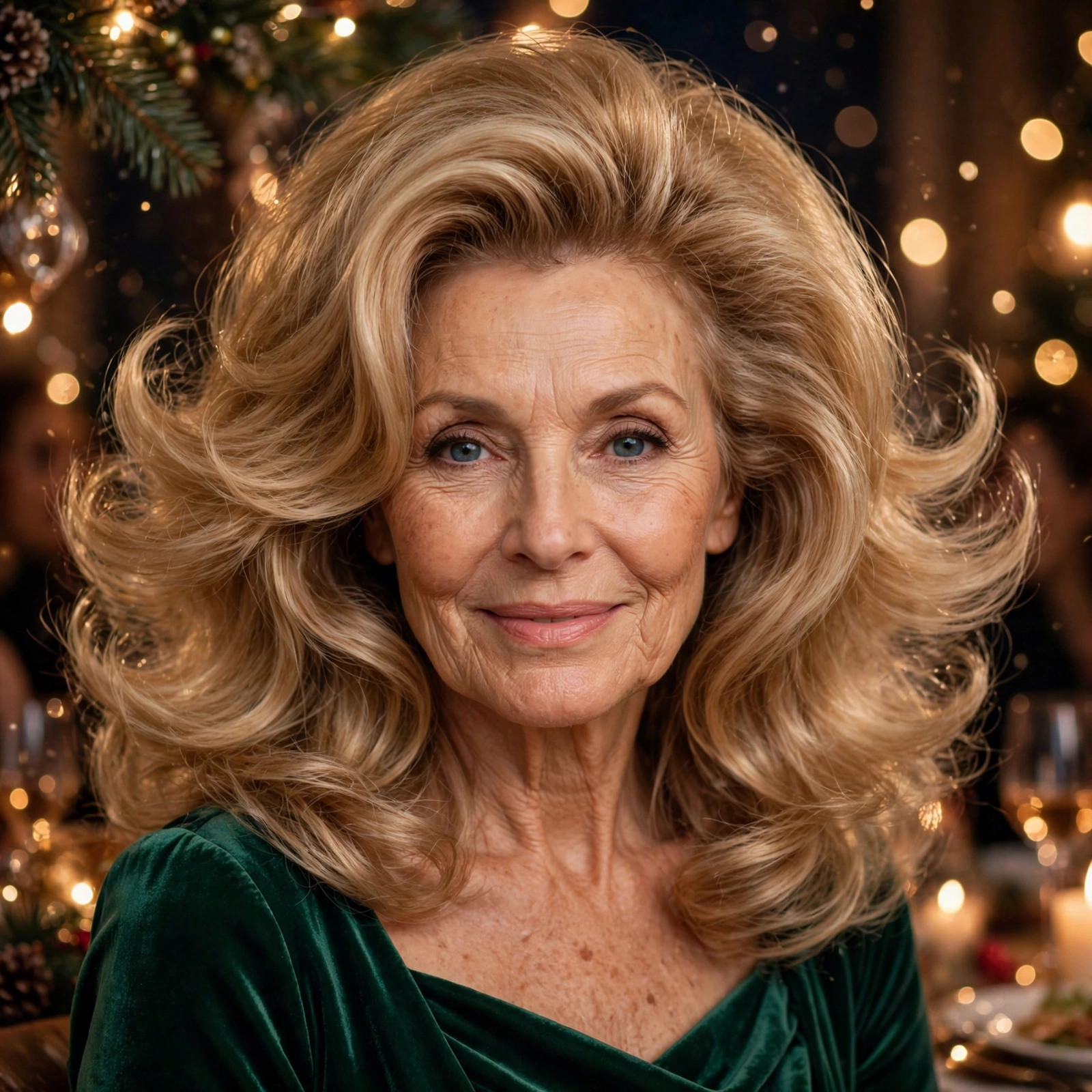
13. Fullness Curtain Blowout
Big, soft, face-framing volume with that signature sweeping movement around the cheeks — engineered here specifically for finer, mature hair. The curtain layers open up the face, the root lift counteracts the flatness thinning brings, and winter’s dry air is this style’s best friend: unlike summer humidity, January air lets the volume survive the whole day. It reads healthy, expensive, and confident.
How to get it: Ask your stylist for face-framing curtain layers starting at the cheekbones — they’re the architecture this style needs. At home, apply volumizing mousse to damp roots, blow-dry with a large round brush rolling sections up and away from the face, and set the front pieces in large Velcro rollers while they cool. Finish with the cool shot — heat shapes, cold sets.
Best for: Fine to medium hair that needs volume; oval, round, and heart-shaped faces; medium to long lengths. This is the number-one pick for hair that has thinned but not shortened.
Maintenance: Medium. Ten to fifteen minutes for the blowout, but it lasts two to three days with dry shampoo at the roots and a satin pillowcase overnight.
Pro tip: Flip your head upside down for the final cool blast — thirty seconds of inverted cooling delivers more root lift than any product. And never apply conditioner to the roots on blowout day: mid-lengths and ends only, or you’ll flatten everything you just built.
14. Fireside Collarbone Layers
Long layers cut to the collarbone, worn smooth with soft bends through the ends — the fireside cut is warm, classic, and quietly glamorous. It’s the answer for women who love their length but have noticed it thinning: the collarbone perimeter keeps ends looking full, the layers remove weight that would otherwise drag everything flat, and the soft bends catch winter evening light beautifully.
How to get it: Ask your stylist for collarbone-length layers with soft, blended ends — “remove the weight, keep the length.” At home, bend the ends with a flat iron (alternating directions for a natural finish), or curl mid-lengths to ends with a 1.25-inch iron and brush through. A heat protectant is essential — winter’s dry air plus heat styling is brutal on unprotected ends.
Best for: Medium to thick hair that can sustain the length; all face shapes; women who want to keep length without the stringy look thinning can bring.
Maintenance: Medium. Ten to fifteen minutes for the bend routine; holds for days. Trims every 8–10 weeks — “dusting” the ends keeps long layers intentional.
Pro tip: Always bend the front sections away from the face — it’s the detail that keeps longer hair from closing in around your features. And on fine-leaning hair, add Velcro rollers at the crown while you do your makeup: the hidden lift is what separates “long hair” from “great long hair.”

15. Snowlight Braided Updo
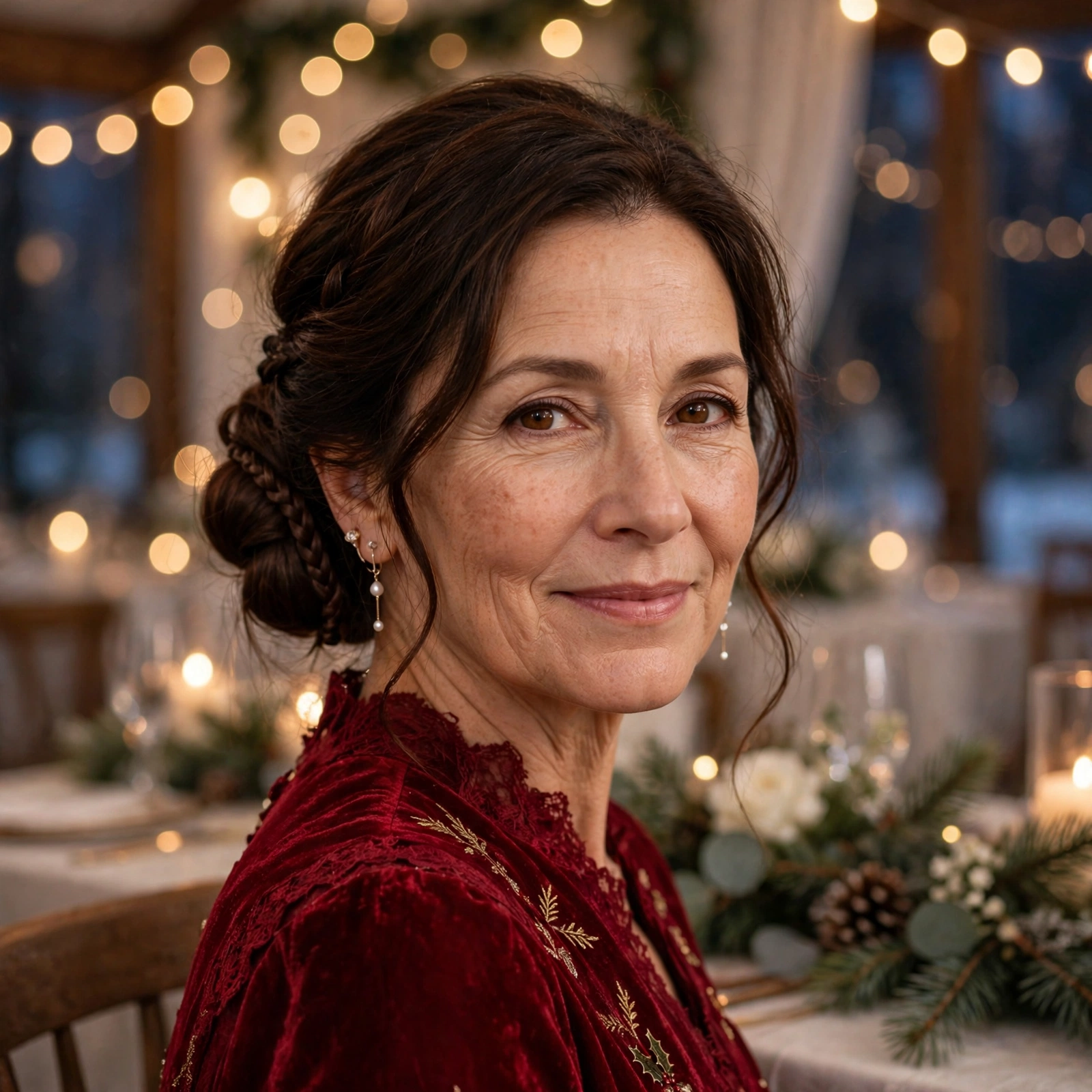
A low, soft braided bun with the braid gently pulled apart for fullness — the snowlight updo is winter elegance with real staying power. Two small braids feeding into a low bun create intricate-looking detail in about ten minutes, and the “pancaked” braid looks fuller, which flatters finer hair beautifully. It’s the holiday-party answer: polished enough for photographs, secure enough to dance.
How to get it: Make two small braids at the temples, gather everything into a low ponytail, twist into a bun, then wrap the braids around the bun’s base and pin. Gently tug the outer edges of each braid before wrapping — the “pancaking” is what gives the fullness. Hide every pin: slide them in wavy-side-down and tuck the ends under.
Best for: Medium to long hair; all face shapes; straight to wavy textures show the braid detail best. Fine hair benefits enormously from the pancaking step.
Maintenance: Medium. Ten to fifteen minutes once you’ve practiced it twice. No salon maintenance tied to the style.
Pro tip: Braid slightly damp hair with a little texture spray — it sets with more grip and texture as it dries, and the style holds hours longer. And pin the finished bun in an X pattern with two pins at each anchor point: winter coats and hugs are updo enemies, and this is the fix.
Winter Hairstyles for Women Over 50: FAQs
My hair is thinning — which winter styles will actually help?
Thinning hair flatters best with shorter perimeters and texture: the Silver Feather Lob (#1), Velvety Short Shag (#9), and Tousled Chin-Length Bob (#8) all manufacture the look of density through shape rather than product. Add mousse at the roots, a round-brush lift at the crown, and dry shampoo on day two for grit. What to avoid: one-length long hair (it shows every sparse spot), scraped-tight styles (tension emphasizes thinning at the hairline), and heavy oils that flatten. If shedding seems sudden or patchy rather than gradual, read the basics of hair loss in women and bring it up with a dermatologist — some causes are very treatable.
How do I blend gray gracefully through winter?
Winter is actually the kindest season for gray: the low, soft light flatters silver tones, and you’re not fighting summer sun fade. The graceful route is blending, not covering — a demi-permanent gloss in a tone close to your gray, or lowlights woven through the regrowth line, turns a harsh demarcation into dimension (see style #10). Weekly purple shampoo or a purple mask keeps silver luminous instead of yellowed, and a rich conditioning mask is non-negotiable since gray hair runs coarse and dry. Give any color change two weeks to settle before judging it — fresh color always looks bolder on day one.
What’s the lowest-maintenance winter cut after 50?
The Wool-Collar Textured Pixie (#2) wins on daily effort — two to three minutes — but demands trims every 4–6 weeks, so it’s low-daily, high-salon. For the true low-everything winner, pick the Silver Feather Lob (#1) or Velvety Short Shag (#9): both air-dry decently, look good slightly messy, and stretch to 10–12 weeks between appointments. The honest formula: textured cuts hide grow-out, blunt cuts don’t. If you know you’re a “stretch the appointment” person, choose texture every time — a grown-out shag still looks intentional, while a grown-out blunt bob just looks overdue.
How do I beat hat hair at 50+ without wrecking my style?
Low, contained styles win hat season: the Beanie-Proof Side Sweep (#7), Low Winter Chignon (#4), and Silk-Scarf Low Bun (#6) were designed for exactly this. The physics are simple — anything piled high gets crushed, anything at the nape slides right under. Two more tricks: choose beanies with a silk or satin lining to prevent frizz and breakage on fragile mature hair, and part your hair where the hat’s edge will sit before putting it on. When the hat comes off, flip your head upside down and shake once — instant volume restoration. If you’re still building your seasonal rotation, our summer hairstyles for women over 50 guide shows which warm-weather cuts transition best into hat season.
How often should I really trim my hair in winter?
Winter’s dry air means most mature hair needs slightly more frequent attention than summer. Precision short cuts (pixies, shaped bobs): every 4–6 weeks without negotiation. Lobs, shags, and layered cuts: every 8–12 weeks. Longer hair worn mostly down: every 10–12 weeks, but ask for a “dusting” — just the very tips — to stop splits traveling up the shaft. The tell-tale sign you waited too long isn’t length, it’s ends: if they look transparent or won’t hold a curl, you’re overdue. A tiny trim on time beats a big chop later, every single time. Learn how to get rid of split ends before they travel further up the shaft.
The Bottom Line
The most flattering winter hairstyles for women over 50 aren’t the most complicated ones — they’re the ones that work with your hair’s real texture, survive your real life, and make you feel like yourself when you catch your reflection. Pick one cut and two or three styling ideas from this list, give them a two-week trial and let this be the winter your hair feels easy. If you’re thinking about how your style should keep evolving, our youthful hairstyles for women over 50 guide has even more ideas for keeping your look fresh year-round. Here’s to healthy, happy mature winter hair in 2026 — and many good hair days ahead.