
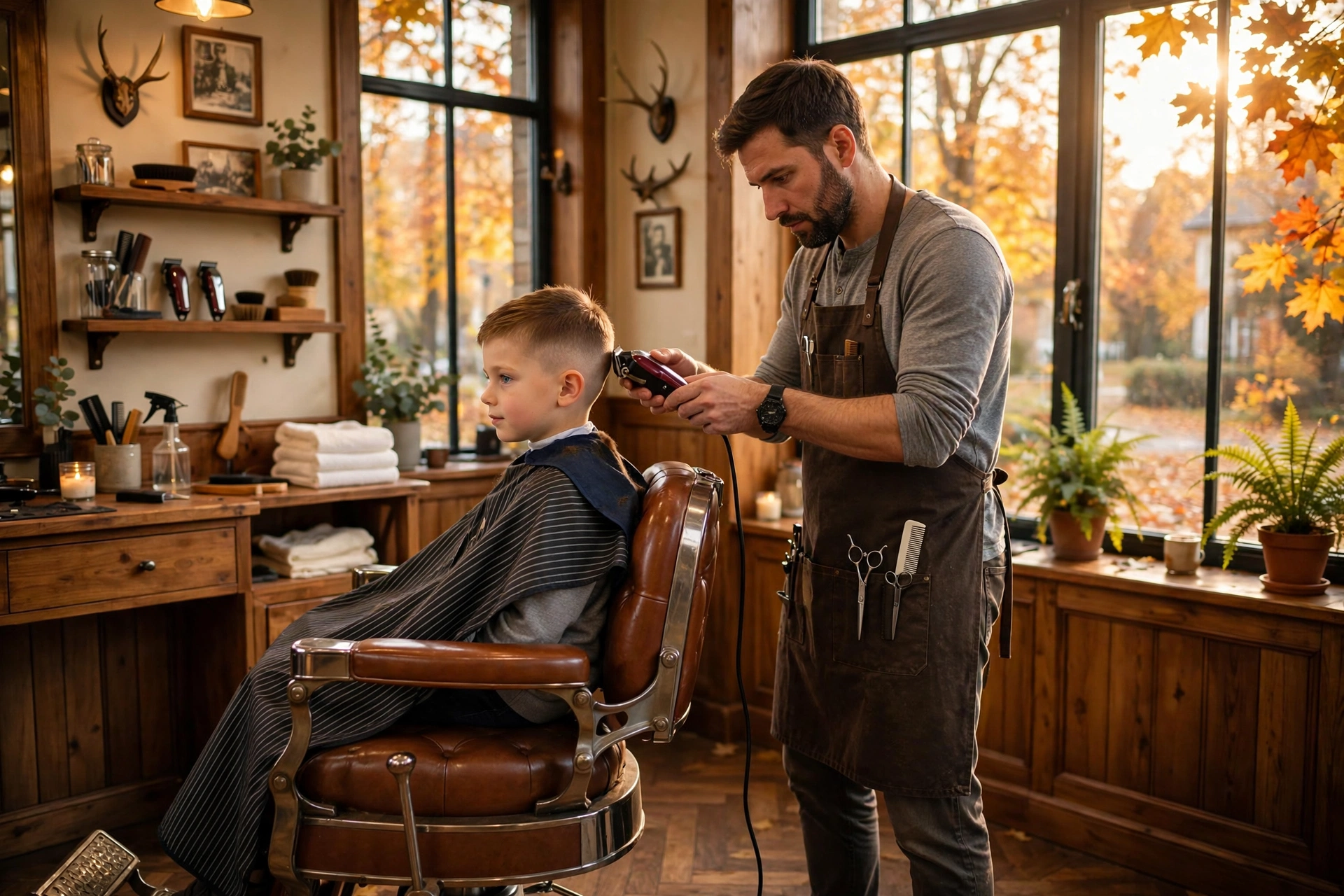
12 Fall Fade Haircuts for Boys
If you’re a parent standing in the barbershop doorway while your son scrolls for the perfect cut, here’s the direct answer: the best fall fade haircuts for boys in 2026 are the low fade textured crop, the mid fade with side-swept texture, the high skin fade with quiff, the drop fade with curly top, and the classic taper fade — five cuts that pair sharp, clean sides with enough length on top to style a dozen different ways. A fade is the haircut equivalent of a good pair of sneakers: it goes with everything, looks intentional from every angle, and when the blend is crisp, the whole look clicks. Below, our editors break down 12 of them with the exact words to tell the barber.
Fall is secretly the best season for a fade. Summer’s sweat and swim-pool frizz are gone, so the sides stay sharp longer and the top actually holds the style you ask for. It’s picture season — school photos, family portraits, holiday cards — and nothing photographs cleaner than a fresh fade line against a cozy sweater. It’s also sports season — ask any kid on a team: a fade survives helmets, beanies, and ninety minutes of running.
But let’s be honest about the barbershop conversation, because it confuses almost everyone the first time. A fade is a gradual blend from longer hair on top down to very short (or skin) at the sides and back — not a buzz cut, not “short all over.” Guard numbers are the barber’s measuring language: a #0 is skin-close (about half a millimeter), a #1 is roughly 3mm, a #2 is 6mm, a #3 is 10mm, and a #4 is 13mm. When your son says “I want a skin fade,” he means the blend goes all the way down to bare skin. When he says “taper,” he usually means just the neckline and sideburns cleaned up — a very different commitment. Every style below includes the exact guard numbers to ask for, so nobody has to guess.
Parents ask us three things more than anything else: is it age-appropriate, will the school allow it, and how fast will it grow out? Short answers: yes, fades suit all ages (even a 5-year-old rocks a low fade); most schools are fine unless there’s a shaved design or extreme contrast; and a fade stays crispest for two to three weeks — the full grow-out story is in our guide below. We rated every style’s maintenance honestly, because a cool cut that turns into a daily battle isn’t cool.
What makes this guide different: every style comes with the full picture — exactly how to get it (barber script with guard numbers, plus at-home upkeep), who it flatters most, honest maintenance expectations, and a pro tip from our editors’ testing. No fluff — just the 12 best boys’ fade haircuts for fall 2026.
Below, we’ve rounded up the most wearable fade haircuts for boys this autumn — sharp, practical, and genuinely cool. Let’s find his fall cut.
In this guide: jump straight to any style that catches your eye.
- 1. Low Fade Textured Crop
- 2. Mid Fade with Side-Swept Texture
- 3. High Skin Fade with Quiff
- 4. Drop Fade with Curly Top
- 5. Classic Taper Fade
- 6. Burst Fade Faux Hawk
- 7. Mid Skin Fade Comb-Over
- 8. Low Fade with Textured Fringe
- 9. High Fade with Wavy Top
- 10. Tapered Coily Afro Fade
- 11. Mid Fade Spiky Top
- 12. Low Skin Fade with Crisp Line-Up
Editor’s Top 5 Fall Fade Haircuts for Boys
Short on time? These are the five boys’ fade haircuts our editors keep recommending this season — the highest style-to-effort ratio on the entire list, tested against real school mornings.
1. Low Fade Textured Crop
The undisputed champion of fall 2026. The low fade keeps things subtle and school-safe while the textured top does all the talking — it’s the cut most barbers reach for when a parent says “cool but appropriate.” It photographs beautifully, survives beanie season, and asks almost nothing of your mornings.
2. Classic Taper Fade
The parent-favorite for a reason. The taper cleans up the neckline and sideburns without committing to a full fade, which means it grows out more gracefully than anything else on this list. If this is his first fade, start here — it’s the lowest-risk way to look sharp.
3. Drop Fade with Curly Top
The best thing to happen to curly hair in years. The drop fade follows the head’s natural curve instead of cutting straight across, so curls on top get a perfect frame and the sides stay neat for weeks. If your son has curls, this is the cut that finally works with them instead of against them.
4. Mid Skin Fade Comb-Over
Picture-day polish with genuine staying power. The mid skin fade gives that crisp, high-contrast look kids love, while the comb-over keeps it neat enough for grandparents’ approval. It’s the rare cut that satisfies both the kid and the camera.
5. Low Skin Fade with Crisp Line-Up
Maximum sharpness, minimum fuss. The low placement keeps the skin fade subtle, and a clean line-up along the hairline makes the whole cut look expensive. Older boys (9+) love this one — it’s the closest thing to a “grown-up” haircut on the list.
Fade Types Decoded: Low, Mid, High, Drop, Taper — What Each Means
Walk into any barbershop and you’ll hear the same five words, and they genuinely change the whole haircut. A low fade starts the blend just above the ears and nape — the subtlest, most school-friendly, easiest to grow out. A mid fade starts around temple level, roughly even with the corners of the eyes — the balanced middle ground that’s bold enough to notice and tame enough for class photos. A high fade starts well above the temples, leaving lots of contrast between the bare-ish sides and the longer top — it’s the statement cut, and it needs the most upkeep because the fade line grows out visibly fast.
Then there are the two specialist terms. A skin fade (sometimes called a bald fade) blends all the way down to bare skin at the bottom — you can stack it onto any height, so a “low skin fade” and a “high skin fade” are completely different haircuts. And a drop fade isn’t about height at all: it’s about the shape. Instead of cutting the fade line straight around the head, the barber lets it arc downward behind the ears, following the skull’s natural curve. It’s the best fade for curly hair, cowlicks, and less-than-perfectly-round heads.
The taper deserves its own explanation because it’s the most misunderstood word in the chair. A taper only cleans up two zones — the sideburns and the neckline — fading them gradually while leaving the rest of the sides’ length alone. It is not a full fade. That’s why parents love it: neat for twice as long, graceful grow-out, zero dress-code drama. When your son says “taper fade,” he usually means a taper at the neckline plus a low fade on the sides — the hybrid that dominates this list.
Guard numbers are the other half of the barber script, and they’re simpler than they sound. Think of them as a ruler: #0 is skin-close (under 1mm), #1 is about 3mm, #2 is 6mm, #3 is 10mm, #4 is 13mm. Most boys’ fades blend from a #0 or #1 at the bottom up to a #2 or #3 where the fade meets the longer top. The top itself is usually described in inches or finger-lengths instead — “two inches on top, textured” is a perfectly good instruction. Rule of thumb: confirm any unfamiliar guard number with the barber before the clippers start.
One practical fall note: beanie season changes the math. High and skin fades pair well with hats — no “hat line” dent when there’s barely hair to dent. Low fades and tapers are more forgiving if he wears his beanie pulled low, since the blend sits below the hat’s edge. And if he’s playing fall sports, shorter faded sides are a genuine advantage — helmets fit better, sweat dries faster, and post-game hair doesn’t look like a disaster. For boys who live in their gear, our volleyball hairstyles for boys guide covers cuts built to survive a full match.
The golden rule we give every parent: bring a photo and learn two words — the fade height and the shortest guard. “Mid fade, down to a zero” tells a barber everything. Photos remove the guesswork, and the two words make sure the guesswork stays removed even when the photo is on a phone screen across the shop.
Fade Grow-Out: How Long It Lasts and When to Go Back
Here’s the honest timeline nobody puts on the barbershop poster. A fresh fade looks its absolute crispest for about 10 to 14 days. Weeks two to three still look good — the blend softens but the shape holds. By week four, most fades look grown out: the fade line is a memory and the neckline does its own thing. Skin fades get there faster (the contrast is the whole point, so it fades first), while tapers and low fades buy you an extra week or two of respectability.
So when do you go back? For a skin fade or high fade, plan on every 2 to 3 weeks to keep it sharp — that’s the real cost of the high-contrast look. Mid fades are happy at 3 to 4 weeks. Low fades and tapers can stretch to 4 to 6 weeks, especially if you’re willing to clean up the neckline at home between visits. Time cuts backward from what matters: picture day, holiday photos, family gatherings. A cut booked 5 to 7 days before the big day is the sweet spot — fresh enough to look crisp, settled enough to look natural.
The grow-out awkward phase is real, but it’s manageable. Around week five or six, the sides start to puff out while the top keeps growing — that’s the “mushroom” window. Three fixes work: a quick at-home neckline clean-up (#1 guard, bottom edge only), styling the top with a little product, or a discounted sides-only “clean-up” appointment — ask your barber; good ones offer it unprompted.
Fall’s dry air adds one more variable: scalp and ends. Cooler weather means drier scalps, and a fade puts the scalp on display — flakes show. A gentle shampoo 2 to 3 times a week (not daily — daily washing strips kids’ scalps), plus a light conditioner on the longer top, keeps everything healthy. If you’re rebuilding his routine for the season, these dermatologists’ tips for healthy hair are the gold standard, and they apply to short fades just as much as long hair.
One last grow-out truth: the top needs trims too, not just the fade. Split ends travel upward and make the longer top look scruffy even when the sides are fresh — a tiny “dusting” of the ends every couple of months keeps the texture looking deliberate. Learn how to spot and handle split ends before they make the whole cut look tired.
12 Fall Fade Haircuts for Boys
1. Low Fade Textured Crop
The low fade textured crop is the consensus pick of fall 2026 for one reason: it makes every boy look sharp without making any statement that needs defending. The fade sits low — just above the ears and around the nape — while the top keeps one to two inches of choppy, piece-y texture. It’s trending because it threads the needle both care about: cool enough for the playground, clean enough for the class photo. The vibe is effortless confidence for school days and sports practice alike.
How to get it: Tell the barber: “Low fade, down to a #1 blending up to a #2, with two inches on top, point-cut for texture.” Point-cutting creates the piece-y finish. At home, work a pea-sized amount of matte clay through dry hair and push it forward with your fingers — two minutes, no comb.
Best for: Ages 5–14 (the most universally age-appropriate fade on this list); straight to wavy hair; fine to thick densities; all face shapes — the low fade doesn’t expose much, so it flatters round and square faces especially.
Maintenance: Low to medium. Two minutes of styling on school mornings; air-dries fine on lazy days. Barber visits every 4–5 weeks — the low placement grows out gracefully.
Pro tip: On second-day hair, skip product — dampen and re-scrunch; yesterday’s texture usually beats a fresh restyle. Ask the barber to keep the fringe slightly longer than the crown for forward movement.
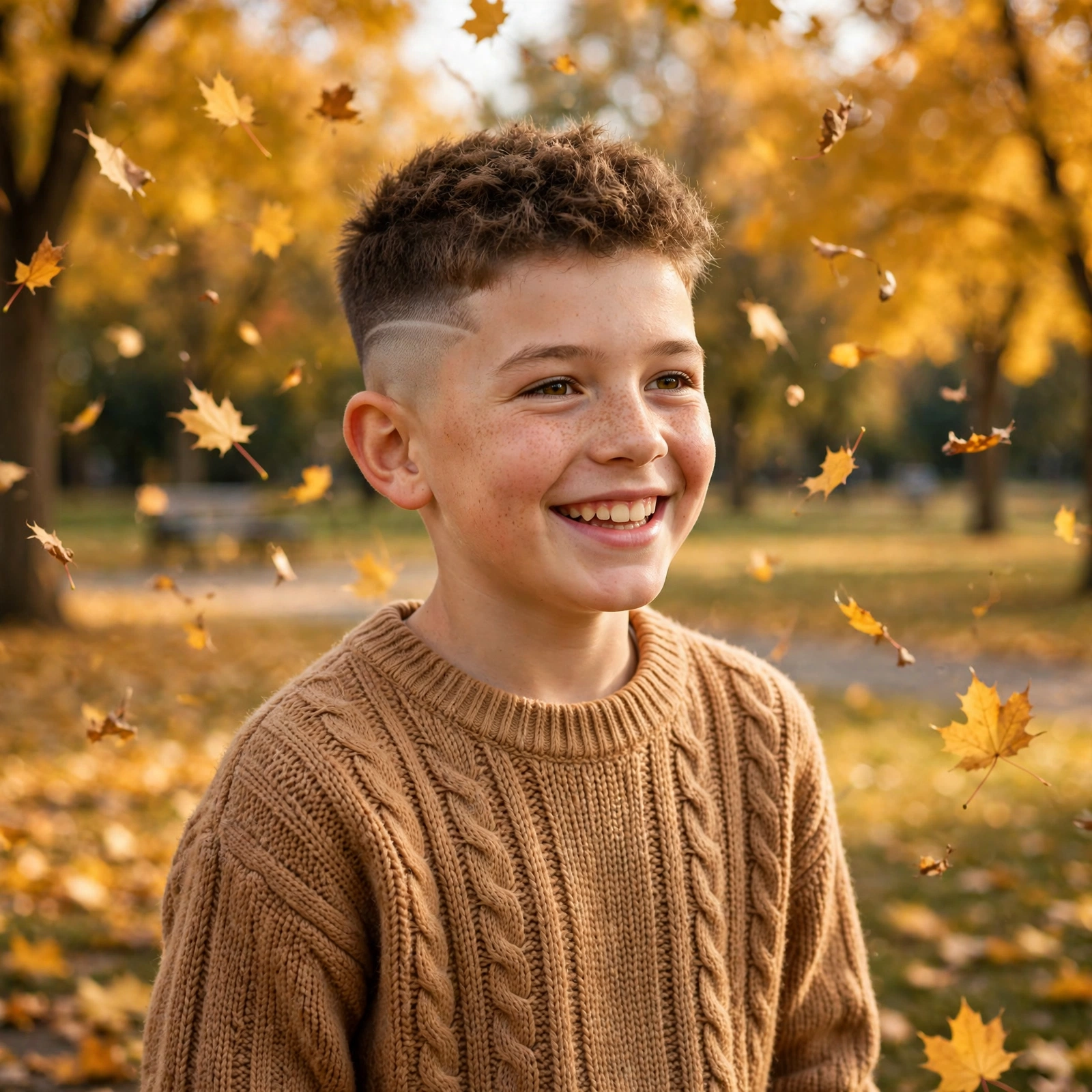
2. Mid Fade with Side-Swept Texture
The mid fade with side-swept texture is the “cool older brother” cut of fall fade haircuts for boys — polished but not stiff, with real movement on top. The fade starts at temple level for visible contrast, while three to four inches on top get swept to one side with natural texture. It’s trending because it photographs beautifully and survives under a beanie. The vibe is smart-casual — family dinners, concerts, and picture day.
How to get it: Tell the barber: “Mid fade down to a #0 at the bottom, blending to a #3 at the parietal ridge, with three to four inches on top swept to the side — leave the front longest.” At home, blow-dry the top sideways with a vent brush and finish with light styling cream — or just dampen and sweep on rushed mornings.
Best for: Ages 8–14; straight to wavy hair with some natural body; oval, oblong, and heart-shaped faces (the side sweep softens wider foreheads); boys with enough top length to sweep.
Maintenance: Medium. Five minutes of styling for the polished version; the cut itself holds shape well. Barber visits every 3–4 weeks to keep the fade line crisp.
Pro tip: Sweep with his natural growth pattern, not against it — it halves styling time and lasts all day. A dime-sized amount of American Crew Fiber gives hold without the wet look.
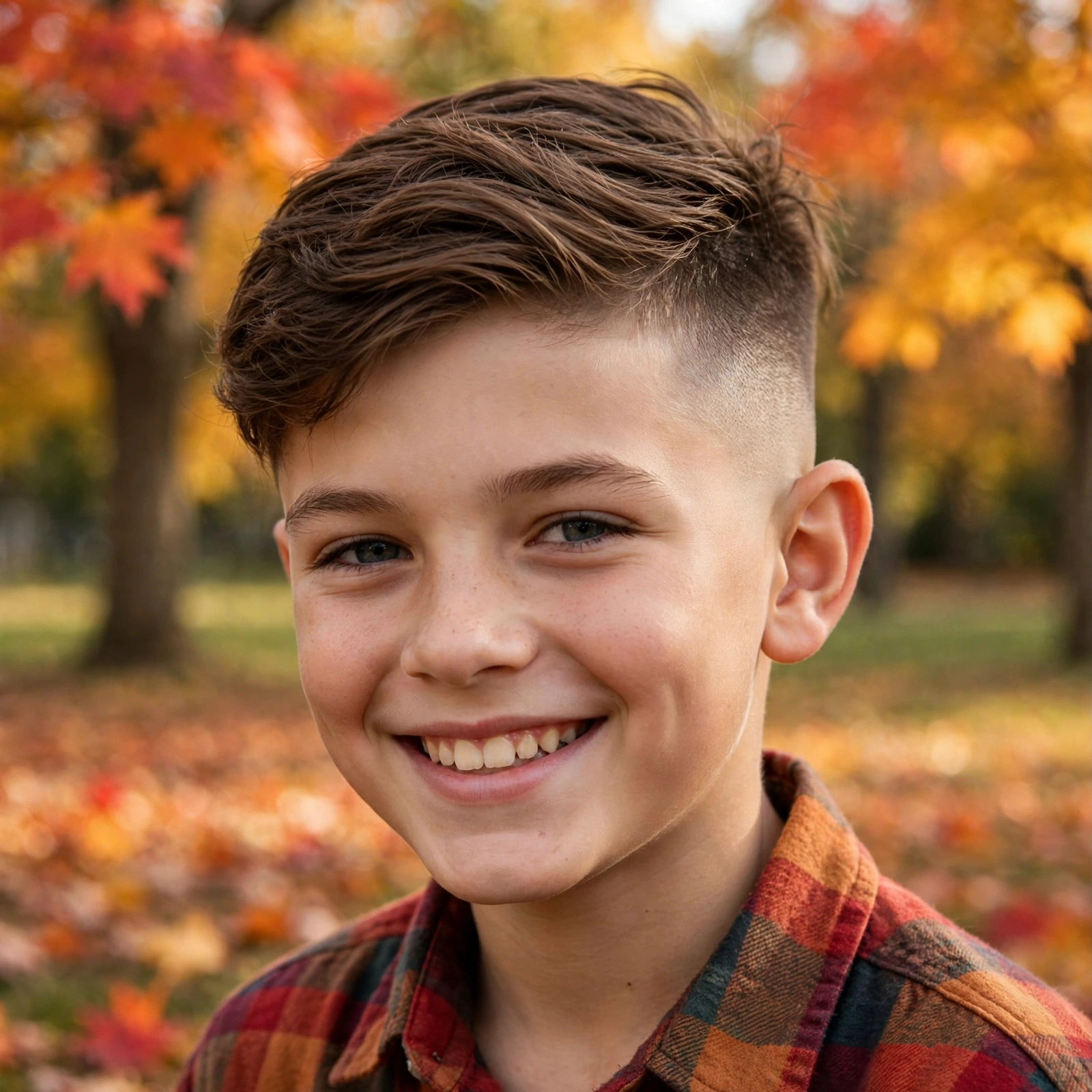
3. High Skin Fade with Quiff
Bold, high-contrast, and unapologetically cool — the high skin fade with quiff is the statement cut of the season. The sides go from bare skin up high above the temples into a voluminous quiff that lifts up and back off the forehead. It’s trending among older boys as the maximum-drama fade: intentional from every angle, perfect with chunky fall fashion. The vibe is confident and fashion-forward — dances, hangouts, and photos.
How to get it: Tell the barber: “High skin fade — foil or #0 at the bottom, high up above the temples — with four inches on top for a quiff, shorter at the back of the crown.” At home, blow-dry the top up and back with a round brush, then lock with matte paste — the blow-dry is non-negotiable; air-drying gives a flop, not a lift.
Best for: Ages 10–14; straight to wavy hair with enough density to hold volume; oval and oblong faces (the height elongates); boys willing to spend a few minutes styling.
Maintenance: High. Five to eight minutes of styling each morning; the high skin fade shows grow-out fast. Barber visits every 2–3 weeks — this is the highest-maintenance fade height.
Pro tip: Pre-style with volumizing mousse on damp hair before blow-drying — it doubles staying power. On hat days, a beanie pressed over the quiff creates cool lived-in texture when it comes off.
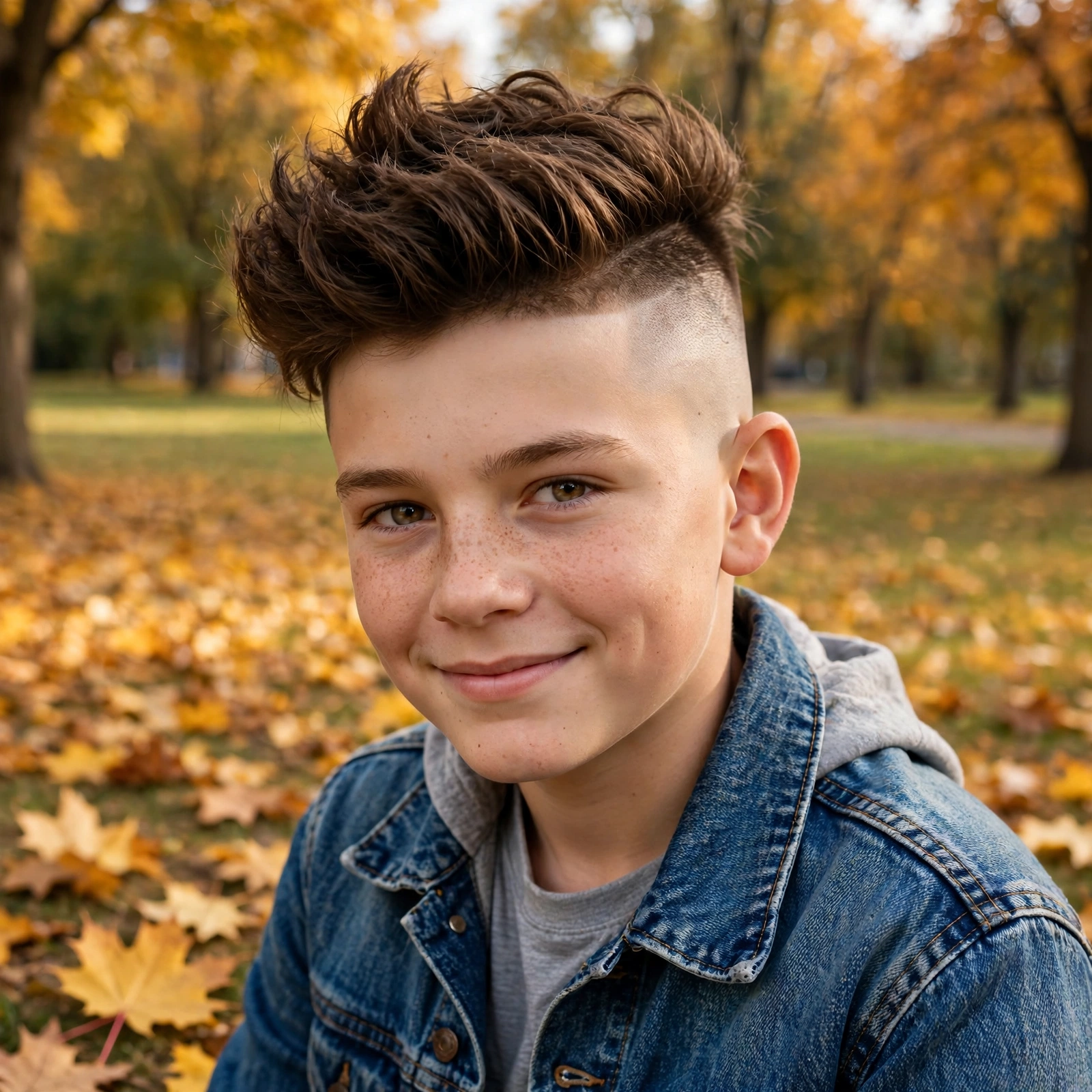
4. Drop Fade with Curly Top
If your son has curls, stop scrolling — this is his cut. The drop fade arcs downward behind the ears, following the skull’s natural curve, while the curls on top keep their full shape and bounce. It’s the standout curly fade haircut for boys this fall because it treats curls as the feature: structured sides, free-flowing top. Our editors tested it on three curl types — it flattered all of them. The vibe is joyful and natural.
How to get it: Tell the barber: “Drop fade on the sides — follow the head’s curve, down to a #1 — and keep the curls on top, just shape the ends, don’t thin them out.” The “don’t thin” instruction matters: thinning shears on curly hair create frizz. At home, scrunch curl cream into damp hair and air-dry or diffuse — never brush curls dry.
Best for: Ages 5–14; curly and coily hair of all types (3A through 4C); all face shapes — the curl volume balances everything; especially great for cowlicks the drop fade navigates around.
Maintenance: Low to medium. Three minutes of scrunching on wash days; refresh curls with a water spritz on other days. Barber visits every 3–4 weeks for the fade; the top can go 8–10 weeks between shapings.
Pro tip: A satin pillowcase cuts morning frizz dramatically. On damp hair, a pump of Cantu Shea Butter Leave-In Conditioning Repair Cream is the routine our editors kept coming back to.
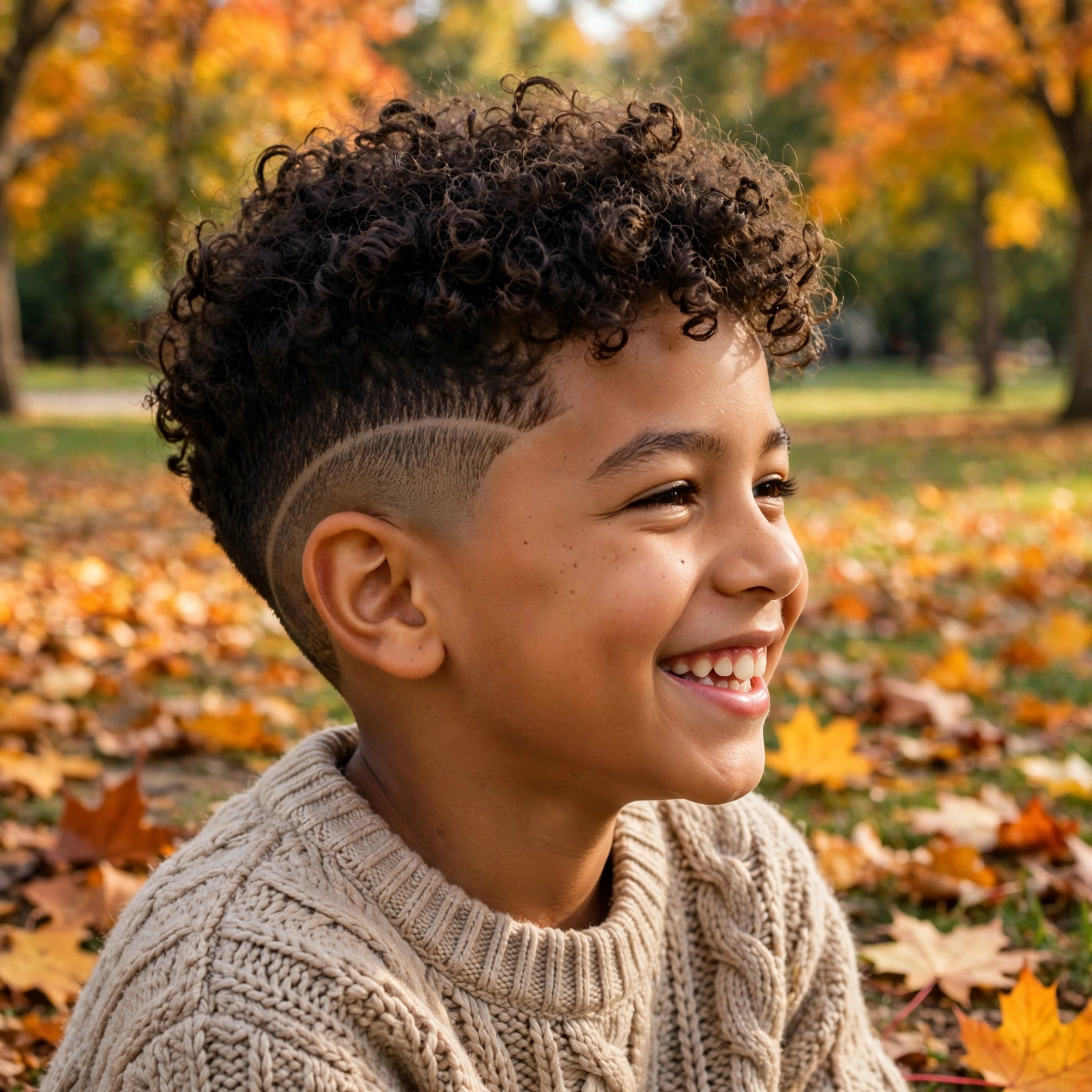
5. Classic Taper Fade
The classic taper fade is the quiet achiever of this list — the cut barbers recommend when a parent whispers “something neat, please.” Only the sideburns and neckline get the graduated fade treatment; the rest of the sides keep their natural length, and the top stays classic and combed. It’s the lowest-commitment way to look sharp, and it grows out so gracefully nobody can tell you’re overdue. The vibe is timeless and tidy — school, services, and weddings.
How to get it: Tell the barber: “Taper the sideburns and neckline — #1 down to #0 at the very edge — and just clean up the sides, keep the length. Scissor-trim the top.” At home, comb the top into a side part after a shower — a touch of light pomade keeps it neat all day.
Best for: Ages 5–14 (the best first-fade for young kids); all hair types and densities; all face shapes; boys with strict school dress codes or parents who want maximum grow-out forgiveness.
Maintenance: Low. One minute of combing; the style survives the whole day. Barber visits every 4–6 weeks — the longest interval on this list.
Pro tip: Growing out any other fade? Ask for “just a taper clean-up” and the awkward phase disappears. Teach him the neckline check: fuzzy in a phone photo means it’s time to book.
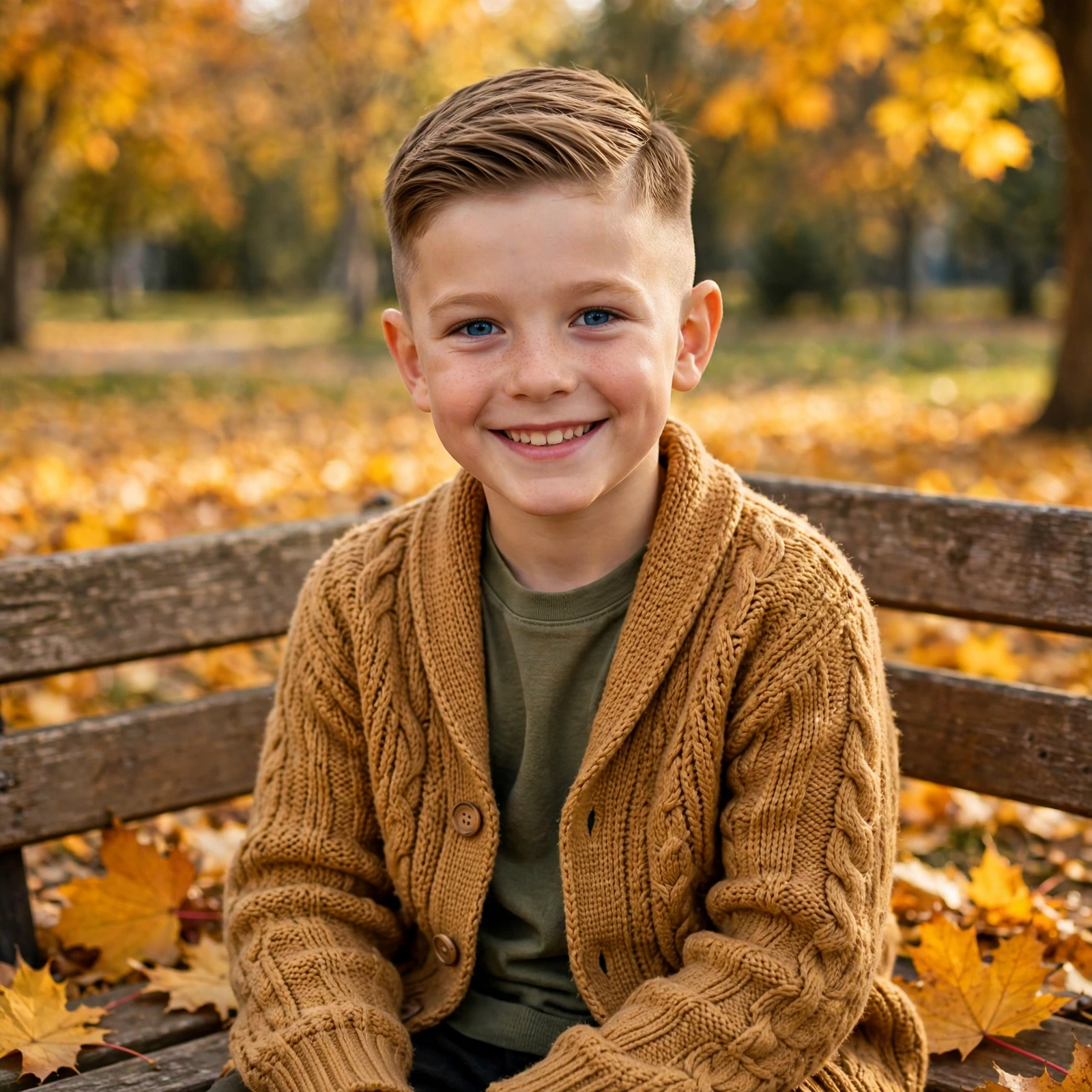
6. Burst Fade Faux Hawk
The burst fade faux hawk is pure weekend energy — the fade curves around the ear in a sunburst arc while a strip of textured hair runs down the center, spiked or tousled upward. It’s the sportiest cut on this list and a fall favorite because it looks incredible in motion: on the field, on a bike, in every action photo. It’s trending hard with the 9–13 crowd — edgy enough to feel like a statement, neat enough to never read messy. The vibe is athletic and bold: game days and skate parks.
How to get it: Tell the barber: “Burst fade around the ears — drop it to a #0 at the curve — with a faux hawk strip on top, about two to three inches, textured.” Bring a photo — “burst fade” gets interpreted differently. At home, work styling paste through the center strip and push upward: spikes for game day, tousled for school.
Best for: Ages 8–14; straight to wavy hair (curly hair makes a great version too — ask the barber); oval and round faces (the center height elongates); active boys who want a cut that matches their energy.
Maintenance: Medium. Three to five minutes of styling to get the hawk standing; the burst fade itself needs touch-ups every 3 weeks. Grows out into a decent textured crop, so the awkward phase is mild.
Pro tip: For game-day hold, apply product to slightly damp hair and blast upward with the dryer for 30 seconds — heat-set spikes outlast finger-styled ones by hours. Gatsby Moving Rubber survives a full match.

7. Mid Skin Fade Comb-Over
Side part, neat sweep, razor-crisp fade — the mid skin fade comb-over is the most polished cut on this list, and kids love it precisely because it looks “official.” The skin fade at mid-temple height creates striking contrast while the longer top combs over cleanly to one side. It’s trending this fall as the go-to for picture day and family events: it reads classic from the front and modern from the side. Our editors found it earns the most compliments of any style here. The vibe is sharp and put-together — photos, holiday dinners, ceremonies.
How to get it: Tell the barber: “Mid skin fade — #0 at the bottom up to a #2 — with a hard part combed over, three inches on top.” Choose the hard part (shaved line — bolder) or a natural part (softer). At home, comb the top over while damp with a little pomade and let it set.
Best for: Ages 8–14; straight to wavy hair that lies flat when combed; oval, square, and heart-shaped faces; boys who don’t mind two minutes with a comb each morning.
Maintenance: Medium. Two to three minutes of combing; the style holds all day once set. Barber visits every 3 weeks — the skin fade contrast is the first thing to soften.
Pro tip: Train the part on damp hair — comb it into place after the shower and it “remembers” all day. Suavecito Original Hold Pomade gives the shine this style wants without grease.
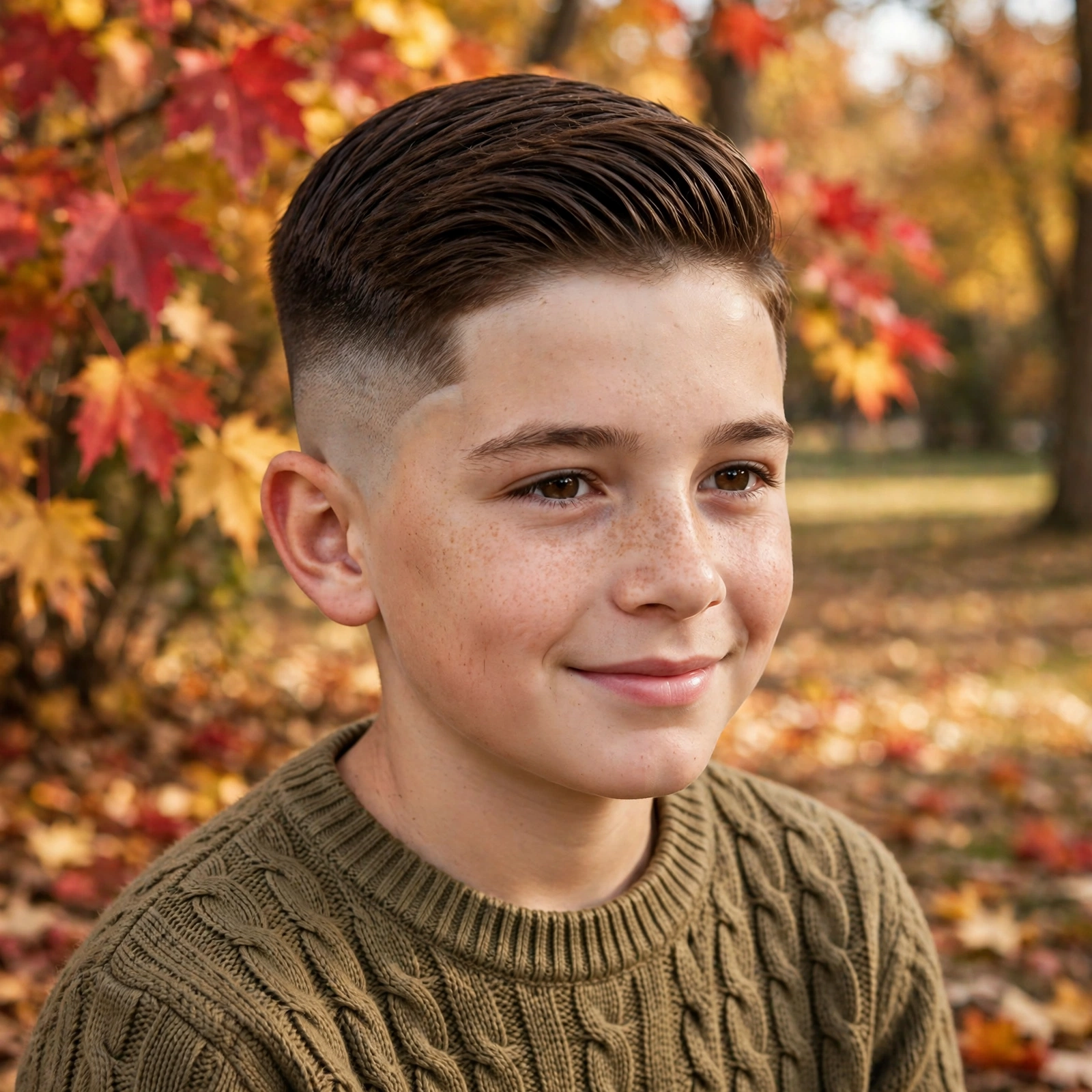
8. Low Fade with Textured Fringe
Forward, piece-y, and effortlessly cool — the low fade with textured fringe is the haircut equivalent of a perfectly broken-in hoodie. The fringe falls over the forehead in soft, separated pieces while the low fade keeps the sides tidy and understated. It’s trending among younger boys this fall because it’s the rare cool cut that requires zero morning skill: the fringe just does its thing. Our editors love it for the 6–10 crowd — adorable on little kids, cool on tweens. The vibe is relaxed and playful.
How to get it: Tell the barber: “Low fade, #1 up to #3 on the sides, with a textured fringe — keep the front about two inches, point-cut so it falls in pieces, not a straight line.” Point-cutting is what separates this from a bowl cut — insist on it. At home, scrunch a little texture cream into the damp fringe and air-dry.
Best for: Ages 5–12; straight to wavy hair (curly fringe works too — just keep it longer); round and oval faces (the fringe shortens a long forehead nicely); low-effort mornings.
Maintenance: Low. One minute of scrunching, or genuinely nothing on good hair days. Barber visits every 4–5 weeks; the fringe can be trimmed between visits with the “twist and snip” method if it starts poking eyes.
Pro tip: The eye-poke test signals trim time: fringe touching eyelashes means book the barber. Never cut a fringe straight across when wet — it springs up shorter than expected.

9. High Fade with Wavy Top
Maximum contrast meets natural movement — the high fade with wavy top pairs bare-blended sides with loose, touchable waves up top. The high fade makes the waves the entire focus of the haircut, which is exactly why it’s trending with the 11–14 crowd this fall: it looks different from every angle and photographs with real drama. It’s for the kid who’s been fighting his natural wave for years — this style lets the wave win. The vibe is cool and modern.
How to get it: Tell the barber: “High fade down to a #0, and keep the waves on top — four inches, layered so they sit naturally, no thinning.” Layers are essential — without them the top goes triangular. At home, scrunch sea salt spray into damp hair and air-dry; a diffuser on low heat speeds up cold mornings.
Best for: Ages 10–14; naturally wavy to loose-curly hair; oval and oblong faces; boys who want a distinctive cut without daily heat styling.
Maintenance: Medium. Three minutes of scrunching; the waves hold for days with a satin pillowcase. Barber visits every 2–3 weeks for the high fade — the sides are the maintenance cost here, not the top.
Pro tip: Wash wavy hair every two to three days — the natural oils define the waves. On other days, mist with water and re-scrunch; the waves reactivate instantly.
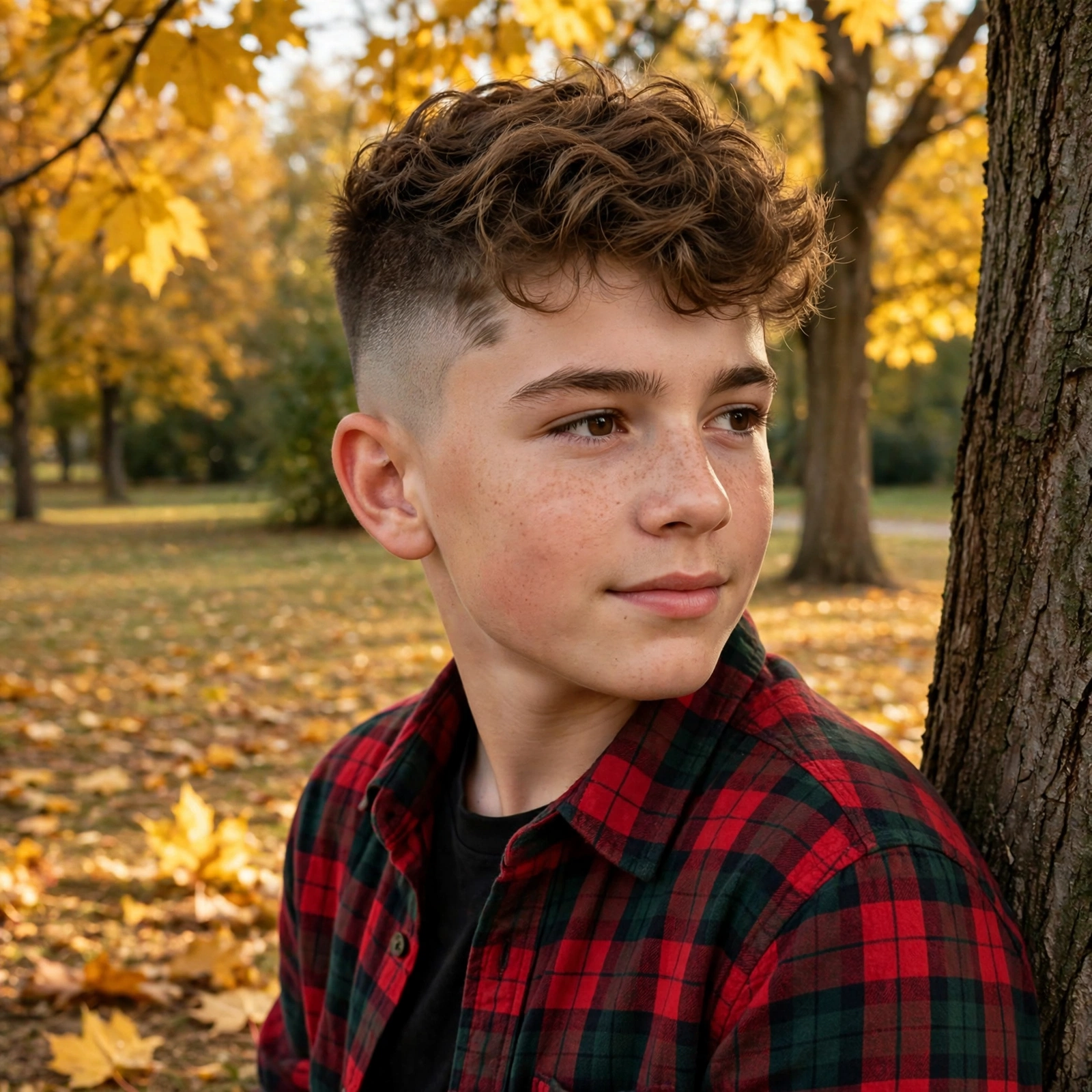
10. Tapered Coily Afro Fade
Shape, structure, and celebration of texture — the tapered coily afro fade keeps a beautifully rounded afro on top while the sides taper down in a clean, gradual fade. It’s one of the most requested fade haircuts for Black boys this fall because it honors the hair’s natural volume while giving the cut crisp, intentional edges. Our editors call it a masterclass in balance: the afro is the crown, the fade is the frame. The vibe is proud and polished.
How to get it: Tell the barber: “Tapered fade on the sides — start with a #1 and blend up — and shape the afro on top, even all around, pick it out to the shape you want.” Bring a photo of the exact silhouette — “afro fade” covers many shapes. At home, moisturize with leave-in conditioner, then pick out from the ends upward. Moisture first, always — dry picking causes breakage.
Best for: Ages 5–14; coily and kinky hair textures (4A through 4C); all face shapes — the barber customizes the silhouette’s height and width to balance his features; boys who want to wear their natural texture with pride.
Maintenance: Medium. Five minutes of moisturizing and picking every couple of days; a satin bonnet or durag at night preserves the shape beautifully. Barber visits every 2–3 weeks to keep the taper sharp; the afro itself needs shaping every 6–8 weeks.
Pro tip: The night routine matters most — a satin bonnet preserves the shape for days. For lasting moisture, the LOC method (leave-in, oil, cream) on wash days is our editors’ gold standard.

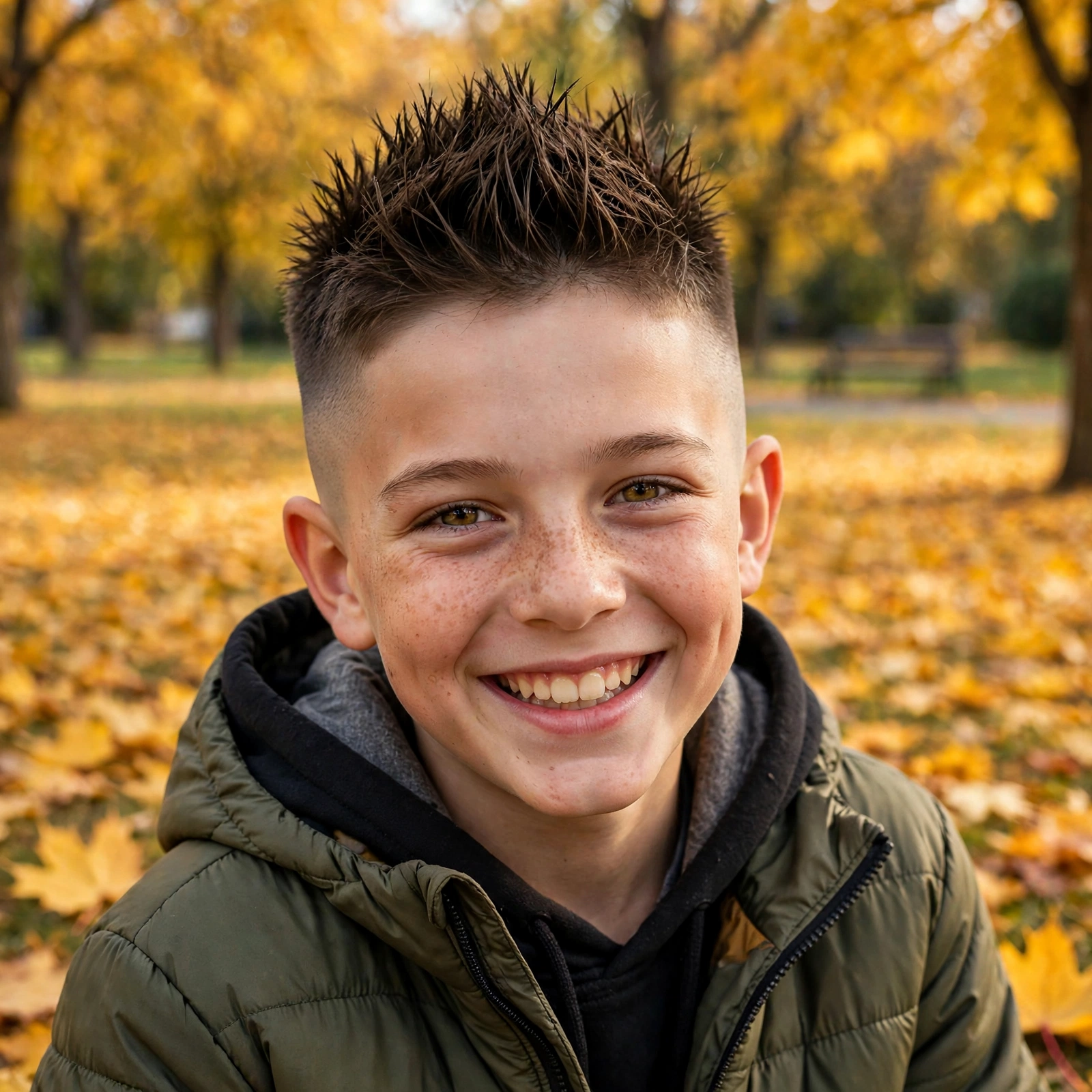
11. Mid Fade Spiky Top
Fun, fearless, and full of personality — the mid fade spiky top is the cut for the kid who treats recess like an extreme sport. Short textured spikes stand up across the crown while the mid fade keeps everything below the temples clean and sharp. It’s trending because it’s equally popular with 8-year-olds and 13-year-olds — spikes are timeless kid joy. The vibe is playful and energetic.
How to get it: Tell the barber: “Mid fade, #1 up to #3, with about two inches on top, heavily textured so it spikes up.” Texture is the engine — without it, spikes fall flat. At home, pinch strong-hold wax through dry hair upward into spikes. Use less than you think; you can add more.
Best for: Ages 6–14; straight to wavy hair (the spikier the natural texture, the easier the style); round and oval faces; high-energy kids who want a cut with attitude.
Maintenance: Low to medium. Three minutes of spiking on school mornings; it air-dries into a decent textured crop on lazy days. Barber visits every 3–4 weeks.
Pro tip: Spike it the night before — revive in the morning with damp hands and a touch more product. “Lived-in” spikes look cooler and cut the routine to sixty seconds.
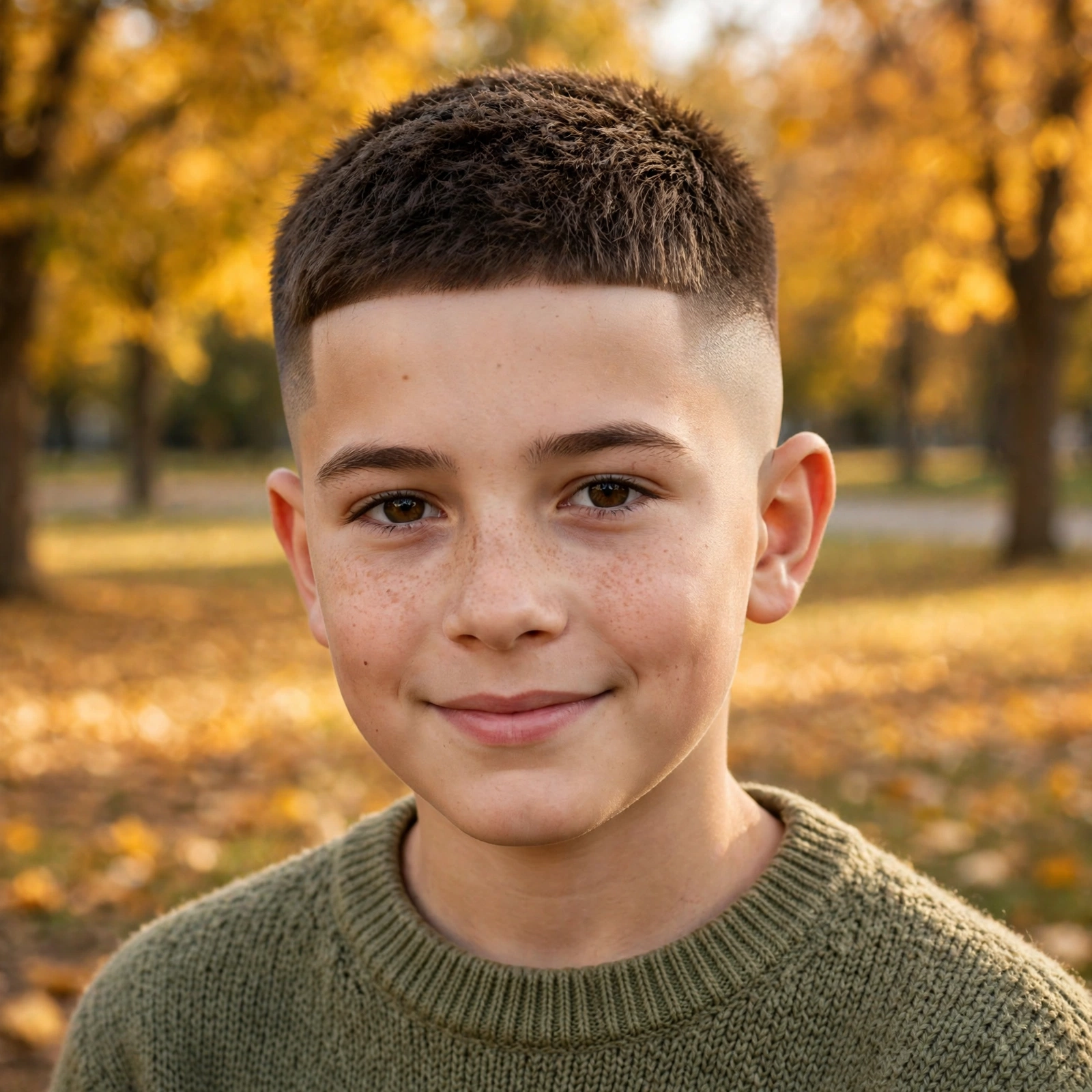
12. Low Skin Fade with Crisp Line-Up
The sharpest pencil in the box — the low skin fade with crisp line-up pairs bare-blended low sides with a razor-defined hairline that looks drawn on with a ruler. The low placement keeps it subtle from a distance; up close, the line-up is pure precision. It’s trending with older boys this fall as the “grown-up” fade — the one that gets compliments from barbers themselves. Our editors found it has the highest perceived-effort payoff here: an hour’s look in three minutes. The vibe is sleek and confident.
How to get it: Tell the barber: “Low skin fade — foil finish at the bottom — with a sharp line-up on the forehead and temples, and keep an inch or two of texture on top.” The line-up is a separate skill — confirm the barber does them. At home, brush the top forward or sideways with a soft brush.
Best for: Ages 9–14; straight to wavy hair with a defined natural hairline; oval, square, and diamond faces (the sharp lines complement strong bone structure); boys who want maximum sharpness.
Maintenance: Medium to high. Two minutes of daily styling, but the line-up is the diva — it needs refreshing every 1–2 weeks to stay razor-sharp. Full barber visits every 3 weeks; ask about line-up-only touch-ups between cuts.
Pro tip: Never sharpen the line-up at home with a razor — one slip costs a month of grow-out. Extend it by moisturizing the hairline; dry edges blur the crisp line faster than growth.
Fall Fade Haircuts for Boys: FAQs
What’s the difference between a fade and a taper?
A fade blends the hair on the sides and back gradually from longer to shorter (or skin) across the whole side of the head. A taper only fades two small zones — the sideburns and the neckline — while leaving the rest of the sides’ natural length alone. Think of it this way: a fade transforms the whole side; a taper just cleans up. When your son asks for a “taper fade,” he usually means the hybrid — tapered neckline plus low fade — which is why the photo matters more than the vocabulary.
How short is too short for school?
Most schools don’t regulate clipper length — they regulate extremes. The rules that actually get kids sent home are usually about shaved designs, lines carved into the fade, unnatural hair colors, or hair that covers the eyes. A plain low, mid, or taper fade is fine almost everywhere, and skin fades usually are too — minus etched designs. When in doubt, choose styles #1, #5, or #8 and read the school’s actual dress code; “my friend’s school allows it” is not a policy.
Are skin fades appropriate for young kids?
Yes — a skin fade is just a very short blend at the bottom of the sides; there’s nothing inherently grown-up about it, and plenty of 5- and 6-year-olds wear them. The considerations are practical: skin fades show grow-out fastest (touch-ups every 2–3 weeks) and expose more scalp (watch fall dryness). Many parents start young kids on a low fade or taper and graduate to skin fades around 8 or 9. It’s a maintenance decision, not a maturity one — pick the fade height that matches your tolerance for barbershop visits.
How do you survive the grow-out awkward phase?
The awkward phase hits around week five: the sides puff out, the fade line vanishes, and the top keeps growing. Three strategies get you through. First, book a sides-only clean-up — most barbershops offer a discounted touch-up that re-sharpens the fade without a full cut. Second, style the top with intention — product makes “growing out” read as “growing toward something.” Third, use bridge styles while the top outpaces the sides; our rubber-band hairstyles for boys guide is full of them. The phase only lasts a couple of weeks; it feels longer than it is.
How often does a fade really need a touch-up?
It depends on the fade height. Skin fades and high fades: every 2–3 weeks to stay crisp, because the high contrast is the first thing grow-out erases. Mid fades: every 3–4 weeks. Low fades and tapers: every 4–6 weeks, and you can stretch further with at-home neckline clean-ups between visits. Budget reality check: a high skin fade costs roughly twice a taper’s upkeep over a school year. The cut in the chair is only half the price of a haircut — the other half is how often you go back.
The Bottom Line
The best fall fade haircuts for boys aren’t the most dramatic ones — they’re the ones that match his hair type, survive his real life, and fit your tolerance for barbershop visits. Pick one cut from this list, bring the photo, use the two-word script (fade height + shortest guard), and give it a genuine three-week trial — the same trial our editors ran on every style here. And with costume season around the corner, don’t miss our Halloween hairstyles for boys for cuts that pair perfectly with this year’s costume. Happy fall, and happy fresh cuts.