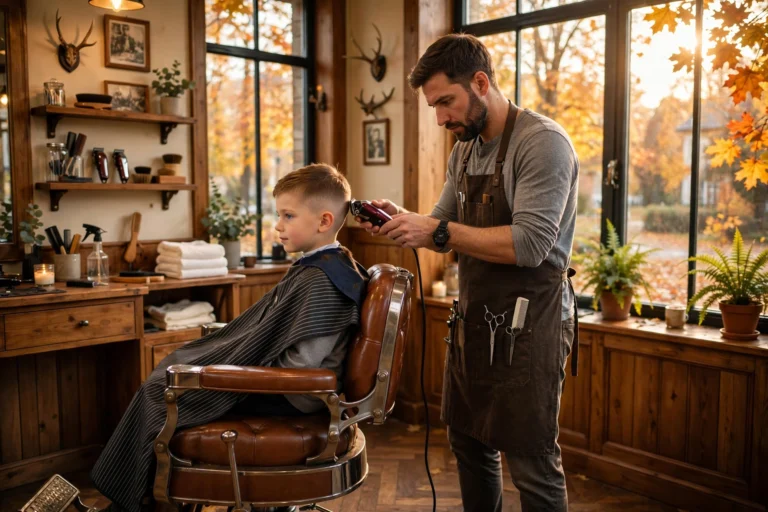
10 Low Maintenance Fall Haircuts for Teen Boys
Let’s be honest about what low maintenance fall haircuts for teen boys really need to do: survive first period at 7:40 AM, practice at 4, homework at 8, and still look good in the Friday-night group photo — all without a 15-minute styling ritual. The good news: the best low-maintenance haircuts for teen boys in fall 2026 are the textured French crop, the messy two-block, the mid fade with textured top, the bro flow, and the buzz cut with skin fade — and this guide breaks down exactly how to get each one, what to say at the barber, and how long it actually lasts.
Fall 2026 is quietly the best hair season for guys who don’t want to fuss. Summer’s humidity is gone, so texture holds longer and frizz calms down, which means the cut itself does most of the work. This season’s trend is “clean but not trying” — cuts that look intentional at school, survive a helmet or a beanie, and grow out without that awkward in-between stage that makes you want to hide under a cap for a month. Our editors tested every cut on this list against one brutal standard: would a busy 15-year-old actually keep it up?
Here’s what makes a teen haircut genuinely low maintenance, because not every cut that claims the title earns it. A truly easy cut does three things: it works with your natural texture instead of fighting it, it looks fine on day two (and day three), and it grows out in a way that doesn’t demand an emergency barber run at week three. If a cut needs daily heat, four products, and a perfect part to look decent, it’s not low maintenance — no matter what the TikTok caption says.
Parents, this guide is written for you too. Every style below includes honest barber frequency and real grow-out timelines, so you know exactly how often you’re driving to the shop and what the cut looks like at week six when motivation (and the cut) is fading. We’ve also included the exact words to use at the barber chair — guard numbers and all — because “just make it look like the photo” is how good cuts go wrong. Show the photo AND say the script.
One more fall-specific thing: hats. Beanie season starts earlier than you think, and the wrong cut turns into hat-hair disaster by second period. Several cuts on this list were picked specifically because they look good under a beanie and still look good when the beanie comes off. Fall is also sports season — football, basketball, soccer — so we’ve weighted cuts that play well with sweat, helmets, and post-practice chaos.
What makes this guide different: every style comes with the full picture. Not just what it looks like, but exactly how to get it (the barber script with guard numbers, plus the lazy-morning version), who it suits best, honest maintenance numbers, and a pro tip from real-world wear. No fluff — just the 10 best low-maintenance haircuts for teen boys for fall 2026, decoded for real life.
In this guide: jump straight to any cut that catches your eye.
- 1. The Textured French Crop
- 2. The Messy Two-Block
- 3. The Mid Fade with Textured Top
- 4. The Bro Flow
- 5. The Choppy Fringe Crop
- 6. The Curly Taper Top
- 7. The Side-Swept Crew
- 8. The Buzz Cut with Skin Fade
- 9. The Lazy Grown-Out Quiff
- 10. The Shaggy Surfer Crop
Editor’s Top 5 Low-Maintenance Haircuts for Teen Boys
Short on time? These are the five cuts our editors keep coming back to this fall — the highest style-to-effort ratio on the entire list, and the ones that survived real school mornings, real sports practices, and real beanies.
1. The Textured French Crop
The undisputed champion of fall 2026 for guys who want to look good with zero effort. Short faded sides, choppy textured top, done. It’s the cut that looks like you have a personal stylist when all you did was get out of bed — our editors’ unanimous number one pick.
2. The Mid Fade with Textured Top
The safe choice that never looks wrong: clean fade on the sides, natural texture on top, works for school photos and Saturday games alike. It’s what barbers recommend when a teen asks for “something cool but easy,” and they’re right every time.
3. The Bro Flow
The patience pick — medium length that flows naturally and looks better the less you do to it. Perfect for guys growing their hair out who still want to look intentional, and it survives hat season better than any other medium-length cut.
4. The Buzz Cut with Skin Fade
The nuclear option for maximum laziness: zero morning routine, zero products, zero bedhead. Sharpen it up with the skin fade and it goes from “I gave up” to “I’m confident” instantly. Parents love it, athletes love it, barbers love doing it.
5. The Choppy Fringe Crop
The coolest cut on this list that still takes no effort. The jagged fringe hides cowlicks, forehead sweat, and awkward hairlines better than anything else here — it’s practically engineered for teenage reality.
The 2-Minute Morning Routine for Guys
Here’s the routine our editors settled on after testing every cut on this list through real school mornings: wake up, run damp hands through your hair (or do a 10-second blast with a blow dryer if you showered at night), work a pea-sized amount of product through the top if needed, and walk out the door. That’s it. Two minutes. The secret is that 90% of the work should happen in the barber chair, not the bathroom — a well-cut texture cut practically styles itself.
The product question comes up constantly, so let’s settle it: most of these cuts need either zero product or one matte product. A matte clay or paste is the workhorse — it adds definition without shine, which reads modern and clean rather than greasy-dad-hair. Use less than you think (pea-sized, seriously), warm it between your palms until it disappears, then rake it through with your fingers. If your hair looks wet, you used too much or picked a gel — and gels are the number one way teen hair goes wrong.
Night-before strategy matters more than morning effort for truly lazy hair. If you shower at night, don’t go to bed with soaking hair — towel-dry it, push it roughly in the direction you want it to lie, and let your pillow do the rest. Morning-after hair is almost always better than freshly-washed hair for textured cuts, because a little natural oil gives the cut grip and separation. This is why the second-day rule is a feature, not a flaw: these cuts are designed around it.
Sports days need their own mini-system. Wash or at least rinse the sweat out after practice — salt and sweat sitting overnight is the fastest way to dull hair and irritate a scalp, and a quick rinse with water (no shampoo needed every time) solves most of it. If you’re cycling through game days and practice days, our volleyball hairstyles for boys roundup has sport-specific styling ideas that pair perfectly with these cuts. For athletes, cuts like the buzz fade, mid fade, and choppy fringe earn their keep: sweat doesn’t show, helmets don’t destroy them, and the post-game reset takes thirty seconds.
Fall air is drier than summer air, which changes the game slightly: ends get crispier, static shows up, and over-washing makes everything worse. Switch to a slightly richer conditioner, don’t skip it (conditioner takes 60 seconds and does more for your hair than any product), and keep the shampoo mostly on the scalp, not the ends. These dermatologists’ tips for healthy hair cover the basics if you want to rebuild your routine for the season. Healthy hair holds texture better and needs less product — which is the whole point.
Grow-Out Math: How Long Each Cut Lasts Between Barber Visits
Hair grows roughly half an inch per month — about 6 inches a year — which is the single most useful number in this entire guide. Every cut below lists its real barber frequency, but here’s how to think about it yourself: a short crop starts looking scruffy at week four and needs a cut by week five; a mid fade starts softening at week three but still looks fine at week five; and medium-length cuts like the bro flow or surfer crop can stretch 10–12 weeks because growth just adds to the look instead of breaking it. The longer the cut, the longer between visits — that’s the grow-out math that saves parents money and teens hassle.
The grow-out phase is where most teen cuts die, so let’s be honest about which cuts survive it. Fades are the worst growers-out — the clean line that made the cut cool at week one becomes a fuzzy blur by week five, and there’s no disguising it. Crops and fringes grow out gracefully because the texture hides the growth; the fringe just gets a little longer and you push it back. Medium-length styles grow out the best of all: at week eight a bro flow just looks like a slightly longer bro flow, which is why long-haired teens can go months between cuts while fade guys are back in the chair monthly.
Budget-wise, this is the conversation parents care about: a $25–$35 cut every 4 weeks costs roughly $300–$400 a year, while a $25–$35 cut every 10 weeks costs about $125–$175. That’s real money, and it’s a legitimate factor in choosing a cut. If barber trips are a hassle — scheduling, driving, cost — the longer-lasting cuts on this list (bro flow, surfer crop, curly taper top, grown-out quiff) are genuinely the smart play. Tell the barber you want a cut that grows out well, and a good barber will adjust: softer blend on the fade, more length on top, no harsh lines that grow out badly.
One thing that quietly kills grow-out quality: split ends. As the cut stretches past week six, ends start to fray, and frayed ends make even good hair look tired. The fix is simple — keep the ends moisturized with conditioner (especially in dry fall air) and don’t skip the trim when the hair starts catching on itself or looking transparent at the tips. If the ends are already frayed, here’s how to get rid of split ends before they travel further up the shaft. A tiny trim on time beats a big chop later, every time.
10 Low-Maintenance Fall Haircuts for Teen Boys
1. The Textured French Crop
The French crop — short faded sides with a choppy, textured top pushed slightly forward — is the defining teen haircut of fall 2026, and it earned the crown honestly. It’s everywhere because it solves the exact problems teenage mornings have: it hides bedhead (the fringe covers the forehead where bedhead shows most), it needs zero heat, and it looks deliberately cool rather than accidentally messy. Our editors tested it through a full week of school mornings and the longest styling session was three minutes. The vibe is clean, modern, and confident — first-day-of-school photos, football games, hanging out after school, all of it.
How to get it: Say: “Mid fade on the sides — start with a #2 guard — with a textured crop on top, about 2 inches long, choppy and pushed forward.” Bring a photo. Lazy-morning version: damp hands through the hair, pea-sized matte clay, push forward with fingers, done. No comb, no dryer required — fingers are the correct tool for this cut.
Best for: Straight to wavy hair; thick and fine hair both work; round, oval, and square faces; guys who want to look good with literally no skill. Great for cowlicks too — the forward texture hides them instead of fighting them.
Maintenance: Low. One to two minutes each morning, zero heat. Barber visits every 4–5 weeks — the fade softens by week four but the top still looks fine.
Pro tip: Ask the barber to point-cut (not blunt-cut) the fringe — point-cutting creates the choppy texture that makes this cut work. A blunt fringe on a French crop looks like a bowl cut’s cousin, and no one wants that surprise.
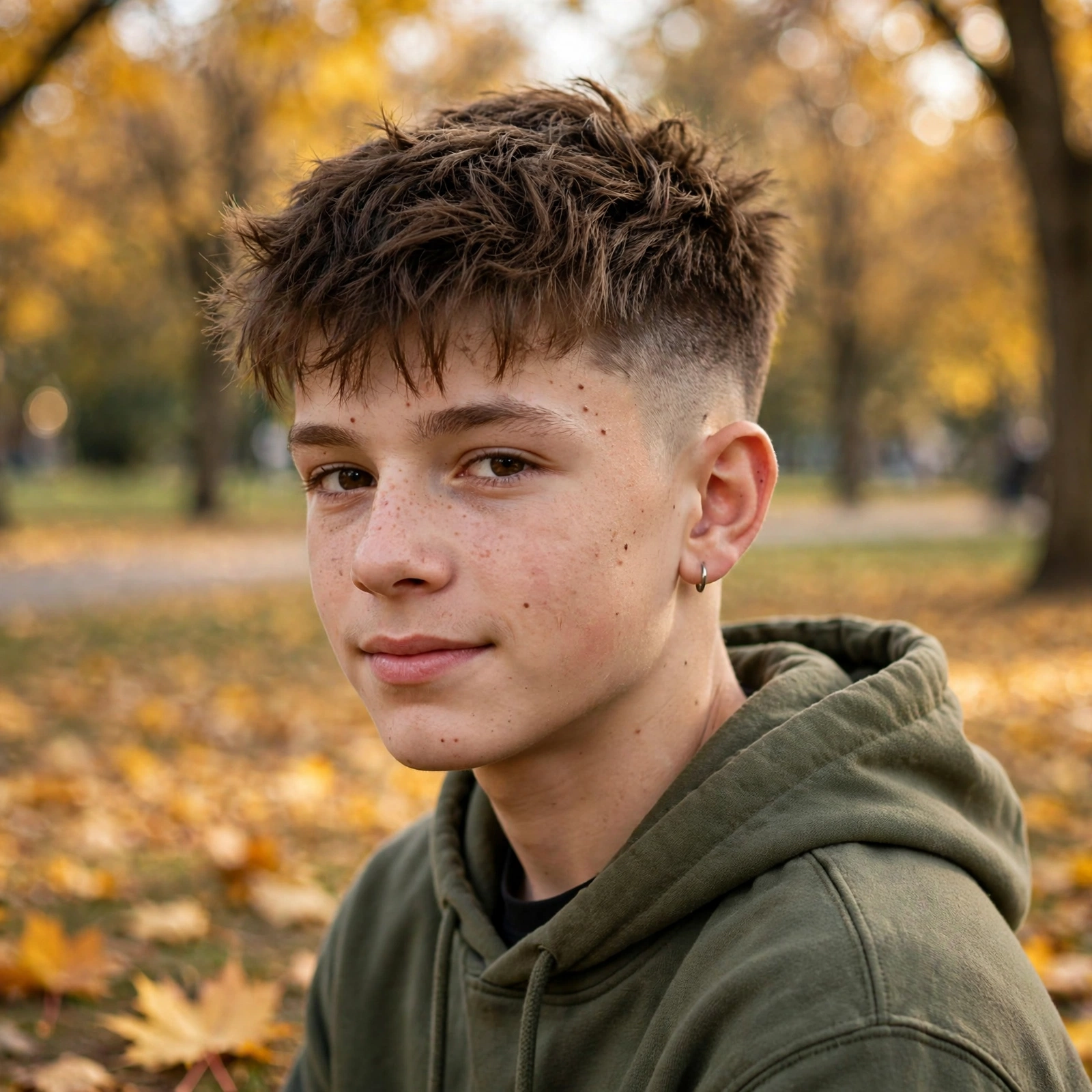
2. The Messy Two-Block
The two-block — sides and back clipped short with a disconnect from the longer, messier top — rode in from Korean pop culture and never left, and fall 2026’s version is looser and more natural than ever. It’s trending because it gives you the most visual interest per unit of effort of any cut on this list: the contrast between the tight sides and the wild top does all the talking. The vibe is effortlessly cool, a little artsy, and very “I know what I’m doing” — even though the whole point is that you didn’t do anything. Our editors found it photographs ridiculously well, which matters more to teens than anyone admits.
How to get it: Say: “Two-block — short on the sides with a disconnect, and keep 3–4 inches of messy texture on top. I want it to fall naturally.” Bring a photo, because “two-block” means different things to different barbers. Lazy-morning version: shake your head, push the top roughly into place, maybe a pinch of texture powder at the roots. That’s the whole routine.
Best for: Straight to wavy hair with some natural body; medium to thick density (fine hair can struggle to get the volume); oval and longer faces especially. Needs a bit of top length to start with.
Maintenance: Low. Two minutes, mostly finger-styling. Barber visits every 5–6 weeks — the disconnect holds up well as it grows, and the top just gets messier in a good way.
Pro tip: The disconnect is the whole cut — if the barber blends the sides into the top, you’ve got a regular haircut, not a two-block. Check in the mirror before you leave the chair and ask for a sharper disconnect if it’s too blended.
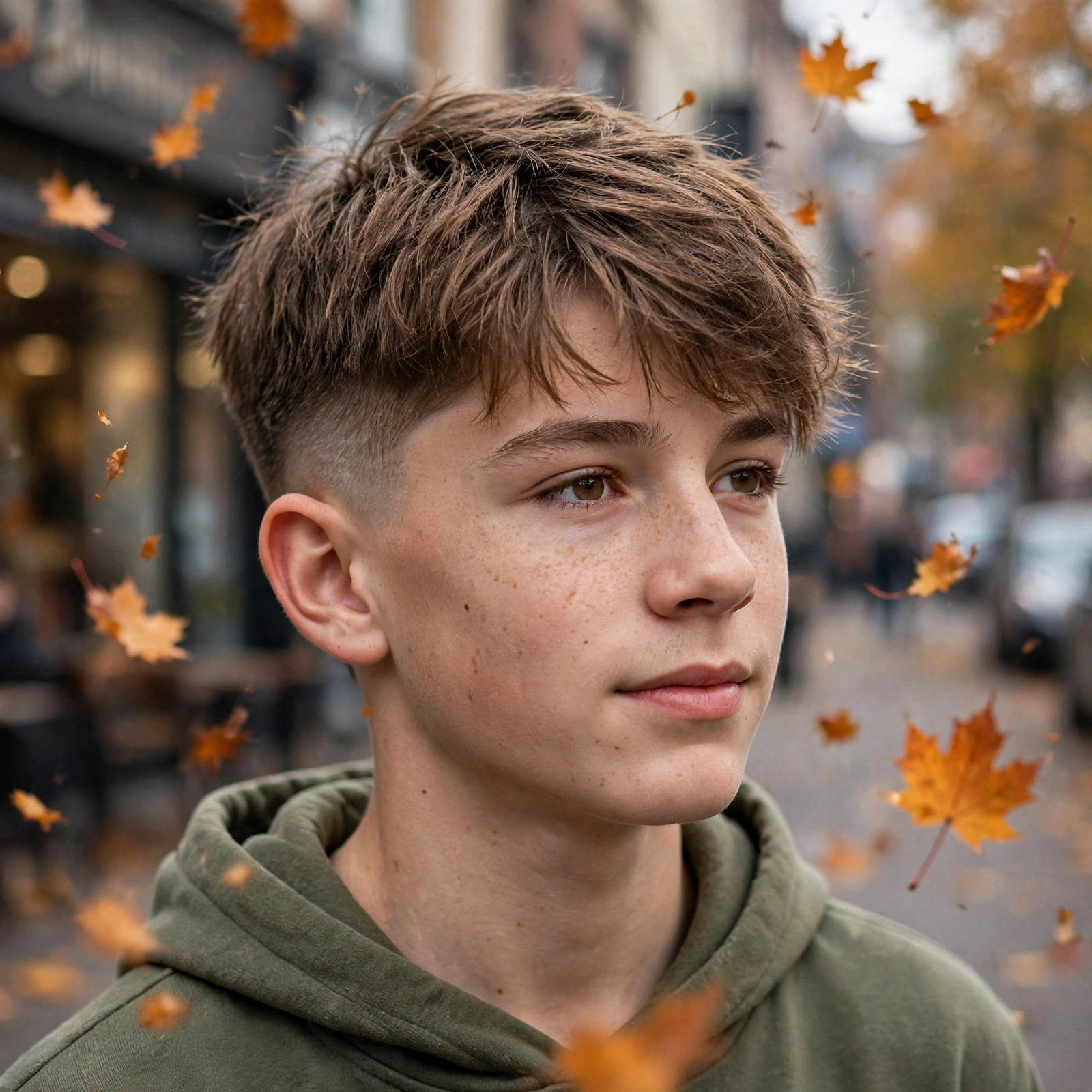
3. The Mid Fade with Textured Top
If there were a “default cool haircut” for teen boys in 2026, this would be it: a clean mid fade that transitions halfway up the head, with 2–3 inches of natural texture on top. It’s the cut barbers recommend when a teen says “something cool but easy,” and they’ve recommended it ten thousand times because it works ten thousand times. It earned its spot here by being the most foolproof cut on the list — it suits almost every face, every hair type, and every occasion from picture day to playoffs. Our editors’ take: it’s not the most exciting cut here, but it’s the one with the lowest risk of regret.
How to get it: Say: “Mid fade on the sides — #1 or #2 at the bottom blending up — with about 2.5 inches of textured length on top. Keep it natural.” Lazy-morning version: towel-dry, rake a little matte paste through the top with fingers, push it forward or to the side. Under two minutes, and it looks the same every day.
Best for: Basically everyone — straight, wavy, and curly hair; all face shapes; athletes (sweat doesn’t show, helmets don’t ruin it); guys getting their first “real” haircut and nervous about going too bold.
Maintenance: Low. Two minutes max, no heat needed. Barber visits every 3–4 weeks — this is the trade-off: fades grow out visibly, so it needs the most frequent trims on this list to stay crisp.
Pro tip: A #2 fade grows out softer than a #1, which buys you an extra week between cuts. Tell the barber “I want to stretch this to five weeks” and they’ll start the fade slightly higher and softer — barbers do this adjustment all the time.

4. The Bro Flow
The bro flow — medium-length hair worn pushed back with natural movement, ends flipping out past the ears — is the patience play of fall 2026, and it’s having a serious moment. It’s trending because the “growing it out” phase finally got its own name and its own aesthetic: it looks intentional instead of transitional. The vibe is relaxed confidence, a little bit athlete, a little bit musician — Friday night lights energy. Our editors found it’s the lowest-maintenance medium-length option by far, because the entire aesthetic is “wind did it,” and wind is free.
How to get it: This one you grow, not cut — but get the right cut to start: say “Keep the length on top and sides, just clean up the ends and thin it out underneath so it flows back.” You’ll need 4–6 inches on top to start. Lazy-morning version: push it back with damp hands, let it air-dry, done. A tiny bit of sea salt spray on damp hair adds the texture that makes the flow look deliberate.
Best for: Wavy to straight hair with natural movement; oval, oblong, and square faces; guys willing to wait through the grow-out (months 2–3 are the test). Thick hair flows best; very fine hair can look stringy.
Maintenance: Very low daily, higher patience cost. One minute in the morning, zero product most days. Barber visits every 10–12 weeks — just end cleanups, which is why parents secretly love this cut.
Pro tip: The awkward phase (months 2–3) is survivable with one trick: tuck the sides behind your ears. It instantly reads as “flow” instead of “growing out,” and it buys you the six weeks you need for the top to catch up.

5. The Choppy Fringe Crop
A textured crop with a jagged, piece-y fringe resting on the forehead — the choppy fringe crop is the coolest low-effort cut of fall 2026, and it has a secret superpower: the fringe hides everything. Cowlicks, awkward hairlines, forehead shine after gym class, the cowlick that defies physics — the fringe just covers it all. It’s trending hard because it photographs with real edge while requiring literally no skill: the choppiness is the style, so “messy” is correct by definition. Our editors ranked it the best cut on this list for guys who’ve had bad luck with cowlicks and hairlines.
How to get it: Say: “Textured crop with a choppy fringe — keep the fringe long enough to sit on my forehead, point-cut the ends so it’s piece-y, tapered sides.” About 2–3 inches of fringe length. Lazy-morning version: fingers through the fringe, tiny bit of matte clay pinched into the pieces, done in 90 seconds. No combing — combing ruins the choppiness.
Best for: Straight to wavy hair; guys with cowlicks, strong hairlines, or high foreheads (the fringe is camouflage); oval, round, and heart-shaped faces; anyone who wants edge without effort.
Maintenance: Low. Under two minutes, no heat. Barber visits every 4–5 weeks — the fringe grows into your eyes around week five, which is your reminder to book.
Pro tip: When the fringe starts poking your eyes between cuts, don’t trim it yourself — sweep it to the side for a week. A self-trimmed fringe is how a great cut becomes a funny story, and the side-sweep buys you two weeks easily.

6. The Curly Taper Top
Short tapered sides and back with your natural curls left free and full on top — the curly taper top is fall 2026’s loudest endorsement of working with what you’ve got. It’s trending because the era of fighting curls into submission is officially over: natural texture is the look, and the taper gives it the clean frame that keeps it from reading messy. The vibe is confident and current — this is the cut that makes curly-haired teens stop straightening and start getting compliments. Our editors’ curly-haired tester called it “the first cut that ever made my hair easy,” which tells you everything.
How to get it: Say: “Taper on the sides and back — not a fade, a taper, so it stays soft — and keep my curls long on top, about 3 inches, shaped but not thinned out.” Bring a photo of curls similar to yours. Lazy-morning version: wet your hands, scrunch the curls up from the ends, let air-dry. A little curl cream on damp hair on wash days is the only product this cut ever needs.
Best for: Naturally curly and coily hair (this cut was made for it); all face shapes — the barber shapes the top to yours; guys tired of fighting their texture every morning. The curls do the styling for you.
Maintenance: Very low. One minute — scrunch and go. No heat, ever (heat is the enemy of this cut). Barber visits every 6–8 weeks — tapers grow out softer than fades, and the top just gets fuller in a good way.
Pro tip: Never brush curly hair dry — that’s the fastest way to turn defined curls into a frizz cloud. If you need to detangle, do it in the shower with conditioner and your fingers, and let the curls clump back together on their own.
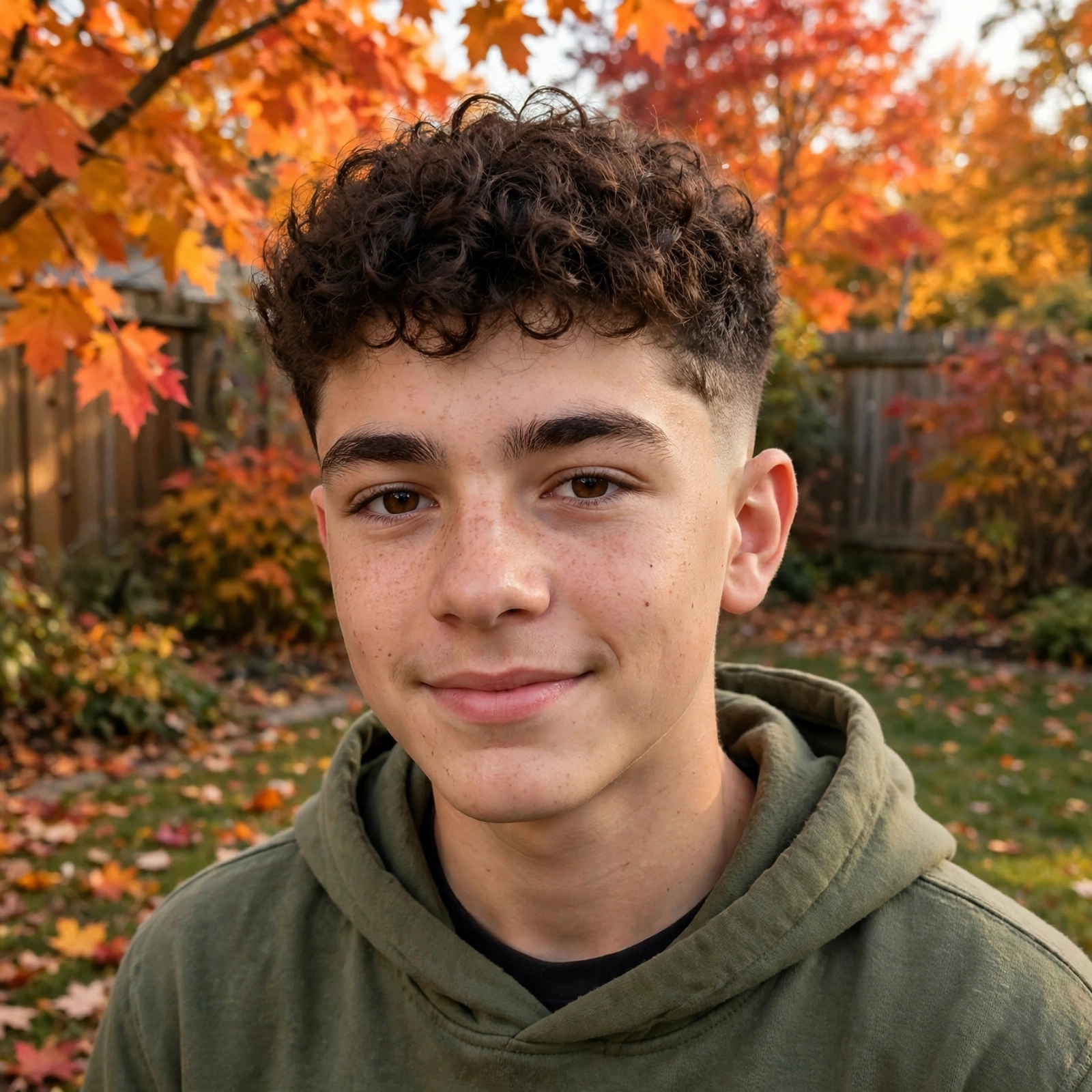
7. The Side-Swept Crew
A classic crew cut — short on the sides, a little longer on top — worn swept naturally to one side instead of spiked up: the side-swept crew is the quiet sleeper hit of fall 2026. It’s trending as the anti-spike backlash finally reaches teen boys: the spiky gelled look of the 2010s is out, and this is what replaced it — clean, natural, and mature without trying. The vibe is put-together and trustworthy: picture day, family events, job interviews for that first part-time gig. Our editors found it’s the cut dads approve of fastest and teens actually keep.
How to get it: Say: “Crew cut — #3 or #4 on the sides, about an inch and a half on top, and I want to sweep it to the side, not spike it.” Lazy-morning version: push it to your natural part with damp hands. If it needs help staying, a tiny bit of light cream — but most guys need nothing at all.
Best for: Straight to slightly wavy hair; all face shapes; fine hair (short length = instant fullness); guys who want the neatest possible look with the least possible effort; conservative schools and dress codes.
Maintenance: Very low. Thirty seconds to a minute, zero products usually. Barber visits every 4–6 weeks — it grows out evenly and never looks bad, just slightly longer.
Pro tip: Find your natural part once (it’s where your hair wants to fall when wet) and always sweep that direction — fighting your natural part is the only thing that makes this cut hard, and the fix is just… not doing that.

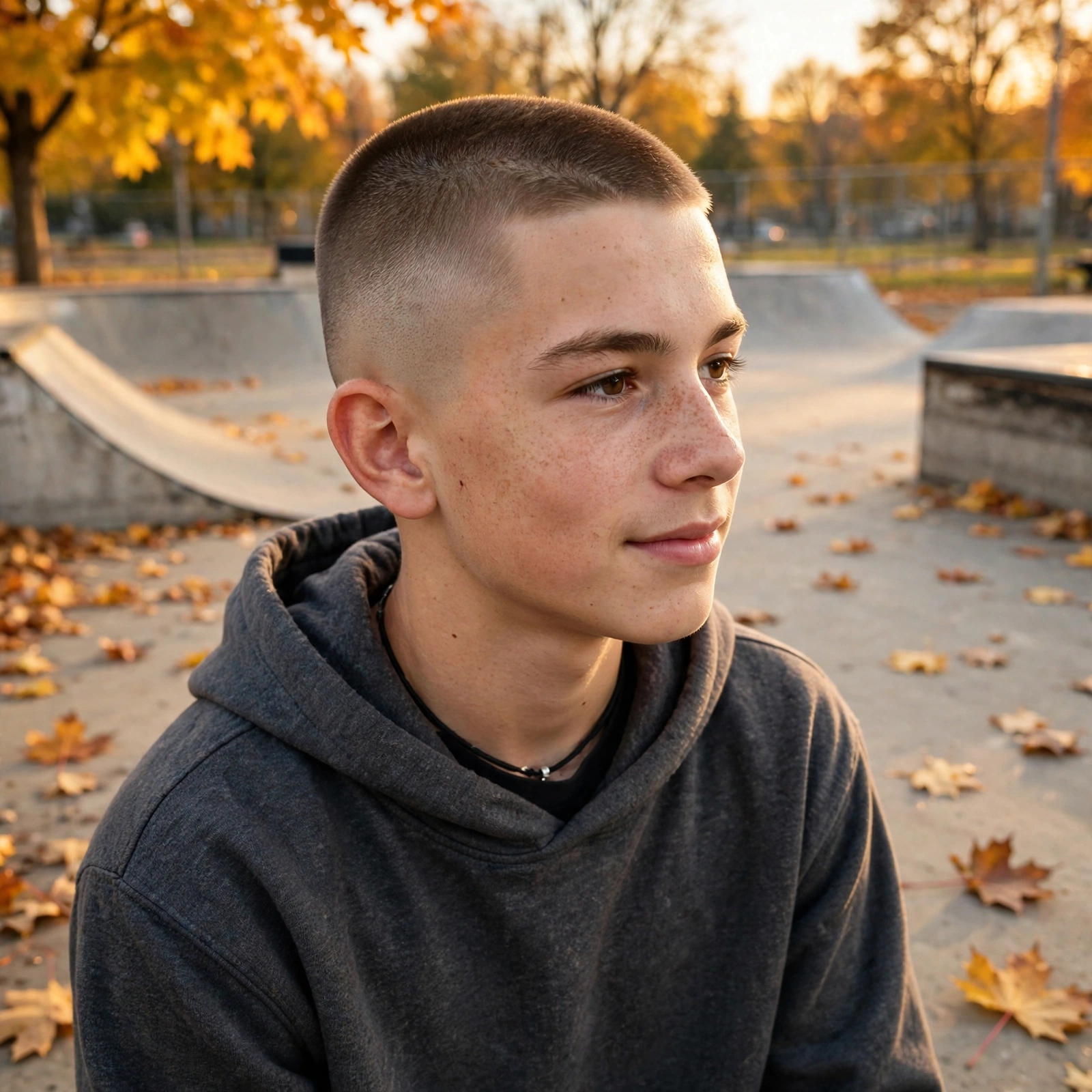
8. The Buzz Cut with Skin Fade
An even, very short buzz all over with a clean skin fade at the sides and a sharp hairline — the buzz cut with skin fade is the maximum-laziness option, and fall 2026’s version is sharper than the buzz cuts of the past. It’s trending because confidence is the whole aesthetic now: no hiding behind hair, just clean lines and done. The vibe is bold, athletic, and decisive — football players, swimmers, and guys who are done spending any time on hair whatsoever. Our editors confirmed the obvious: this is the only cut on the list with a genuinely zero-minute morning routine, and the skin fade is what keeps it from reading “I gave up.”
How to get it: Say: “Buzz it even all over — #2 or #3 guard on top — with a skin fade on the sides and clean up the hairline.” The guard number is the whole decision: #3 is forgiving, #2 is bold, #1 is commitment. Lazy-morning version: there isn’t one. You wake up and you’re done. That’s the cut.
Best for: All hair types (it’s too short for texture to matter); oval, square, and oblong faces; athletes (nothing to get sweaty or helmet-flattened); guys with a good head shape who want the ultimate reset; anyone growing out a bad cut fast.
Maintenance: Zero daily. Nothing. No products, no tools, no bedhead. Barber visits every 2–3 weeks if you want it crisp — this is the one real cost of the buzz: it only looks intentional when it’s fresh, so the chair frequency is the highest on this list.
Pro tip: A buzz exposes your scalp to the sun more than any other cut — and fall sun still burns. If you’re outside for practice or games, the hairline and crown need sunscreen just like the rest of your face. It’s the detail every newly-buzzed teen learns the hard way once.
9. The Lazy Grown-Out Quiff
A quiff — volume on top swept up and back — with the “lazy” built in: instead of the stiff, sculpted quiff that needs a blow dryer and strong hold, this is the grown-out version with natural texture and soft movement. It’s fall 2026’s answer for guys who like the quiff look but not the quiff workload. It’s trending because it hits the sweet spot between polished and effortless — it looks like you styled it, but the texture is doing the styling. The vibe is smart and current: school dances, nice dinners, any time you want to look like you tried (without actually trying). Our editors found it photographs the best of all ten cuts — that height and texture just works on camera.
How to get it: Say: “I want a quiff but lazy — keep 3–4 inches on top with lots of texture, faded or tapered sides, and I don’t want it stiff.” Lazy-morning version: blow-dry the top forward for 20 seconds if you want the height (optional), then push it up and back with fingers and a dab of matte paste. Under two minutes, and day-two hair actually holds the quiff better than fresh hair.
Best for: Straight to wavy hair with some natural lift; medium to thick density (fine hair struggles to hold the height); oval, oblong, and round faces (the height elongates); guys who want a little polish without a routine.
Maintenance: Low to medium. Two to three minutes, and it’s the one cut on this list where a 20-second blow-dry genuinely helps — but it’s optional, not required. Barber visits every 5–6 weeks.
Pro tip: The lazy quiff lives or dies on the front: if the front flops by noon, the fix is a pea-sized dab of matte paste just at the roots of the front section, applied to dry hair. Root-only product gives lift without weighing the ends down — it’s the difference between a quiff and a flop.
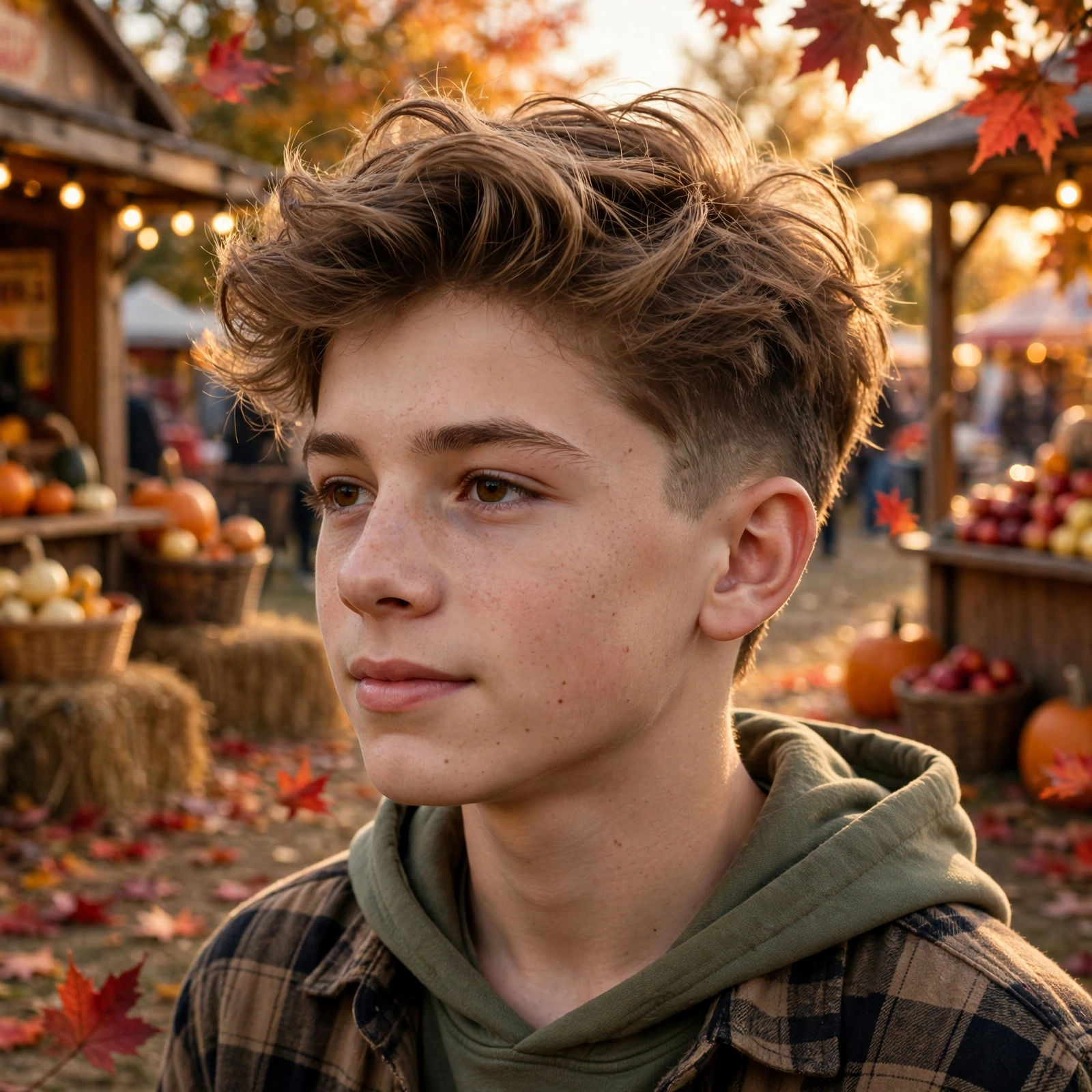
10. The Shaggy Surfer Crop
Medium-length shaggy layers with piece-y ends falling around the ears — the shaggy surfer crop is fall 2026’s love letter to not caring, in the best way. It’s trending because the “clean boy” era is loosening up: texture, movement, and a little wildness are back, and this cut is the most wearable version of it. The vibe is relaxed and creative — weekends, concerts, anyone whose style leans more interesting than polished. Our editors’ verdict: this is the cut for the teen who’s been growing his hair out and wants it to look like a choice instead of an accident.
How to get it: Say: “Shaggy crop — medium length with lots of layers, piece-y ends, keep it messy and natural. I want it to fall around my ears.” Bring a photo, because “shaggy” is vague and barbers need the visual. Lazy-morning version: shake it out, maybe scrunch a little sea salt spray into damp hair, done. Air-dry is the correct finish — a dryer makes it too neat.
Best for: Wavy to straight hair with natural texture; medium to thick density; oval and oblong faces; guys growing out shorter cuts who need a style that works at every length along the way.
Maintenance: Low. One to two minutes, no heat, minimal product. Barber visits every 8–10 weeks — shaggy layers grow out beautifully, which is the whole point of the cut.
Pro tip: Sea salt spray is the one product that actually matters for this cut — it creates the piece-y separation that separates “surfer” from “shaggy dog.” Spray it on damp hair, scrunch, and don’t touch it while it dries. Touching it while it dries is how you get frizz instead of texture.

Low-Maintenance Haircuts for Teen Boys: FAQs
How often should a teenage boy actually wash his hair?
For most teen boys, every other day is the sweet spot — daily if you’re very active, play sports, or have naturally oily hair. Over-washing strips the scalp and actually makes oil production worse, which is why the “wash less, look better” thing isn’t a myth. On non-wash days, a quick water rinse after practice handles sweat without a full shampoo. If you’re figuring out your own rhythm, this breakdown of how often to wash your hair based on hair type is the most practical guide we’ve found. Parents: if his hair looks greasy by noon every day, that’s usually a sign to wash more often, not less — oily teen scalps are normal, not a hygiene failure.
How do I fix hat hair without starting over?
The 30-second hat-hair rescue: flip your head upside down, shake once, run damp hands through the roots, and push the hair back into shape with your fingers. The flip restores the volume the beanie crushed, and damp hands reset the texture without a full re-style. Prevention beats repair, though — part your hair where the beanie’s edge will sit before putting it on, and choose cuts that survive hats in the first place (the bro flow, choppy fringe, and French crop are the best on this list for beanie season). If fall events have you thinking about hair more than usual, our Halloween hairstyles for boys roundup has fun seasonal ideas that work with these low-maintenance cuts. And the nuclear option: a tiny bit of dry shampoo at the roots before the hat goes on absorbs the flattening oil in advance.
How do I grow out a bad haircut without looking rough for a month?
First: don’t panic-cut it shorter, which is the instinct and almost always makes it worse. The bridge strategy is to lean into styles that disguise uneven growth — push everything forward into a fringe, tuck the sides behind the ears, or wear a beanie while it catches up (fall is the perfect season for this excuse). Book a “fix” appointment at week three, not week six: a good barber can reshape a bad cut with minimal length loss, but only if there’s still hair to work with. And this is exactly why the cuts on this list were chosen for graceful grow-out — a textured crop or bro flow at week six just looks like a slightly longer version of itself, not a mistake.
My son has cowlicks that ruin every haircut. What actually works?
Cowlicks are the number one hair complaint among teen boys, and the fix is a cut that works with them instead of against them. The choppy fringe crop (#5) is the best weapon on this list — the forward fringe covers the cowlick zone entirely. The French crop works the same way. What doesn’t work: fighting the cowlick with product and a comb every morning, which is a losing battle that takes ten minutes and fails by lunch. Tell the barber about the cowlick before the cut starts — a good barber will leave extra length over it or cut the surrounding hair to camouflage it, and that’s a two-second conversation that saves months of frustration.
How can he look neat for school with literally zero effort?
The honest answer: the cut does 90% of it. A fresh textured crop or side-swept crew looks neat on its own — neatness comes from the cut’s shape, not from morning styling. The remaining 10% is two habits: sleeping with dry (not wet) hair so it doesn’t dry in weird directions overnight, and keeping the neckline clean between cuts (a quick neckline cleanup is cheap or free at most barbershops and takes five minutes). If mornings are truly zero-effort, pick from the “very low” maintenance tier on this list — the side-swept crew, buzz fade, or curly taper top — where even bedhead reads as intentional. And keep one matte product in the bathroom for the days that matter: picture day, presentations, first dates. One product, used rarely, beats a shelf of products used never.
The Bottom Line
The best low maintenance fall haircuts for teen boys aren’t the trendiest ones — they’re the ones that survive real mornings, real sports, and real beanies. Pick the cut that matches his texture and his patience level, use the barber script word for word, and give it a genuine two-week trial before judging it. Fall 2026 is the easiest season in years to have great hair with no effort — take the win.