10 Winter Braided Hairstyles for Women (Cozy & Chic)
When the temperature drops and the air turns dry, your hair takes the hit first — static, split ends, breakage, and styles that unravel the moment you pull on a beanie. That’s exactly why winter braided hairstyles for women are the smartest move of the season. The best winter braid styles of 2026 — the Fireside Halo Crown Braid, the Chunky Knit French Braid, and the Cabin Fever Bubble Braid — protect your ends, last for days, and look even better peeking out from under a cozy scarf. This guide gives you all ten.
Here’s what our editors learned after weeks of testing braids through real winter weather: braids aren’t just pretty, they’re protective. Tucking your ends into a braid shields them from the two things winter does worst — dry indoor heating and rough wool scarves that snag and snap fragile ends. A braid that survives your morning commute, your office, and a holiday party without a touch-up is worth more than any styling tool on your shelf.
The cozy braided hairstyles trending in 2026 lean into texture and warmth rather than razor-sharp precision. Think chunky, pancaked braids that echo your favorite cable-knit sweater, crown braids that frame a glowing winter face, and low, relaxed styles that slide under hats without getting crushed. The mood is “candlelit cabin weekend” — romantic, unfussy, and quietly luxurious. If you’ve been collecting protective winter braids ideas on Pinterest, consider this your curated shortlist.
There’s also a practical case nobody talks about enough: winter is the longest stretch of the year between trims for most women. Braids buy you time. They disguise grown-out layers, hide split ends for a few more weeks, and turn third-day hair into an asset instead of a problem. When your hair is tucked into a protective style, it grows undisturbed — which is exactly the goal for anyone nursing summer damage back to health before spring.
What makes this guide different: every style below comes with the full picture. Not just what it looks like, but exactly how to get it (DIY steps plus what to tell a stylist for the complex ones), who it flatters most, honest maintenance expectations, and a pro tip you won’t find in a caption. No fluff — just the 10 best winter braided hairstyles for women, decoded and tested in real winter conditions.
In this guide: jump straight to any style that catches your eye.
- 1. Fireside Halo Crown Braid
- 2. The Chunky Knit French Braid
- 3. Alpine Milkmaid Twist
- 4. Double Dutch Glacier Braids
- 5. Cabin Fever Bubble Braid
- 6. Starlight Waterfall Braid
- 7. Evergreen Braided Ponytail
- 8. Lowland Fishtail Side Braid
- 9. Winterberry Rope Twist
- 10. Hearthside Braided Bun
Editor’s Top 5 Winter Braid Picks
Short on time? These are the five cozy braided hairstyles our editors kept wearing on repeat through the coldest weeks of testing — the ones with the highest style-to-effort ratio on the entire list.
The Chunky Knit French Braid
The undisputed hero of winter 2026. One oversized, pancaked French braid that mimics the texture of a cable-knit sweater — it takes eight minutes, survives a beanie, and somehow looks more expensive than it has any right to. If you only learn one braid this season, make it this one.
Cabin Fever Bubble Braid
A high or low ponytail sectioned into plump “bubbles” — the lowest-tension style on this list and the most genuinely protective. It lasted three full days in our testing without a refresh, and the gentle elastics do zero damage to the hairline. The ultimate lazy-girl winter braid.
Fireside Halo Crown Braid
A Dutch braid wrapped around the head like a crown, with every end tucked away from the elements. It’s the most romantic style here and the most protective — literally nothing touches your ends. Holiday parties, family photos, and days when you want to feel like royalty in a parka.
Starlight Waterfall Braid
A half-up waterfall braid that lets cascading curls do the drama while the braid handles the polish. It earned its spot as the date-night pick: festive enough for New Year’s Eve, soft enough to wear every day of December. One of our editors wore it to three events in a week.
Evergreen Braided Ponytail
Sleek at the crown, braided down the tail — the power braid of the list. It pairs with structured winter tailoring like a blazer or wool coat, survives workouts, and stays put through long holiday travel days. When you need your hair to behave for twelve hours straight, this is the one.
Why Braids Are Winter’s Best Protective Style
Winter is objectively hard on hair, and the damage mechanism is simple: cold air outside and heated air inside both strip moisture, while wool scarves, coat collars, and beanie friction create the perfect breakage storm. Hair worn loose in January rubs against your coat collar thousands of times a day — every rub is a micro-fracture waiting to become a split end. Braids solve this by bundling the hair into one contained unit where the vulnerable ends are tucked away and the cuticle faces less friction. If you want the full playbook on keeping strands resilient through the dry months, these dermatologists’ tips for healthy hair pair perfectly with a braid-heavy winter routine.
There’s a second, quieter benefit: braids are the lowest-maintenance protective option you can do yourself. Unlike sew-ins or extensions, most braided styles take five to fifteen minutes, cost nothing, and come out in seconds. That means you get genuine protection — ends shielded, moisture sealed in with a leave-in, fewer heat-styling sessions — without the salon bill or the commitment. In our testing, switching to braids four days a week cut heat styling by more than half, which matters because winter air is already drying your hair without any help from a flat iron.
The third reason is purely seasonal: braids photograph beautifully in winter light. Holiday photos, cozy cabin weekends, New Year’s Eve — a braid adds texture and intention that loose hair often lacks in flat winter lighting. Chunky knits, wool coats, and scarves all pair naturally with braided texture in a way they don’t with sleek, straight hair. Winter fashion is textured fashion, and your hair should match. For everyday inspiration beyond this list, our braided hairstyles for women roundup has dozens more ideas to rotate through the season.
Prep, Tension, and Aftercare for Healthy Braids
The number one rule of winter braiding: never braid dirty, dry, or desperate. Start with clean, conditioned hair — ideally washed the day before, since freshly washed hair is slippery and braids won’t grip. Work a leave-in conditioner through damp hair before it dries, seal the ends with a light oil, and detangle completely before a single strand gets crossed. Braiding over tangles doesn’t hide them; it locks them into a knot you’ll regret at takedown. Damp (not wet) hair braids smoothest and sets with beautiful texture as it dries.
Tension is where braids turn from protective to destructive, and this is the section to take seriously. A braid should never hurt — not at the hairline, not at the crown, not after an hour. Constant pulling on the follicles can cause traction alopecia, a form of hair loss that shows up first as broken hairs around the forehead and a receding hairline; the American Academy of Dermatology warns that hairstyles that pull can lead to hair loss when worn tight and too often. The fix is simple: braid with medium tension, keep edges soft, and if you feel that familiar “tight ponytail” ache, take it down immediately — pain is never part of the style.
Nighttime is where winter braids either survive or die. A silk or satin pillowcase (or a satin bonnet for longer styles) cuts overnight friction dramatically — cotton pillowcases rough up the cuticle and turn a day-two braid into a frizz halo by morning. For multi-day styles, re-mist the braid with a little water mixed with leave-in each morning and smooth the hairline with a soft brush. And give your hair rest days: even the gentlest protective style should come down regularly so your scalp can breathe and you can check in on your edges. If you’re rotating styles weekly, our fall braided hairstyles guide is a good place to find your next in-between look.
10 Winter Braided Hairstyles for Women (Cozy & Chic)
1. Fireside Halo Crown Braid
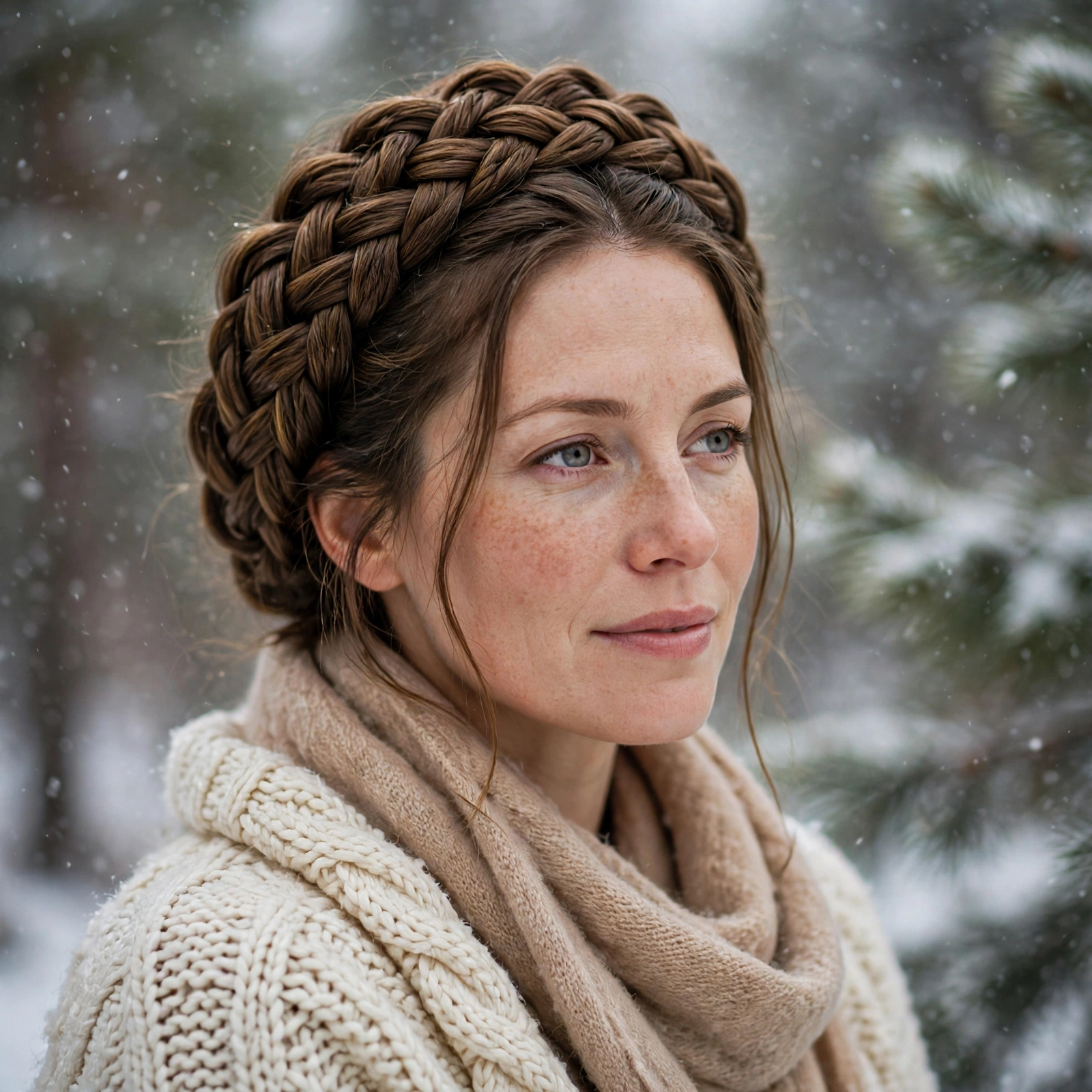
A Dutch braid that travels around the entire head like a crown, with the tail tucked and pinned so no ends are exposed. It’s the most romantic entry among winter braided hairstyles for women — and the most protective, because literally every inch of hair is contained. The style frames the face with a soft, glowing finish that looks stunning against winter skin, and it stays put through wind, hats, and long holiday evenings. Think fireside dinners, Christmas morning photos, winter weddings as a guest, and any day you want maximum elegance with zero touch-ups.
How to get it: Create a deep side part, then Dutch-braid (underhand, so the braid sits raised) around the hairline, adding hair as you travel across the front, around the back, and back to your starting point. Tuck the tail under the braid and pin it flat. Gently pancake the braid by tugging the outer edges to widen it — this is what gives it the lush, crown-like fullness. Finish with a light mist of flexible-hold hairspray.
Best for: Medium to long hair (shoulder length and beyond); oval, round, and heart-shaped faces — the crown lift elongates beautifully; medium to thick densities hold the shape best, though fine hair works with texturizing spray.
Maintenance: Medium. Fifteen to twenty minutes the first few times, faster with practice. Lasts a full day and night; sleeps surprisingly well on a silk pillowcase and can stretch to day two.
Pro tip: Braid slightly damp hair and let it dry in the crown shape — when you take it down the next day, you’ll have perfect heatless waves as a bonus style. And place the braid’s seam slightly behind the ear rather than directly over it; it photographs better and won’t press uncomfortably under a hat.
2. The Chunky Knit French Braid
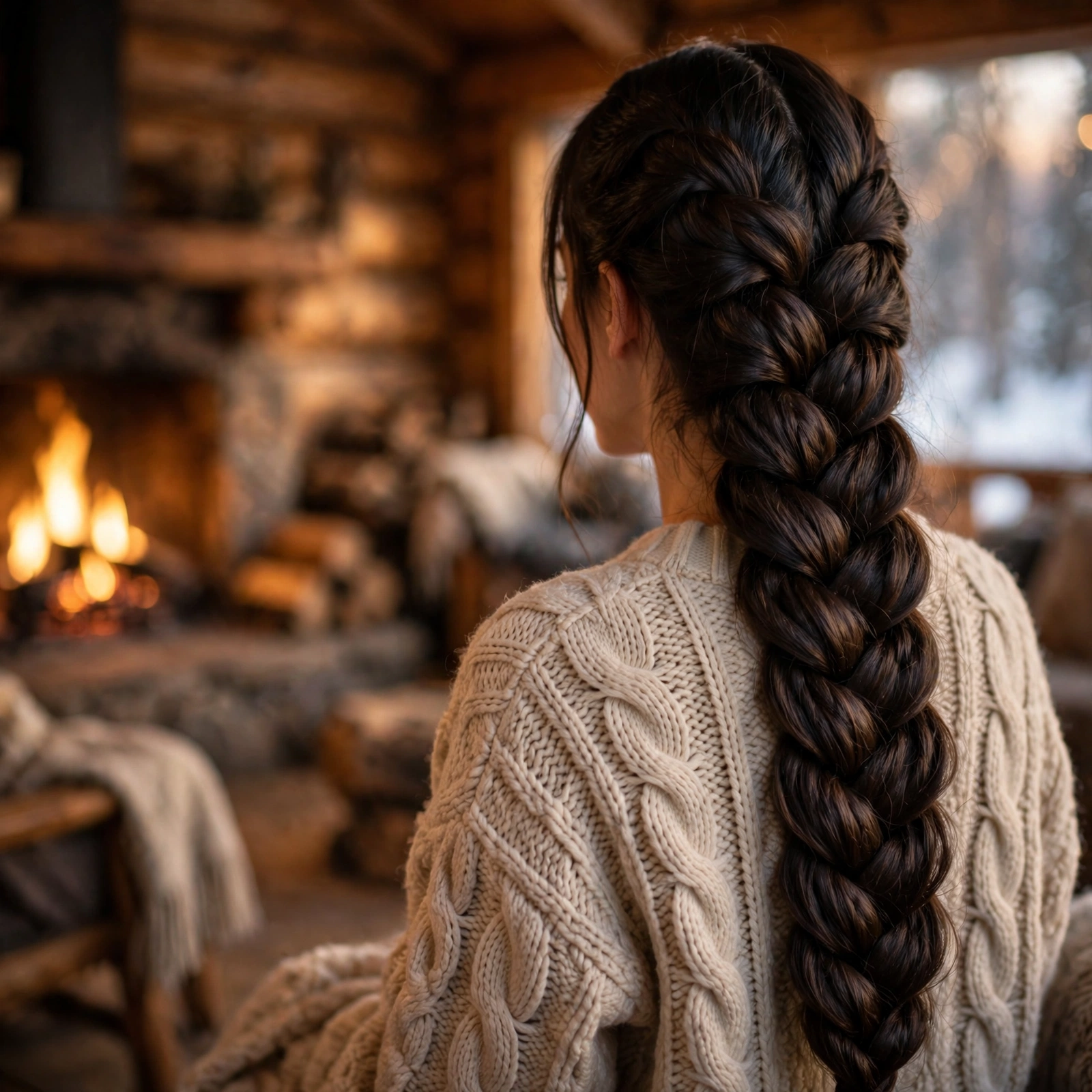
One big, bold French braid down the back, pancaked wide so it mimics the cozy texture of a cable-knit sweater — the signature braid of protective winter braids season. It’s trending hard for 2026 because it nails the exact aesthetic winter fashion demands: chunky, soft, and touchable. The wide, relaxed plait reads romantic rather than sporty, and it keeps every strand off your coat collar. Weekend markets, ski-lodge trips, casual holiday gatherings, and every cozy errand on your December calendar.
How to get it: Start with dry shampoo or texture spray for grip — clean, slippery hair won’t pancake well. French-braid from the crown with medium-loose tension, keeping the sections big. Once secured, gently tug each outer edge of the braid outward, working from the bottom up, until it doubles in width. Leave a few face-framing pieces out and curl them softly.
Best for: Medium to long hair; medium to thick densities create the fullest knit effect; all face shapes — the softened, widened braid flatters universally. Fine hair can fake it with texturizing powder at the roots first.
Maintenance: Low. Eight to ten minutes once you know the technique, and it genuinely improves as it loosens through the day. Bonus: sleep in it for heatless waves tomorrow.
Pro tip: Only pancake the outer edges, never the middle of the braid — pulling the center loosens the whole structure apart. And braid one inch off-center instead of dead-center for a modern, editorial feel. To keep ends supple through the dry season, smooth a drop of Olaplex No. 7 bonding oil over the tail before you start.
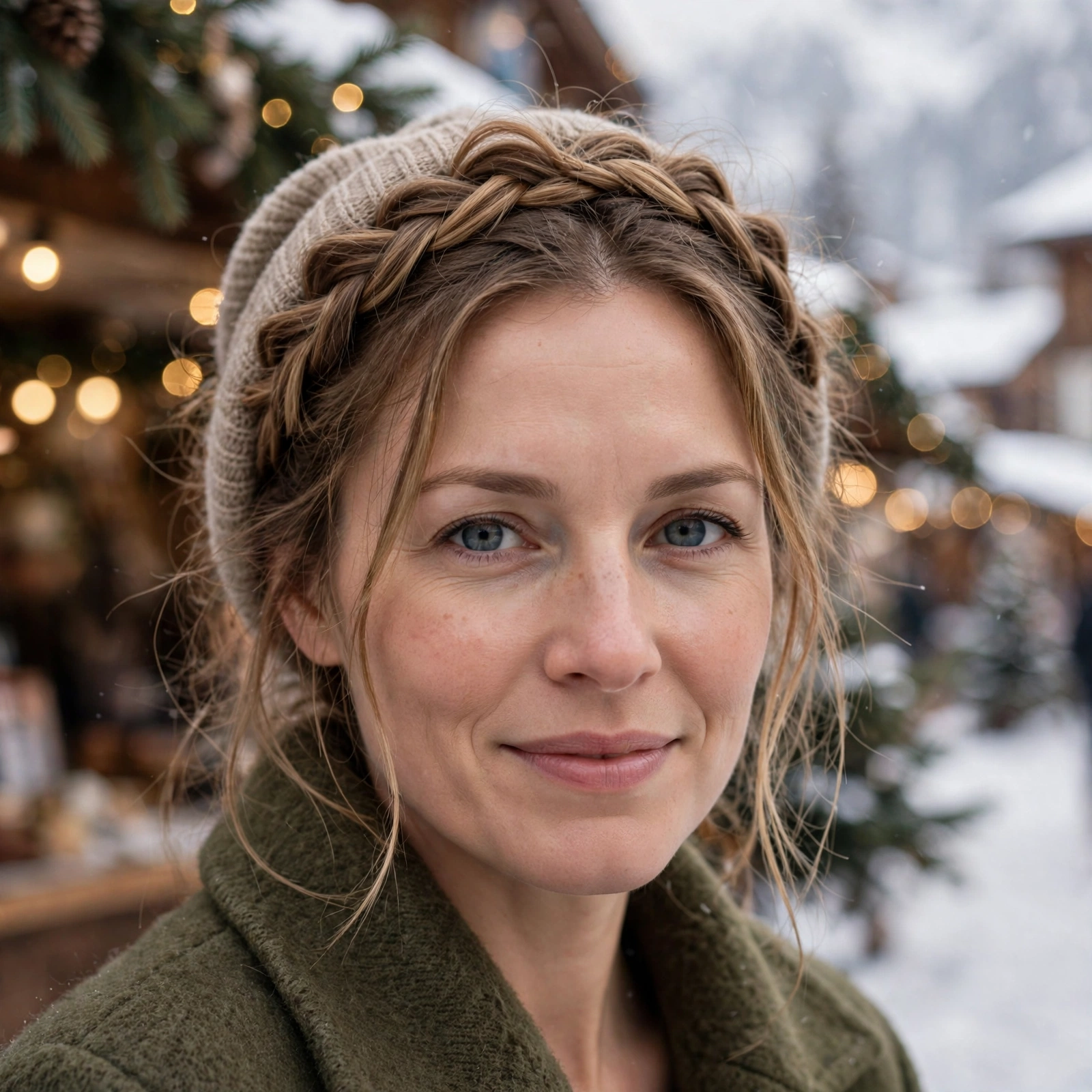
3. Alpine Milkmaid Twist
Two braids — one from each side — crossed over the top of the head and pinned, like a crown you can actually wear under a beanie. The milkmaid has been around forever, but the 2026 winter version is softer: slightly loosened braids, wispy pieces at the temples, and a finish that looks romantic rather than costume-y. It’s fully protective (every end tucked), fully hat-compatible, and one of the prettiest ways to keep long hair completely out of the way. Alpine lodge weekends, holiday markets, and days when the wind is doing its worst.
How to get it: Part hair down the middle and make two regular three-strand braids, one behind each ear, securing with small clear elastics. Cross them over the crown — left braid to the right side, right braid to the left — and pin each tail flat under the opposite braid with U-shaped pins. Pancake gently for fullness, then pull out soft pieces around the face.
Best for: Long hair (the braids need enough length to cross the crown); oval and oblong faces benefit most from the added width at the sides; straight to wavy textures show the clean braid lines best.
Maintenance: Low to medium. Ten minutes, no heat, and it holds all day. Pins are the only failure point — carry two spares in your coat pocket on windy days.
Pro tip: Crisscross two bobby pins in an X wherever the braids overlap instead of using a single pin — the hold is dramatically stronger and invisible. If your braids are thin, braid in a little texturizing powder first; it plumps each section noticeably.
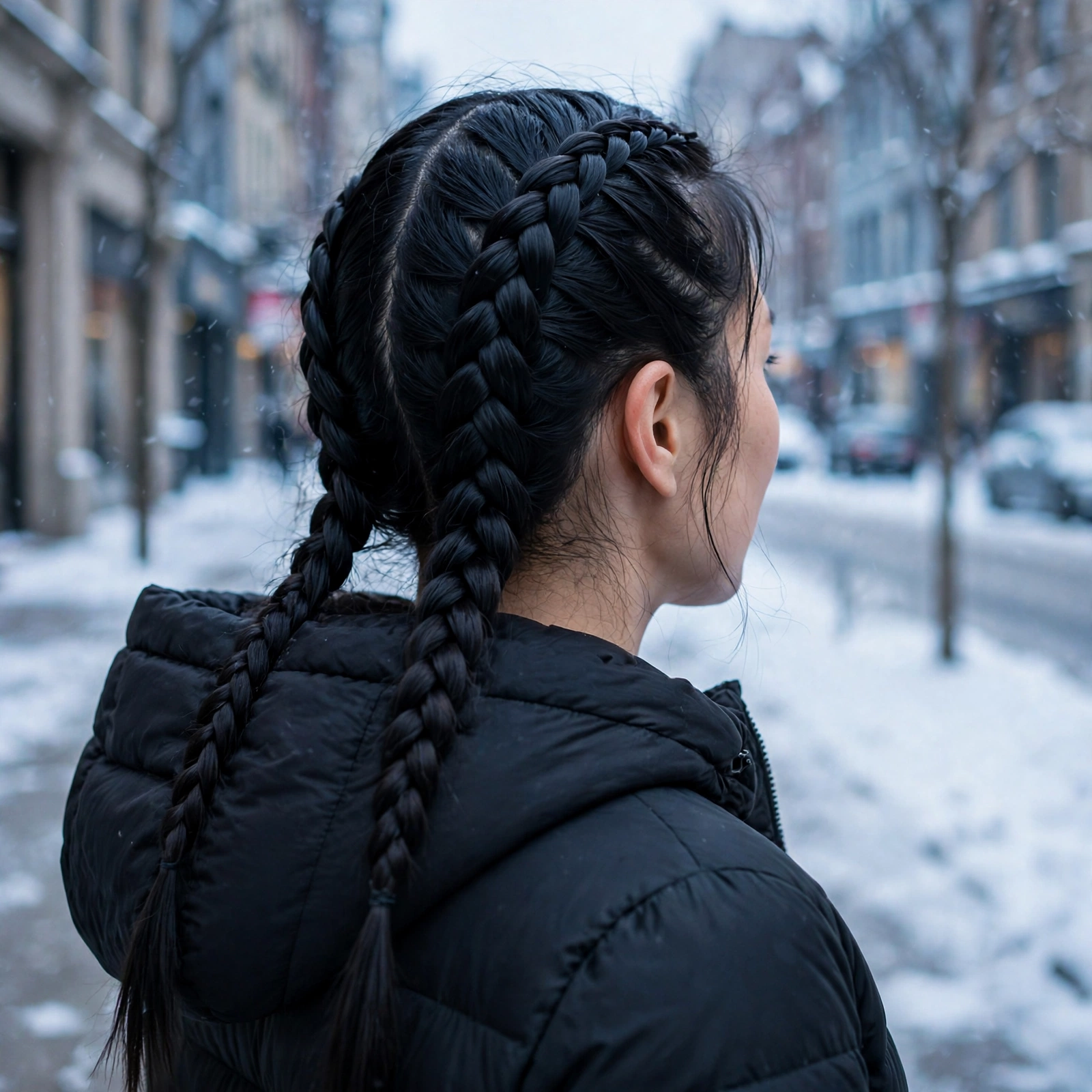
4. Double Dutch Glacier Braids
Two crisp Dutch braids running from the hairline to the nape — sporty, sleek, and the longest-wearing everyday style on this list. “Glacier” because the look is cool, clean, and polished: tight enough to last, but this version keeps the tension comfortable at the hairline for all-day wear. It’s the braid our editors reached for on the busiest weeks — gym mornings, long workdays, travel days — because it simply does not move. Under a beanie it slides in perfectly; over a turtleneck it looks sharp and intentional.
How to get it: Part hair precisely down the middle (use the nose as your guide in the mirror). Dutch-braid each side from the front hairline back, adding hair in clean sections and keeping the braid close to the scalp. Secure both at the nape and either leave as twin tails or combine into one low ponytail. Smooth flyaways with a toothbrush misted with hairspray.
Best for: Medium to long hair; all face shapes — the center part and symmetry are universally flattering; thick hair in particular, since it holds the raised Dutch texture beautifully.
Maintenance: Low. Ten to twelve minutes, and it lasts two to three days on a silk pillowcase — just re-smooth the hairline each morning. No salon upkeep tied to the style.
Pro tip: This is the one style where precision matters more than softness: take small, even sections as you add hair and the braids will look salon-done. But keep the first inch at the hairline gentle — a braid that pulls at the temples on day one will ache by day three, and comfort is what makes it re-wearable.
5. Cabin Fever Bubble Braid
A ponytail — high, mid, or low — sectioned with elastics every couple of inches and gently puffed into soft “bubbles.” It’s the lowest-tension braid on this list, which makes it the most genuinely protective: no pulling at the roots, no tight scalp sections, just gentle elastics. In our testing it lasted three full days with nothing more than a morning hairline smooth-down, and it has a playful, cozy charm that suits the season’s chunky knits perfectly. The ultimate “I give up on my hair this week (in a cute way)” style.
How to get it: Gather hair into a ponytail at your preferred height and secure firmly — this is the only tight elastic in the whole style. Place small elastics every two to three inches down the tail, then gently tug each section outward to puff it into a bubble. Keep the bubbles slightly uneven for a relaxed, organic look rather than perfect spheres.
Best for: Medium to long hair (the more length, the more bubbles); all face shapes — adjust ponytail height to flatter yours; fine hair actually excels here, since the puffing technique creates volume out of nothing.
Maintenance: Very low. Five minutes, zero skill required, and it re-wears for days. Take it down gently — cut elastics out with small scissors rather than pulling them off to avoid breakage.
Pro tip: Use fabric-covered or spiral elastics instead of plain rubber bands; they grip without snagging and slide out cleanly at takedown. A light mist of flexible hairspray over the finished bubbles keeps them plump through wind and hat-wearing.

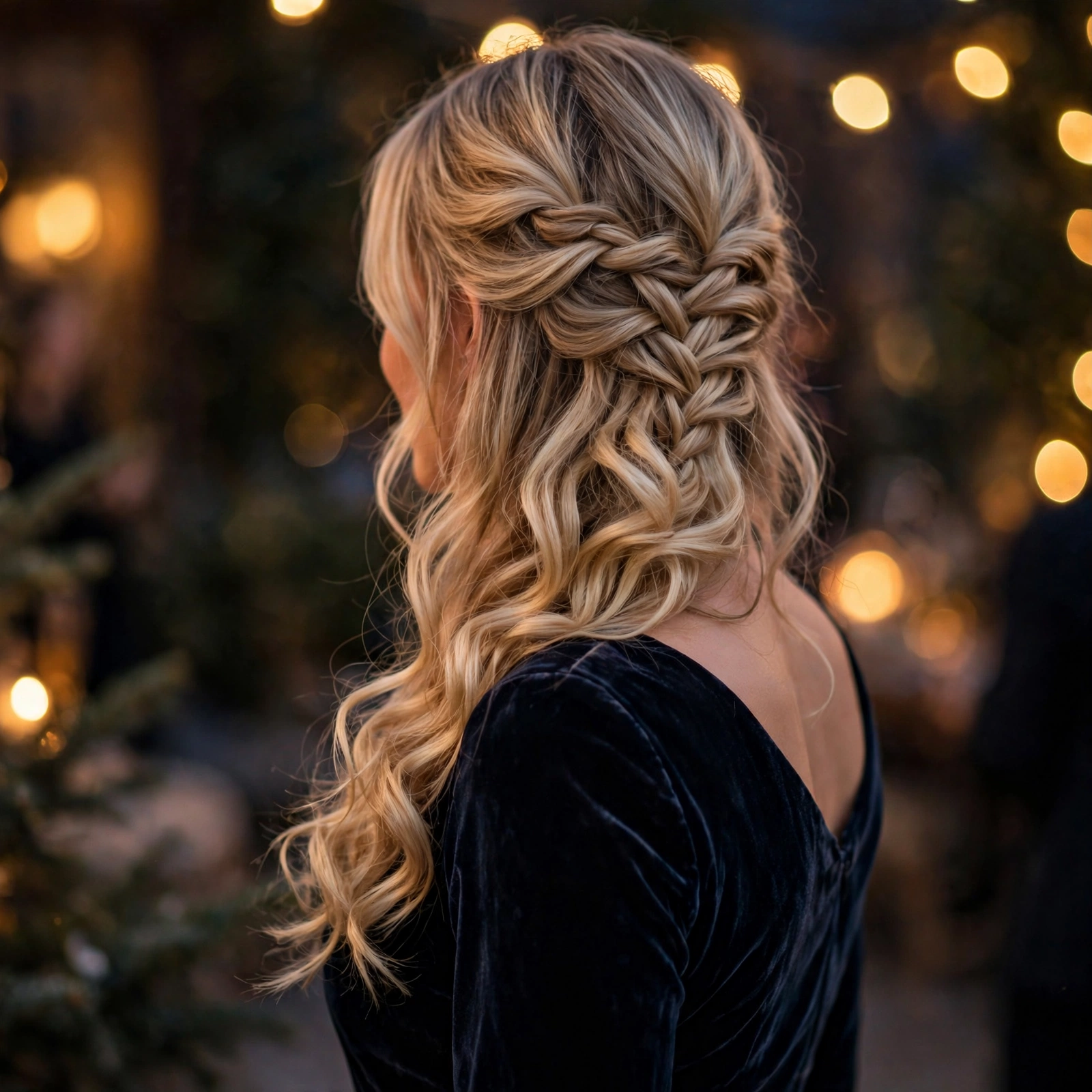
6. Starlight Waterfall Braid
A half-up braid that weaves across the back of the head, dropping strands through it like a waterfall, while the rest of the hair falls in soft curls. It’s the date-night braid of winter 2026 — festive, feminine, and just intricate enough to look special without requiring a stylist. The dropped strands catch winter light beautifully, which is why it photographs like a dream at holiday parties. One of our editors wore it to three December events and got asked about it at every single one.
How to get it: Curl the lengths first (the contrast between the braid and the curls is the whole point). Take a section at one temple and begin a French braid across the back of the head — but each time you’d add hair to the bottom strand, drop it instead and pick up a new section behind it. That’s the waterfall. Pin where it meets the other side and hide the pin under the curls.
Best for: Medium to long hair; wavy and curly textures (the dropped strands look especially pretty with natural texture); oval and heart-shaped faces — the half-up lift opens up the face.
Maintenance: Medium. Fifteen to twenty minutes including the curling, but it’s a one-evening style — enjoy it, photograph it, take it down. No salon maintenance.
Pro tip: Braid on second-day hair with dry shampoo at the roots — the grip is essential for a waterfall, which unravels fast on slippery just-washed hair. And always pin the finished braid slightly tighter than feels natural; half-up styles loosen faster than full braids.
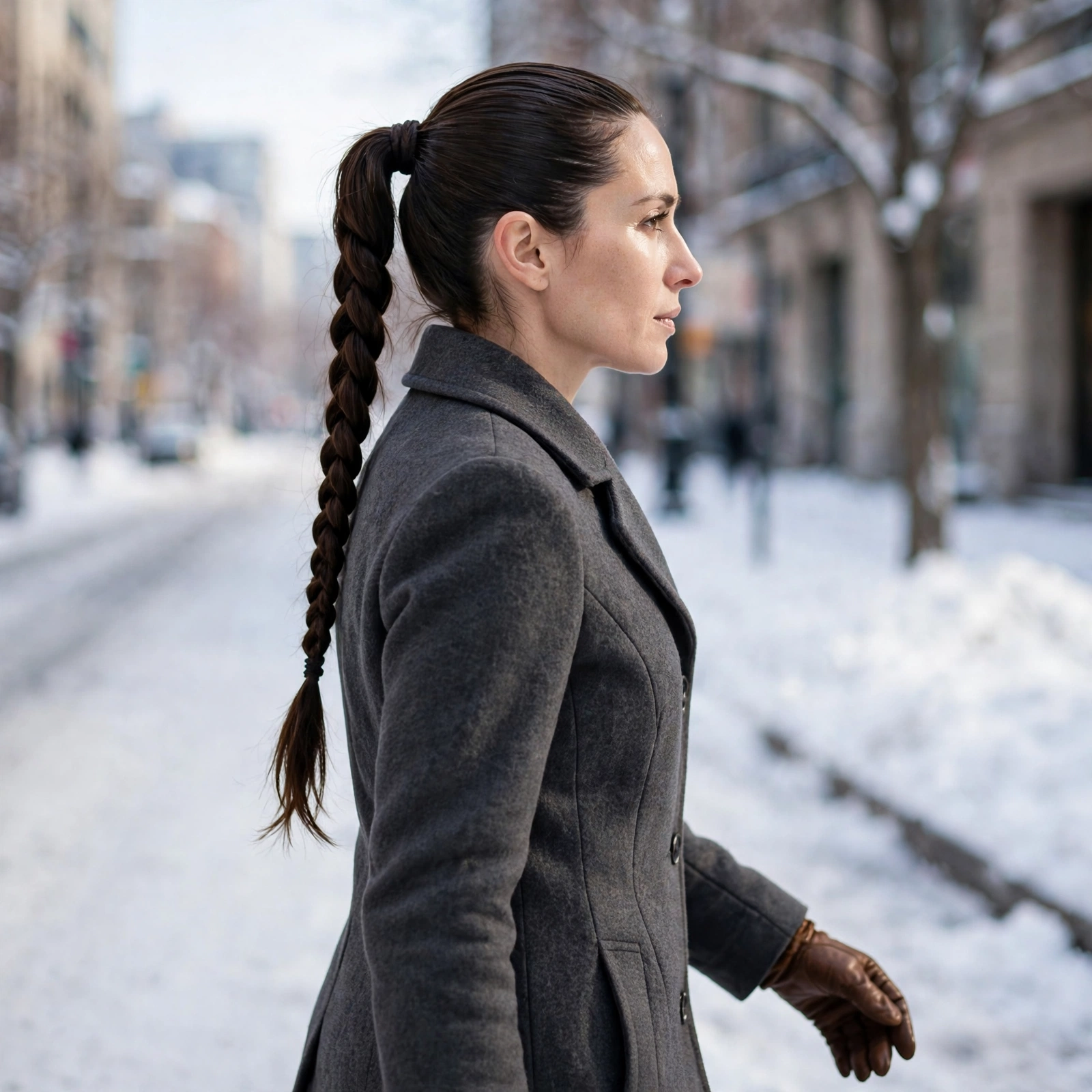
7. Evergreen Braided Ponytail
Sleek and smooth through the crown, braided down the tail — the power braid that means business. It’s the most polished cozy braided hairstyle here, pairing flawlessly with winter’s structured fashion: blazers, wool coats, sharp tailoring. The braided tail keeps long hair contained through workouts, commutes, and twelve-hour holiday travel days, while the sleek crown reads intentional and expensive. When you need your hair to behave from morning to midnight, this is the one.
How to get it: Apply a smoothing serum to damp hair and blow-dry the crown smooth, brushing everything back into a ponytail at mid-to-high height. Secure firmly, wrap a strand around the base to hide the elastic, then braid the tail — three-strand, fishtail, or rope, your call. Pancake lightly for fullness and mist with shine spray.
Best for: Medium to long hair; oval and oblong faces especially — the height elongates; straight to wavy textures achieve the sleekest crown. Thick hair makes the most dramatic braided tail.
Maintenance: Low to medium. Ten to fifteen minutes; the braid tail re-wears for two days if you re-smooth the crown each morning. The crown is the only part that needs daily attention.
Pro tip: Tease the crown very lightly before smoothing it back — that hidden half-inch of lift is what separates a flat ponytail from a gorgeous one. And never skip the wrap-around strand at the base; a visible elastic instantly cheapens the whole look.
8. Lowland Fishtail Side Braid
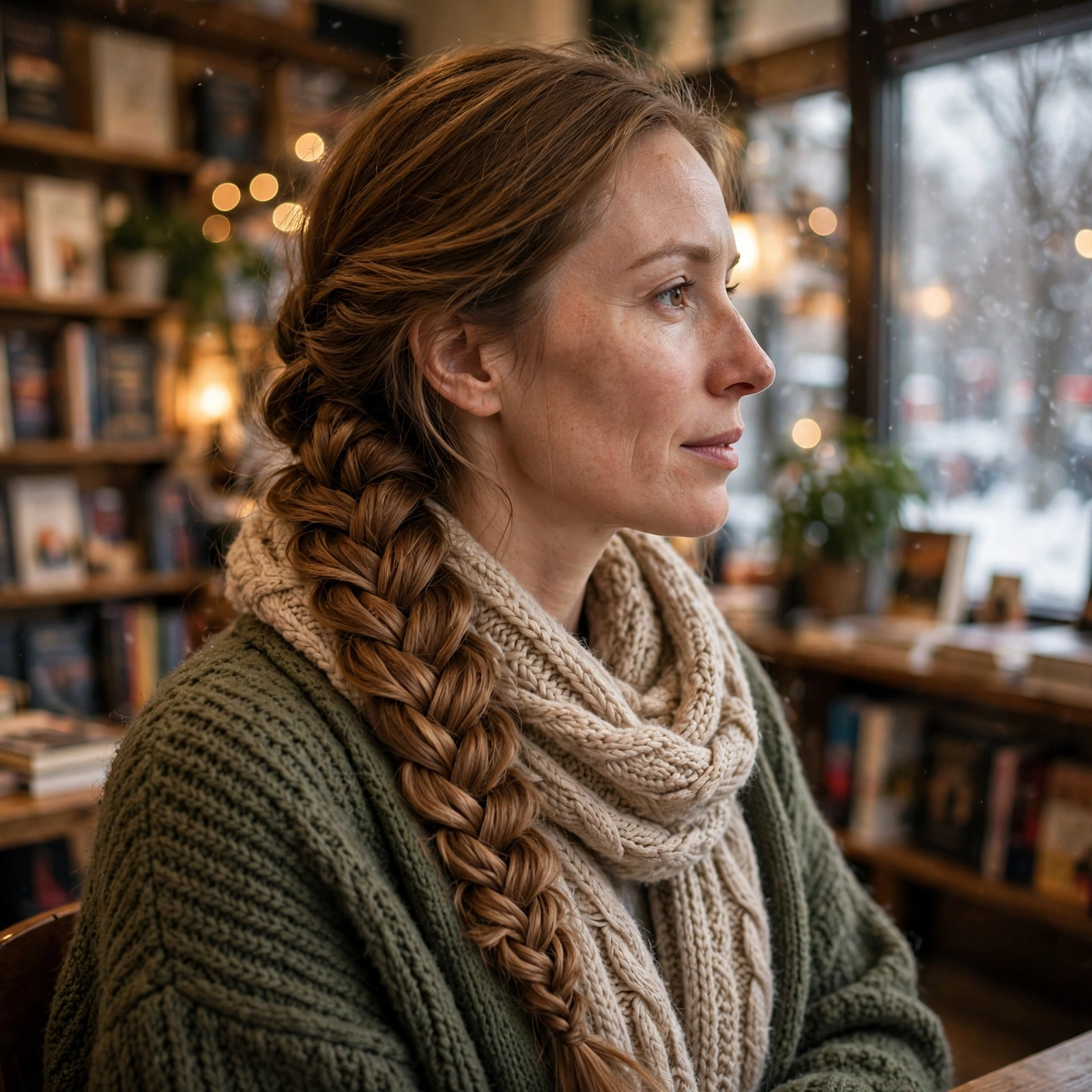
A fishtail braid swept over one shoulder and worn loose — intricate-looking, secretly simple, and impossibly cozy against a chunky scarf. The fishtail’s woven texture reads more detailed than a regular braid, which makes this the “effortlessly interesting” pick of the list. Worn low and relaxed, it’s gentle on the hairline and sits comfortably under coats. Coffee dates, bookstore afternoons, casual holiday dinners — the soft, romantic side of winter.
How to get it: Sweep all hair over one shoulder and divide into two sections. Fishtail by taking a thin strand from the outside of the left section and crossing it to the inside of the right, then mirroring — repeat all the way down. Keep tension loose and even, secure with an elastic, then pancake the edges gently for that full, soft finish.
Best for: Medium to long hair; fine to medium hair shows the fishtail weave most clearly; round and square faces — the diagonal line across the shoulder slims and softens.
Maintenance: Low. Ten minutes once the fishtail rhythm clicks (practice twice and it becomes muscle memory). Wears well for a full day; refreshes easily by re-pancaking.
Pro tip: The thinner the strands you cross over, the more intricate the fishtail looks — chunky pieces read casual, fine pieces read luxe. And braid over the shoulder it naturally falls toward; fighting your hair’s preferred side creates tension that loosens the braid by evening.
9. Winterberry Rope Twist
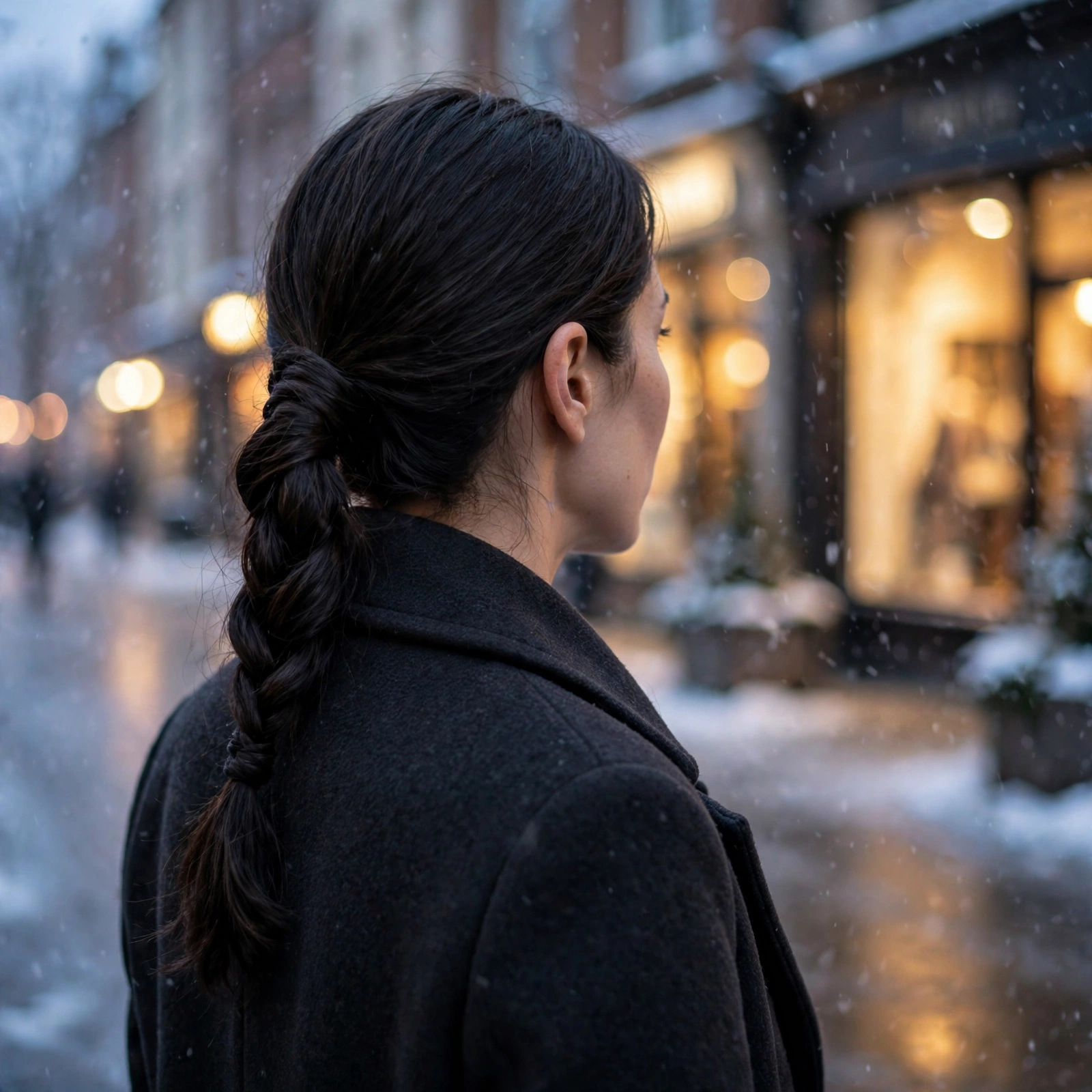
Two sections twisted around each other into a rope, gathered low at the nape — the simplest braid-adjacent style here and one of the most elegant. The rope twist has a sleek, twisted-candy-cane texture that looks far more intricate than the sixty seconds it takes, and worn low it’s completely hat-friendly. It’s also wonderfully gentle: two-strand twists distribute tension evenly, making this a great pick for anyone whose scalp is sensitive to tighter braiding. Quiet luxury in braid form.
How to get it: Gather hair into a low ponytail (or leave it loose for an even softer version) and divide into two equal sections. Twist each section clockwise individually, then wrap them counterclockwise around each other all the way down — the opposing directions are what lock the rope together. Secure with an elastic and let the end coil naturally.
Best for: Medium to long hair of any texture — curly hair makes an especially beautiful rope twist; sensitive scalps and fine hair, since the tension is minimal and even; all face shapes.
Maintenance: Very low. Two to five minutes, no tools, no products required beyond a little oil on the ends. Re-twist in seconds if it loosens.
Pro tip: The secret is twisting each section tightly while wrapping them together loosely — tight singles plus a relaxed wrap gives a defined rope that doesn’t kink or tangle. Smooth a pea-sized amount of Mielle Rosemary Mint oil over the finished twist for shine and a healthy scalp feel.
10. Hearthside Braided Bun
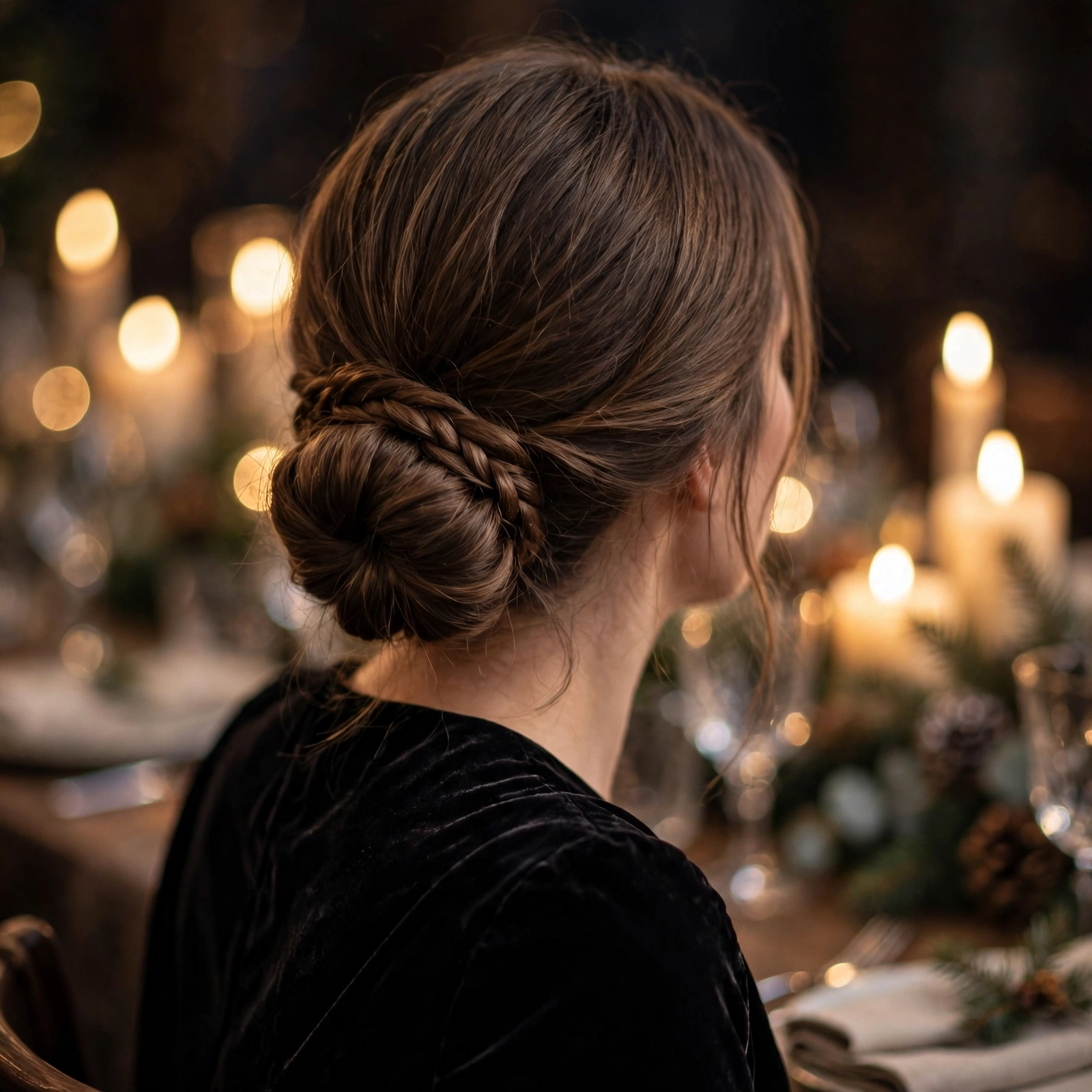
Two small accent braids feeding into a low twisted bun at the nape, with soft pieces framing the face — the “looks complicated, takes twelve minutes” finale of this list. The braids wrapped around the bun’s base add intricate detail that elevates a simple low bun into something holiday-worthy, while everything sits low enough to slide under any hat or hood. It’s the style our editors chose for the fanciest winter evenings: New Year’s Eve, formal holiday dinners, winter weddings.
How to get it: Make two small three-strand braids at the temples. Gather all hair — braids included — into a low ponytail at the nape, twist loosely into a bun, and pin. Wrap the temple braids around the bun’s base and pin underneath, then pancake the braids slightly so the detail shows. Pull out a few face-framing pieces and curl them softly.
Best for: Medium to long hair; all face shapes — customize the face-framing pieces to yours; straight to wavy textures show the wrapped-braid detail best.
Maintenance: Medium. Twelve to fifteen minutes with a little practice, and it holds from afternoon through midnight. No salon maintenance tied to the style.
Pro tip: Hide every pin — slide bobby pins in with the wavy side down and tuck the ends under the bun. Visible pins are what separate “I did this myself” from “who did your hair?” And do this style on day-two hair; the natural grip makes the bun hold twice as long.
Winter Braided Hairstyles: FAQs
How long do braids actually last in winter?
It depends on the braid. Everyday styles like the Chunky Knit French (#2) or the Evergreen Ponytail (#7) hold one to three days on a silk pillowcase with a morning touch-up. Multi-day protective styles like Double Dutch Glacier braids (#4) can go two to four days, and the Bubble Braid (#5) stretched to three in our testing. Winter’s dry air is actually your ally here — styles hold longer than they do in humid summer. The limit isn’t the braid, it’s your scalp: wash when it itches, not when the calendar says so, and never push a style past the point of comfort. If you’re planning a full protective-style rotation through the season, our prom updos with braids roundup has fancier options for the holiday party circuit.
My braids give me tension headaches — what am I doing wrong?
You’re braiding too tightly at the hairline, and your scalp is telling you immediately. Loosen the first inch of every braid — the style should feel secure, never pulling. If a headache starts, take the braid down right away; “it’ll loosen up” is a myth that costs people their edges. Repeated tight braiding can lead to traction alopecia, so treat pain as a hard stop, not a challenge. Switch to the lowest-tension styles on this list — the Bubble Braid (#5) and Rope Twist (#9) — until your scalp recovers, and give your hairline a few braid-free days between styles.
How do I wash my hair when it’s in braids?
For multi-day braided styles, focus on the scalp, not the lengths. Dilute your shampoo with water in an applicator bottle, apply it directly to the scalp between the braids, massage gently with your fingertips (never nails), and rinse thoroughly — residue causes more itching than dirt does. The critical step most people skip: dry completely. Damp braids left to air-dry in winter can stay wet for hours, inviting odor and mildew; use a blow-dryer on low heat at the roots or sit under a hooded dryer. Follow with a light scalp oil once dry to replace what washing stripped.
How do I stop frizz at the hairline when it’s freezing out?
Winter frizz at the edges comes from two culprits: dry air lifting the cuticle, and hat friction roughing it up. The fix is a three-part routine — moisture, smoothing, protection. Start with a leave-in conditioner on damp edges before braiding, smooth the finished hairline with a soft bristle brush and a tiny amount of edge control, then tie a silk or satin scarf over the hairline for ten minutes to set it (stylists call this “laying the edges”). Before putting on a beanie, choose one with a satin lining or wear a silk scarf underneath — it cuts friction to almost nothing. Re-smooth each morning rather than re-braiding the whole style.
What’s the right way to take braids down without breakage?
Takedown is where most braid damage actually happens, so slow down. Never rip elastics out — snip them with small scissors. Work a little oil onto each braid before unraveling to reduce friction, then undo the braid and finger-detangle the section before moving on. Once everything is out, detangle fully with a wide-tooth comb from ends to roots, then deep-condition: winter hair coming out of braids is thirsty. If your ends look frayed after a long protective stretch, read up on how to get rid of split ends before they travel further up the shaft. And give your hair at least a few days of rest — loose, moisturized, heat-free — before the next braided style goes in.
The Bottom Line
The best winter braided hairstyles for women do double duty: they look cozy and intentional through the darkest months, and they quietly protect your hair while you live your life. Pick one everyday braid and one special-occasion style from this list, give them a genuine two-week trial — the same trial our editors ran — and let this be the winter your hair comes out healthier than it went in. Happy winter, and happy braiding.