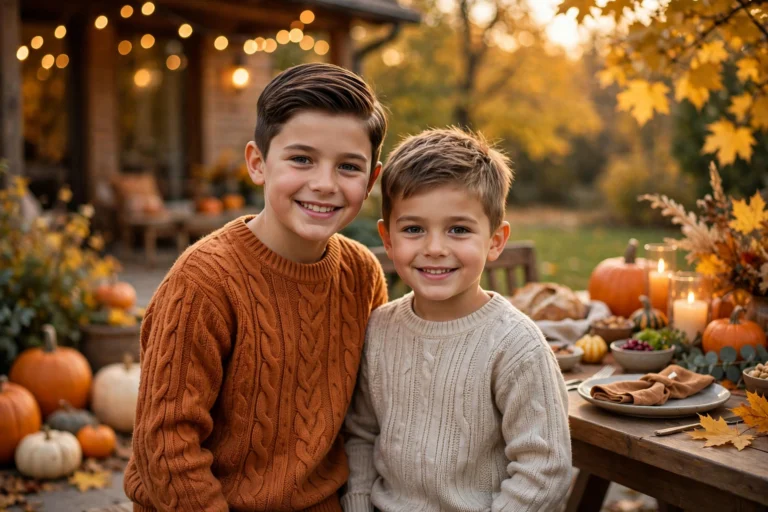
10 Fall Hairstyles for Toddler Boys (Easy & Cute)
Searching for fall hairstyles for toddler boys that look adorable but survive a full day of snacks, naps, and playground chaos? Our editors tested the cutest options of the season, and the best fall hairstyles for toddler boys in 2026 are the soft mini crop, the gentle side part, and baby curls left natural — and this guide shows you exactly how to get each one.
Fall is secretly the best season for a toddler’s hair. Summer’s humidity makes fine baby hair frizz and stick; winter’s dry indoor heat brings static and tangles. Autumn sits right in the sweet spot — cool air, calmer texture, and the prettiest light of the year for family photos. It’s also hat season, Thanksgiving-photo season, and “everyone suddenly notices his hair got long” season, so a little planning now pays off through the holidays.
But let’s be honest about the audience here: your client is one to four years old, has strong opinions about sitting still, and may or may not let a comb near his head. That’s why every style on this list was chosen with a wiggly toddler in mind — nothing that requires heat styling, nothing with sharp lines that grow out badly, and nothing that falls apart the second he puts on a beanie. These are cuts that look good a little messy, because a little messy is the reality.
A quick word on products and safety before we start: toddler hair needs far less than you think. A gentle, tear-free shampoo, a light leave-in conditioner or detangler for knotty textures, and that’s genuinely it. Skip adult styling products, heavy waxes, and anything with strong fragrance — little scalps are sensitive, and most of these styles hold their shape purely from the cut. If a style below mentions a product, it’s a well-known gentle kids’ formula, used sparingly.
What makes this guide different: every style comes with the full picture, parent to parent. Not just what it looks like, but exactly how to get it (what to tell the barber for a toddler, plus at-home steps for kids who won’t sit still), who it flatters most, honest maintenance expectations, and a pro tip our editors learned the hard way so you don’t have to. No fluff — just the 10 best fall hairstyles for toddler boys, decoded for real life with a real toddler.
Below, we’ve rounded up the 10 cutest, most wearable autumn haircut ideas for little boys for 2026. Cozy, practical, and genuinely adorable — let’s find his fall hair.
In this guide: jump straight to any style that catches your eye.
- 1. The Soft Mini Crop
- 2. Baby Curls Left Natural
- 3. The Gentle Side Part
- 4. The Swept-Forward Baby Fringe
- 5. The Teddy Bear Cut
- 6. The Tidy Toddler Taper
- 7. The Wispy Curtain Fringe
- 8. The Pumpkin Patch Crop
- 9. Curly Top, Neat Sides
- 10. The Soft Side-Sweep
Editor’s Top 5 Fall Hairstyles for Toddler Boys
Short on time? These are the five looks our editors keep recommending to parents this season — the ones with the highest cute-to-effort ratio on the entire list, tested against real toddlers with real opinions.
1. The Soft Mini Crop
The undisputed hero of fall 2026 for little boys. It’s short enough to survive hats, naps, and spaghetti night, but soft — never buzzed harsh — so it keeps that sweet baby-boy look. If you only do one thing this season, make it this cut: it grows out gracefully, needs almost nothing in the mornings, and photographs beautifully.
2. Baby Curls Left Natural
For the blessed parents of curly toddlers: put the comb down. Fall’s cooler air is the kindest season for natural curls, and this “style” is really about protecting and defining what’s already there. A little moisture, a little shaping with your fingers, and those ringlets do all the work — it’s the lowest-effort, highest-payoff look on the list.
3. The Gentle Side Part
A timeless little-gentleman look scaled down for toddlers: a soft side part with slightly longer hair on top and tidy sides. It reads polished in family photos and holiday gatherings but is really just a part and a comb-through — two minutes, zero drama. Our editors loved how it dresses up without looking try-hard.
4. Curly Top, Neat Sides
The best of both worlds for textured hair: length and personality on top, clean and comfortable around the ears and neckline. It keeps curls from getting sweaty and tangled under hats while letting them shine where it counts. If your toddler’s curls are his signature, this is how you frame them for fall.
5. The Wispy Curtain Fringe
Soft, wispy fringe that parts naturally in the middle — the toddler version of a trend that’s everywhere in 2026. It’s adorable on round little faces, keeps hair out of his eyes without a harsh straight-across bang, and grows out into face-framing pieces instead of an awkward shelf. The rare fringe that’s actually low maintenance.
Trimming a Wiggly Toddler: A Parent’s Survival Guide
Here’s the truth nobody tells first-time parents: cutting a toddler’s hair is 20% technique and 80% diplomacy. The actual trimming takes ten minutes; the negotiation takes the rest of the afternoon. Our editors have sat through dozens of toddler trims, and the single biggest factor in success is timing — aim for the sweet spot after a nap and a snack, when he’s calm, fed, and not yet bored. Never attempt a trim when he’s tired, hungry, or due for a nap in twenty minutes. That way lies tears (yours and his).
Set the scene like a toddler barbershop, not a battlefield. A high chair or booster seat works perfectly at home; a favorite show or a snack that takes a while to eat (puffs, anyone) buys you the stillness you need. Quiet trimmers beat loud clippers — the buzzing is what scares most toddlers, not the cutting. Keep a second pair of hands nearby for the first few trims: one person entertains, one person trims. And go in with a plan, because a toddler will not grant you a second attempt to “fix that one spot.”
For barber visits, your script matters more than the barber’s tools. Say this: “He’s two, this is his [first/third] cut, please keep it soft — nothing buzzed to the skin, and I’d like the fringe to stay above his eyebrows.” Bring a photo on your phone; barbers are visual people, and “a soft crop” means different things to different people. Book the first appointment of the day when the shop is quietest, and warn the barber about any sensory quirks upfront. Most kid-friendly barbers have seen it all — a heads-up helps them pace the cut.
Safety rules are non-negotiable. Use rounded-tip scissors around the ears and neckline, never point sharp tips toward his face, and keep your fingers between the scissors and his skin as a guard. Skip clippers directly on the scalp for very young toddlers — use a guard, always. And one honest note: screen time during a haircut is not a parenting failure, it’s a tool. Ten minutes of a beloved show in exchange for a safe, calm trim is an excellent trade. Once you’ve picked a cut from the list below, our toddler boy haircuts guide walks through first-cut timing and barber etiquette in more detail.
Choosing by Hair Type: Fine, Curly, and Everything Between
Toddler hair is its own universe — often finer, more unpredictable, and more cowlick-prone than anything he’ll have as an adult. The golden rule: choose a cut that cooperates with what grows out of his head, not the texture you wish he had. Fighting his natural hair every morning is a battle you’ll lose by day three, and toddlers have zero patience for a styling routine that doesn’t work.
Fine, straight hair is the most common toddler texture, and its superpower is how neatly it lies — its weakness is how easily it goes flat or stringy. Keep it light: skip heavy oils and butters, which weigh fine strands down and make them look greasy by lunch. Cuts with soft texture on top (like the soft mini crop or the pumpkin patch crop) give fine hair the illusion of fullness, and a tiny bit of length on top moves better than a super-short buzz, which can look sparse on fine hair.
Curly and coily toddler hair needs the opposite approach: moisture, moisture, moisture. Curly strands are naturally drier, and fall’s cool air makes that worse. A light leave-in conditioner after bath time, detangling gently with fingers or a wide-tooth comb while the hair is damp, and a satin pillowcase on his crib or bed all protect those curls overnight. Never brush curly toddler hair dry — it turns ringlets into frizz. And resist the urge to cut curls too short on top; length is what gives curls their shape and bounce. If you need extra help managing his texture, the dermatologists’ tips for healthy hair apply to little heads too, with gentler products.
Then there are the cowlicks — those stubborn swirls at the crown or hairline that refuse to lie flat. Here’s the secret: cowlicks win. Don’t fight them; design around them. Cuts with a little length where the cowlick lives let the hair’s natural direction do the work, and a soft side part placed to follow the swirl (not against it) turns a cowlick from a problem into a feature. For curly tops that need a little daytime control, small ouchless bands keep curls out of his eyes — see these rubber band hairstyles for boys for gentle, snag-free ideas that work on little ones too.
10 Fall Hairstyles for Toddler Boys (Easy & Cute)
1. The Soft Mini Crop
The soft mini crop is the workhorse of fall hairstyles for toddler boys: short all over, but cut with scissors or a longer guard so the edges stay soft and touchable — never a harsh buzz. It’s the cut our editors recommend most for busy parents because it simply refuses to look bad: bedhead, hat hair, post-nap flattening, all of it just looks like a cute little boy with short hair. In fall 2026 it’s trending as the “clean but sweet” toddler look — tidy enough for holiday photos, easy enough for a Tuesday. The vibe is classic little boy: playground-ready, picture-day approved, and completely fuss-free.
How to get it: Tell the barber: “Scissor cut, about half an inch to an inch on top, blended shorter on the sides — soft edges, nothing shaved.” At home, use clippers with a #3 or #4 guard on the sides and back, then scissor-trim the top, working in small sections while he watches his show. Keep the fringe just above the eyebrows so it doesn’t poke his eyes as it grows.
Best for: Fine to medium straight or wavy hair; round faces (the uniform length keeps proportions sweet); parents who want the absolute lowest daily effort; toddlers who hate having their hair touched.
Maintenance: Low. Zero daily styling — just wash and go. Trim every 6–8 weeks to keep it from growing into a shaggy in-between.
Pro tip: Ask the barber to “soften” rather than “thin” the top — thinning shears on fine toddler hair can create wispy gaps that look sparse. A soft scissor texture keeps it looking full as it grows out.

2. Baby Curls Left Natural
Some toddlers arrive with perfect ringlets, and the smartest fall move is to get out of their way. Baby curls left natural is less a haircut and more a care philosophy: keep the length, define the curl, and let autumn’s cooler air do what summer humidity never could — let those curls sit soft and springy instead of frizzing by noon. Our editors tested this on the curliest toddlers we could find, and the result was unanimous: the less you do, the better it looks. The vibe is cherubic and timeless — those are the photos you’ll frame.
How to get it: Tell the barber: “Just a shape-up — take the very ends to even things out, keep all the length, no thinning.” At home, the routine is all care, no cutting: wash 2–3 times a week with a gentle tear-free shampoo, apply a light leave-in conditioner to damp hair, and scrunch gently with your hands to encourage the curl pattern. Detangle only when damp, with fingers or a wide-tooth comb, working from the ends up.
Best for: Naturally curly, wavy, or coily hair; toddlers with enough length for curls to form (usually 2+ inches on top); parents happy to trade cutting for a little conditioning routine.
Maintenance: Low to medium. Two minutes of scrunch-and-go on wash days; a light mist of water revives curls on other mornings. Shape-up trim every 8–10 weeks.
Pro tip: A pea-sized amount of a gentle kids’ leave-in — our editors like Johnson’s No More Tangles detangler spray on damp hair — defines curls without any crunch or residue. Apply it before the scrunch, never after, and keep it off the scalp.

3. The Gentle Side Part
The gentle side part is the little-gentleman look, shrunk to toddler scale: a soft, natural part on one side with a bit of length swept across the top. It photographs like a dream — there’s a reason it’s the go-to for fall family photos and holiday cards — but it’s really just a well-placed part and a comb-through, which means it survives the attention span of a two-year-old. In 2026 it’s the “dressed up without trying” pick: it reads polished next to a tiny blazer or a Thanksgiving sweater, then goes right back to playground mode. The vibe is sweet and classic, the toddler equivalent of a Sunday best.
How to get it: Tell the barber: “Longer on top, about an inch and a half, with a natural side part — tidy the sides but keep them soft.” At home, find his natural part (where the hair wants to fall — usually obvious when damp) and comb the top across it while the hair is still damp from the bath. A tiny dab of water is all the “product” this needs.
Best for: Straight to wavy hair with enough top length to sweep; oval and round faces; special occasions that still need to survive a toddler’s day; fine hair that lies flat naturally.
Maintenance: Low. One minute with a comb on damp hair each morning; the part usually holds all day on its own. Trim every 6–8 weeks to keep the top sweepable and the sides neat.
Pro tip: Part it where his hair naturally wants to part, not where you want it to — fighting the natural growth direction means fighting it every single morning. Dampen, comb, and follow the hair’s lead; the part will practically place itself.

4. The Swept-Forward Baby Fringe
A soft fringe brushed gently forward — the baby fringe is the cutest way to handle that awkward grow-out stage when the front is suddenly in his eyes. Instead of a blunt straight-across bang (which looks harsh on toddlers and grows out into a shelf), this version is textured and feathered so it falls softly and moves. It’s having a moment in fall 2026 because it frames round little faces so sweetly in photos, and it solves a real problem: no more hair-in-eyes during meals, crafts, and playground slides. The vibe is storybook-cute — think children’s book illustration, in the best way.
How to get it: Tell the barber: “Soft textured fringe, swept forward, sitting just above the eyebrows — not blunt, feather the ends.” At home, trim only when dry (wet fringe shrinks up and you’ll cut it too short), snipping tiny vertical cuts into the ends rather than cutting straight across. Between trims, a quick forward brush after bath time keeps it sitting right.
Best for: Straight to slightly wavy hair; toddlers with hair that grows fast in front; round and oval faces; parents who want the eyes visible in every photo.
Maintenance: Low to medium. Thirty seconds of brushing forward each morning. The fringe needs a tiny trim every 4–5 weeks — it grows into the eyes faster than the rest.
Pro tip: Always trim the fringe dry, and cut less than you think — half of what looks right. Wet toddler hair stretches longer than it is, and a fringe cut wet will spring up shockingly short. When in doubt, stop one snip early.

5. The Teddy Bear Cut
Round, soft, and fluffy all over — the teddy bear cut keeps a uniform soft length that makes his whole head look like the plush toy it’s named after. It’s the maximum-cuteness option on this list: no harsh lines, no severe edges, just soft hair in a soft round shape that begs to be ruffled. For fall 2026 it’s the cozy pick, pairing perfectly with chunky knit sweaters and chubby-cheek season. Our editors noted it also hides a multitude of sins — uneven growth, a cowlick or two, yesterday’s hat dent — all disappear into the softness. The vibe is pure cuddle: the haircut equivalent of a warm hug.
How to get it: Tell the barber: “One length all over, about an inch to an inch and a half, rounded shape — soft and fluffy, like a teddy bear.” At home, this is a scissor-only cut: work around the head keeping one consistent length, rounding the silhouette rather than creating layers. A quick finger-fluff after the bath gives it that plush texture.
Best for: Medium to thick straight or wavy hair (fine hair can look thin at this length — the mini crop suits it better); round faces; toddlers whose hair grows evenly; maximum softness fans.
Maintenance: Low. Wash, fluff with fingers, done. Trim every 6–8 weeks before it starts looking shaggy rather than teddy.
Pro tip: This cut lives or dies on dryness — towel-dry thoroughly and let it air-dry rather than leaving it damp under a hat, or the “teddy” turns into a flat cap. A minute of finger-fluffing while it dries makes all the difference.

6. The Tidy Toddler Taper
The tidy toddler taper takes the grown-up taper concept and softens it for little heads: gradually shorter hair down the sides and back, blending into a soft top — but with gentle, blended transitions instead of sharp faded lines. It’s the neatest look on this list without ever looking severe, which is why it’s a favorite for picture day and holiday gatherings. In fall 2026, the softened taper is the “put-together” toddler cut: clean around the ears (no more hair catching on jacket zippers), comfortable under hats, and it grows out into a perfectly fine medium cut rather than an awkward one. The vibe is sharp but sweet — the best-dressed kid at the pumpkin patch.
How to get it: Tell the barber: “Soft taper — blended shorter on the sides and back, no hard lines, keep the top soft with about an inch of length.” At home, use clippers with a #4 guard low on the sides blending up to scissor-cut top; the key word is “blend” — go slowly and check both sides match. Keep the neckline natural rather than shaved square; it grows out softer.
Best for: Straight to wavy hair; toddlers who overheat or sweat under hats (shorter sides breathe better); oval and oblong faces; parents who like a crisp look without the maintenance of a true fade.
Maintenance: Low to medium. No daily styling needed. The taper grows out faster than uniform cuts, so book trims every 5–6 weeks to keep the blend clean.
Pro tip: Ask for the taper to start low — high tapers on toddlers grow out into a visible “shelf” within weeks. A low, gradual taper stays handsome twice as long and forgives a stretched appointment.
7. The Wispy Curtain Fringe
The wispy curtain fringe is the toddler translation of 2026’s biggest fringe trend: soft, feathery pieces in front that part naturally in the middle and frame the face, instead of one solid bang. On a toddler it looks effortlessly adorable — like his hair just happens to fall that way (because with this cut, it does). It’s the lowest-drama fringe option: no blunt line to maintain, nothing poking his eyes, and when it grows out it simply becomes face-framing layers instead of an emergency trim situation. The vibe is soft and modern — the cool-kid toddler look that requires zero cool-kid effort.
How to get it: Tell the barber: “Wispy curtain fringe — longer in the middle parting, feathered pieces framing the face, blended into the sides.” At home, maintain by point-cutting (snipping upward into the ends at an angle) rather than cutting across — this keeps the feathered texture. A center part placed while damp sets the curtain shape.
Best for: Straight to wavy hair with some natural movement; round faces (the parted fringe elongates); toddlers in the awkward grow-out phase between cuts; parents who fear commitment to bangs.
Maintenance: Low. The whole point is that it grows out gracefully — trims every 8–10 weeks. A quick finger-part down the middle each morning is the entire routine.
Pro tip: Don’t wet the fringe to style it and then leave — damp wispy pieces clump together and dry into separated chunks. Either style it dry with fingers or fully dampen, part, and let it air-dry untouched for the softest finish.

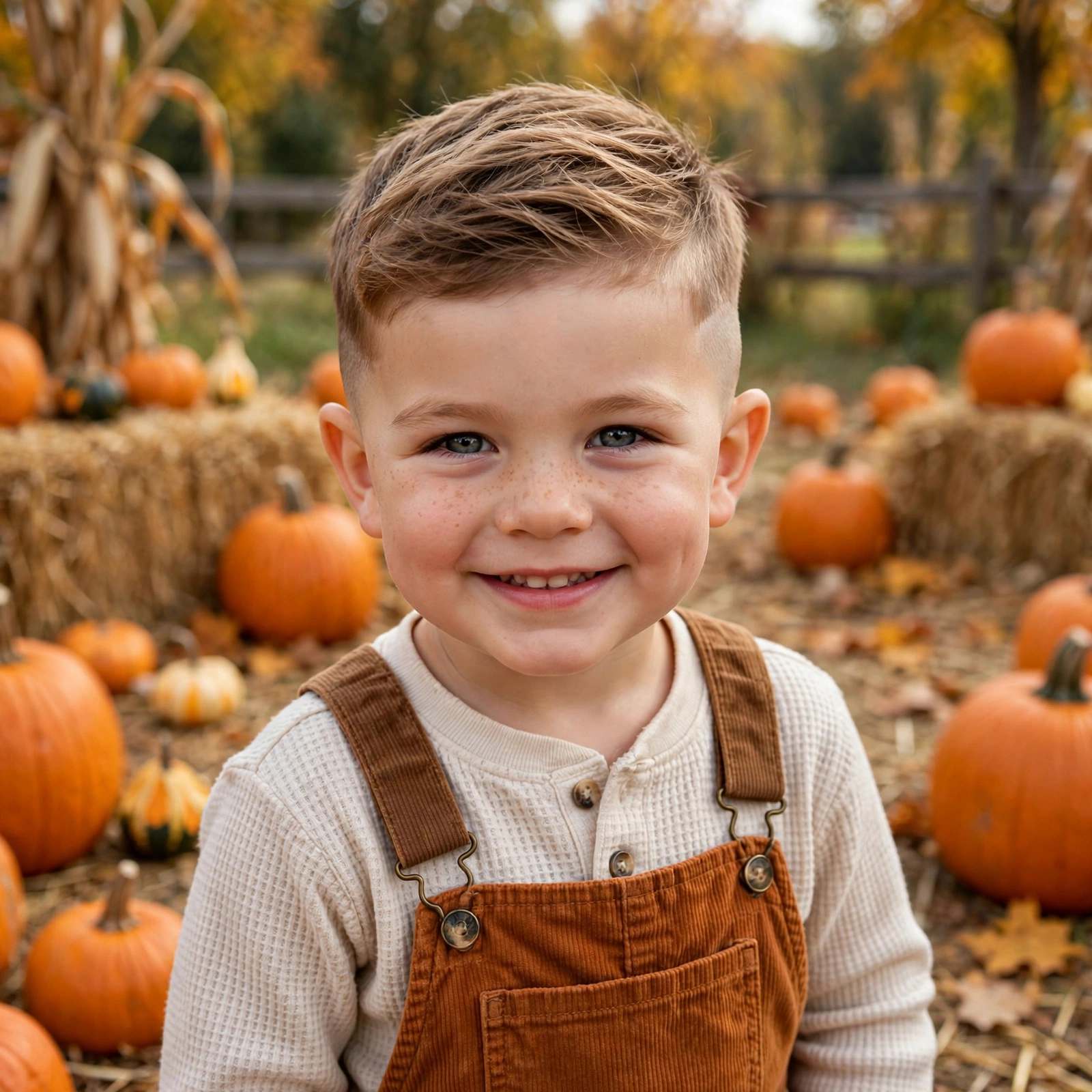
8. The Pumpkin Patch Crop
Our fall-named favorite: the pumpkin patch crop is a textured short cut with a little extra playful length on top — short enough for beanies, long enough to show some personality. The top is point-cut for texture so it has that perfectly tousled, just-rolled-in-the-leaves look even when you did nothing to it. It earned its seasonal name because it’s the cut that looks most at home in every fall photo op: pumpkin patches, apple orchards, leaf piles. The vibe is mischievous and joyful — the haircut of a toddler who’s about to do something funny.
How to get it: Tell the barber: “Textured crop — short on the sides, about an inch of choppy texture on top, messy finish.” At home, clipper the sides with a #3 guard, then scissor the top using point-cutting (snipping into the ends vertically) to create the choppy texture. Tousle with dry fingers — never a brush, which flattens the texture.
Best for: Straight to wavy hair with some natural body; fine hair that needs the illusion of fullness; active toddlers; anyone who wants “styled” without styling.
Maintenance: Low. The texture is the style — bedhead genuinely works here. Trim every 6–7 weeks to keep the top from getting heavy.
Pro tip: This cut photographs best slightly tousled, so on photo days, skip the comb entirely — dampen your hands, shake the top gently, and walk away. The “done” version of this cut is the undone version.

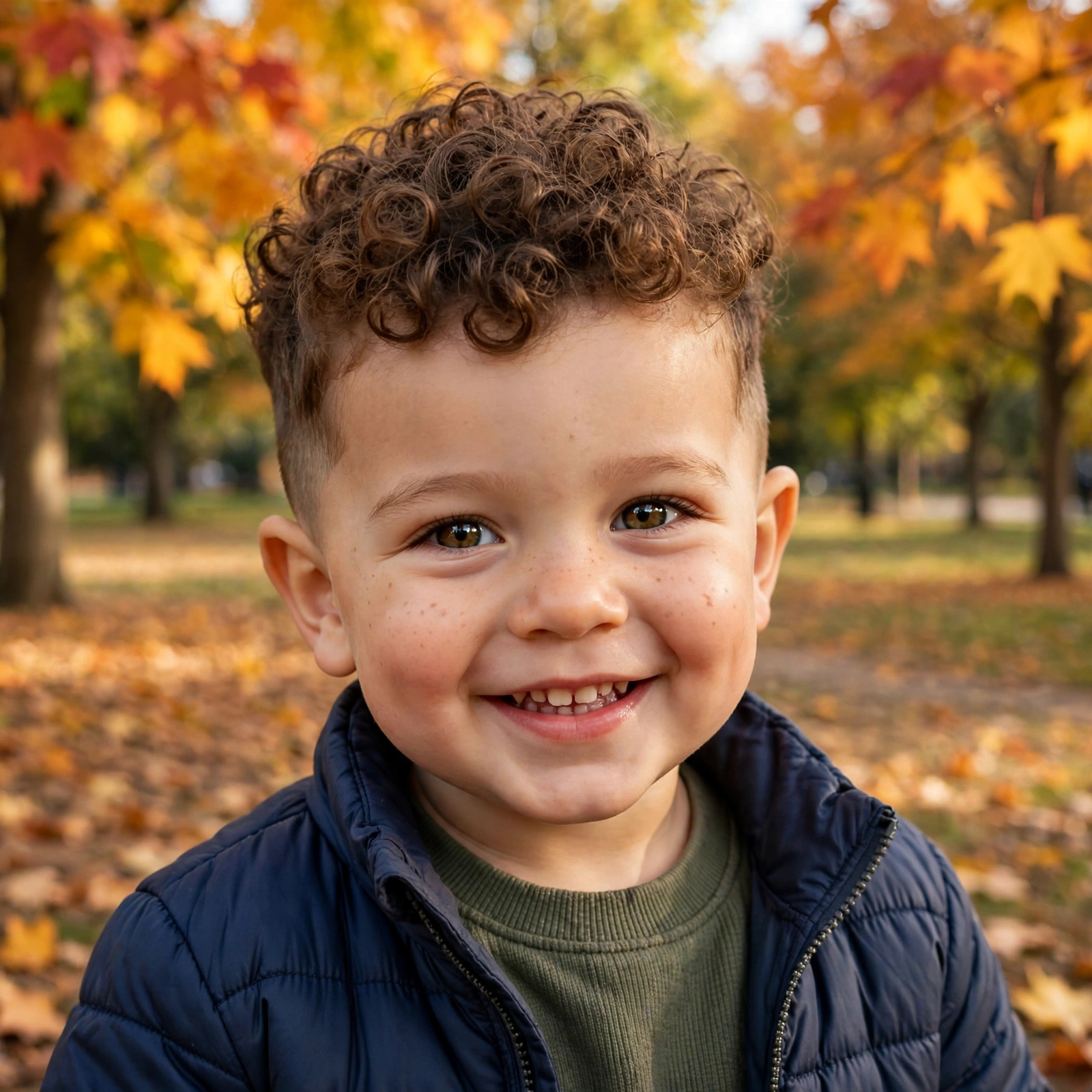
9. Curly Top, Neat Sides
For toddlers whose curls are the main event: keep the party on top and tidy up the sides. Curly top, neat sides gives textured hair a intentional shape — length and bounce where the curls shine, shorter and comfortable around the ears, neckline, and under hats. Our editors found this is the cut that finally ends the “should we cut the curls?” debate: you’re not cutting the curls, you’re framing them. It reduces tangles, sweat, and hat-frizz while keeping every bit of the personality. The vibe is confident and cool — the toddler with the best hair at daycare, and everyone knows it.
How to get it: Tell the barber: “Keep the length on top — at least two to three inches for the curls — and taper the sides and back shorter, blended. Cut the curls dry, curl by curl.” That last instruction matters: curly hair shrinks when dry, so a wet cut will come out much shorter than expected. At home, maintain the sides with a guarded clipper and leave the top strictly alone between barber visits.
Best for: Curly, coily, or very wavy hair; toddlers whose curls tangle at the nape; warm-natured kids who sweat under hats; parents who want the curls but less of the maintenance.
Maintenance: Medium. The top needs the curl routine (leave-in on damp hair, scrunch, no dry brushing); the sides need trimming every 5–6 weeks to stay neat. Wash 2–3 times weekly.
Pro tip: Never let anyone cut his curls wet and straightened — the shrinkage surprise is the number one cause of toddler curl regret. Dry curl-by-curl cutting is slower but it’s the only way to see the true length. If a barber won’t do it, find one who will.
10. The Soft Side-Sweep
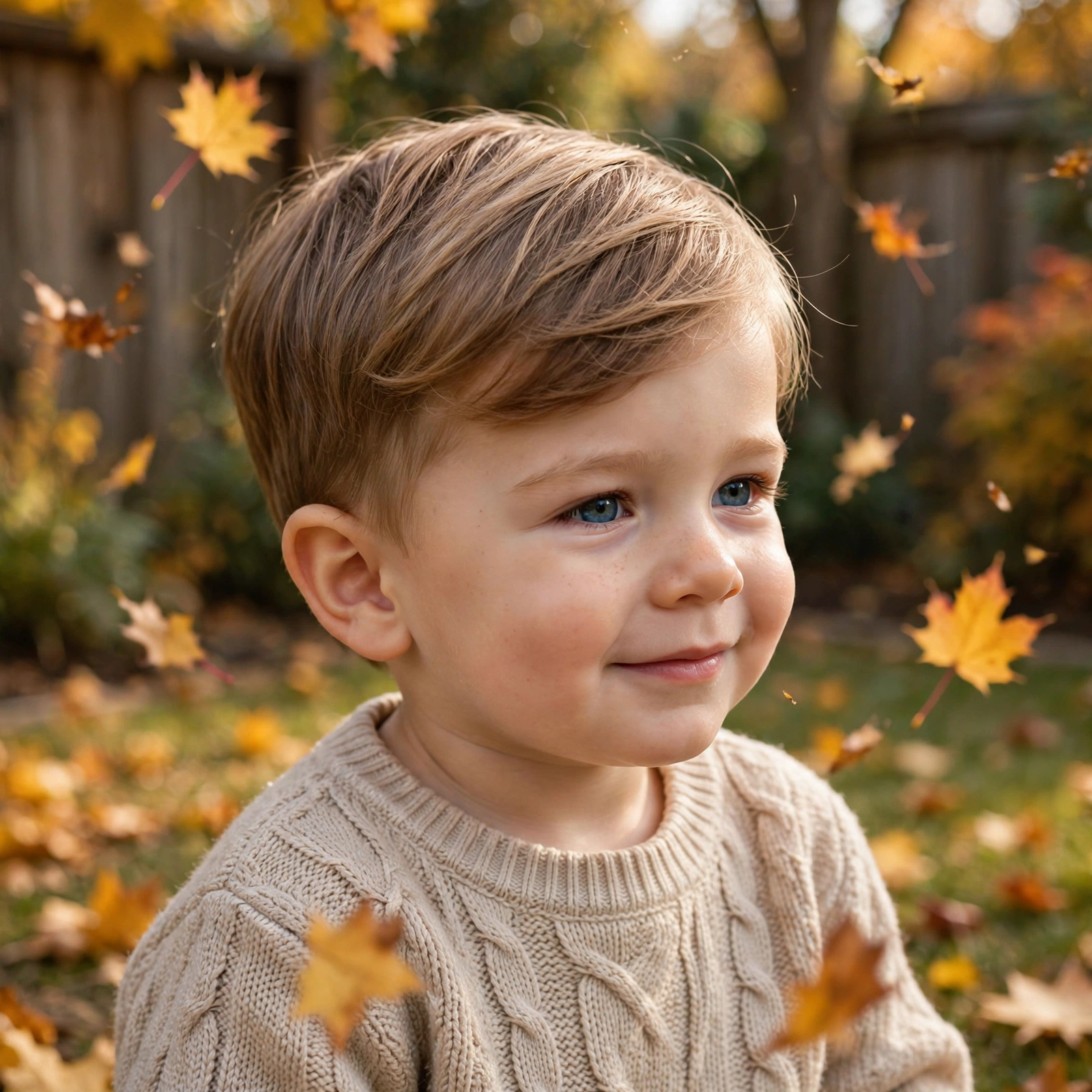
The soft side-sweep is the grow-out hero: longer hair on top swept gently to one side, with soft sides that keep it from looking shaggy. It’s the perfect answer for the “we’re growing it out but it’s in his eyes” phase, and honestly it’s adorable in its own right — relaxed, a little windswept, very fall. In 2026 it’s the choice for parents who love a bit of length but need it to behave: the sweep keeps hair off his face for meals and play, and the whole thing reads as intentional rather than overdue-for-a-cut. The vibe is easygoing and sweet — the toddler who looks like he just came in from playing outside, because he did.
How to get it: Tell the barber: “Grow-out friendly — keep the top long enough to sweep, about two inches, tidy the sides and clean up the neckline.” At home, the daily routine is one move: while the hair is damp, sweep the top to his natural side with your hand or a soft brush. That’s it. As it grows, the sweep just gets more dramatic.
Best for: Toddlers growing out a shorter cut; straight to wavy hair; parents who like a little length; oval and heart-shaped faces.
Maintenance: Low. One sweep each morning; the style evolves as it grows. Shape-up trims every 8–10 weeks — mostly the sides and neckline while the top keeps growing.
Pro tip: When the sweep starts falling into his eyes no matter what, it’s not a styling failure — it’s the signal for a fringe trim, not a full cut. A two-minute fringe tidy buys another month of perfect side-sweep.
Fall Hairstyles for Toddler Boys: FAQs
When should my toddler get his first haircut?
There’s no magic age — it’s about need, not the calendar. Most toddlers get their first real cut somewhere between 12 and 18 months, when the hair starts covering the eyes, curling over the ears, or getting ratty at the back from the car seat. If his hair is still thin and even at 18 months, there’s no rush; if he’s born with a full head of hair, he might need a fringe trim at 9 months. The first cut should be conservative — just a tidy-up — because you can always take more off, and a nervous toddler remembers a bad first experience.
How do I deal with cradle cap before a haircut or photo day?
Cradle cap — those yellowish, scaly patches on the scalp — is extremely common and harmless, but it can make a fresh haircut look flaky. The week before a cut or photos, wash his hair a little more often (every other day) with a gentle, fragrance-free baby shampoo, and massage the scalp softly with your fingertips or a soft baby brush during the bath to loosen the scale. For stubborn patches, a little baby oil massaged in before the bath helps soften them. Never pick or scratch at the flakes. If the rash spreads beyond the scalp, looks irritated, or doesn’t improve, check the dermatologists’ tips for treating cradle cap and mention it to your pediatrician.
How do I fix toddler hat hair?
Hat hair on a toddler is really just flattened, staticky hair — and the fix takes thirty seconds. First, prevention: choose beanies with a smooth or satin lining, which cause far less friction than rough knits. When the hat comes off, dampen your hands lightly, run your fingers through his hair to lift the roots, and reshape it with your hands — for most cuts on this list, that’s the entire fix. For fine hair prone to static, a tiny bit of leave-in conditioner in the morning prevents the flyaways before they start. And honestly? Slightly mussed post-hat hair on a toddler just looks like a toddler. Don’t overthink it.
How do I get food out of my toddler’s hair without a full bath?
Peanut butter, yogurt, mashed banana — if it can be smeared, it will be in his hair. For most food, a warm damp washcloth pressed (not rubbed) on the spot lifts it out; follow with a quick rinse under the tap if needed. For truly stuck situations like gum or very sticky candy, a small amount of coconut or baby oil worked gently through the spot dissolves the stickiness, then shampoo it out. Avoid the temptation to cut it out — a food spot is temporary, a chunk missing from the fringe is a six-week commitment. Keep a soft brush by the high chair; a quick brush-through right after meals prevents most dried-on disasters.
When should we switch from at-home trims to a real barber?
Home trims are perfect for the basics — fringe touch-ups, cleaning up the neckline, keeping a mini crop even. Make the jump to a barber when you want shape rather than just shorter: tapers, textured tops, and anything with blending are genuinely hard to do on a moving target without experience. Also consider a barber if your toddler simply won’t sit still for you — many kids behave remarkably better for a professional (novelty helps) than for a parent. Look for a kid-friendly shop, book the quietest slot of the day, and stay for the first few visits. There’s no prize for DIY-ing a cut that’s stressing you both out.
The Bottom Line
The best fall hairstyles for toddler boys aren’t the most elaborate ones — they’re the cuts that survive naps, hats, and spaghetti night while still looking adorable in your holiday photos. Pick one cut from this list that matches his hair type, give the barber the exact script above, and keep mornings to a comb-through and a smile. Happy fall, and happy hair days to your little guy.